Attorney Advertising · Time-Sensitive
OpenClassActions.com is an attorney-advertising and informational resource — not a law firm. It does not provide legal advice and does not recommend or endorse any particular lawyer. Submitting a form on this page does not create an attorney-client relationship, file a lawsuit, or pause any legal deadline, and it does not guarantee that an attorney will review or respond to your case.
These claims are time-sensitive. Legal deadlines (statutes of limitations) vary by state and can permanently bar a claim once they pass — so don't wait for a callback. You are free to choose any attorney you wish, and if you are considering a claim you should speak with a qualified attorney of your choosing as soon as possible. Prior results do not guarantee a similar outcome.
People who were under 18 during heavy use of Instagram, Facebook, TikTok, Snapchat or YouTube and later developed mental-health harm may qualify for an individual personal-injury case in the social media addiction litigation against Meta, TikTok, Snap and YouTube. As of October 9, 2026, new cases are still being filed in MDL 3047 and JCCP 5255 and law firms are still reviewing them; there is no class claim form, and the next trial is set for October 28, 2026.

What the Social Media Addiction Lawsuit Is About
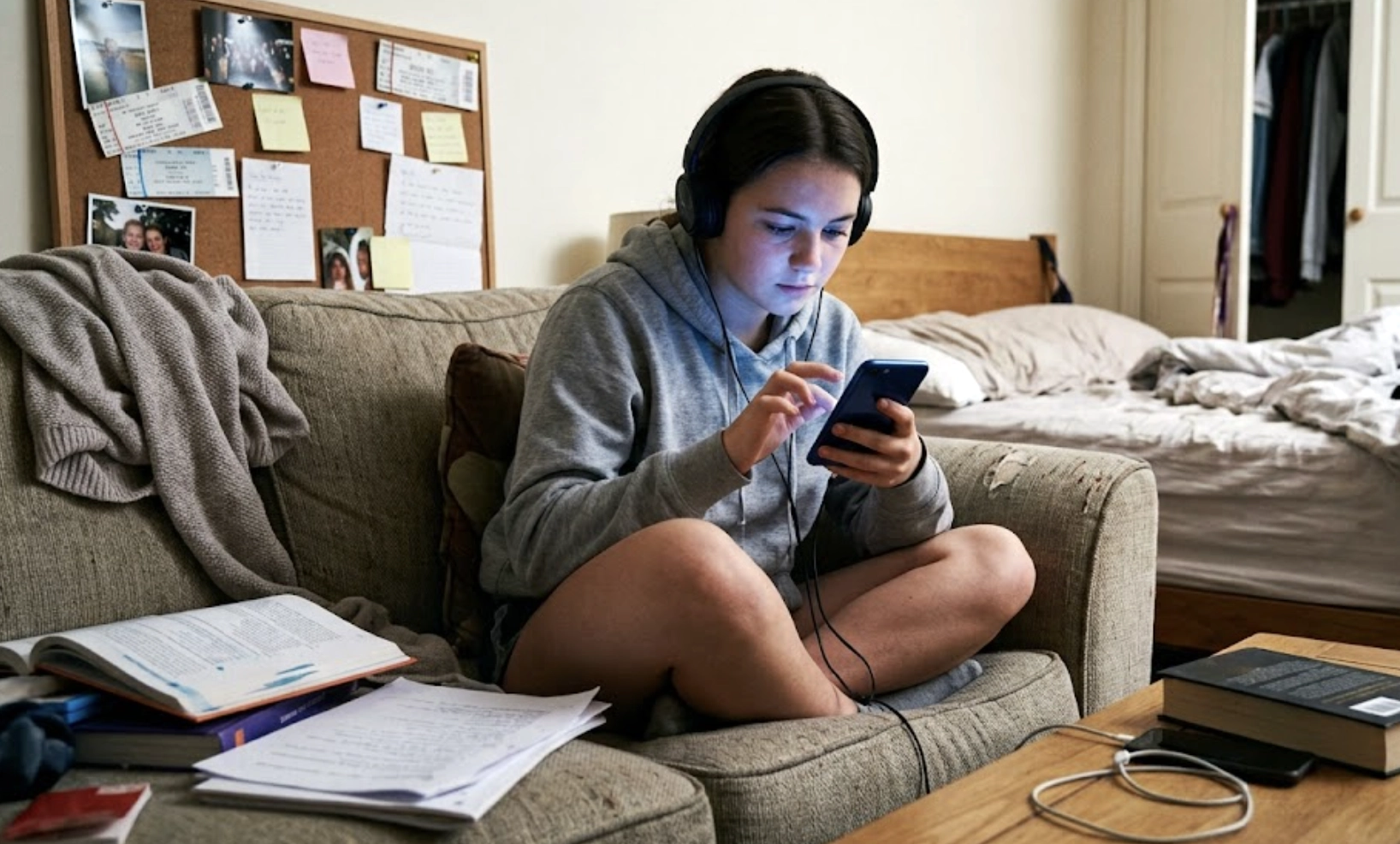
The social media addiction lawsuits allege that Meta, TikTok, Snap and YouTube designed their platforms to keep minors using them compulsively, and that heavy use while under 18 caused or worsened conditions such as eating disorders, self-harm, depression and suicidal thoughts. The companies deny the allegations. The cases are individual personal-injury lawsuits, each brought on behalf of a specific young person, and new ones are still being filed as of October 2026.The following social media companies may be part of the investigation:
Social Media Addiction Lawsuit Timeline
How the social media addiction litigation has unfolded, with verifiable dates from court records and federal agencies. Each milestone has shaped how today's claims are evaluated by intake firms.-
Sept 13, 2021The Facebook Files. The Wall Street Journal begins publishing leaked Meta internal research, including studies showing Instagram worsens body-image issues for one in three teen girls. The disclosures become a foundational evidentiary basis for later complaints.
-
Oct 5, 2021Senate testimony. Whistleblower Frances Haugen testifies before the U.S. Senate Commerce Subcommittee on Consumer Protection, asserting Meta knew its platforms harm children but prioritized engagement over safety.
-
Oct 6, 2022MDL 3047 created. The U.S. Judicial Panel on Multidistrict Litigation consolidates social-media adolescent addiction cases as In re: Social Media Adolescent Addiction/Personal Injury Products Liability Litigation, MDL No. 3047, in the U.S. District Court for the Northern District of California before Judge Yvonne Gonzalez Rogers.
-
May 23, 2023Surgeon General Advisory. U.S. Surgeon General Vivek Murthy issues an official advisory, Social Media and Youth Mental Health, citing evidence that adolescents using social media more than three hours per day face roughly double the risk of poor mental-health outcomes.
-
Oct 24, 2023State AGs sue Meta. A bipartisan coalition of 41 state attorneys general files suit against Meta, alleging Instagram and Facebook are designed to be addictive and harmful to minors. Many state-court suits are later coordinated alongside the federal MDL.
-
Nov 14, 2023Section 230 ruling. Judge Gonzalez Rogers denies the platforms' motions to dismiss most product-liability and negligence claims, holding that allegations targeting addictive design features are not barred by Section 230 of the Communications Decency Act — a turning point that opens the door for thousands of additional filings.
-
Jan 2026K.G.M. bellwether (JCCP 5255). The first bellwether trial in California's coordinated state proceeding begins in Los Angeles Superior Court. Snap and TikTok settle before trial.
-
Mar 9, 2026Tolbert v. Meta filed. Tolbert v. Meta Platforms, Inc., et al., Case No. 4:26-cv-02005, is filed in the N.D. Cal. against Meta, Google/YouTube, ByteDance, and Snap. See our Tolbert v. Meta page for case details.
-
Mar 25, 2026K.G.M. verdict. A Los Angeles jury finds Meta and YouTube negligent in the K.G.M. case and awards $6 million — $3 million compensatory (70% Meta, 30% YouTube) and $3 million punitive. Post-trial motions are denied June 9, 2026, and Meta and Google appeal in July 2026, so the verdict is not final.
-
May 21, 2026First federal bellwether settles — $27M. Breathitt County Board of Education v. Meta Platforms, Inc., et al., the first federal bellwether in MDL 3047 and a Kentucky school-district case, settles for a combined $27 million weeks before its scheduled mid-June 2026 trial in Oakland (jury selection had been set for June 12). Meta is the last of four defendants to settle (May 21), paying $9 million after Snap ($8M), TikTok ($8M), and YouTube/Google ($2.01M) settled earlier that week. The companies admit no wrongdoing.
-
Aug 2026Federal docket keeps growing. The JPML's monthly statistics report dated August 3, 2026 puts MDL 3047 at 3,137 pending cases, up 244 from the July report — a gain of about 8% in a single month, and one of the largest proportional increases among the country's biggest MDLs. The docket has continued to grow even after the first federal bellwether settled in May 2026.
-
Aug 6, 2026New Mexico orders $567M. A state judge in Santa Fe finds Meta created a public nuisance and orders the company to pay $567 million into a five-year child mental-health fund and to change how its products work for minors, including turning off push notifications for under-18 users during school hours and overnight. It follows the March 2026 jury phase that ordered $375 million on consumer-protection findings. The money funds state programs rather than individual claims.
-
Aug 12–18, 2026The 29-state trial opens in Oakland. A bipartisan coalition of 29 state attorneys general takes Meta to trial before Judge Gonzalez Rogers in People of the State of California v. Meta Platforms, Inc., et al., No. 4:23-cv-05448 (N.D. Cal.), with jury selection August 12 and opening statements August 18. California, Colorado, Kentucky, and New Jersey lead the claim that Instagram and Facebook were designed to addict and harm young users; all 29 states allege Meta collected under-13 users’ data without parental consent in violation of COPPA. An eight-member advisory jury hears the evidence, but the judge decides liability and any penalty or injunction. The states have asked the court to order likes and infinite scroll removed for young users. In a July 7, 2026 filing Meta disclosed that the states’ theory implies a theoretical ceiling of roughly $1.4 trillion in statutory penalties, a figure Meta called unsupported; the attorneys general said before trial that something closer to $200 billion was more realistic. Former Meta safety engineer Arturo Béjar testified first, and Instagram head Adam Mosseri and Mark Zuckerberg were expected before the evidence closed. The trial ended in a settlement on August 26, 2026 (below) without a ruling on liability. This is a government enforcement action that pays the states, not families. See OCA’s explainer on the 29-state trial.
-
Aug 26, 2026Meta settles with the states for up to $17.1 billion. Eight days into the Oakland trial, Meta and a bipartisan coalition of attorneys general file a consent judgment resolving the claims of 47 states, the District of Columbia, American Samoa, Puerto Rico and the Northern Mariana Islands. Meta commits to about $12.1 billion paid to the states over ten years, with roughly $5 billion more owed only if Snap, TikTok and YouTube reach comparable settlements of their own. Meta separately settles with Texas for about $1 billion the same day. The agreement also imposes five years of product changes for users under 18 — a default two-hour daily limit across Instagram and Facebook, scroll-interrupting pauses, a midnight–6 a.m. block, notifications off during weekday school hours, like counts and cosmetic-surgery filters disabled, and enhanced age assurance — overseen by an independent auditor. Judge Gonzalez Rogers entered the consent judgment the same day it was filed. The agreement states it is not an admission of liability or wrongdoing. It pays state governments, not families, and creates no claim form. It also does not resolve the personal-injury or school-district cases. See OCA’s breakdown of the $17.1 billion state settlement.
-
Aug 28, 2026Two teen cases consolidated for trial. Over Meta’s objection, Judge Carolyn B. Kuhl consolidates two teen plaintiffs’ JCCP 5255 cases for a single jury trial in Los Angeles set to begin October 28, 2026. TikTok settled with both plaintiffs in August 2026, leaving Meta, YouTube and Snap as defendants.
-
Late Sept 2026TikTok settles with Alabama. Days before a scheduled trial, Alabama reaches the first state settlement with TikTok and ByteDance over teen-safety claims: at least $100 million to the state, rising to as much as $300 million if 40 other attorneys general sign similar agreements within a set time, plus teen changes in Alabama including a two-hour daily limit, pauses after 15 minutes of use and stricter age checks. TikTok denies wrongdoing. The money goes to the state, not to families.
-
Oct 1, 2026MDL 3047 passes 3,800 pending cases. The JPML’s October 1, 2026 report counts 3,824 pending cases and 4,009 filed in total, up from 3,208 pending on September 1 and 3,137 on August 3. New short-form complaints are still being filed in October 2026.
-
Oct 28, 2026Next personal-injury trial. The consolidated two-plaintiff JCCP 5255 trial against Meta, YouTube and Snap is set to begin in Los Angeles Superior Court.
-
Feb 2027Next federal bellwethers set. With Breathitt resolved, Judge Gonzalez Rogers schedules the next school-district bellwethers — Tucson Unified (AZ) and Charleston County (SC) — with jury selection on Feb 3, 2027 and opening statements Feb 8, 2027.
-
2027More California bellwethers. Further JCCP 5255 personal-injury trials are reportedly set for March 16, 2027 and August 6, 2027.
Free settlement alerts
Get notified when new class actions open to claims
Join thousands of readers who get the latest class action settlements you may qualify for — delivered straight to your inbox.
What Are the Harms of Social Media Addiction?
Scientific studies confirm that adolescent brains are still developing critical areas involved in emotional regulation, impulse control, and risk assessment. Social media platforms exploit these vulnerabilities by delivering constant dopamine-driven feedback through likes, notifications, and content designed to capture attention. This cycle can lead to addiction, rewiring the brain's reward system and making it difficult for users to disengage.The consequences of social media addiction can be severe, especially for kids and teens, including:
• Eating disorders
• Body dysmorphia
• Severe depression
• Severe anxiety
• Self-harm or suicidal thoughts and attempts
Who Qualifies for a Social Media Addiction Lawsuit?
Intake criteria for the social media addiction lawsuits generally look for the following:
• The injured person was under the age of 18 during the period of heavy social media use.
• The minor used social media platforms (such as Facebook, Instagram, TikTok, Snapchat, YouTube) for prolonged periods (e.g., several hours a day) over an extended time frame (months or years).
• The minor developed mental health issues after prolonged social media use, including:
• Eating disorders
• Body dysmorphia
• Severe depression or anxiety
• Self-harm or suicidal thoughts/attempts
• There is a medical diagnosis or other evidence linking these conditions to the period of social media use.
• The family is not already represented by a lawyer on this issue.
Meeting these criteria does not guarantee that a firm will take a case or that a case will recover anything; each one is reviewed on its own facts.
What Evidence Do I Need to File a Social Media Addiction Lawsuit?
Personal injury claims built around social media addiction generally rise or fall on documentation. Intake reviews generally look for the following documentation:• Medical and mental-health records — diagnoses such as major depressive disorder, generalized anxiety, eating disorders (anorexia, bulimia, binge eating), body dysmorphic disorder, or ADHD, plus any records of inpatient treatment, emergency-room visits for self-harm, or therapy notes that connect the condition to platform use.
• A timeline of use — which platforms (Instagram, TikTok, Snapchat, YouTube, Facebook), approximate start date, and average daily hours. Screen-time reports from iOS “Screen Time,” Android “Digital Wellbeing,” or parental-control apps (Bark, Qustodio, Family Link) are especially useful.
• Proof the user was under 18 during the period of heavy use. Birth certificate, school records, or a state ID works.
• Evidence of downstream harm — school attendance records, report cards, disciplinary referrals, or any documentation of self-harm, hospitalization, or suicide attempts.
• Account confirmation — login emails, account creation dates, or device screenshots that tie the specific minor to the specific platforms.
You do not need to have every item on this list to qualify, but the more documentation a family can produce, the faster attorneys can evaluate the claim and the stronger it becomes if it proceeds to discovery.
How Much Can I Get Paid?
The amount of compensation varies depending on several factors, including:
• The severity of the mental health injuries or diagnoses caused by social media addiction (e.g., depression, anxiety, eating disorders, self-harm).
• The impact on the young person's daily life and well-being.
• The specific details and evidence of each case.
How Does a Family Start a Case Review?
1. Short Survey:
The case review starts with a short set of questions about the minor's age, platforms, diagnosis and timeline.
2. Free Consultation: When the answers fit current intake criteria, an attorney who handles these cases follows up for a free consultation.
3. Attorney Review: A law firm handling product-liability and social media addiction cases decides whether to take the case and, if it does, files it in MDL 3047, JCCP 5255 or another appropriate court.
4. Damages Sought: Personal-injury complaints in this litigation generally seek damages for:
• Medical bills and therapy
• Out-of-pocket expenses
• Emotional distress and loss of enjoyment of life
• Potential punitive damages if the social media company's actions were especially harmful
Case Review Website: Free Case Review
Frequently Asked Questions
Is the social media addiction lawsuit a class action with a claim form?
No. These are individual personal-injury claims coordinated in MDL 3047 in the Northern District of California and in California's JCCP 5255 proceeding. There is no single settlement fund, no claim form, and no deadline set by an administrator. Each case is valued on its own facts, so what one family recovers has no fixed relationship to what another does.
Who qualifies for a social media addiction claim?
Generally, someone who was under 18 during a period of heavy social media use lasting months or years, who was later diagnosed with or treated for a mental-health condition such as major depression, severe anxiety, an eating disorder, body dysmorphia, or self-harm and suicidality. Documentation connecting the diagnosis to the period of platform use is what intake firms look for.
Which platforms are covered by the social media addiction litigation?
The main defendants are Meta (Instagram and Facebook), ByteDance (TikTok), Snap (Snapchat), and Alphabet (YouTube). WhatsApp and Discord appear in related cases. A child who used several of these platforms does not have to choose one; the claim can cover the combined use.
Does the $27 million Breathitt County settlement mean parents get paid?
No. Breathitt County Board of Education v. Meta Platforms was a Kentucky school district's lawsuit over the cost of student mental-health services, and it settled for a combined $27 million in May 2026. There is no claim form or settlement fund for parents attached to it. It matters only as a signal of how bellwether cases are being valued; an individual injury claim is separate.
Is there a deadline to file a social media addiction lawsuit?
There is no administrator deadline, but every state has a statute of limitations, and those vary. Many states pause the clock while the injured person is a minor and start it when they turn 18, though the rules differ by state and by the type of claim. Because the limit is set by state law rather than by a settlement schedule, the time available depends on the state and the facts of the case.
What evidence do I need to start a social media addiction claim?
The strongest files combine mental-health records showing the diagnosis and treatment, evidence of heavy use during the minor years such as iOS Screen Time or Android Digital Wellbeing reports or parental-control logs, proof the user was under 18 during that period, and evidence of downstream harm such as school records or hospitalization. A review can start without every item.
Has any court found the social media companies liable?
Only in one case so far. On March 25, 2026 a Los Angeles jury in the K.G.M. case found Meta and YouTube negligent and awarded $6 million ($3 million compensatory and $3 million punitive); Meta and Google have appealed, so that verdict is not final and does not bind other cases. The remaining claims in MDL 3047 and JCCP 5255 are allegations that have not been proven, and the companies deny them. In November 2023 the federal court allowed most product-liability and negligence claims to proceed past a motion to dismiss, holding that allegations aimed at addictive design features are not barred by Section 230 of the Communications Decency Act, but that ruling decided what could be litigated, not who was right.
How much does it cost to start a social media addiction case review?
The case review itself costs nothing and carries no obligation. If a law firm takes the case, how that firm charges is set in the engagement agreement between the family and the firm.
Is the social media addiction lawsuit still accepting new cases?
New individual injury cases are still being filed as of October 2026, and law firms handling the litigation are still reviewing new cases. Families join the federal MDL 3047 by filing a short-form complaint, and the JPML’s October 1, 2026 report counted 3,824 pending cases, up from 3,137 in August. Meta’s state settlement did not close the injury track. Each case is reviewed on its own facts, and state statutes of limitations still apply.
When is the next social media addiction trial?
The next personal-injury trial is set to begin October 28, 2026 in Los Angeles Superior Court, where Judge Carolyn B. Kuhl consolidated two teen plaintiffs’ cases for a single jury trial in the JCCP 5255 proceeding. Meta, YouTube and Snap are the defendants; TikTok settled with both plaintiffs in August 2026. In the federal MDL, the next school-district bellwethers (Tucson Unified and Charleston County) are set for February 2027.
Did TikTok settle the social media addiction lawsuits?
TikTok has settled individual cases, not the litigation as a whole. It settled the K.G.M. bellwether in January 2026, the R.K.C. case before its July 2026 trial date, the Breathitt County school-district bellwether in May 2026, and both plaintiffs’ cases in the October 28, 2026 Los Angeles trial in August 2026. In late September 2026 it also settled with Alabama, agreeing to pay the state at least $100 million, rising to as much as $300 million if 40 other attorneys general sign similar agreements; that money goes to the state, not families, and TikTok denies wrongdoing. Thousands of other injury claims against TikTok remain pending.
Related Investigations & Lawsuits
Children harmed on other platforms — Roblox, Discord, or an AI companion chatbot — are the subject of related child-safety investigations and lawsuits, which sit alongside the social media addiction litigation:Sources & Government References
Primary, government-issued, and court documents that inform the claims and findings on this page:- U.S. Surgeon General Advisory (HHS, May 2023): Social Media and Youth Mental Health — finds adolescents who use social media for more than 3 hours per day face roughly double the risk of poor mental-health outcomes.
- U.S. Senate Commerce Committee (Oct. 5, 2021): "Protecting Kids Online: Testimony from a Facebook Whistleblower" — Frances Haugen's full hearing record before the Subcommittee on Consumer Protection.
- U.S. Judicial Panel on Multidistrict Litigation: JPML consolidated transfer order creating In re: Social Media Adolescent Addiction/Personal Injury Products Liability Litigation, MDL No. 3047.
- JPML Pending MDL Dockets by Actions Pending, October 1, 2026: October 1, 2026 report (PDF) — the source for the 3,824 pending / 4,009 total case counts in MDL 3047.
- JPML MDL statistics report, August 3, 2026: pending actions by MDL — the source for the August 3,137 pending / 3,312 total case counts in MDL 3047, and for the month-over-month change from the July 1, 2026 report. See our full list of all active MDLs for how MDL 3047 compares.
- U.S. District Court, Northern District of California: N.D. Cal. — presiding court for MDL 3047 and the new Tolbert v. Meta filing (Case No. 4:26-cv-02005). The Hon. Yvonne Gonzalez Rogers presides.
- N.D. Cal. — MDL 3047 Case of Interest page: In re: Social Media Adolescent Addiction/Personal Injury Products Liability Litigation, MDL No. 3047 — the court's official docket hub, including the Breathitt County bellwether and the next bellwether schedule.
- Meta state settlement (August 26, 2026): NPR — Meta, States Agree to $17 Billion Settlement in Child Safety Trial; see also OCA’s breakdown of the state settlement.
- Breathitt County $27M school-district settlement (May 2026): NBC News — Meta settles social media addiction case brought by rural Kentucky school district.
- Centers for Disease Control and Prevention (CDC): Youth Risk Behavior Surveillance System (YRBSS) — biennial federal survey documenting trends in adolescent depression, persistent sadness, and suicidal ideation overlapping the social-media-saturation period.
- U.S. Department of Health and Human Services: HHS Mental Health for Youth — federal resource hub on adolescent mental-health policy and programs.
- Federal Trade Commission: Children's Privacy (COPPA) — FTC enforcement framework for online services directed at children, including social-media platforms.
- Tolbert v. Meta — OpenClassActions case page: Tolbert v. Meta & the Social Media Addiction Class Action.
- Tolbert v. Meta — independent overview: openclassactions.org — Tolbert v. Meta.