Published
February 13, 2026
Updated
October 11, 2026
A 1998 Washington anti-spam law turned misleading email subject lines into a $500-per-email liability, triggering roughly 80 to 100 class actions against major retailers — here is every company sued so far, plus how a June 2026 amendment cut the figure to $100 going forward.
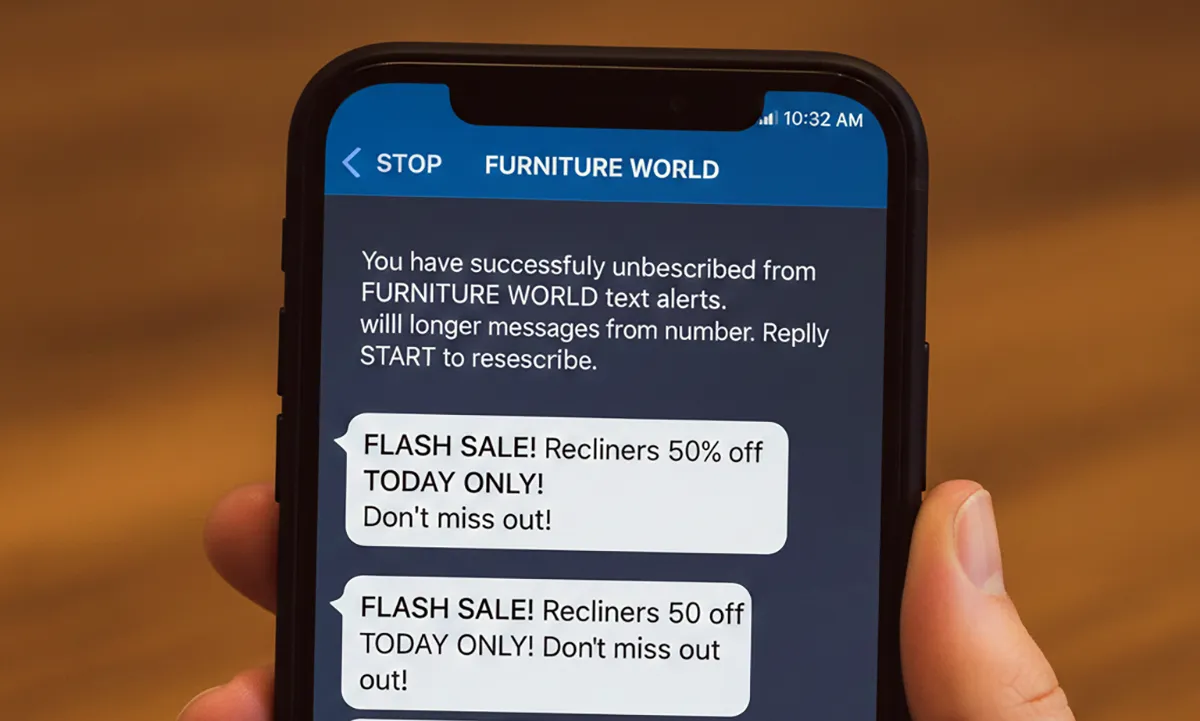

The targets include some of the largest retail brands in the country: Old Navy, Macy’s, Nike, Skechers, JCPenney, Hanes, Ulta Beauty, Discount Tire, Southwest Airlines, VistaPrint, and dozens more. Each faces potential statutory damages of $500 per misleading email, per recipient — with no requirement that anyone was actually harmed or even opened the email.
The math is staggering. A retailer with 100,000 Washington email subscribers sending one violating email per week for a year could face $2.6 billion in theoretical penalties. With a four-year statute of limitations, that exposure only multiplies.
What Is CEMA?
The Commercial Electronic Mail Act (RCW 19.190) was enacted by Washington state in 1998. At the time, most consumers were still on dial-up internet, paying by the minute, and every unsolicited email cost real time and money. The legislature passed CEMA to combat deceptive spam by prohibiting commercial emails sent to Washington residents that either use a third party’s domain without permission or contain “false or misleading information in the subject line.”For the statute itself — what RCW 19.190 prohibits, what a claim pays, how the 2026 amendment changed it, and how CEMA differs from CAN-SPAM and the TCPA — see our dictionary entry on the Washington Commercial Electronic Mail Act (CEMA).
Status
Active Litigation
roughly 80–100 lawsuits filed · HB 2274 reform effective June 11, 2026
Potential Damages
$500 – $1,500 per email
per recipient · no actual harm required · $100 for actions brought on or after June 11, 2026
Key Ruling
Brown v. Old Navy
Wash. Supreme Court · April 17, 2025
Who Can Sue
Washington residents
who received violating commercial emails
That changed dramatically in April 2025.
The Ruling That Changed Everything: Brown v. Old Navy
On April 17, 2025, the Washington Supreme Court issued a 5–4 decision in Brown v. Old Navy LLC (567 P.3d 38) that fundamentally transformed CEMA’s reach.The case started when consumers filed a class action alleging that Old Navy sent promotional emails with subject lines indicating a sale would end on a specific date — “50% Off Today Only,” “Sale Ends Tonight” — even though the retailer continued to offer the same promotions days later.
Old Navy argued that CEMA only prohibits subject lines that conceal the commercial nature of an email. In other words, Old Navy contended the law was meant to catch deceptive spam that tricks people into opening ads by pretending to be personal messages, not to regulate the content of obviously promotional emails.
The Washington Supreme Court rejected that argument. The majority held that CEMA’s plain language prohibits any false or misleading information in a commercial email’s subject line — regardless of whether the email is clearly an advertisement. The court did carve out one exception: “mere puffery” — subjective statements, opinions, and hyperbole like “Best Deals of the Year” — is not actionable under CEMA.
The four dissenting justices warned that the majority’s reading transformed a narrow anti-spam measure into a sweeping truth-in-advertising regime that the legislature never intended.
Free settlement alerts
Get notified when new class actions open to claims
Join thousands of readers who get the latest class action settlements you may qualify for — delivered straight to your inbox.
Why the Damages Are So Extreme
CEMA’s damage structure is what makes this litigation so explosive:$500 per email per recipient. Every individual commercial email that contains false or misleading information in its subject line is a separate violation carrying $500 in statutory damages.
No actual harm required. The recipient does not need to have opened the email, been misled by it, or suffered any injury. Simply receiving the email is enough.
Per se Consumer Protection Act violation. Every CEMA violation is automatically a violation of Washington’s Consumer Protection Act, which authorizes treble damages — potentially increasing the penalty to $1,500 per email.
Four-year statute of limitations. Plaintiffs can reach back four years to cover emails sent during the entire period.
Private right of action. Unlike the federal CAN-SPAM Act, which only allows enforcement by the government, CEMA allows individual consumers and their attorneys to file lawsuits.
What Types of Emails Are Being Challenged
The lawsuits filed since Brown target three main categories of email marketing practices:1. False time-limited sales. Subject lines like “Ends Tonight!” “Today Only!” or “Last Chance!” where the same or substantially similar promotion was extended or repeated. This is the most common allegation. Plaintiffs argue that if a retailer says a sale ends tonight but then offers the same deal tomorrow, the subject line was false.
2. Inflated discount claims. Subject lines advertising “70% Off” or “Up to 50% Off” where the percentage-off is calculated from an artificially inflated list price that the product was never actually sold at. This makes the discount appear larger than it really is.
3. Misleading “free” offers. Subject lines advertising “Buy One Get One Free” or “Free Gift with Purchase” where the cost of the “free” item was built into the price of the paid item, or where undisclosed conditions applied.
Full List of Companies Sued Under CEMA (Email Subject Line Cases)
The following companies have been named as defendants in CEMA class action lawsuits alleging misleading email subject lines. This list includes cases filed in both Washington state courts and federal courts in Washington since the Brown v. Old Navy decision. It is based on court filings, legal publications, and news reports and may not be exhaustive as new cases are filed regularly.| Company / Defendant | Case Name / Number (if available) | Allegation Type |
|---|---|---|
| Old Navy (Gap Inc.) | Brown v. Old Navy LLC, No. 2:23-CV-00781-JHC (W.D. Wash.) / Wash. Supreme Court Case No. 102,592-1 | False time-limited sales |
| Macy’s | Filed Nov. 2025 (W.D. Wash.) | False time-limited sales (“Open ASAP: up to 65% off ends tomorrow”) |
| Nike, Inc. | Ma v. Nike, Inc., No. 2:25-cv-01235 (W.D. Wash., filed May 29, 2025) | False time-limited sales |
| Keurig Green Mountain, Inc. | Bennett v. Keurig Green Mountain, Inc., No. 2:26-cv-01036 (W.D. Wash.; removed from King County No. 26-2-06995-6 SEA) | False time-limited sales (“TODAY ONLY” / “ENDS TONIGHT”) |
| Skechers USA Inc. | Liss et al v. Skechers USA Inc., No. 3:25-cv-05861 (W.D. Wash., filed Sept. 22, 2025) | False time-limited sales |
| Ulta Beauty Inc. | Shahpur et al v. Ulta Beauty Inc., No. 2:25-cv-00284 (E.D. Wash.) | False time-limited sales |
| JCPenney (Catalyst Brands LLC) | Arcand v. Catalyst Brands LLC, No. 2:25-cv-01445 (King County Superior Court) | Inflated discounts / false “free” offers / false time-limited sales |
| Hanesbrands Inc. | Jackson v. Hanesbrands Inc., No. 2:25-cv-00440-SAB (E.D. Wash.) — motion to dismiss denied Apr. 28, 2026 | False time-limited sales (“LAST DAY!” free-shipping subject line) |
| Hot Topic, Inc. | Gallo v. Hot Topic, Inc., No. 2:26-cv-02346 (W.D. Wash.; removed from Pierce County No. 26-2-09007-1) | False time-limited sales (“% off” / holiday-tethered deadlines that were extended) |
| H&M Hennes & Mauritz AB | Iniguez v. H&M Hennes & Mauritz AB, No. 2:26-cv-00244 (E.D. Wash.; removed from Spokane County No. 26-2-02205-32, filed Apr. 30, 2026) | False time-limited sales (“ends tonight” deadlines extended, or beaten by a larger discount days later) |
| Michaels Stores, Inc. | Crow v. Michaels Stores, Inc., No. 1:26-cv-03142-RLP (E.D. Wash.; removed July 22, 2026; amended complaint Sept. 1, 2026) | False time-limited sales (“ENDS TODAY” sales extended) and “% off” claims against regularly couponed prices |
| Discount Tire Co. | Filed Nov. 2025 (W.D. Wash.) | False time-limited sales (“Up to $160 OFF ends tonight!”) |
| Southwest Airlines | Filed 2025 (Washington) | False time-limited sales |
| Vineyard Vines | Filed 2025 (Washington) | False time-limited sales |
| BYLT | Filed 2025 (Washington) | False time-limited sales |
| V Shred | Filed 2025 (Washington) | False time-limited sales |
| Global Custom Commerce Inc. | Perkins v. Global Custom Commerce Inc. et al., No. 2:25-cv-01750 (W.D. Wash.) | Misleading email subject lines |
| Famous Footwear | Filed 2025 (Washington) | Misleading email subject lines |
| VistaPrint (Cimpress) | Case No. 25-2-05325-32 (Pierce County Superior Court) | False time-limited sales (“Sale extended for TODAY”) |
How Defendants Are Fighting Back
Retailers facing CEMA lawsuits have raised several legal defenses. No court has issued a definitive ruling on these defenses since Brown, making this an evolving area of law.Federal CAN-SPAM preemption. The federal Controlling the Assault of Non-Solicited Pornography and Marketing Act (CAN-SPAM) includes a preemption provision that supersedes state laws regulating commercial email — except state laws that “prohibit falsity or deception.” Defendants argue this exception is narrow and only preserves state claims based on traditional tort fraud theories, not the strict liability imposed by CEMA. In January 2026, a federal court rejected this defense, removing one of the few legal shields businesses had.
Dormant Commerce Clause. Defendants argue CEMA is unconstitutional because it effectively regulates email campaigns created and sent from outside Washington. They contend the law places an excessive burden on interstate commerce by subjecting nationwide retailers to Washington’s specific regulatory requirements.
Arbitration clauses. Some retailers have moved to compel arbitration under their terms of service, attempting to move claims out of class action litigation and into individual proceedings.
The Legislative Response: HB 2274 Is Now Law
The flood of lawsuits prompted legislative action, and the reform passed. Governor Bob Ferguson signed House Bill 2274 on March 23, 2026, and it took effect June 11, 2026. Two changes matter most:• Per-violation statutory damages drop from $500 to $100. Actual damages remain available where they exceed that amount.
• A subject line claim now requires that the sender knew, or that knowledge was fairly implied from objective circumstances, that the subject line was false or misleading when it was sent.
The amendment is not retroactive. It applies only to actions brought on or after June 11, 2026, which means the roughly 80 to 100 cases already filed under the pre-amendment statute keep the $500 figure and the easier standard. That non-retroactivity produced a rush of filings in the weeks before the effective date, as plaintiffs’ firms moved to lock in the older terms.
The practical effect is a narrower but still live statute. A claim over emails sent to Washington residents is now worth one-fifth as much per message and requires proof of the sender’s knowledge — a meaningful obstacle, but not a bar. Companies that market to Washington residents still carry exposure.
CEMA’s Ripple Effect: Other States
Washington is not the only state with laws targeting deceptive commercial emails. At least 16 other states have similar statutes. Plaintiffs’ attorneys in Maryland and California are already bringing comparable claims under parallel laws:• California Business & Professions Code § 17529.5 prohibits deceptive commercial emails and provides a private right of action. A growing number of lawsuits under this statute mirror the CEMA claims.
• Maryland’s Commercial Code (§ 14-3002) similarly prohibits commercial emails with false or misleading subject line information, with $500 per-email statutory damages.
• Indiana’s Deceptive Commercial Electronic Mail Act bars commercial emails with false or misleading subject lines sent to Indiana residents, with $500 per email when actual damage is not proven. Two Indiana women invoked it in a 2026 suit over Ulta’s sale-deadline emails; see OCA’s page on the Ulta Indiana email lawsuit.
Legal analysts expect the CEMA litigation wave to serve as a template for nationwide expansion of similar claims.
The pattern is not limited to email. A dormant clause in the Colorado Prevention of Telemarketing Fraud Act — which bars listing a cell phone number in a directory for a commercial purpose without consent, at $300 to $1,000 per violation plus attorney fees — has produced its own wave of putative class actions since 2025, aimed at people-search sites and contact-data vendors rather than retailers.
What This Means for Consumers
If you are a Washington state resident and receive promotional emails from retailers with subject lines that contain objectively false claims — such as fake sale deadlines, inflated discount percentages, or misleading “free” offers — you may have a claim under CEMA. Since June 11, 2026 the statutory figure is $100 per email rather than $500, and the sender’s knowledge is now part of the case; claims brought before that date are still governed by the older $500 standard.Be careful about who you sign up with. Some firms gather these claims in bulk and file them as individual arbitration demands rather than class actions, which are confidential and produce no public docket or settlement website. If you are trying to work out whether a payout notice you received is genuine, see our breakdown of the reported Michael Kors subject line payout.
If you are a Maryland or California resident, similar protections may apply under your state’s equivalent laws.
To protect yourself and preserve potential claims:
• Do not delete marketing emails. They may serve as evidence of violations.
• Take screenshots of email subject lines and note the date received, especially for “limited time” offers that continue beyond the stated deadline.
• Monitor for class action opportunities. Many CEMA cases are in early stages, and new ones are filed regularly.
You can browse all currently open class action settlements on our settlements page, or subscribe to the OpenClassActions.com newsletter to receive alerts when new cases open.
Key Case Information
The landmark case is Brown v. Old Navy LLC, 567 P.3d 38 (Wash. 2025), decided April 17, 2025 by the Washington Supreme Court (5–4). The statute at issue is Washington’s Commercial Electronic Mail Act, RCW 19.190. Since that ruling, roughly 80 to 100 class action lawsuits have been filed against retailers in Washington state and federal courts. Legislative reform: HB 2274, signed March 23, 2026, effective June 11, 2026 — statutory damages cut to $100 per email and a knowledge requirement added, with no retroactive effect on earlier-filed claims.Sources
• Brown v. Old Navy LLC, 4 Wash.3d 580, 567 P.3d 38 (2025)• Washington Retail Association, “Time to Re: Think Your Marketing Emails” (2025)
• Ecommerce Innovation Alliance, “House Committee Advances Substitute Bill to Curb Abusive CEMA Litigation” (Feb. 2026)
• Arnold & Porter, “Washington Courts Broaden CEMA Liability” (Oct. 2025)
• Benesch Friedlander, “Time to RE-act: Washington Supreme Court Email Ruling” (Sept. 2025 Update)
• Inside Class Actions, “Recent Class Actions Under State Anti-Spam Laws” (Dec. 2025)
• Frankfurt Kurnit Klein & Selz, “Plaintiffs Target Email Subject Lines in New Class Action Trend” (Nov. 2025)
• Blank Rome LLP, “Retailers on Alert: The New Wave of Email Marketing Lawsuits” (2025)
• Perkins Coie, “Litigation Update: Washington’s Commercial Electronic Mail Act” (2025)
• Morgan Lewis, “Emerging Digital Marketing Risks: The Revival of State Anti-Spam Laws” (Jan. 2026)
• K&L Gates, “Washington Supreme Court Increases Risks of Lawsuits for False or Misleading Email Subject Lines” (Aug. 2025)
• Washington State Legislature — HB 2274 / SB 5976 bill tracking
About This Article
This article is for informational purposes only. CEMA litigation is active and evolving. This is not legal advice. Consult an attorney if you believe you have a claim. OpenClassActions.com is a consumer news site and is not a law firm or settlement administrator. This article will be updated as new cases are filed and legislative developments occur.
For more class actions keep scrolling below.
| CEMA Litigation Overview | |
| Status | Active — Nearly 80 Lawsuits Filed, Legislative Reform Pending |
|---|---|
| Law | Washington Commercial Electronic Mail Act (RCW 19.190) |
| Key Ruling | Brown v. Old Navy LLC, 567 P.3d 38 (Wash. Apr. 17, 2025) |
| Statutory Damages | $500 per email (up to $1,500 with CPA treble damages) |
| Actual Harm Required? | No — receipt of email is sufficient |
| Statute of Limitations | 4 years |
| Who Can Sue | Washington residents who received violating emails |
| Allegation Types | False time-limited sales / Inflated discounts / Misleading “free” offers |
| Pending Reform | HB 2274 (advanced out of House committee) / SB 5976 (stalled in Senate) |
| Similar Laws | California § 17529.5 / Maryland § 14-3002 / 16+ other states |