Published
February 13, 2026
Updated
October 1, 2026
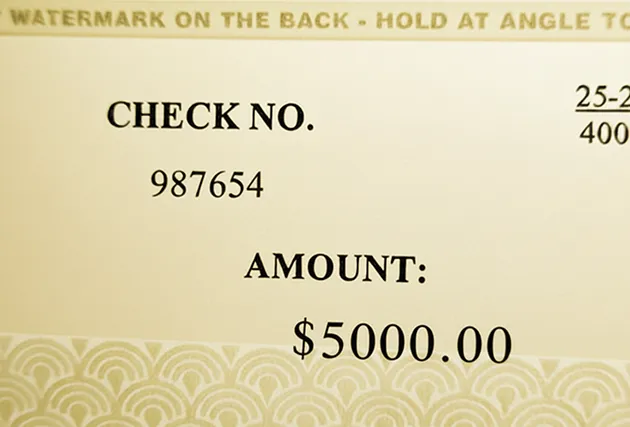
California Wells Fargo mortgage borrowers whose CARES Act forbearance was reported to credit bureaus as "in forbearance" are being paid automatically from the $56.85 million Wells Fargo settlement. The court approved it June 10, 2026, and the administrator was to mail checks by the end of August 2026.

Current Status
Payments are in progress. According to the official settlement website, the Superior Court of California, County of San Diego approved the settlement on June 10, 2026, and the settlement administrator will mail a check to each class member for their pro rata share of the net settlement fund by the end of August 2026. No claim form is required.Checks are void 90 days after they are issued, so a check mailed in late August 2026 needs to be deposited by late November 2026. A class member who has not received a check should ask the administrator through the official settlement website before that window closes. The settlement website had not published a per-person payment amount as of October 1, 2026.
What Changed
When this page was last updated in July 2026, the settlement website had not posted the result of the April 17, 2026 final approval hearing. It now reports that the court approved the settlement on June 10, 2026, and that checks would be mailed by the end of August 2026. Because payments are automatic, there was never a claim form, and nothing needs to be filed to be paid.What Happened?
When COVID-19 hit in early 2020, Congress passed the CARES Act (Coronavirus Aid, Relief, and Economic Security Act) to help Americans weather the financial crisis. One of the law's key protections was for homeowners: if you were struggling to make mortgage payments due to the pandemic, you could request forbearance — a temporary pause or reduction in your payments — without it hurting your credit.The law was specific about this. If your mortgage was current when you entered forbearance, your lender was required to continue reporting your account as "current" to credit reporting agencies like Equifax, Experian, and TransUnion. The whole point was to give people breathing room during a pandemic without destroying their credit scores.
According to the lawsuit, Wells Fargo didn't follow this rule. Instead of reporting forbearance accounts as "current," Wells Fargo allegedly reported them as "in forbearance" or similar language to the credit agencies.
Free settlement alerts
Get notified when new class actions open to claims
Join thousands of readers who get the latest class action settlements you may qualify for — delivered straight to your inbox.
Why Does "In Forbearance" on Your Credit Report Matter?
This might seem like a small distinction — "current" versus "in forbearance" — but the impact on borrowers' financial lives was potentially enormous.When a credit report shows an account "in forbearance," it signals to other lenders that something is wrong. Even though the CARES Act was specifically designed to prevent this from happening, the forbearance notation on a credit report could make it harder to get approved for a credit card, get a lower interest rate on a car loan, qualify for a new mortgage or refinance, pass a credit check for an apartment rental, or even pass background checks for certain jobs.
For many borrowers, the damage compounded. Credit scores dropped, and the consequences rippled across multiple areas of their financial lives — during a time when they were already dealing with the economic fallout of a global pandemic.
The entire purpose of the CARES Act forbearance provision was to prevent exactly this situation. Congress said: if your account was current, forbearance shouldn't touch your credit. The lawsuit alleges Wells Fargo failed to follow that rule.
StatusPayments in ProgressApproved June 10, 2026 · checks mailed by end of August 2026
Claim FormNot RequiredPayments are automatic · checks void 90 days after issue
Settlement Fund$56.85 millionBefore fees and costs.
Covered AreaCaliforniaQualifying Wells Fargo mortgage borrowers.
Who Qualifies?
You are a class member if all of the following apply:• You are a California resident with a Wells Fargo mortgage on property located in California
• Your account was current (0–29 days past due) when you entered forbearance
• You received a CARES Act forbearance on or after March 27, 2020
• Wells Fargo reported your account as "in forbearance" or similar status to a consumer reporting agency
This settlement is limited to California borrowers. If you had a Wells Fargo mortgage in another state and experienced similar credit reporting issues, this particular settlement does not cover you.
How Much Will I Get?
The total settlement fund is $56,850,000. After court-approved attorneys' fees, expenses, service awards and administration costs are deducted, the remaining amount (the "Net Settlement Fund") is divided equally among all class members.Each class member receives an equal pro rata share. The settlement website has not published the per-person amount or the number of class members, so the figure printed on the check is the only reliable number. Class Counsel's fee request was capped at 30% of the fund, so the net fund available to class members would be roughly $39 million if the court awarded the full request and the estimated costs.
Do I Need to File a Claim?
No. This is an automatic settlement. With final approval granted, settlement checks are mailed directly to all eligible class members without any claim form or documentary proof. The administrator, A.B. Data, uses the mailing address Wells Fargo has on file for the mortgage account.Checks are void 90 days after they are issued. If money remains in the fund after the first distribution, a second round of payments may be sent to class members who cashed their initial check.
What If I Have Not Received a Check?
The administrator said checks would be mailed by the end of August 2026. A class member who believes they qualify but has not received a check by October 2026 should contact the administrator through the official settlement website, which has a contact form and the court documents. The most common reason a check does not arrive is a move since the forbearance, because the mailing list comes from the loan records.A check that was lost, damaged or expired can usually be reissued on request before the fund is finally distributed. The reissued settlement check guide explains how that generally works, and the guide to cashing a class action settlement check covers deposits and bank holds.
View Settlement Details
Important Dates
• Lawsuit Filed: June 18, 2020
• Class Certified: February 5, 2024
• Objection Deadline: March 25, 2026
• Final Approval Hearing: April 17, 2026
• Final Approval Granted: June 10, 2026
• Checks Mailed: By the end of August 2026, per the settlement administrator
• Check Void Date: 90 days after the check is issued
Attorneys' Fees and Service Awards
Class Counsel (Andrew J. Brown of Law Offices of Andrew J. Brown and Russell S. Thompson IV of Thompson Consumer Law Group PC) asked for attorneys' fees not exceeding 30% of the settlement fund (up to approximately $17,055,000) plus reimbursement of expenses up to $190,000. Settlement administration fees were estimated at $297,000. Service awards totaling up to $98,000 were requested — including up to $90,000 for the class representative (Stoff), up to $2,000 each for two class members who provided depositions, and up to $1,000 each for four additional class members who contributed to the case. All amounts are paid from the settlement fund.What Happens If I Do Nothing?
In this case, doing nothing gets you paid. Unlike most class action settlements that require a claim form, this settlement distributes checks automatically to all eligible class members. The only thing a class member needs to do is cash the check within 90 days of its issue date.By remaining in the settlement, class members release their claims against Wells Fargo related to its credit reporting of CARES Act forbearance accounts. The opt-out and objection deadlines have passed, and the court approved the settlement on June 10, 2026.
Case Information
The case is Stoff v. Wells Fargo Bank, N.A., Case No. 37-2020-00020808-CU-BT-CTL, in the Superior Court of California, County of San Diego, before Judge Katherine A. Bacal.Class Counsel: Andrew J. Brown of Law Offices of Andrew J. Brown (San Diego, CA) and Russell S. Thompson IV of Thompson Consumer Law Group PC (Scottsdale, AZ).
Settlement Administrator: A.B. Data, Ltd.
Settlement Notice
Sources
• Class Action Settlement Notice, Stoff v. Wells Fargo Bank, N.A., Case No. 37-2020-00020808-CU-BT-CTL (Superior Court of California, County of San Diego)• Settlement Website: CaresActLitigation.com (final approval date and check mailing timing)
• Court Documents posted on the official settlement website
Filing Class Action Settlement Claims
No claim form is required for this settlement. Payments are automatic. If you are unsure whether you qualify, review the official notice or contact Class Counsel. OpenClassActions.com is a consumer news site and is not the settlement administrator or a law firm.
For more class actions keep scrolling below.
Settlement Fund
$56,850,000
Case Title
Stoff v. Wells Fargo Bank, N.A.
Case Number
37-2020-00020808-CU-BT-CTL
Court
Superior Court of California, San Diego County
Claim Form
Not required — eligible payments are automatic
Status
Payments in Progress — approved June 10, 2026; checks mailed by end of August 2026
Administrator
A.B. Data, Ltd.
Official Website
CaresActLitigation.com