Published
March 6, 2026
Updated
September 17, 2026
A proposed class action claims popular Ferrara candies — Nerds, Trolli, Laffy Taffy and SweeTarts — contain unsafe arsenic levels; no recall has been issued and the testing method is disputed.
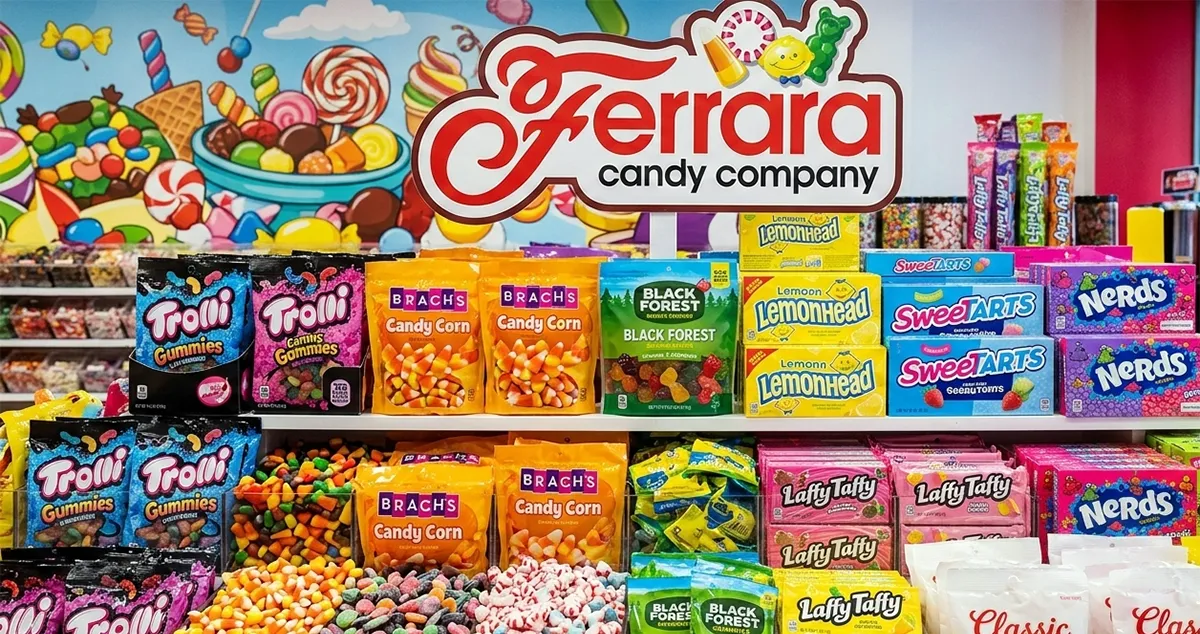

Ferrara Candy Facing Class Action Over Arsenic in Popular Children's Candy
Ferrara Candy Company, the maker of Nerds, SweeTarts, Laffy Taffy, Trolli gummies, and Black Forest gummy bears, is facing a proposed national class action lawsuit accusing the company of selling candy with toxic levels of arsenic. The lawsuit was filed on February 4, 2026 in the U.S. District Court for the Northern District of Illinois (Case No. 1:26-cv-01304) by California resident Christina Anstett on behalf of herself and a nationwide class of consumers.The complaint alleges that independent laboratory tests conducted by Florida's health department found arsenic in 8 of 10 Ferrara candy products tested at concentrations far above safe limits for children. According to the testing, a child could exceed an entire year's worth of safe arsenic intake by eating just one box of Nerds or four pieces of banana-flavored Laffy Taffy.
Ferrara has not issued a public statement about the lawsuit. No recall has been issued by the company or the FDA as of March 2026. The company's trade association, the National Confectioners Association, has disputed the testing methodology and defended candy safety.
Status
Newly Filed
No class certified · no recall · no settlement
Case Filed
February 4, 2026
N.D. Illinois · Case No. 1:26-cv-01304
Products Named
Nerds, Trolli, Laffy Taffy, SweeTarts
8 of 10 Ferrara products failed Florida arsenic testing (methodology disputed)
Claim Form
None Yet
Nothing to file — watch for class notices
What is Ferrara Candy Company?
Ferrara Candy Company is one of the largest candy manufacturers in the United States. The company is headquartered in Chicago, Illinois and produces some of the most recognizable candy brands in the country. Its products include Nerds, SweeTarts, Laffy Taffy, Trolli, Black Forest, Lemonheads, Chuckles, Gobstoppers, Brach's, and Butterfinger, among others. Many of these candies are marketed specifically to children with colorful packaging and cartoon imagery.Free settlement alerts
Get notified when new class actions open to claims
Join thousands of readers who get the latest class action settlements you may qualify for — delivered straight to your inbox.
What Did the Florida Testing Find?
In January 2026, Florida's Healthy Florida First program purchased 46 different candy products from 10 brands at retail stores and tested them for heavy metals using EPA Method 6010D. The testing found arsenic in 28 of the 46 products, including 8 of 10 Ferrara candy products.The highest arsenic concentrations found in Ferrara products, measured in parts per billion (ppb), were as follows: Nerds Gummy Clusters at 500 ppb (one box equals a full year's arsenic allowance for a child), Laffy Taffy banana flavor at 480 ppb (only 4 pieces to reach a child's yearly limit), Nerds strawberry at 450 ppb, Trolli Sour Brite Crawlers at 430 ppb, SweeTarts Original at 400 ppb, SweeTarts Ropes at 390 ppb (approximately 3 ropes for a child's yearly limit), Nerds grape at 380 ppb, and Black Forest Gummy Bears at 370 ppb (approximately 16 pieces for a child's yearly limit).
For context, the EPA's drinking water standard for arsenic is 10 ppb. The Ferrara candy products tested at levels 37 to 50 times higher than what is allowed in drinking water. However, it is important to note that no comparable FDA limit exists for candy and the testing methodology is disputed (see below).
What is Arsenic and Why Is It Dangerous?
Arsenic is a naturally occurring element found in soil, water, and some foods. It exists in two forms: organic arsenic (less harmful) and inorganic arsenic (more toxic and the form linked to health problems). Chronic exposure to inorganic arsenic is classified as a known human carcinogen and has been linked to skin cancer, bladder cancer, lung cancer, and developmental and neurological problems in children.Health organizations including the World Health Organization, the CDC, and the American Academy of Pediatrics stress that there is no established safe level of arsenic exposure for children. The FDA regulates arsenic on a case-by-case basis for specific foods (for example, there is a 10 ppb action level for inorganic arsenic in infant rice cereal) but has not set a specific limit for candy.
The concern for children is heightened because they have smaller body weights, developing organ systems, and tend to consume proportionally more of certain foods relative to their size. A dose of arsenic that might be negligible for an adult could represent a much larger exposure for a young child.
What Does the Lawsuit Allege?
The complaint raises three main legal theories against Ferrara:The first is a claim under the Florida Deceptive and Unfair Trade Practices Act (FDUTPA) on behalf of a Florida-only subclass. The lawsuit alleges Ferrara committed a deceptive act by failing to disclose that its candy products contained arsenic. The complaint argues that Ferrara had exclusive knowledge of its products' ingredients and that reasonable consumers would have paid less or would not have purchased the candy at all if they had been warned about arsenic contamination.
The second theory is fraudulent concealment on behalf of a nationwide class. The lawsuit alleges that Ferrara knew or should have known about arsenic in its products and intentionally hid this information from consumers to continue profiting from sales.
The third theory is unjust enrichment, arguing that Ferrara was unfairly enriched by collecting full retail prices for candy products that contained an undisclosed contaminant.
The complaint seeks damages, restitution, and disgorgement of Ferrara's profits from selling the affected candy products. What the FDUTPA count can actually deliver is narrower than a prayer for relief suggests: the statute gives a private plaintiff actual damages — normally the difference between what the product was worth as sold and what it would have been worth as represented — plus court costs and attorney's fees under Fla. Stat. § 501.2105. FDUTPA provides no statutory damages, no punitive damages, and no treble damages, and it excludes personal injury claims outright.
Is the Testing Methodology Disputed?
Yes, and this is a critical issue in the case. Florida used EPA Method 6010D to test the candy products. This method is a standard laboratory technique designed for testing environmental samples such as soil, sediment, and water. It was not developed specifically for food analysis.The National Confectioners Association publicly criticized the methodology, stating that it does not align with current federal standards or recognized peer-reviewed science. The NCA warned that using hypothetical annual consumption levels in risk calculations can cause unnecessary consumer confusion. The trade group also pointed to the FDA's Total Diet Study, which has found much lower arsenic levels in candy than what Florida reported.
Toxicologists have also weighed in on the dispute. Some experts have noted that applying environmental screening benchmarks to food products likely inflated the apparent risk, because the analytical technique was designed for a different type of sample matrix. Without clear exposure modeling showing how much candy children actually eat, the findings may appear more alarming than warranted.
On the other hand, the Florida health department stands by its testing, and the lawsuit argues that any detectable level of arsenic in candy marketed to children is unacceptable. The case will likely involve significant expert testimony on both sides regarding the proper way to measure and interpret arsenic levels in food products.
Has Ferrara Faced Lawsuits Before?
Yes. Ferrara has been the subject of consumer class action lawsuits in the past, though on different issues. The most notable prior case was a 2018 class action over "slack-fill" packaging, in which consumers alleged that Ferrara candy packages for Black Forest, Trolli, Lemonheads, and Chuckles were intentionally underfilled to mislead buyers into thinking they were getting more candy than they actually received. Ferrara denied the claims but agreed to a $2.5 million settlement and promised to adjust its packaging. That case showed Ferrara's willingness to settle consumer class actions rather than proceed through a full trial.What Happens Next?
The case is in its earliest stages. Ferrara is expected to respond to the complaint by approximately March or April 2026. From there, the typical timeline for a class action lawsuit would involve discovery (exchange of documents and evidence), motions to dismiss or narrow the claims, and a motion for class certification. If a class is certified, notices would be sent to consumers, likely in 2027. Settlement negotiations could occur at any point. If no settlement is reached, a trial could take place in late 2027 or 2028, with potential appeals extending the case into 2029.In the meantime, there is no recall and no government action against Ferrara. The FDA could conduct its own testing, as it has done for other food categories. On February 27, 2026, the FDA launched a Total Diet Study interface tool showing arsenic data for various foods, which reported much lower arsenic levels in candy than Florida's findings.
What Should Consumers Do?
No action is required right now to participate in the lawsuit. If a class is certified, all consumers who purchased the named Ferrara candy products would typically be included automatically. Keep receipts if you have them and watch for class action notices.Parents who are concerned about arsenic exposure may want to limit their children's intake of the specific candy products named in the lawsuit until more information is available. Health experts recommend diversifying snacks, choosing products from brands with transparent testing programs, and monitoring FDA announcements for any official guidance. Consulting a pediatrician is appropriate if you have specific concerns about a child's health, though acute arsenic poisoning from candy consumption is considered extremely unlikely.
Case Information
Caption: Anstett v. Ferrara Candy Company, Case No. 1:26-cv-01304
Court: U.S. District Court, Northern District of Illinois
Filed: February 4, 2026
Plaintiff: Christina Anstett (California)
Defendant: Ferrara Candy Company (Chicago, IL)
Plaintiff's Counsel: Schonbrun Seplow Harris
Claims: Florida Deceptive and Unfair Trade Practices Act; Fraudulent Concealment; Unjust Enrichment
Status: Early stage — no class certified, no recall, no settlement
Sources
• Anstett v. Ferrara Candy Company, Case No. 1:26-cv-01304 (N.D. Ill. Feb. 4, 2026)• Florida Department of Health, Healthy Florida First Contaminant Testing (Jan. 26, 2026)
• National Confectioners Association public statement on candy safety
• FDA Total Diet Study data
• American Academy of Pediatrics guidance on arsenic and children
For more class actions keep scrolling below.