A June 2026 agreement in principle between Pfizer and MDL leadership has shifted the Depo-Provera meningioma litigation toward settlement — but no claim form or payout terms exist yet.
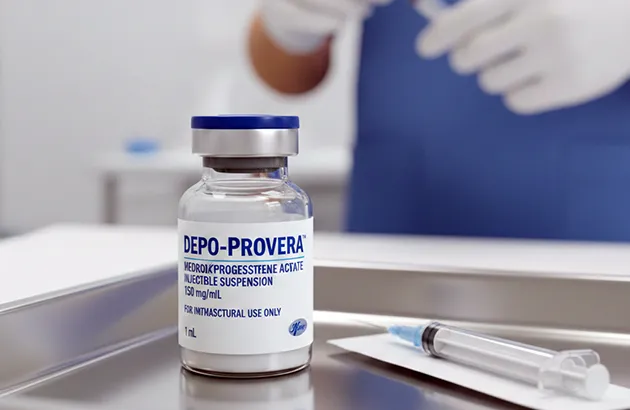

Status: Agreement in Principle Reached · Claims Process Pending
In June 2026, Pfizer and plaintiff leadership announced an agreement in principle to resolve Depo-Provera meningioma claims in MDL 3140. This is a framework toward a settlement — not a final, finalized settlement. No public claim form, payout formula, or claim administrator exists yet. The only step available now is a free attorney case review to assess individual eligibility.
Is there a Depo-Provera settlement? Yes — an agreement in principle was reached in June 2026 between Pfizer and MDL leadership to resolve meningioma claims in MDL 3140. However, the specific terms, payout formulas, and claim forms are still being negotiated, and no official claims program has opened yet.
Depo-Provera Settlement Update: Understanding Your Eligibility
If you or a loved one received Depo-Provera birth control injections and were later diagnosed with a brain tumor such as meningioma, the litigation has reached an important turning point. In June 2026, Pfizer and the MDL plaintiff leadership announced an agreement in principle to resolve claims in the federal Depo-Provera multidistrict litigation (MDL 3140). Many of the affected cases involve women who used Depo-Provera, or generic medroxyprogesterone acetate, for contraception over several years before learning about a possible link to meningioma.One thing to understand up front: an agreement in principle is a framework toward a settlement, not a final, finalized settlement. The specific terms, eligibility criteria, and payout formulas are still being negotiated, and no public settlement claim form exists yet. On August 5, 2026, the court appointed BrownGreer PLC as settlement administrator to help implement the settlement program. Because no official program is open, the practical step right now is to prepare for potential eligibility: complete a free attorney case review to see whether your diagnosis, Depo-Provera use history, and records may fit the criteria, and make sure your medical records are organized so you are ready if and when a claims process opens.
Latest MDL 3140 Settlement Framework Update
The federal Depo-Provera litigation is centralized in the U.S. District Court for the Northern District of Florida as MDL No. 3140, In re: Depo-Provera (Depot Medroxyprogesterone Acetate) Products Liability Litigation, Master Docket 3:25-md-03140, before U.S. District Judge M. Casey Rodgers, with more than 5,500 actions pending.In June 2026, a Pfizer spokesperson stated that the company had reached an agreement in principle with plaintiff leadership in the Depo-Provera MDL that provides an opportunity for MDL plaintiffs to resolve their claims. Pfizer noted that the agreement contains no admission of liability or wrongdoing and does not affect cases pending in state courts. The terms have not been disclosed, and both sides are continuing to negotiate and document the framework. Recent developments in the MDL include:
• Judge Rodgers vacated the deadlines for the first bellwether case, which had been scheduled for trial in December 2026 — a step that signals the court is now focused on facilitating the settlement framework rather than preparing for an immediate test trial.
• The court held a case-management conference on July 27, 2026. It currently schedules the general-causation Rule 702 (Daubert) motions hearing — which will address whether the plaintiffs' expert testimony linking medroxyprogesterone acetate to meningioma is admissible — for September 18, 2026, following the 9:00 a.m. CT case-management conference.
• The court appointed BrownGreer PLC as settlement administrator on August 5, 2026, but no public claim form exists, so a free attorney case review remains the current path to assess individual eligibility while the framework is finalized.
A multidistrict litigation, or MDL, consolidates many similar individual lawsuits in one federal court for pretrial proceedings — evidence rulings, expert challenges, and bellwether trials. It is not a class action settlement, so even with an agreement in principle in place, being part of the affected group does not yet mean you can fill out a claim form and wait for a check — that is why an official program has to be built and approved first. To learn more about how this works, see our explainer on multidistrict litigation (MDL), and for other active cases see our mass tort lawsuits page.
Free settlement alerts
Get notified when new class actions open to claims
Join thousands of readers who get the latest class action settlements you may qualify for — delivered straight to your inbox.
Who May Qualify — and How to Prepare Now
Pre-qualification for a Depo-Provera case generally focuses on three things: a qualifying brain or spinal cord tumor diagnosis (most often meningioma), a history of Depo-Provera or medroxyprogesterone acetate injections for birth control, and Depo-Provera use that began before the diagnosis. While the settlement framework is finalized, the most useful thing you can do is organize your records — imaging and pathology reports, neurosurgery and hospital records, and documentation of your Depo-Provera injection dates — because individual eligibility for any eventual program will depend on that documentation.For the full breakdown of who qualifies, the diagnoses attorneys review, the proof that strengthens a claim, and the step-by-step case-review process, see our companion guide: Do You Qualify for a Depo-Provera Lawsuit? Eligibility, Proof, and How to File.
What Types of Compensation Depo-Provera Claims Seek
Depo-Provera claims seek compensation for a range of losses. Depending on the case, potential damages can include:• Medical expenses: past and future costs of imaging, neurosurgery, hospital stays, radiation, rehabilitation, and follow-up care
• Lost wages and reduced earning capacity: income lost due to time away from work or reduced ability to work after treatment
• Pain and suffering: physical pain, emotional distress, and reduced quality of life
• Cognitive and functional changes: long-term effects on memory, concentration, mobility, or independence
• Wrongful death damages: for families who lost a loved one to a tumor allegedly linked to Depo-Provera
Because these are individual injury claims handled through the MDL rather than a single class action, any recovery would consider each person's specific diagnosis and losses. The agreement in principle does not yet include public payout formulas, and there is no confirmed settlement amount.
Deadlines and Statutes of Limitations
There is no single nationwide deadline for Depo-Provera brain tumor lawsuits. Each state has its own statutes of limitations and, in some cases, statutes of repose, which may limit how long you have to file a claim after a diagnosis, after major treatment, or after learning that Depo-Provera might be linked to your condition. The agreement in principle does not change these individual deadlines, and joining any eventual settlement program will still depend on having a timely, eligible claim. A lawyer can review your medical and residence history and explain which deadlines apply and whether any exceptions or tolling rules might extend the window.Submitting a case review form does not file a lawsuit or stop any legal deadline. If time may be an issue, contact a qualified attorney directly as soon as possible.
Has Any Depo-Provera Settlement Been Reached?
An agreement in principle was reached in June 2026 between Pfizer and the MDL plaintiff leadership, but there is still no approved global settlement and no MDL-wide payout program that a claimant can sign up for. The agreement is a framework: the eligibility criteria, payout formulas, and claim process are still being negotiated and must ultimately be documented and presented to the court. The court appointed BrownGreer PLC as settlement administrator on August 5, 2026, but no public claim form or payout schedule has been released. Any specific Depo-Provera settlement amounts or per-person payout figures circulating online are projections, not confirmed terms.Important: Because no official program is open yet, be cautious of unsolicited calls, texts, emails, or websites that claim to register you for a Depo-Provera settlement or ask for payment or sensitive information. There is no public claim form, so any "settlement claim portal" offered right now should be treated with skepticism. Legitimate updates will come through the court (MDL 3140) or a law firm you have personally chosen — for reliable updates, bookmark this page, which we keep current as the settlement framework develops.
Depo-Provera, Medroxyprogesterone, and Meningioma Risk
Depo-Provera is a hormonal contraceptive that contains medroxyprogesterone acetate, a synthetic progestin. It is typically given as an injection every three months to prevent pregnancy by suppressing ovulation, thickening cervical mucus, and affecting the uterine lining.The lawsuits allege that long-term use of medroxyprogesterone acetate increases the risk of meningioma and that patients were not adequately warned. The litigation followed a 2024 study published in The BMJ that reported an association between prolonged use of certain progestogens, including medroxyprogesterone acetate, and an increased risk of intracranial meningioma. Meningiomas arise from the meninges, the protective membranes covering the brain and spinal cord. While many meningiomas are considered benign, they can still cause serious complications by pressing on nearby brain tissue or nerves.
People diagnosed with meningioma may experience headaches, vision problems, seizures, balance issues, or changes in memory, depending on tumor size and location. Treatment often involves surgery, radiation therapy, or careful monitoring with regular imaging. These remain allegations and contested scientific questions, and the MDL court has continued to weigh which expert opinions are admissible.
Health and Safety Note
This page provides legal information, not medical advice. For health questions about Depo-Provera, meningioma, or other tumor risks, speak directly with your doctor, neurologist, or neurosurgeon. If you are currently using hormonal contraception, work with your healthcare provider before making any changes to your medication or birth control plan.Frequently Asked Questions About the Depo-Provera Settlement
Is there a public settlement claim form available yet?
No. As of August 2026 there is no public settlement claim form for the Depo-Provera meningioma litigation. Pfizer and plaintiff leadership announced an agreement in principle to resolve claims in MDL 3140, and the court appointed BrownGreer PLC as settlement administrator on August 5, 2026. The terms, payout formulas, and public claim process have not been released. Until an official program opens, the only step available is a free attorney case review to assess individual eligibility.What does "Agreement in Principle" mean for my case?
An agreement in principle is a framework to resolve the MDL claims — not a final, finalized settlement. The two sides have agreed to work toward a resolution, but the specific terms, eligibility criteria, and payout amounts are still being negotiated and must be documented and presented to the court. Practically, it means you should make sure your medical records — imaging, pathology, neurosurgery records, and Depo-Provera injection history — are organized and ready, because individual eligibility for any eventual program will depend on that documentation.How do I sign up for updates on the settlement process?
No public settlement-alert list has been announced. The court appointed BrownGreer PLC to administer the settlement program, but no public claim form is available. To stay current, bookmark this page, which is updated as the MDL 3140 settlement framework develops, and complete a free attorney case review so the reviewing firm can confirm your eligibility and notify you if an official claim process opens. Be cautious of unsolicited calls, texts, or websites claiming to register you for a Depo-Provera settlement — legitimate updates will come through the court, BrownGreer, or a firm you have chosen.Is the Depo-Provera lawsuit still active?
Yes. The federal multidistrict litigation, MDL No. 3140, In re: Depo-Provera (Depot Medroxyprogesterone Acetate) Products Liability Litigation, is active in the U.S. District Court for the Northern District of Florida before Judge M. Casey Rodgers, with more than 5,500 actions pending. The court held a case-management conference on July 27, 2026, and currently schedules the general-causation Rule 702 motions hearing for September 18, 2026, following that morning's case-management conference.How much money can I get from a Depo-Provera settlement?
There is no fixed payout and no confirmed settlement amount. Because the agreement in principle does not yet include public payout formulas, any specific per-person figures circulating online are projections, not confirmed terms. Any eventual compensation would depend on tumor type and severity, surgery and treatment costs, long-term health effects, income loss, and the strength of the individual case.Sources
• U.S. District Court, Northern District of Florida — MDL 3140 litigation page• N.D. Fla. — MDL 3140 orders by date
• JPML — Pending MDL dockets by district, June 1, 2026 (PDF)
• The BMJ — Use of progestogens and intracranial meningioma risk (2024 study)
• National Cancer Institute — meningioma treatment information
• U.S. Food and Drug Administration — drug safety information
See also our related pages: Do You Qualify for a Depo-Provera Lawsuit? · Mass Tort Lawsuits · What Is an MDL? · Class Action Investigations
Important Disclaimer
This page distinguishes between two different things. An official settlement program — a court-approved claims process with a claim form, a claim administrator, and defined payout terms — does not yet exist for Depo-Provera; only an agreement in principle has been announced, and its terms are still being negotiated. An attorney case review is the separate, currently available step that helps establish your individual eligibility; it is not the same as filing a claim in a settlement program.Important: Legal deadlines can be time sensitive and vary by state, diagnosis date, exposure history, and other facts. Submitting information through this website does not file a lawsuit, preserve your rights, create an attorney-client relationship, or guarantee that any attorney will contact or represent you. If you do not receive a response, or if you are unsure about a filing deadline, you should promptly contact a qualified attorney of your choice to discuss your specific situation.