GSK’s $2.2 billion settlement is paying out, but Boehringer, Pfizer, and Sanofi cases continue — and intake firms are still reviewing new Zantac cancer cases in 2026.
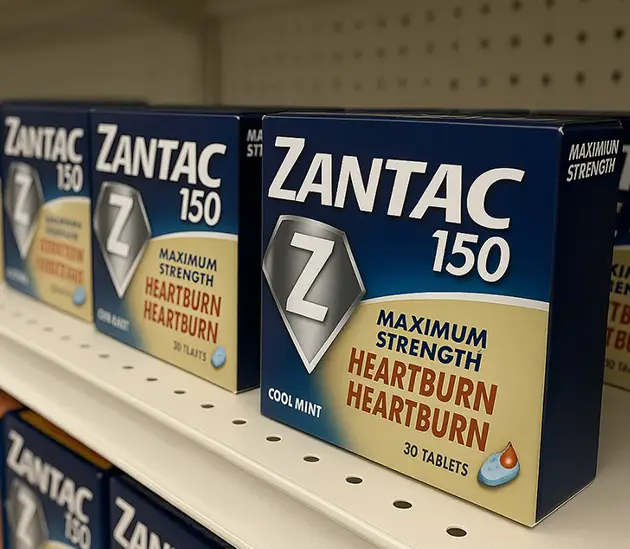

Zantac Lawsuit Status - May 2026
Zantac, once one of the most widely sold heartburn drugs in the world, remains the subject of major U.S. litigation in May 2026. The headline development is GSK's $2.2 billion settlement announced in October 2024, which resolved roughly 93% of the company's pending U.S. state-court Zantac cancer claims covering approximately 80,000 plaintiffs. Disbursement of those funds has continued through 2025 and into 2026 under the participating plaintiff firms' allocation plans.GSK's settlement did not end the broader litigation. Cases against Boehringer Ingelheim, Pfizer, and Sanofi - the other companies that marketed branded or generic ranitidine products - remain in active state-court litigation, alongside the federal multidistrict litigation framework. Intake firms are still accepting new cases from people diagnosed with cancers that have been alleged to be linked to long-term Zantac (ranitidine) use, though statutes of limitations vary by state.
If you or a loved one took Zantac or generic ranitidine long-term and were later diagnosed with a cancer that intake firms are reviewing for this litigation, a free case evaluation through an intake firm is the most efficient way to confirm whether your circumstances fit any of the ongoing case categories.
Zantac Lawsuit Timeline: How the Case Has Moved
A quick read of the milestones that shaped the Zantac (ranitidine) cancer litigation from Valisure's 2019 lab findings to the $2.2 billion GSK settlement and the cases that remain in 2026.-
Sept 9, 2019Valisure files FDA citizen petition. Connecticut testing lab Valisure reports detecting extremely high levels of N-nitrosodimethylamine (NDMA), a probable human carcinogen, in ranitidine (Zantac) tablets. The petition asks the FDA to recall the drug.
-
Sept – Nov 2019Voluntary retail pulls begin. Major retailers (CVS, Walgreens, Walmart, Rite Aid) stop selling Zantac and store-brand ranitidine while the FDA investigates. Initial product-liability lawsuits are filed.
-
Feb 6, 2020MDL 2924 created. The U.S. Judicial Panel on Multidistrict Litigation consolidates federal Zantac product-liability cases as In re: Zantac (Ranitidine) Products Liability Litigation, MDL No. 2924, in the U.S. District Court for the Southern District of Florida before Judge Robin L. Rosenberg.
-
April 1, 2020FDA market-withdrawal request. The FDA requests removal of all prescription and over-the-counter ranitidine products from the U.S. market after determining NDMA levels in some products increased over time, particularly at higher temperatures during storage.
-
Dec 6, 2022Federal MDL Daubert ruling. Judge Rosenberg excludes plaintiffs' general-causation experts under Daubert and grants summary judgment on the five "designated cancers" then before the MDL (bladder, esophageal, gastric, liver, pancreatic). The federal MDL is effectively narrowed; cases shift to state courts.
-
June 2024Delaware evidentiary ruling goes the other way. Delaware Superior Court Judge Vivian L. Medinilla denies the defendants' motions to exclude plaintiffs' general-causation experts under Delaware's Daubert-equivalent standard, allowing the NDMA causation theory to reach Delaware juries.
-
Oct 9, 2024GSK announces $2.2 billion settlement. GSK confirms agreements to resolve approximately 93% of its U.S. state-court Zantac cases — roughly 80,000 plaintiffs — for total cash payments of about $2.2 billion. GSK does not admit liability. Disbursement begins through participating plaintiff firms.
-
Late 2024Pfizer reaches confidential resolutions. Reuters and other outlets report that Pfizer settled roughly 10,000 Zantac cases for an undisclosed amount. Sanofi continues to resolve U.S. ranitidine cases through confidential individual settlements rather than a single fund.
-
Early 2025Securities class action filed against GSK. Institutional investors file a U.S. federal securities class action alleging GSK misled the market on ranitidine's safety profile and litigation risk. GSK has rejected the allegations. The securities case is on a separate track from the consumer cancer cases.
-
2025Delaware Supreme Court hears expert appeal. The Delaware Supreme Court hears argument on the defendants' interlocutory appeal of Judge Medinilla's June 2024 evidentiary ruling. The eventual decision will materially affect how Delaware-coordinated Zantac cases proceed.
-
May 2026Where things stand today. GSK's $2.2B settlement continues to disburse through plaintiff firms. Boehringer Ingelheim, Pfizer, and Sanofi state-court cases continue, with a mix of verdicts and confidential resolutions. Intake firms are still accepting new Zantac cancer cases subject to state-specific statutes of limitations.
Free settlement alerts
Get notified when new class actions open to claims
Join thousands of readers who get the latest class action settlements you may qualify for — delivered straight to your inbox.
How the Zantac Cancer Litigation Got Here
The Zantac litigation traces back to September 2019, when the Connecticut-based independent pharmacy testing lab Valisure filed a citizen petition with the U.S. Food and Drug Administration reporting that it had detected extremely high levels of N-nitrosodimethylamine (NDMA), a probable human carcinogen, in ranitidine tablets. Valisure's testing reported that some Zantac samples generated NDMA at levels far above the FDA's acceptable daily intake limit of 96 nanograms.The FDA initially asked manufacturers to voluntarily recall some ranitidine products and ultimately requested withdrawal of all prescription and over-the-counter ranitidine from the U.S. market in April 2020. Plaintiffs began filing cancer claims shortly thereafter, alleging that ranitidine - the active ingredient in Zantac - degraded into NDMA during storage and shipping (and, by some plaintiff experts, inside the body), exposing long-term users to elevated cancer risk.
In February 2020 the U.S. Judicial Panel on Multidistrict Litigation consolidated federal Zantac product-liability cases as In re: Zantac (Ranitidine) Products Liability Litigation, MDL No. 2924, in the U.S. District Court for the Southern District of Florida. That federal MDL was substantially curtailed in late 2022 when Judge Robin Rosenberg excluded plaintiffs' general-causation experts under Daubert and granted summary judgment on the five "designated cancers" then before the court (bladder, esophageal, gastric, liver, and pancreatic). That ruling pushed the action forward primarily in state-court forums - especially Delaware, California, and Illinois.
GSK's $2.2 Billion Settlement (October 2024)
On October 9, 2024, GSK announced it had reached agreements to resolve approximately 93% of its then-pending U.S. state-court Zantac product-liability cases, with total cash payments to plaintiffs of roughly $2.2 billion. The deal covered an estimated 80,000 plaintiffs across the participating plaintiff firms. GSK characterized the settlements as resolutions of "ten product liability matters" and said the company continued to deny any liability for the underlying claims.The agreements use a tiered framework in which individual payouts depend on factors that include the cancer type, severity, duration of Zantac use, and documentation. GSK said in its October 2024 statement that the settlements were being recommended for acceptance by all of the participating plaintiff firms. Disbursement to qualifying plaintiffs has been administered by the plaintiff firms and the settlement administrator each firm uses, not through a court-run consumer claim form. There is no general public claim form for the $2.2 billion fund - eligibility runs through the law firm representing each plaintiff.
Separately, GSK agreed in 2023 to pay $70 million to resolve a federal whistleblower (qui tam) action filed by Valisure and a related entity over Medicaid-rebate allegations tied to Zantac. That figure is distinct from the $2.2 billion paid to individual plaintiffs.
Boehringer, Pfizer, and Sanofi - The Cases That Remain
GSK's settlement covered GSK's claims. The other historical Zantac marketers each face their own pools of state-court cases.• Boehringer Ingelheim acquired the U.S. rights to over-the-counter Zantac in 2006 and is named in a large share of the remaining state-court actions. Several state-court trials involving Boehringer have gone to verdict, with mixed results. Negotiated resolutions have been reported in some of those cases; others continue to be tried.
• Pfizer sold an over-the-counter Zantac product line in the late 1990s. Reuters and other outlets reported in 2024 that Pfizer had reached agreements to resolve about 10,000 cases for an undisclosed sum, although Pfizer has not publicly confirmed a single global figure.
• Sanofi marketed over-the-counter Zantac for several years before the FDA withdrawal. Sanofi has reported in its public filings that it has been working to resolve U.S. ranitidine cases, with the bulk of resolutions structured as confidential individual settlements rather than a single fund.
For consumers, the practical effect of all this is that there is no single "Zantac class action" claim form to fill out. Individual lawsuits are still the vehicle. Whether an individual claim is viable depends on the cancer diagnosis, the timing of Zantac use, the state of residence, and how that state's courts have treated Zantac general-causation evidence.
Delaware: The Pivotal State Forum
Delaware has become the most important state forum for the remaining Zantac cases. In June 2024, Delaware Superior Court Judge Vivian L. Medinilla denied the defendants' motions to exclude plaintiffs' general-causation experts under Delaware's Daubert-equivalent standard, allowing plaintiffs to present their NDMA theory of cancer causation to juries. That ruling tracked the opposite direction from the 2022 federal MDL ruling and effectively kept the Delaware cases alive.Defendants sought interlocutory review in the Delaware Supreme Court, which heard argument on the issue in 2025. The Delaware Supreme Court's eventual ruling on expert admissibility is one of the most consequential pending issues in the litigation because the volume of Delaware-coordinated cases is large and other state courts often look to Delaware's evidentiary standards in mass-tort litigation. OCA will update this page when the Delaware Supreme Court issues a final opinion on the expert-admissibility appeal.
Shareholder Securities Class Action Against GSK
On a separate legal track, institutional investors filed a securities class action against GSK in U.S. federal court in early 2025, alleging that the company misled the market about ranitidine's safety profile and the litigation risk it posed. The complaint references internal GSK research on NDMA formation in ranitidine going back to the 1980s. GSK has rejected the allegations. The securities case is separate from the consumer cancer cases and any recovery from the securities case would go to GSK shareholders during the class period, not to individual Zantac patients.The Science: Why Causation Is Still Contested
The scientific debate over Zantac and cancer turns on two questions: (1) how much NDMA was actually present in Zantac tablets in real-world conditions, and (2) whether long-term exposure at those levels meaningfully raised the risk of specific cancers.On the first question, Valisure's 2019 testing reported very high NDMA levels in some Zantac samples, especially when tablets were heated. Defendants have argued that Valisure's high-temperature testing methods do not reflect normal storage and do not establish what a patient actually ingested. The FDA itself, in a 2021 update, said it had detected NDMA in some ranitidine samples but at levels generally lower than Valisure's published findings, while still concluding that NDMA increased over time and with heat, leading to the agency's market-withdrawal request.
On the second question, the most-cited large epidemiologic studies of ranitidine users have not consistently shown elevated rates of the cancers most often alleged in this litigation. Plaintiffs counter that those studies were not designed to capture the long-duration, high-dose exposures most relevant to their claims, and that NDMA's status as a probable human carcinogen is well established independently. Different courts have weighted this evidence differently, which is why the same drug has produced both broad federal-MDL summary-judgment rulings (in favor of defendants) and trial-ready state-court rulings allowing plaintiff experts to testify.
Zantac Claim — Full Qualification Criteria
The following are the criteria intake firms working on Zantac (ranitidine) cases generally review in 2026. They are presented here for clarity so readers can understand whether their situation broadly fits the active case profile. Each law firm makes its own determination based on the specific facts of a case, and applicable law in each state controls.Which Zantac & Ranitidine Products Qualify?
The active intake covers brand-name Zantac sold over-the-counter with ranitidine as the active ingredient. Generic ranitidine, prescription ranitidine, and the post-recall reformulated Zantac 360 (which uses a different active ingredient, famotidine) are generally outside current case-acceptance criteria. Both OTC strengths of brand Zantac (Zantac 75 and Zantac 150) sit inside the qualifying product scope.
| Product | Active Ingredient | OTC or Rx | Qualifies? | Why |
|---|---|---|---|---|
| Zantac 75 | Ranitidine 75 mg | OTC | Yes | Brand-name OTC Zantac with ranitidine — the product class at the center of the litigation. |
| Zantac 150 | Ranitidine 150 mg | OTC | Yes | Brand-name OTC Zantac with ranitidine, maximum-strength OTC version. Same product class as Zantac 75. |
| Zantac (prescription) | Ranitidine 150 mg or 300 mg | Rx | No | Prescription-only ranitidine is generally outside current intake-firm criteria. |
| Zantac 360 | Famotidine | OTC | No | Reformulated post-recall product. Famotidine is a different active ingredient and has not been alleged to produce NDMA the way ranitidine was. |
| Generic ranitidine | Ranitidine | OTC or Rx | No | Store-brand and generic ranitidine (e.g. Wal-Zan, Equate ranitidine, CVS ranitidine, Walgreens ranitidine) are not part of the active brand-name Zantac intake. |
Statute of Limitations by Accepted State
Periods below are the typical statute-of-limitations windows applied by intake firms, measured from the cancer diagnosis date. Most states recognize a discovery rule that can affect when the clock starts. Georgia is measured differently — see note. Statutes of limitations can be shortened or extended by individual facts; a firm has to review a particular case to confirm timeliness.
Sources for the criteria above: intake-firm screening guidelines as of May 2026. Criteria are subject to change without notice as cases settle, statutes of limitations expire, and individual firms adjust acceptance standards. Nothing here is a promise of representation, of acceptance, or of any compensation.
FAQ: Zantac Cancer Lawsuit and Settlement, May 2026
Does Zantac 150 qualify? What about Zantac 75 or Zantac 360?
Brand-name Zantac 75 and Zantac 150 — both over-the-counter versions with ranitidine as the active ingredient — sit inside the active intake-firm criteria. They are the same brand-name OTC Zantac product class that has been at the center of the litigation; the number is the milligram strength of ranitidine per tablet (75 mg and 150 mg, respectively). Zantac 360 is a different product: it was reformulated after the 2020 recall and uses famotidine, not ranitidine. Famotidine has not been alleged to produce NDMA, so Zantac 360 is generally outside the current intake. See the full product comparison table above for prescription Zantac and generic ranitidine.
Does generic ranitidine (Wal-Zan, Equate, CVS, Walgreens, etc.) qualify?
Generic and store-brand ranitidine products are generally outside the active brand-name Zantac intake criteria as of May 2026. The intake firms working on these cases in 2026 are focused on documented use of brand-name OTC Zantac.
Is there a Zantac class action claim form I can fill out?
No. The Zantac cases are individual product-liability lawsuits, not a class action with a single open consumer claim form. The $2.2 billion GSK resolution is being administered through the plaintiff firms that represent the approximately 80,000 covered plaintiffs - not through a public claim portal. People who think they may qualify go through a law firm or intake firm.
Is it too late to file a Zantac claim in 2026?
Not necessarily. Whether a claim is timely depends on the state, the cancer type, when you stopped using Zantac, and when you were diagnosed. Some states apply a discovery-rule extension that ties the limitations period to when the injury was, or reasonably should have been, discovered. An intake firm can assess timing at no cost.
Was Zantac recalled?
Yes. The FDA requested manufacturers withdraw all prescription and OTC ranitidine products (the active ingredient in Zantac) from the U.S. market in April 2020 after determining that NDMA levels in some ranitidine products increased over time, including at higher temperatures during storage and shipping. Reformulated "Zantac 360" (famotidine) is a different active ingredient and is not the subject of the cancer lawsuits.
How much has GSK paid?
GSK's October 2024 settlements totaled approximately $2.2 billion to resolve roughly 93% of its U.S. state-court Zantac cases. Per-plaintiff payouts vary and have not been publicly broken out by GSK - per-plaintiff amounts are confidential and are administered by participating plaintiff firms.
What about the other manufacturers (Boehringer, Pfizer, Sanofi)?
Cases against Boehringer Ingelheim, Pfizer, and Sanofi remain in active state-court litigation, with a mix of trial verdicts and confidential individual settlements reported through 2025. None of those companies has announced a single global resolution comparable to GSK's $2.2 billion deal.
I have GSK Zantac shares. Does the securities class action affect me?
The securities class action against GSK is a separate case from the consumer
cancer lawsuits. It is brought on behalf of GSK shareholders who allegedly
purchased securities during the class period, not on behalf of cancer
patients. Any recovery in the securities case (if approved) would be
distributed to shareholders, not to Zantac patients. The securities case is
being defended by GSK.
About OCA News Coverage
This article is general news reporting on the Zantac (ranitidine) cancer litigation, not legal or medical advice. OpenClassActions.com is a consumer news site and is not a law firm or a settlement administrator. We do not decide claims, file lawsuits, or guarantee outcomes. Whether any individual qualifies for the active Zantac cases depends on facts an intake firm or law firm has to review on a case-by-case basis. Some links on this page are sponsored.Sources
• GSK plc, "GSK announces agreements to resolve approximately 93% of all product liability cases pending in U.S. state courts related to Zantac" (October 9, 2024)• Valisure LLC, FDA Citizen Petition on Ranitidine (September 9, 2019)
• U.S. FDA, "FDA Requests Removal of All Ranitidine Products (Zantac) from the Market" (April 1, 2020)
• In re: Zantac (Ranitidine) Products Liability Litigation, MDL No. 2924, S.D. Fla., Hon. Robin L. Rosenberg presiding (Daubert and summary judgment order, December 2022)
• Delaware Superior Court, evidence-admissibility ruling on Zantac general-causation experts (June 2024, Hon. Vivian L. Medinilla)
• U.S. Securities and Exchange Commission filings by GSK plc