If a Bard PowerPort implanted port fractured, migrated, or required surgical removal, you may qualify to file an injury claim in MDL 3081.

Allegations Only · No Liability Finding Yet
This article describes claims in active litigation. The statements below are unproven allegations. C.R. Bard and Becton, Dickinson and Company have not been found liable, and the MDL has not produced a global settlement. This page is informational and is not legal or medical advice.
What Is the Bard PowerPort Lawsuit About?
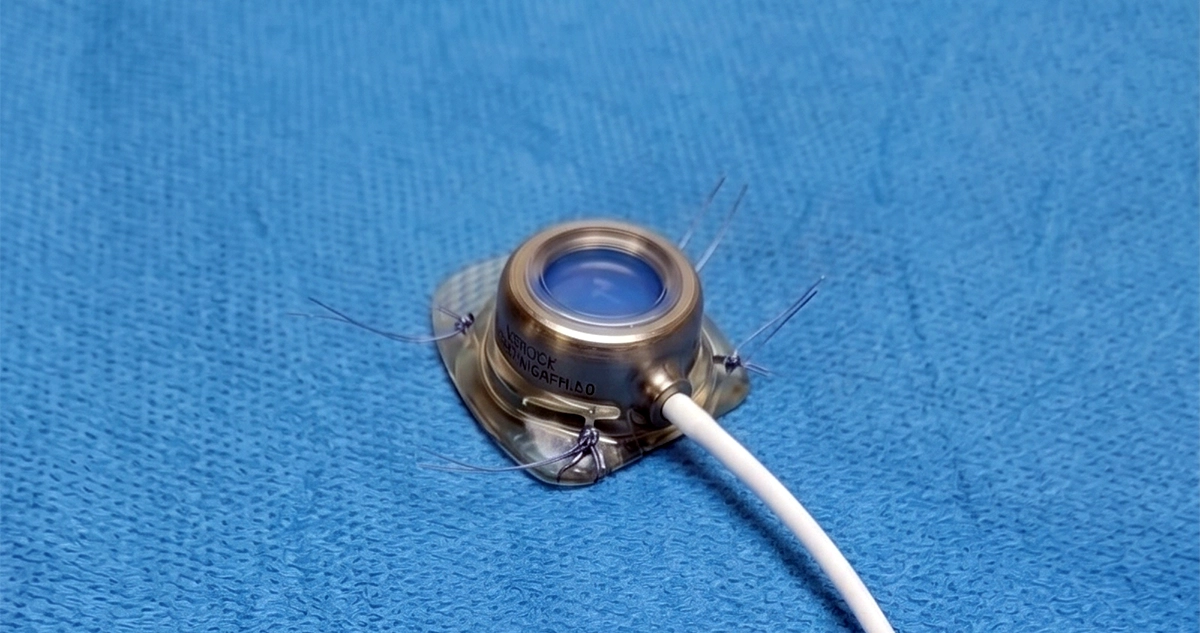
The Bard PowerPort is a family of implantable venous-access devices manufactured by C.R. Bard, Inc. and its parent company Becton, Dickinson and Company (BD). An implanted port, sometimes called a “port-a-cath,” is a small reservoir placed surgically under the skin of the chest and connected to a catheter that is threaded into a central vein near the heart. Ports provide long-term intravenous access and are used primarily for chemotherapy, long-course antibiotics, nutritional support, and other treatments that require repeated infusions.The central allegation in the Bard PowerPort lawsuits is that the catheter portion of the device — made from a barium-sulfate-impregnated polyurethane called Chronoflex — degrades, fractures, and migrates inside the body at rates higher than a reasonably safe medical device should. Plaintiffs allege that the Chronoflex material develops micro-cracks and surface defects under the mechanical stress of implantation and normal physiologic use, and that fragments of the catheter can break off and travel through the bloodstream to the heart, lungs, or other organs. Plaintiffs further allege that Bard knew or should have known about these risks and failed to adequately warn physicians and patients.
The personal-injury lawsuits have been consolidated for pretrial purposes in a federal multidistrict litigation (MDL 3081), In re: Bard Implanted Port Catheter Products Liability Litigation, pending in the United States District Court for the District of Arizona before Judge David G. Campbell. The MDL was created by the Judicial Panel on Multidistrict Litigation in August 2023 and continues to accept new cases as they are filed and transferred.
Which Bard PowerPort Devices Are Involved?
The litigation covers the full PowerPort implantable-port product family. Commonly named models include:• Bard PowerPort (original)
• Bard PowerPort ClearVUE
• Bard PowerPort MRI
• Bard PowerPort ClearVUE MRI
• Bard PowerPort Duo MRI
• Bard PowerPort isp MRI
If you are not sure which Bard port you received, your surgical operative report, the sticker card given to you at the time of implant, or your hospital’s medical-device records will identify the exact model and lot number.
Free settlement alerts
Get notified when new class actions open to claims
Join thousands of readers who get the latest class action settlements you may qualify for — delivered straight to your inbox.
What Injuries Are Alleged?
The following complications have been reported by Bard PowerPort patients and are the injuries most commonly pleaded in MDL 3081:• Catheter fracture — the Chronoflex catheter breaking into one or more pieces inside the body.
• Catheter migration — fragments of the catheter or the entire catheter traveling away from the implanted position, often into the right atrium, right ventricle, or pulmonary arteries.
• Cardiac arrhythmia and cardiac perforation caused by fragments lodging in or puncturing heart tissue.
• Pulmonary embolism caused by catheter fragments traveling to the lungs.
• Deep-vein thrombosis and blood clots related to the damaged device.
• Severe infection, including bacteremia and sepsis, associated with device failure.
• Surgical revision or open-chest removal required to retrieve migrated catheter fragments.
• Wrongful death — families who lost a loved one following a Bard PowerPort complication may qualify to file a claim on the decedent’s behalf.
Do I Qualify for the Bard PowerPort Lawsuit?
You may qualify for the Bard PowerPort lawsuit (and a free case review) if you or a loved one was implanted with a Bard PowerPort family device — sometimes called a Bard port-a-cath — and later experienced a catheter-related complication that required medical attention. The strongest claims typically involve:• Device identification — operative report, implant sticker, or medical-device record confirming the specific Bard PowerPort model and lot.
• Imaging or explant records — chest X-ray, CT, echocardiogram, or interventional-radiology report documenting fracture or migration; operative report from the revision/explant procedure.
• Diagnosis of an alleged injury — hospital records for infection, clot, embolism, arrhythmia, or cardiac event linked to the device.
• Timeline — approximate dates of original implantation, the complication, and any subsequent removal or revision procedures.
Not every patient who had a PowerPort will qualify — the litigation focuses on patients with a documented device failure and a related injury. An intake attorney can tell you quickly whether your facts fit the criteria.
Bard PowerPort Litigation Timeline
How the Bard PowerPort litigation has progressed, with the key procedural milestones intake firms use to evaluate claims today.-
Aug 2023MDL 3081 created. The U.S. Judicial Panel on Multidistrict Litigation consolidates Bard PowerPort cases as In re: Bard Implanted Port Catheter Products Liability Litigation in the U.S. District Court for the District of Arizona before Judge David G. Campbell.
-
2024 – 2025Coordinated discovery and bellwether selection. The MDL moves through centralized fact discovery, general-causation expert work, and Daubert briefing, and the court selects a slate of six bellwether cases — a mix of infection, thrombosis (blood-clot), and catheter-fracture claims — to be tried first.
-
May 2026First bellwether trial — partial defense verdict. In the first bellwether (an infection case), the jury found Bard and Becton Dickinson not liable on the failure-to-warn and consumer-fraud claims and deadlocked without reaching a verdict on the design-defect claim. The plaintiff has since moved for a new trial. A bellwether result is not binding on other cases, but both sides use it to gauge how juries may view the evidence.
-
Aug 18, 2026Second bellwether trial — first fracture case. A catheter-fracture case is scheduled to go to trial, the first bellwether to test the allegation that the catheter is prone to fracturing inside the body.
-
Late 2026 – 2027Additional bellwether trials set. Further bellwether trials are scheduled to begin on Oct. 13 and Dec. 1, 2026, and Feb. 2, 2027, working through the remaining representative injury types.
-
July 2026MDL keeps growing. Roughly 3,560 cases are pending in the District of Arizona per the JPML, with new cases still being filed and transferred. No global settlement has been reached.
Status of MDL 3081
MDL 3081, In re: Bard Implanted Port Catheter Products Liability Litigation, is the federal multidistrict litigation that consolidates Bard PowerPort personal-injury cases for coordinated pretrial proceedings. It is pending in the U.S. District Court for the District of Arizona, in Phoenix, before Judge David G. Campbell. The MDL handles discovery, expert challenges, and bellwether trial selection centrally; individual plaintiff cases are then either tried as bellwethers, resolved through a global settlement, or remanded to their home federal districts for trial.As of the Judicial Panel on Multidistrict Litigation’s July 2026 report, roughly 3,560 cases are pending in the MDL, and it continues to accept new cases as they are filed in or transferred to the District of Arizona. The litigation is now in its bellwether phase. The first bellwether trial — an infection case — ended in May 2026 with a partial defense verdict: the jury found Bard and Becton Dickinson not liable on the failure-to-warn and consumer-fraud claims and could not reach a verdict on the design-defect claim, and the plaintiff has moved for a new trial. The second bellwether, scheduled to begin August 18, 2026, is the first to put a catheter-fracture claim in front of a jury, with additional trials set for October 13 and December 1, 2026, and February 2, 2027. Bellwether outcomes do not bind the other cases, but they are closely watched because they shape how both sides value the remaining claims and whether the parties move toward a global resolution. No global settlement has been reached.
How Much Is the Bard PowerPort Lawsuit Worth Per Person?
There is no fixed Bard PowerPort settlement amount at this stage — claims are evaluated individually and the litigation has not yet produced a global settlement. If a claim succeeds, compensation may include medical bills (past and future), lost wages, pain and suffering, loss of consortium, and, in wrongful-death claims, funeral expenses and loss of financial support. Punitive damages may also be available where a manufacturer’s conduct is found to be especially egregious. Individual claim values per person depend on the severity of the injury, the strength of device and medical documentation, and whether the case resolves through a bellwether trial, a global settlement, or an individual trial.How to Join the Bard PowerPort Lawsuit (MDL 3081)
1. Pre-qualify online. Take a short, free intake questionnaire to see if your facts match the MDL 3081 criteria.Pre-qualify for a free Bard PowerPort evaluation.
2. Free consultation with an attorney. If you pre-qualify, you’ll be matched with an attorney who handles medical-device injury cases and is familiar with MDL 3081.
3. Preserve evidence. Request a complete copy of your medical records, including the operative report from the original implant, any explant procedure, and all imaging. If you still have the device sticker card, keep it.
4. Case filing. If your claim proceeds, your attorney will file your case directly into MDL 3081 or file in a federal district court where the case will be transferred to the MDL. Individual plaintiffs retain their own attorneys even when cases are consolidated.
Is There a Deadline to File?
Yes. Statutes of limitations apply and vary by state. Time is limited to file a claim, and some states have shorter filing windows than others. Once the deadline passes, you may lose your right to seek compensation permanently. If you believe a Bard PowerPort device caused an injury, complete the free evaluation as soon as possible to determine whether your case is still within the filing window.Free Case Review: See If You Qualify
Frequently Asked Questions
Do I qualify for the Bard PowerPort lawsuit?
You may qualify if you or a loved one was implanted with a Bard PowerPort family device and later experienced a catheter-related complication — such as fracture, migration, infection, blood clots, or a cardiac or pulmonary injury — that required medical attention. The strongest claims have medical records documenting the device and the resulting injury. A free case review can confirm whether your facts fit the MDL 3081 criteria.
How much is the Bard PowerPort lawsuit settlement worth per person?
There is no fixed Bard PowerPort settlement amount at this stage — the litigation has not yet produced a global settlement, and claims are evaluated individually. Potential compensation depends on the severity of the injury, the strength of the device and medical documentation, and whether the case resolves through a bellwether trial, a global settlement, or an individual trial.
Which Bard PowerPort devices are involved?
The litigation covers the full PowerPort implantable-port family, including the original Bard PowerPort, ClearVUE, MRI, ClearVUE MRI, Duo MRI, and isp MRI models. Your surgical operative report, the implant sticker card, or your hospital's medical-device records will identify the exact model and lot number.
What is MDL 3081?
MDL 3081, In re: Bard Implanted Port Catheter Products Liability Litigation, is the federal multidistrict litigation that consolidates Bard PowerPort personal-injury cases for coordinated pretrial proceedings. It is pending in the U.S. District Court for the District of Arizona before Judge David G. Campbell. As of the JPML's July 2026 report, roughly 3,560 cases are pending and the MDL continues to accept new cases. It is in its bellwether phase: the first bellwether trial ended in May 2026 with a partial defense verdict, and the next trial — the first fracture case — is scheduled for August 18, 2026, with more trials set through early 2027.
Is there a deadline to file a Bard PowerPort claim?
Yes. Statutes of limitations apply and vary by state. Time is limited to file a claim, so you should complete a free case evaluation as soon as possible to determine whether your case is still within the filing window.