Published
February 12, 2026
Updated
June 29, 2026
Over 100 million Android users may be paid automatically over how Google Play Services used their cellular data in the background — here is how the case unfolded and what happens next.
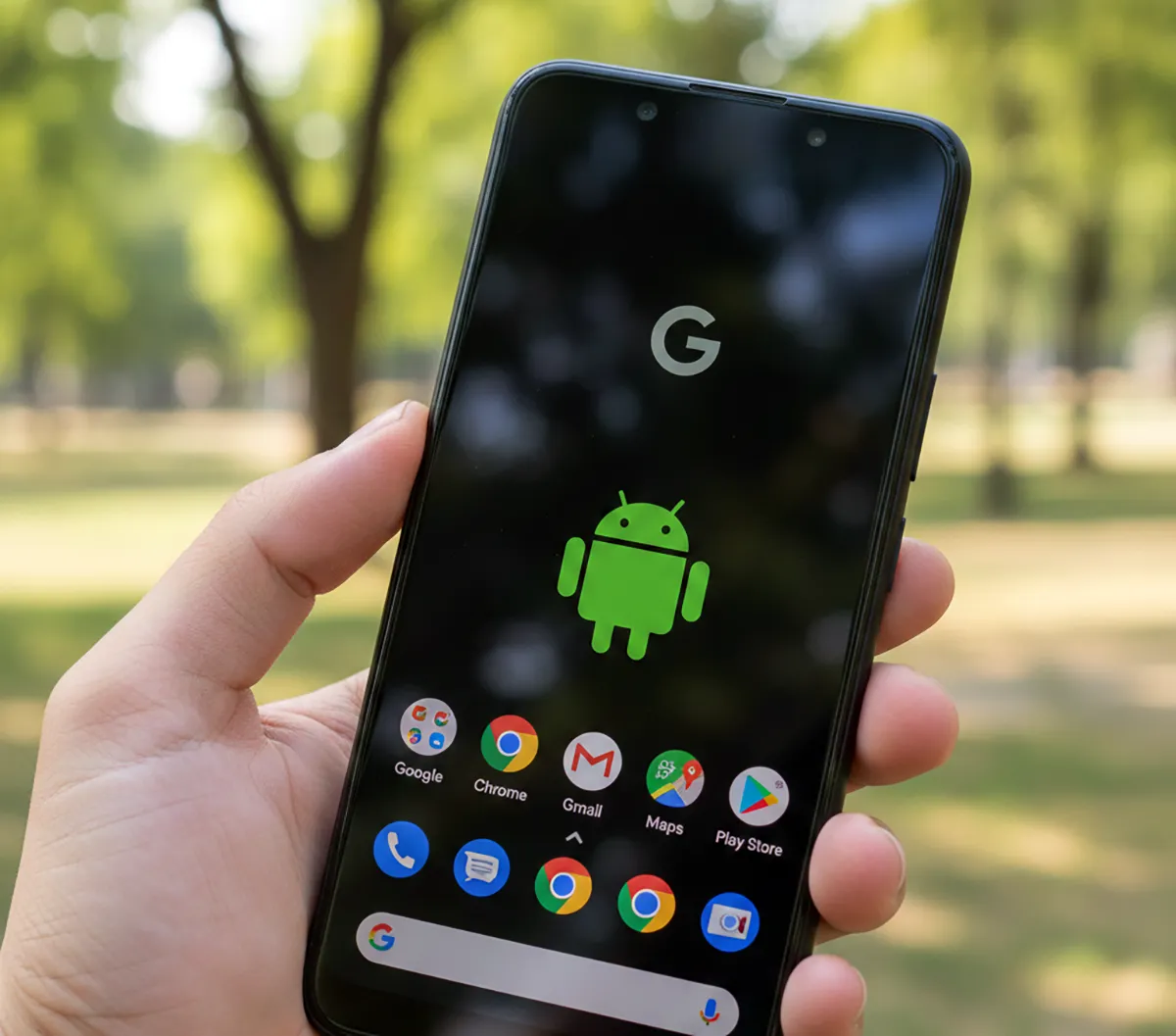

The lawsuit, filed in 2020, claims that a piece of software called Google Play Services, which is installed on virtually every Android phone sold in the United States, was quietly transferring data to Google's servers over cellular networks in the background. These transfers happened without users' knowledge or consent, and they consumed cellular data that users were paying for through their mobile carriers.
The settlement covers over 100 million Android users across the country, and unlike most class action settlements, you may not even need to file a claim form to get paid. The settlement administrator will attempt to automatically send payments to eligible class members through PayPal, Venmo, or Zelle using email addresses associated with their Android accounts.
Status
Awaiting Final Approval
Final approval hearing held June 23, 2026 — the court's ruling is pending
Settlement Fund
$135,000,000
Non-reversionary · individual payments capped at $100
Claim Form
Not Required
Automatic payment via PayPal, Venmo or Zelle — no claim to file
Estimated Class Size
100M+ Android users
U.S. users outside California (Nov 12, 2017 onward)
What Was Google Doing With Your Data?
According to court filings, Google Play Services — the core system software that runs in the background on Android devices — was sending a variety of data to Google's servers using cellular networks whenever Wi-Fi wasn't available. These transfers occurred automatically, without any action from the user, and continued even when the phone's screen was locked.The transfers were used for purposes including safely rolling out new features, fixing device problems, monitoring device health, developing new products, protecting the Android ecosystem, supporting advertising, and automatically downloading and configuring software.
The plaintiffs argued that this amounted to conversion — Google was taking something that belonged to users (their paid cellular data) and using it for Google's own purposes without permission. The Ninth Circuit Court of Appeals agreed that the conversion claim was properly pleaded and reversed an earlier dismissal.
Perhaps most damning: Android phones had a toggle labeled "allow background data usage" for Google Play Services that appeared to let users turn off these background transfers. According to the lawsuit, that toggle generally didn't actually stop the transfers. It was essentially a placebo setting. As part of the settlement, Google is required to deactivate this misleading toggle entirely.
Who Qualifies?
You are a member of the settlement class if you are a person in the United States who used an Android mobile device to access the internet through a cellular data network from November 12, 2017 to the date of final judgment.California residents are excluded because they are covered by a separate but related settlement in a case called Csupo v. Google, which went to trial in Santa Clara County Superior Court and resulted in a jury verdict in favor of the plaintiffs.
Also excluded are Google employees, officers, directors, and their affiliates, as well as anyone who timely opts out of the settlement.
Free settlement alerts
Get notified when new class actions open to claims
Join thousands of readers who get the latest class action settlements you may qualify for — delivered straight to your inbox.
How Much Will You Get?
The $135 million fund is entirely non-reversionary, meaning none of the money goes back to Google under any circumstances.After deducting attorneys' fees (up to $39.8 million), litigation costs (approximately $750,000), and administrative expenses (estimated $9.3 million), the remaining money will be distributed pro rata to class members. Individual payments are capped at $100 per person.
Based on plaintiffs' damages expert calculations, Google's total potential damages through December 2023 were approximately $1.05 billion using the industry average price of cellular data, or roughly $9.98 per person across an estimated 105 million class members. The $135 million settlement represents about 12.9% of that exposure — or as much as 44-184% of Google's potential exposure under Google's own expert's methodology, which valued the data at a fraction of the industry average.
The settlement administrator estimates that 55-80% of class members will receive payment, which is an unusually high rate for a class action.
How Will Payments Be Made?
This is where the settlement stands out from most class actions. No claim form is required.The settlement administrator (Angeion Group LLC) will use email addresses provided by Google to contact class members and give them the option to select a preferred payment method: Zelle, PayPal, Venmo, ACH transfer, or Virtual Mastercard.
For class members who don't respond to the email or don't select a payment method, the administrator will attempt to automatically push payments to their existing PayPal, Venmo, or Zelle accounts based on their email address and other information. This automatic payment feature is designed to maximize the number of people who actually receive money from the settlement.
Any funds left over after the initial distribution will be redistributed pro rata to class members whose first payments went through. If money still remains after that second round, it goes to a court-approved cy pres recipient.
What Is Google Required to Change?
Beyond the $135 million in cash, the settlement includes significant injunctive relief that forces Google to be transparent about how Android uses your cellular data going forward. These changes must remain in place for at least two years:• Google must update its Play Terms of Service to disclose that system services "often require network connectivity and may use your cellular data" and that these communications "may happen in the background, when you are not directly interacting with your device, including when the device's screen is locked."
• Google must update the "Learn about Google Play services" Help Center page to explain that Google Play Services "causes Android devices to exchange information with Google over cellular networks" and that these transfers "cannot be turned off."
• Google must add a new section called "Use of cellular data" to the Android setup flow — the screens every user sees when setting up a new device — requiring users to tap "Accept" after being told that their phone will use cellular data in the background for a range of purposes, some of which cannot be disabled.
• Google must deactivate the "allow background data usage" toggle for Google Play Services, which the lawsuit alleges was misleading because it did not actually stop the transfers.
Plaintiffs' economist estimated that the injunctive relief alone could prevent the conversion of approximately $300 million worth of cellular data per year, giving the transparency requirements an economic value of at least $600 million over the minimum two-year term.
The Related California Case
This federal settlement runs parallel to a separate state court case in California, Csupo v. Google, which covers California Android users. That case went to a month-long trial and ended with a 9-3 jury verdict in favor of the plaintiffs, awarding $314.6 million in damages. Google subsequently agreed to a $350 million settlement to resolve the California case.Together, the two settlements total $485 million. Both were negotiated with the assistance of mediators Kenneth R. Feinberg and Camille S. Biros — the same mediators known for designing and administering the September 11th Victim Compensation Fund. The two settlements are cross-contingent, meaning if either one is not approved, the other can be terminated as well.
Separate Special Settlement Counsel were appointed to represent each class independently: Grame W. Bush of Zuckerman Spaeder for the federal class in this case, and Phillip C. Korologos of Boies Schiller Flexner for the California class in Csupo.
If you are a California resident, read about the California Csupo v. Google class action here.
How the Litigation Got Here
The case has been hard-fought for over five years. Plaintiffs filed the original complaint in November 2020. Google moved to dismiss, and the court initially granted the dismissal. Plaintiffs appealed to the Ninth Circuit, which reversed the dismissal and allowed the conversion claim to proceed.Discovery was extensive: tens of thousands of pages of internal Google documents were produced, billions of pages of Android data logs were analyzed, and plaintiffs' experts spent nearly 50 days reviewing Google's proprietary source code in person. More than 40 depositions were taken, including depositions of 17 Google employees and a dozen experts in computer science, telecommunications, and economics.
Class certification and Daubert motions were fully briefed and argued. During the August 2025 hearing, the court raised pointed questions about the plaintiffs' damages methodology, describing Google's competing arguments as "compelling" and noting that under certain approaches the damages could be "negligible." Those pending motions were never decided — the parties reached a settlement before the court ruled.
Plaintiffs believe the $135 million settlement is the largest class action settlement of a conversion claim in federal court history.
Timeline
• Complaint Filed: November 12, 2020
• Class Period: November 12, 2017 – date of final judgment
• Settlement Agreement Signed: December 23, 2025
• Preliminary Approval Filing: January 27, 2026
• Preliminary Approval Granted: March 5, 2026
• Opt-Out / Objection Deadline: May 29, 2026 (passed)
• Final Approval Hearing: Held June 23, 2026 (the court's ruling is pending)
What You Should Do
If you've used an Android phone with a cellular data plan anywhere in the United States (outside California) since November 2017, you're likely a class member. Here's what to watch for:• Keep an eye on your email for a notice from the settlement administrator (Angeion Group LLC). It will come to the email address associated with your Android/Google account.
• When you receive the email, select your preferred payment method (PayPal, Venmo, Zelle, ACH, or Virtual Mastercard) to ensure you receive your payment.
• Even if you miss the email or don't respond, the administrator may still be able to push a payment to your existing PayPal, Venmo, or Zelle account automatically.
The settlement still requires final court approval. The court granted preliminary approval on March 5, 2026, and the Final Approval Hearing was held on June 23, 2026. As of June 29, 2026, the court has not yet entered a final approval order, so the settlement is awaiting the court's ruling. Payments would follow only after final approval and the resolution of any appeals.
For a step-by-step guide covering eligibility, payout estimates, deadlines, and payment methods, see our Google Android Settlement: How to Get Paid guide.
Related Google Lawsuits and Cases
Google is facing several other major class action lawsuits and settlements. Here are the ones currently tracked on OpenClassActions:• Google $350 Million California Android Cellular Data Settlement (Csupo v. Google) — The parallel California state court case covering California Android users, with a $350 million settlement after a $314.6 million jury verdict.
• Google $425 Million Web & App Activity Privacy Settlement — A jury awarded $425.7 million against Google for tracking users' web and app activity without proper consent.
• Google $700 Million Play Store Antitrust Settlement — Google agreed to pay $700 million to resolve antitrust claims over its Play Store billing practices.
• Google $5 Billion Incognito Mode Privacy Lawsuit — A class action alleging Google tracked users even while browsing in Chrome's Incognito mode.
• Google Assistant $68 Million Privacy Settlement — Google settled claims that its Assistant recorded users' conversations without consent.
• Google $100 Million AdWords Clicks Settlement — A settlement over allegations Google charged advertisers for clicks from locations they excluded.
• Social Media Addiction Lawsuit (Tolbert v. Meta) — A class action against Meta, Google/YouTube, TikTok, and Snapchat alleging platforms were designed to be addictive and caused mental health harm to children and teens.
Case Information
The case is Taylor v. Google LLC, Case No. 5:20-CV-07956-VKD, in the United States District Court for the Northern District of California, San Jose Division, before Magistrate Judge Virginia K. DeMarchi.Settlement Class Counsel: Glen E. Summers of Bartlit Beck LLP (Denver, CO) and Marc A. Wallenstein of Korein Tillery LLC (Chicago, IL).
Additional counsel: Elizabeth M. Pipkin and Ann M. Ravel of McManis Faulkner (San Jose, CA).
Special Settlement Counsel: Grame W. Bush of Zuckerman Spaeder.
Settlement Administrator: Angeion Group LLC.
Court Filing
Sources
• Motion for Preliminary Approval of Class Action Settlement, Taylor v. Google LLC, Case No. 5:20-CV-07956-VKD (N.D. Cal. Jan. 27, 2026)• Memorandum Disposition, Taylor v. Google, LLC, No. 22-16654 (9th Cir. Feb. 28, 2024)
About This Article
This article is based on court filings and is provided for informational purposes. The settlement has not yet been approved by the court. OpenClassActions.com is a consumer news site and is not a law firm or the settlement administrator.
For more class actions keep scrolling below.