Published
March 25, 2026
Two juries in two days found Meta liable for addicting kids — but there is still no class action claim form. Here is what the verdicts mean for your family and what to do now.

What Just Happened
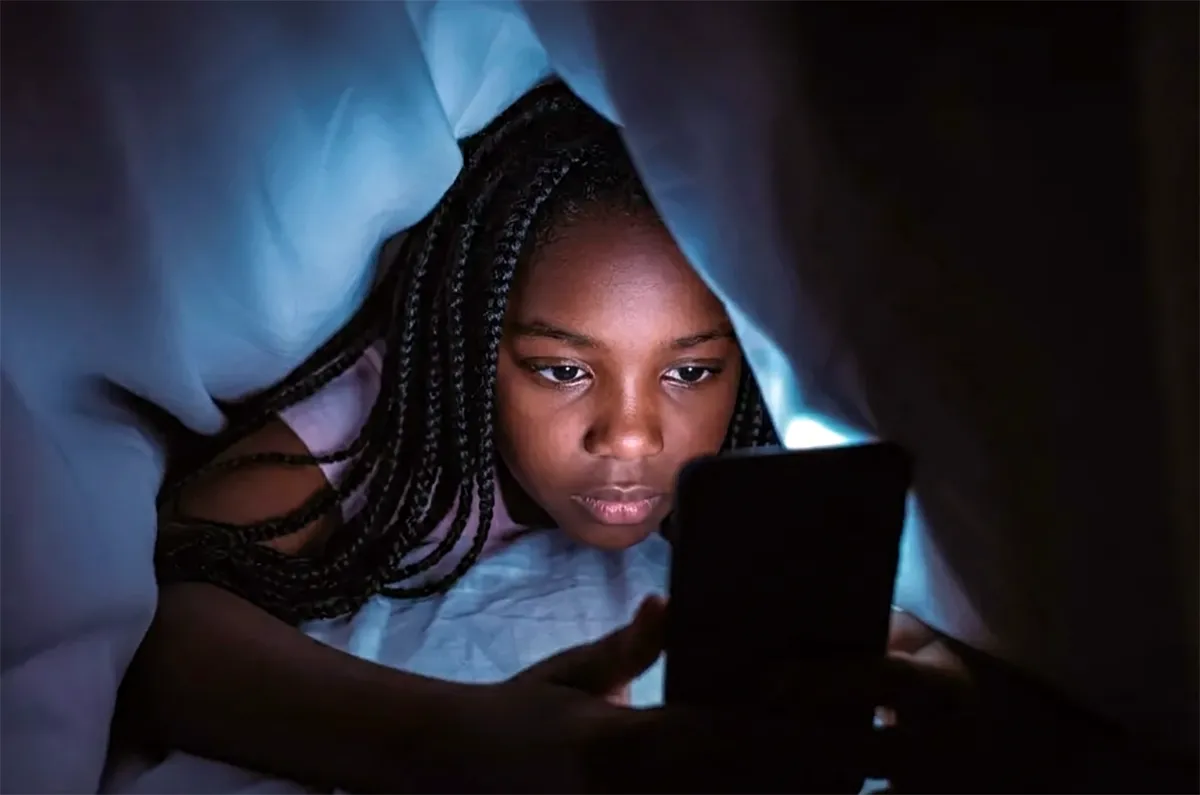
On March 25, 2026, a Los Angeles jury found Meta (Instagram) and YouTube liable for designing addictive platforms that harmed a 20-year-old woman who started using them as a child. The jury awarded $6 million -- $3 million in compensatory damages and $3 million in punitive damages. Meta pays 70%. YouTube pays 30%. The plaintiff's lawyers had asked for $1 billion in punitive damages.One day earlier, a New Mexico jury ordered Meta to pay $375 million for violating consumer protection laws and failing to protect children from sexual predators on Facebook and Instagram.
Two juries. Two states. Two days. Two historic verdicts. And now the question on millions of people's minds: what does this mean for me and my family?
Status
Verdict — Liability Found
Meta & YouTube; both companies appealing
Jury Verdict
$6 Million
$3M compensatory + $3M punitive · Meta 70% / YouTube 30%
Can I Claim?
No — No Class Action Claim Form Yet
individual lawsuits only; document and watch
Why This Verdict Changes the Legal Landscape Forever
Before today, no jury had ever held a social media company liable for addiction. Tech companies relied on Section 230 protections and argued there was "no scientific proof" that social media causes mental health issues. That defense just collapsed.The jury did not just say Meta and YouTube were careless. They found the companies acted with "malice, oppression, or fraud." They agreed that features like infinite scrolling, autoplay, algorithmic recommendations, and notification systems were deliberately designed to maximize engagement at the expense of users' mental health -- especially children.
This was a bellwether case. It was selected specifically to set the direction for approximately 2,000 other pending lawsuits across the country filed by parents, families, and school districts making the same core argument: social media platforms were engineered to addict children, the companies knew it, and they chose profit over safety.
Those 2,000 cases just got dramatically stronger.
Free settlement alerts
Get notified when new class actions open to claims
Join thousands of readers who get the latest class action settlements you may qualify for — delivered straight to your inbox.
What Is Coming Next
The legal pipeline is enormous and accelerating. Here is what is already scheduled or underway.The first federal bellwether trial -- brought by Breathitt County, Kentucky, on behalf of a school district -- had been set to begin in June 2026 in the Northern District of California. Instead, the defendants settled it for a combined $27 million in May 2026 (Meta $9M, Snap and TikTok $8M each, YouTube $2.01M), days before jury selection. The next federal bellwethers -- Tucson Unified in Arizona and Charleston County in South Carolina -- are scheduled for early 2027. See our full coverage of the Breathitt County $27 million settlement. The federal MDL involves over 1,600 plaintiffs -- including 350+ families and 250+ school districts -- and how these bellwethers resolve could affect millions of people nationwide.
The New Mexico case enters a second phase on May 4, where a judge will decide whether Meta must implement real age verification, algorithm changes, and an independent monitor. New Mexico Attorney General Raul Torrez said he is seeking "changes to the design features of the platform itself." If granted, this would be the first time a court forces a social media company to change how its product works.
Over 40 state attorneys general have filed lawsuits against Meta. More state-level actions are expected following this week's results. TikTok and Snapchat, which settled privately before the Los Angeles trial, remain defendants in other pending cases and will face additional trials in 2026.
Legal experts told CBS News this verdict "could open the floodgates of litigation" and will "certainly trigger more" lawsuits.
Is There a Class Action Settlement for Social Media Addiction?
Not yet. This is the most common question we are receiving right now, and we want to be completely transparent: there is no class action claim form. There is no settlement fund. There is no payout available today. Nobody can file a social media addiction claim right now.The cases so far are individual lawsuits and consolidated litigation, not traditional class actions with open claim forms. TikTok and Snapchat settled with the plaintiff in the Los Angeles case for undisclosed amounts before trial, but those settlements are private and do not create a public claims process.
However -- and this is the critical part -- the path from individual verdicts to large-scale settlements is well established. Tobacco litigation started with individual cases in the 1990s and grew into a $206 billion master settlement. Opioid litigation followed the same pattern, starting with individual lawsuits that evolved into multi-billion-dollar settlement frameworks. Social media litigation appears to be following an identical trajectory.
If the federal trial this summer or subsequent trials produce additional verdicts against Meta, YouTube, TikTok, or Snapchat, the pressure to settle broadly -- including through class action-style compensation programs -- will become immense. When that happens, claim forms and eligibility criteria will be announced through the court system.
Who Could Eventually Qualify for a Social Media Addiction Settlement?
No formal eligibility criteria exist yet because no settlement has been announced. But based on the claims in the 2,000+ pending lawsuits and the arguments that just won in court, the people most likely to be included in any future compensation program are parents and guardians of children who experienced depression, anxiety, eating disorders, body dysmorphia, self-harm, suicidal thoughts, or other mental health harms connected to compulsive use of platforms like Instagram, YouTube, TikTok, or Snapchat. Individuals who began using these platforms as minors and experienced similar harms may also qualify.The plaintiff in this case started YouTube at age 6 and Instagram at age 11. She testified that she wanted to be on social media "all the time" and felt that being offline meant she would "miss out on something," which sent her "into a spiral." The jury found that the platforms' negligent design was a "substantial factor" in causing her depression, anxiety, body dysmorphia, and suicidal thoughts.
School districts are also plaintiffs in many of the pending cases, arguing they have incurred costs from the mental health crisis caused by social media addiction -- hiring counselors, implementing intervention programs, and dealing with the fallout in classrooms.
What Parents and Families Should Do Right Now
Even though there is no claim form today, there are concrete steps you can take to protect your family's potential future claim.Document your child's social media usage history. Check Screen Time (iPhone) or Digital Wellbeing (Android) for usage data. Screenshot it. Save it. Note which platforms your child used and approximately what age they started.
Preserve medical and therapy records. If your child has been treated for depression, anxiety, eating disorders, self-harm, or suicidal ideation, those records are the most important evidence you could have. Make sure your copies are up to date.
Keep school records. Report cards, disciplinary records, counselor notes, and IEP or 504 documentation showing changes in academic performance or behavior could be relevant.
Do not sign up for anything promising a payout right now. If you see a website, social media ad, or email claiming you can "file a social media addiction claim today" or "get your payout now" -- that is a scam. No legitimate claims process exists. When one does, it will be announced by a federal court and covered by major news outlets and sites like OpenClassActions.
If you believe your child was seriously harmed and you want to pursue an individual claim now, consult a personal injury attorney who specializes in product liability or social media harm litigation. You can answer a few quick questions to see if your family may qualify for a free case evaluation with an attorney handling these cases.
This Is Bigger Than Social Media
The legal theory that won this case -- that a product can be "defectively designed" to be addictive -- is the same theory being applied to other industries right now.Online sports gambling platforms face similar lawsuits alleging they use behavioral tactics from slot machines to maximize user engagement and spending. You can read more about those cases on our sports gambling addiction investigation page.
Video game companies are also facing claims that reward systems, loot boxes, and engagement mechanics are designed to promote dependency, particularly among younger players. Our coverage of those cases is on our video game addiction lawsuit page.
The core argument is identical across all of these cases: the company knew its product was addictive, it designed features to maximize compulsive use, and it prioritized revenue over user safety. What a jury just validated for social media could establish the legal framework for holding companies accountable across gambling, gaming, and any other industry that engineers its products to exploit human psychology.
The Numbers That Matter
LA verdict (March 25): $6 million total ($3M compensatory + $3M punitive) -- Meta 70%, YouTube 30%
New Mexico verdict (March 24): $375 million in civil penalties against Meta
Pending lawsuits: approximately 2,000 nationwide
First federal bellwether: Breathitt County (KY) settled for $27M in May 2026; next bellwethers (Tucson, Charleston) set for Feb 2027
State AG lawsuits against Meta: 40+
Pre-trial settlements: TikTok and Snapchat settled with LA plaintiff (amounts undisclosed)
NM second phase: May 4, 2026 -- judge to decide if Meta must change platform design
Class action claim form: Does not exist yet
The Bottom Line
Two juries in two days just told the social media industry that accountability has arrived. A legal theory that was untested last month has now been validated by a jury for the first time in history. The companies that designed these products to be addictive -- and knew what they were doing to children -- are now facing the consequences.There is no class action payout yet. But the legal foundation for one is being built right now, in real time, case by case, verdict by verdict. The tobacco industry went from its first courtroom loss to a $206 billion settlement. The opioid industry followed the same path.
Social media may be next. And when it happens, it will be one of the largest class action events in American legal history.
Stay informed. Document everything. And do not fall for scams. OpenClassActions will cover every development as it happens.
If your child was harmed by Instagram, YouTube, TikTok, or Snapchat and you want to explore whether an individual claim makes sense while the litigation moves forward, you can answer a few simple questions to see if you may qualify.
About This Article
This article is based on reporting from NPR, CNBC, NBC News, CBS News, ABC News, CNN, Fox News, the Associated Press, and official statements from the New Mexico Department of Justice. OpenClassActions.com is a consumer advocacy and class action news site, and is not a class action administrator or a law firm.
For more class actions keep scrolling below.
Status
Verdict — liability found (both defendants appealing)
Case Title
K.G.M. v. Meta Platforms, Inc., et al.
Coordination
JCCP 5255 — California Social Media Cases
Court
Los Angeles County Superior Court
Verdict Date
March 25, 2026
Verdict
$6M total ($3M compensatory + $3M punitive) — Meta 70% / YouTube 30%
Related Federal MDL
No. 3047 (N.D. Cal.) — In re: Social Media Adolescent Addiction/PI Products Liability Litigation