The federal MDL was rejected, but individual video game addiction lawsuits are still moving through federal and California courts.
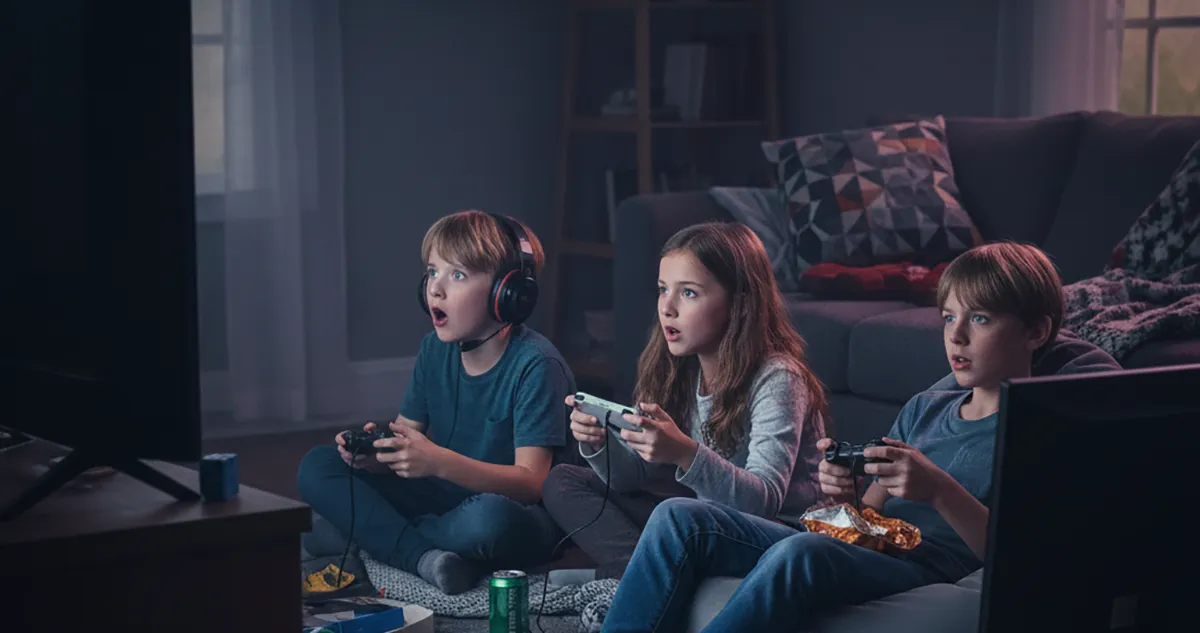

Individual video game addiction lawsuits are still moving forward, although the federal court system declined to combine them into one nationwide MDL.
Video Game Addiction Lawsuits Are Still Active
The request to create one nationwide federal MDL was denied. That does not mean the lawsuits were dismissed. Individual cases are still being litigated, and some courts are informally coordinating related cases.
There is no settlement or public claim form at this time. Some law firms continue to review potential cases involving serious and documented harm.
Video Game Addiction Lawsuits Are Still Active
Video game addiction lawsuits are still active.Families have filed individual lawsuits alleging that companies behind games such as Roblox, Fortnite and Minecraft intentionally used addictive design features to keep children playing and spending money.
Lawyers tried to combine many of the federal lawsuits into one multidistrict litigation proceeding, commonly called an MDL. An MDL places similar lawsuits before one judge. The federal panel rejected that request.
The rejection did not dismiss the lawsuits. It only means that the cases will not all be placed before one federal MDL judge. Individual cases can still continue in their original courts, and judges may still coordinate related cases in other ways.
There is currently no settlement, compensation fund or public claim form. Some law firms are still evaluating potential individual cases involving serious harm.
What Happened to the Video Game Addiction MDL?
An MDL is a system that places similar federal lawsuits before one judge for shared pretrial work.Plaintiffs asked the federal Judicial Panel on Multidistrict Litigation to create a video game addiction MDL. The panel said no.
The panel did not decide whether video games caused anyone's injuries. It did not rule that the gaming companies won every lawsuit. It did not dismiss all of the pending cases.
It only decided that combining all of the cases into one nationwide federal proceeding would not be the most efficient way to manage them.
The cases were not combined into one national MDL. Individual lawsuits may still continue.
Free settlement alerts
Get notified when new class actions open to claims
Join thousands of readers who get the latest class action settlements you may qualify for — delivered straight to your inbox.
Video Game Addiction Lawsuit Timeline
Litigation Timeline
-
June 5, 2024First Federal MDL Request RejectedThe federal panel rejected the first attempt to combine video game addiction lawsuits into MDL No. 3109. The cases involved many different games, companies and platforms, and the panel found that the differences between the cases were greater than the benefits of putting them all before one judge.
-
2024 and 2025Individual Lawsuits ContinuedAfter the first MDL request was rejected, families continued filing individual lawsuits in federal and state courts. Some cases faced motions to dismiss or requests to move the disputes into private arbitration. Other cases continued through discovery and court proceedings.
-
November 14, 2024California Coordination Request FiledCalifornia court records identify a request to coordinate related state lawsuits under JCCP No. 5363, called the Videogame Addiction Cases.
-
March 4, 2025California Coordination HearingA California court held a hearing on whether the related state cases should be coordinated.
-
May 7, 2025California JCCP EstablishedThe California cases were assigned to a coordinated proceeding known as JCCP No. 5363, Videogame Addiction Cases. A JCCP is California's method of managing related state lawsuits together. It is not a federal MDL, class action or settlement.
-
2025Second Federal MDL Request FiledPlaintiffs made a second, narrower attempt to create a federal MDL. This request focused mainly on claims involving Roblox, Fortnite and Minecraft. Plaintiffs described these games as possible "gateway" games that introduced children to allegedly addictive gaming systems.
-
December 10, 2025Second Federal MDL Request RejectedThe Judicial Panel on Multidistrict Litigation denied the second request, known as MDL No. 3168. At that point, the panel had been notified of 39 cases pending across 11 federal districts. The panel was concerned that the litigation could quickly expand to include many different games, platforms and companies, making one MDL too difficult for a single judge to manage.
-
February 27, 2026Federal Court Selects Pilot CasesThe Northern District of California selected three representative cases involving Roblox and Epic Games. These pilot cases are being used to address early issues that may also affect other related cases. A "pilot case" does not mean a trial has occurred — it means the court selected certain cases to handle common preliminary questions first.
-
March 31, 2026Court Begins Coordinating DiscoveryA federal judge issued an order organizing discovery among related Northern District of California cases. Discovery is the stage when both sides exchange records, documents and other evidence.
-
May 27, 2026Twenty-Eight Related Federal Cases in Active DiscoveryThe Northern District of California stated that 28 related video game cases were pending in that district. The cases generally involve Roblox, Microsoft, Mojang and Epic Games. The court established deadlines for document production, depositions, fact discovery and expert discovery.
-
June 2026Litigation Remains ActiveNowIndividual federal cases, the Northern District of California proceedings and California JCCP No. 5363 remain part of the ongoing video game addiction litigation. There is still no global settlement or public claim form.
Why Did the Court Reject the Video Game Addiction MDL?
The federal panel believed the cases may be too different to place into one large MDL. Different plaintiffs may have:• Played different games
• Used different gaming systems
• Played for different amounts of time
• Started playing at different ages
• Signed different account agreements
• Experienced different medical or psychological conditions
• Named different gaming companies
• Used several games rather than only one
• Faced different arbitration rules
The panel was also concerned that more games, companies and platforms could be added later. Because of those differences, the panel believed informal coordination between judges and lawyers could be more practical than creating one very large MDL.
The panel did not decide that the plaintiffs' allegations were correct, and it did not decide that the gaming companies did nothing wrong. It only addressed how the cases should be managed.
What Does It Mean That the Lawsuits Are Still in Litigation?
"Still in litigation" means the legal cases are still being worked on and have not all ended.Plaintiffs' lawyers may be:
• Collecting medical, school and gaming records
• Requesting documents from gaming companies
• Questioning witnesses
• Hiring medical and technical experts
• Opposing efforts to dismiss cases
• Fighting requests to send cases into arbitration
• Preparing certain cases for later court rulings or trials
Gaming companies may be:
• Denying the allegations
• Asking judges to dismiss claims
• Arguing that claims must be handled through arbitration
• Challenging whether a court has authority over them
• Disputing whether game design caused a plaintiff's injuries
• Requesting records about the plaintiff's gaming and medical history
Active litigation does not guarantee a settlement, a trial, a court victory, compensation, or a particular timeline.
Are Law Firms Still Reviewing Video Game Addiction Cases?
Yes. Some law firms continue to advertise that they are reviewing potential video game addiction cases.This does not mean every person who played video games qualifies. Each law firm may use different case criteria. A lawyer may consider factors such as:
• The person's age when the gaming began
• Which games were played
• The number of hours played
• How long the gaming behavior continued
• Whether gaming interfered with school, work or family life
• Mental health diagnoses
• Medical or psychological treatment
• Hospitalization or residential treatment
• Self-harm or suicide attempts
• Physical injuries
• In-game spending
• Available account and gaming records
• When the injuries occurred
• The applicable statute of limitations (the legal deadline to file)
• Whether an arbitration agreement applies
One law firm's private intake criteria do not apply to the entire litigation. And because no federal video game addiction MDL exists, there is no MDL to "join."
Can Someone Still File a Video Game Addiction Lawsuit?
Potentially, but this is not a settlement claim.A person or parent would generally need to speak with a lawyer about a possible individual lawsuit. The lawyer would review the facts, injuries, deadlines, account agreements and available evidence.
Some law firms are still reviewing potential cases, but submitting an intake form does not guarantee that a law firm will accept the case or that compensation will be recovered.
Settlement Claim Form: No
Individual Legal Case Evaluation: Potentially available through participating law firms
What Happens Next in the Video Game Addiction Litigation?
1. Discovery continues. The parties exchange documents, account information, medical evidence and other records.2. Courts address arbitration. Gaming companies may argue that account terms require some plaintiffs to use private arbitration instead of going to court.
3. Courts consider dismissal requests. Defendants may ask judges to dismiss some or all claims. Different courts may reach different results.
4. Experts review the evidence. Medical, psychological, gaming and product-design experts may give opinions about addiction, causation, warnings and game features.
5. Pilot cases may guide other cases. The selected Northern District of California cases may help courts and lawyers understand how certain common issues will be handled.
6. Some cases may continue toward trial. A case that survives early legal challenges could eventually proceed toward trial.
7. Settlements are possible but not guaranteed. Individual or broader settlements could occur later, but no global video game addiction settlement has been announced.
Federal Cases Moving Forward in California
As of the May 27, 2026 discovery order, the Northern District of California was managing 28 related cases. The court selected three pilot cases:• Litton v. Roblox
• Galarza v. Epic Games
• Hendricks v. Roblox
These related cases are being coordinated for discovery even though they are not part of a formal federal MDL. Informal or local coordination is not the same as an MDL.
California Videogame Addiction Cases, JCCP No. 5363
California state lawsuits are being coordinated through JCCP No. 5363 in Los Angeles. A JCCP allows related California cases to be managed together for matters such as discovery and pretrial rulings.It is not a class action, a settlement, a federal MDL, or a public compensation program. Judge Lawrence P. Riff is identified in the official California Judicial Council log as the coordination trial judge.
Games and Companies Named in the Lawsuits
The games and companies involved vary by lawsuit. A game appearing on this page does not mean that its publisher is a defendant in every case. The second federal MDL request focused mainly on three games:• Roblox
• Fortnite
• Minecraft
Other games or companies may appear in individual complaints, but each should be verified before assuming it is currently involved. The list below reflects titles that have been named or discussed across the broader set of claims — it does not mean every title is part of the same case.
| Video Games |
|---|
| Halo |
| Fortnite |
| Roblox |
| Minecraft |
| Call of Duty |
| Grand Theft Auto (GTA) |
| League of Legends |
| Rust |
| World of Warcraft |
| Rainbow Six Siege |
| Candy Crush |
| Overwatch |
| Doom |
| Fallout |
| The Elder Scrolls |
| Sea of Thieves |
| Age of Empires |
| Gears of War |
| Forza |
Video game makers were alleged to use tactics known to hook children and adults such as:
• Reward systems designed to trigger compulsive play
• In-game purchases and loot boxes that encourage spending
• Lack of clear warnings about the risks of addiction
• Minimal parental controls and time limits
• These practices can lead to real, serious harm-both mental and physical.
What Are the Harms of Video Game Addiction?
Addiction isn't just “playing too much” - It can disrupt every part of you or your child's life:• Social isolation: Withdrawing from friends and family
• Mental health issues: Anxiety, depression, emotional outbursts
• Physical injuries: Eye strain, repetitive stress injuries, sleep problems
• Academic/work problems: Falling behind in school or at work
• Financial strain: Excessive spending on in-game purchases
Frequently Asked Questions
Is the video game addiction lawsuit closed?
No. The federal MDL request was rejected, but individual and coordinated lawsuits remain active.
Was the video game addiction MDL approved?
No. The federal panel rejected MDL No. 3109 in June 2024 and later rejected MDL No. 3168 in December 2025.
Why was the MDL rejected?
The panel found that the cases involved too many different games, platforms, defendants and individual circumstances to efficiently place them all before one federal judge.
Does the MDL rejection mean the gaming companies won?
No. It means the cases were not combined into one federal MDL. It was not a final decision about whether the allegations are true or whether any company is liable.
Are video game addiction lawyers still accepting clients?
Some law firms continue to review potential cases. Acceptance depends on the facts, evidence, injuries, deadlines and each firm's criteria.
Can I submit a settlement claim?
No. There is no video game addiction settlement or public claim form.
Can I join the MDL?
No. There is no federal video game addiction MDL. A potential case would generally be evaluated as an individual legal claim.
What happens next?
Courts will continue handling discovery, arbitration disputes, motions to dismiss, expert evidence and other pretrial matters.
Video Game Addiction Cases Are Still Being Reviewed
There is no settlement claim form or federal MDL. Some law firms are still reviewing potential individual cases involving serious, documented harm.
To find out whether you may have an individual case, you would generally speak with a licensed attorney who handles this type of litigation. Submitting information does not guarantee representation, eligibility, compensation or the filing of a lawsuit.
Related Case: Social Media Addiction Lawsuit
Social media addiction lawsuits concern platforms such as Instagram, TikTok, Snapchat, YouTube and Facebook. Those cases are separate from the video game addiction lawsuits discussed on this page. You can read about that separate litigation on our Social Media Addiction Lawsuit page.Sources
• U.S. Judicial Panel on Multidistrict Litigation — order denying MDL No. 3109 (filed June 5, 2024) and order denying MDL No. 3168 (filed December 10, 2025)• Discovery Management Order No. 2 in Litton v. Roblox, U.S. District Court for the Northern District of California (filed May 27, 2026)
• California Judicial Council coordination log for JCCP No. 5363, Videogame Addiction Cases
• CourtListener / RECAP federal dockets for related Northern District of California cases
OpenClassActions.com is a consumer advocacy and class action news site, and is not a class action administrator or a law firm. OpenClassActions is a participant in the Amazon affiliate advertising program and this post may contain affiliate links, which means we may earn a commission or fees if you make a purchase via those links.