If you or a family member used Roundup and were diagnosed with non-Hodgkin lymphoma, this $7.25B settlement is the main path to compensation — here's who qualifies, the payout tiers, and where the case stands after the September 14, 2026 hearing.
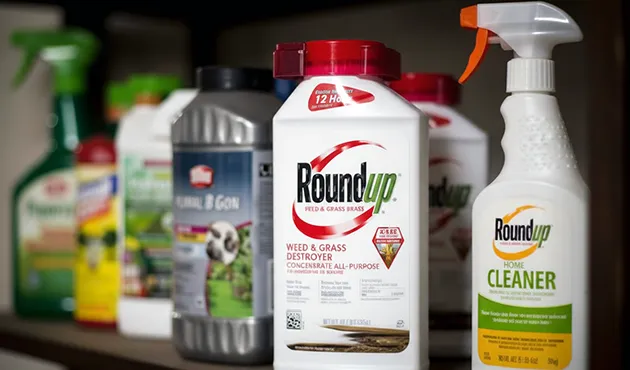

What Is the Roundup Settlement?
Monsanto (owned by Bayer AG) has agreed to a $7.25 billion class action settlement to resolve claims that its Roundup weed killer products cause non-Hodgkin lymphoma (NHL). The Roundup settlement was filed on February 17, 2026 in St. Louis Circuit Court, received preliminary approval on March 4, 2026, and would pay individual awards ranging from $10,000 to $165,000 or more to people who used Roundup and developed NHL.The $7.25 billion Roundup class action settlement is the largest Roundup settlement to date, and one of the largest in history. It covers both people who have already been diagnosed with NHL and people who were exposed to Roundup but have not yet been diagnosed. If you used Roundup or other glyphosate-based weed killers at home, at work, or on a farm in the United States, you may qualify for a payment from this Bayer Roundup settlement.
The court has granted preliminary approval; final approval is pending. The fairness hearing was rescheduled from July 9, 2026 to September 14, 2026 at 9:00 a.m. CT, and the claims process opens after final approval. Registration and claim submission are not open yet. This page covers everything you need to know about the Roundup settlement: who qualifies, how much you could receive, how to file, and key deadlines.
Read the Full Roundup Settlement Agreement (PDF)
Key Dates & Deadlines
• Motion for Preliminary Approval Filed: February 17, 2026• Preliminary Approval Granted: March 4, 2026
• Opt-Out Deadline: August 21, 2026 (passed)
• Objection Deadline: August 21, 2026 (passed)
• Fairness (Final Approval) Hearing: September 14, 2026 (held — rescheduled from July 9 and September 14, 2026)
After the Court grants final approval, class members with an NHL diagnosis will have 180 days to register for benefits and must file a claim within 180 days after any appeals are resolved. Class members diagnosed with NHL later do not need to register now — they may file a claim within 6 years of diagnosis, or before the 16th Annual Payment Date, whichever comes first.
Free settlement alerts
Get notified when new class actions open to claims
Join thousands of readers who get the latest class action settlements you may qualify for — delivered straight to your inbox.
Who Qualifies for the Roundup Settlement?
The Roundup class action settlement covers U.S. persons who were exposed to Roundup Products in the United States before February 17, 2026. You qualify if you applied the products yourself, purchased or paid for the products or their application, participated in or directed the application of the products, or otherwise had reason to know you were exposed.You do not need to be a U.S. citizen to participate. Your immigration status does not affect eligibility. The Roundup settlement covers exposure in all 50 states, the District of Columbia, Puerto Rico, Guam, American Samoa, the U.S. Virgin Islands, the Northern Mariana Islands, and at U.S. military or diplomatic establishments worldwide.
The settlement class is divided into two subclasses:
Subclass 1 includes people already diagnosed with NHL as of the date of preliminary approval. These claimants can register and file claims once the settlement receives final approval.
Subclass 2 includes people who were exposed to Roundup Products but have not yet been diagnosed with NHL. Subclass 2 members are part of the settlement now but can only file a claim if they are diagnosed with NHL in the future — within 6 years of diagnosis or before the 16th Annual Payment Date, whichever comes first.
Derivative claimants such as spouses, parents, or dependent children of exposed persons are also included. Legal representatives, executors, or administrators acting on behalf of deceased or incapacitated exposed persons may file claims as representative claimants.
Roundup Settlement Payout: How Much Will I Get?
The Roundup settlement uses a 9-tier system to determine individual awards. Your payout depends on three factors: whether you are an occupational or residential claimant, your age at NHL diagnosis, and whether your NHL subtype is aggressive or indolent. Within each tier, individual awards may be adjusted from 80% to 120% of the tier average based on claim-specific factors.Here is the full Roundup settlement payout breakdown by tier:
| Roundup Settlement Payout Tiers | |||
| Exposure Type | Age at Diagnosis | NHL Type | Average Award |
|---|---|---|---|
| Occupational | Under 60 | Aggressive | $165,000 |
| Occupational | 60 to 77 | Aggressive | $105,000 |
| Occupational | Under 60 | Indolent | $85,000 |
| Occupational | 60 to 77 | Indolent | $60,000 |
| Residential | Under 60 | Aggressive | $40,000 |
| Residential | 60 to 77 | Aggressive | $30,000 |
| Residential | Under 60 | Indolent | $25,000 |
| Residential | 60 to 77 | Indolent | $20,000 |
| Any | 78 or older | Any | $10,000 |
These are tier averages. Individual awards may range from 80% to 120% of the average based on claim-specific scoring factors. That means the highest possible individual award under the standard program is approximately $198,000 (120% of the $165,000 top tier). Additional compensation may be available through the Extraordinary Circumstances Fund for claimants with severe medical outcomes.
Keep in mind that individual Roundup lawsuits have resulted in jury awards far exceeding these class settlement amounts. Class members who wanted to keep the right to pursue their own case had to opt out by the August 21, 2026 deadline.
Occupational vs. Residential Roundup Claimants
Your classification as an occupational or residential claimant determines your payout tier. The distinction matters because occupational claimants typically had more intense and prolonged exposure to Roundup and receive higher average awards.Occupational claimants are people who were exposed to Roundup Products for more than 80 hours while working in an agricultural, industrial, turf, or ornamental capacity. They must have earned more than 50% of their income or more than $15,000 from the relevant job in at least one year. Examples include farmers, farm laborers, gardeners, maintenance workers, landscapers, pesticide applicators, groundskeepers, lawn service workers, tree trimmers, highway and rail maintenance workers, and facilities managers. Occupational claimants must provide documentary evidence such as employment records, payroll records, business licenses, or tax records.
Residential claimants are people who were exposed to Roundup Products at home or in a non-occupational setting. This includes homeowners who used the product for gardening, landscaping, weed control on driveways or patios, or general use around the home. Residential claimants need at least 16 hours or 10 lifetime days of exposure. Attestation alone is sufficient to prove residential exposure — no documentary proof is required.
What Factors Affect Your Roundup Settlement Payout?
Within each tier, individual Roundup settlement awards are adjusted upward or downward based on several claim-specific factors.Factors that may increase your award include younger age at diagnosis, stronger proof of exposure such as photos or purchase receipts, greater duration or frequency of exposure, more intensive treatment including chemotherapy or radiation, Stage IV diagnosis, and diagnosis occurring 5 to 15 years after the exposure window.
Factors that may decrease your award include older age at diagnosis, weaker proof of exposure, an AIDS diagnosis, prior organ transplant, prior blood cancer, immunosuppressant use, prior Hepatitis C or Epstein-Barr virus for certain NHL subtypes, and other alternative causation explanations.
Quick-Pay Option for Roundup Claimants
Residential claimants and claimants diagnosed at age 78 or older may be eligible for the Quick-Pay option. Quick-Pay provides faster, reduced payments for claimants who prefer not to wait for full program processing.Quick-Pay amounts range from $6,000 to $14,500 depending on tier placement. Quick-Pay is only available to Initial Claimants who filed a lawsuit or tolling agreement before February 13, 2026. Accepting a Quick-Pay Award means you cannot receive a standard program award.
Additional Roundup Settlement Compensation
The Roundup settlement includes several additional funds for claimants with special circumstances.The Extraordinary Circumstances Fund provides additional payments for claimants who experienced severe medical outcomes including death before age 78, organ transplant, CAR-T therapy, intrathecal chemotherapy, or Stage IV diagnosis. This fund receives up to 5% of each annual payment.
The Extraordinary Residential Exposure Fund provides extra compensation for residential claimants who had significant exposure, defined as 80 or more hours on properties totaling 6 or more acres. This fund receives 1.5% of each annual payment. Documentary proof is required.
Exigency Awards are available before the settlement becomes final for claimants facing imminent housing loss or who have a terminal condition. These awards are funded at up to $20 million per year for the first 3 years.
How to File a Roundup Settlement Claim
The claims process opens after the court grants final approval (fairness hearing was held September 14, 2026). Here is how the process works:Subclass 1 (Already Diagnosed with NHL): Register within 180 days of final approval. Submit your full claim within 180 days of the effective date (after any appeals are resolved).
Subclass 2 (Not Yet Diagnosed): You do not need to register now. If you are diagnosed with NHL in the future, file a claim within 6 years of your diagnosis or before the 16th Annual Payment Date, whichever comes first.
The claims administrator for the Roundup settlement is BrownGreer PLC. Visit the official settlement website, WeedKillerClass.com, for updates on when the claims process will open and how to register.
Key Deadlines for the Roundup Settlement
• Preliminary Approval: Granted March 4, 2026• Opt-Out Deadline: August 21, 2026 (passed)
• Objection Deadline: August 21, 2026 (passed)
• Fairness (Final Approval) Hearing: September 14, 2026 (rescheduled from July 9, 2026)
• Registration Deadline (Subclass 1): 180 days after final approval
• Claim Submission Deadline (Subclass 1): 180 days after the effective date
• Claim Deadline (Subclass 2): Within 6 years of NHL diagnosis or before the 16th Annual Payment Date
• First Payment: $500 million within 10 business days of preliminary approval
• Second Payment: $500 million by August 31, 2026
How the Roundup Settlement Fund Works
Monsanto will pay up to $7.25 billion over 17 to 21 years. The first $1 billion is front-loaded in the first year. After that, Monsanto will make 16 annual payments ranging from $550 million down to $250 million per year. An inflation adjustment of up to 2.5% annually begins in year 5.A separate $1 billion security fund serves as a bankruptcy backstop. If Monsanto enters bankruptcy and fails to make payments, the security fund is liquidated and distributed to class members. Additional extended funding of up to $1 billion over 4 extra years is available if needed for remaining occupational claimants.
Attorney fees are paid from the settlement fund. Individual attorneys who represent specific claimants are capped at 22% of the claimant's award.
What You Give Up by Staying in the Roundup Settlement
By staying in the Roundup settlement, you release all compensatory, punitive, and medical monitoring claims against Monsanto, Bayer, and related parties. However, the settlement includes several exit provisions:Subclass 2 members who applied for Extraordinary Circumstances Fund awards can reject their award after reconsideration and exit the settlement. Any claimant who waits 5 or more years from their claim eligibility date without receiving payment can exit. Exiting class members receive a $500 payment, retain the right to sue for compensatory damages, but are permanently barred from seeking punitive damages.
Class members who are never diagnosed with NHL by the 16th annual payment date get all their legal rights restored, including the right to seek punitive damages.
How Opt-Outs and Objections Worked
Class members who wanted to keep their right to sue Monsanto on their own had to exclude themselves from the settlement during the opt-out period, which was extended and ended August 21, 2026. Those who opted out will not receive money from this Roundup settlement but kept the right to file their own lawsuit. Class members who wanted to stay in the settlement but believed its terms were unfair could file an objection; the court heard argument on the objections at the September 14, 2026 final approval hearing. Monsanto has the right to terminate the settlement if too many people opted out.Background: Roundup Lawsuits and Bayer's Litigation History
Monsanto (acquired by Bayer in 2018 for $63 billion) has been battling Roundup cancer lawsuits for more than a decade. The core allegation is that glyphosate, the active ingredient in Roundup, causes non-Hodgkin lymphoma and that Monsanto failed to warn users of the risk.In 2015, the International Agency for Research on Cancer (IARC) classified glyphosate as "probably carcinogenic to humans." The U.S. EPA maintains that glyphosate is not likely carcinogenic when used as directed. This scientific disagreement is central to the litigation.
Juries have repeatedly sided with plaintiffs in Roundup trials, delivering massive verdicts including $289 million in 2018 (Dewayne Johnson), $80 million in 2019 (federal), $2 billion in 2019 (California, Pilliod couple), $332 million in 2023 (California), $2.25 billion in 2025 (consolidated), and $2.1 billion in 2025 (Georgia). Bayer has paid more than $11 billion in prior settlements and verdicts.
On June 25, 2026, the U.S. Supreme Court ruled 7–2 for Monsanto in Monsanto Co. v. Durnell (Case No. 24-1068), holding that the federal pesticide labeling law (FIFRA) expressly preempts state failure-to-warn claims that would require a cancer warning on Roundup's EPA-approved label. The decision narrows the state-court failure-to-warn path that produced the large Roundup jury verdicts, which makes this class settlement the primary route to compensation for many claimants. The settlement was negotiated in part to lock in compensation regardless of the Durnell outcome.
Bayer currently faces approximately 61,000 to 67,000 active Roundup claims. In addition to this $7.25 billion class settlement, Bayer has separately resolved approximately $3 billion in individual cases, including the $2.1 billion Georgia verdict.
Settlement Administration
The Roundup settlement is administered by BrownGreer PLC, which processes all claims. Matthew Garretson of Garretson LLC handles claim scoring and tier assignment. Judge Glenn A. Norton serves as the Settlement Special Master overseeing the process. Wolf Global Compliance handles healthcare lien resolution. JPMorgan Chase Bank N.A. is the settlement fund escrow agent.Fraud Prevention
The Roundup settlement includes audit provisions to prevent fraudulent claims. The administrator will audit at least 2% of attestation-only claims annually and a minimum of 30 claims per quarter. Suspicious patterns may trigger additional investigation. Penalties include claim denial, attorney disqualification, and referral to authorities. Law firms with two or more knowing fraudulent submissions are permanently barred from the program.Roundup Supreme Court Case: Monsanto v. Durnell
The Roundup settlement was announced at a critical moment in the litigation. On June 25, 2026, the U.S. Supreme Court decided Monsanto Co. v. Durnell (Case No. 24-1068), holding 7–2 that the Federal Insecticide, Fungicide, and Rodenticide Act (FIFRA) expressly preempts state failure-to-warn claims that would require a cancer warning on Roundup's EPA-approved label. Justice Kavanaugh wrote the majority opinion; Justice Thomas concurred, and Justice Jackson dissented, joined by Justice Gorsuch.The case originated from a 2023 jury verdict in St. Louis that awarded $1.25 million to John Durnell, who developed non-Hodgkin lymphoma after spraying Roundup. The Missouri Court of Appeals upheld the verdict, the U.S. Supreme Court granted review, and after argument on April 27, 2026 it reversed the judgment and remanded the case.
The ruling significantly limits the state-court failure-to-warn theory that produced the largest Roundup verdicts, which is a central reason this class settlement matters: under its terms, participating claimants receive payment regardless of the Durnell outcome. Attorneys for both current and future claimants have pointed to the decision in urging eligible people to participate rather than rely on individual litigation.
Glyphosate and Cancer: What the Science Says
Glyphosate is the active ingredient in Roundup and the most widely used herbicide in the world. Monsanto patented glyphosate in 1971 and introduced Roundup in 1974.In 2015, the International Agency for Research on Cancer (IARC), a division of the World Health Organization, classified glyphosate as "probably carcinogenic to humans" (Group 2A). A 2019 University of Washington meta-analysis found that individuals with high exposure to glyphosate had a 41% higher risk of developing non-Hodgkin lymphoma.
The U.S. Environmental Protection Agency (EPA) maintains that glyphosate is "not likely to be carcinogenic to humans" when used as directed. The federally approved label for Roundup includes no cancer warning. This scientific disagreement between IARC and the EPA was central to both the litigation and the Supreme Court's June 2026 decision in Monsanto v. Durnell.
Roundup products are still sold in the United States for agricultural and commercial use. Bayer stopped selling glyphosate-based Roundup for residential (homeowner) use in 2023 and is seeking approval for a replacement herbicide in the U.S. and abroad. If your exposure came from a different glyphosate or herbicide product, see our related toxic-exposure investigations.
Types of Non-Hodgkin Lymphoma Covered by the Roundup Settlement
The Roundup settlement covers all subtypes of non-Hodgkin lymphoma (NHL). NHL is a cancer that develops in the lymphatic system, specifically in white blood cells called lymphocytes. There are more than 60 recognized subtypes of NHL, broadly categorized as aggressive (fast-growing) or indolent (slow-growing). Your NHL subtype affects which payout tier you fall into.Aggressive NHL subtypes include diffuse large B-cell lymphoma (DLBCL), which is the most common form of NHL and accounts for roughly 30% of all NHL diagnoses. Other aggressive subtypes include mantle cell lymphoma, Burkitt lymphoma, and peripheral T-cell lymphomas.
Indolent NHL subtypes include follicular lymphoma, the second most common form of NHL, and chronic lymphocytic leukemia/small lymphocytic lymphoma (CLL/SLL). Indolent lymphomas grow slowly but can transform into aggressive forms over time. The settlement does not cover other types of cancer — only non-Hodgkin lymphoma qualifies.
Previous Roundup Settlements and Verdicts
This is not the first attempt to resolve Roundup litigation through a class settlement. In 2020, Bayer announced a $10.9 billion settlement to resolve approximately 125,000 existing claims. That settlement was largely successful for pending cases, but a separate $2 billion fund for future claims was rejected by federal Judge Vince Chhabria in the Northern District of California MDL in 2021.This $7.25 billion settlement addresses the gap left by that rejection. It includes both current claimants and a structured program for future claimants who have not yet been diagnosed. The settlement was negotiated over approximately 18 months with the assistance of a mediator, according to court documents. In addition, Bayer has separately resolved approximately $3 billion in individual cases, including the resolution of the $2.1 billion Georgia verdict.
Frequently Asked Questions About the Roundup Settlement
Can I file a Roundup settlement claim right now?
Not yet. Preliminary approval was granted on March 4, 2026, but registration and claims open only after final approval. The fairness hearing was rescheduled from July 9, 2026 to September 14, 2026. Claim forms and registration procedures will be available through the official settlement website at WeedKillerClass.com.
I used Roundup at home but was never diagnosed with cancer. Am I still part of the settlement?
Yes. You are automatically included in Subclass 2 (future claimants) if you were exposed to Roundup in the U.S. before February 17, 2026. You cannot file a claim for payment unless and until you are diagnosed with NHL. If you are never diagnosed with NHL by the 16th annual payment date, all of your legal rights are restored.
What types of NHL does the Roundup settlement cover?
The settlement covers non-Hodgkin lymphoma (NHL) only. This includes aggressive subtypes such as diffuse large B-cell lymphoma (DLBCL), mantle cell lymphoma, and Burkitt lymphoma, as well as indolent subtypes such as follicular lymphoma, chronic lymphocytic leukemia (CLL), and peripheral T-cell lymphomas. No other cancers are covered.
What if I already have a Roundup lawsuit pending?
If you already had a Roundup lawsuit or tolling agreement filed before February 13, 2026, you are considered an "Initial Claimant" and may be eligible for the Quick-Pay option. You are included in the settlement class unless you opted out by the August 21, 2026 deadline.
Is Roundup still being sold?
Yes. Roundup products are still sold in the United States for agricultural and commercial use. Bayer stopped selling glyphosate-based Roundup for residential use in 2023. Existing products remain widely available in stores and for professional applications.
Do I need a lawyer to file a Roundup claim?
You are not required to have a lawyer to file a claim, but having an attorney can help maximize your award and navigate the claims process. Attorney fees for individual representation are capped at 22% of your award under the settlement terms.
Can family members file a Roundup claim for a deceased loved one?
Yes. Legal representatives, executors, or administrators acting on behalf of deceased or incapacitated exposed persons may file claims as representative claimants. Derivative claimants such as spouses, parents, or dependent children of exposed persons are also included in the settlement class.
Does my immigration status affect my eligibility?
No. The settlement covers all persons exposed to Roundup Products in the United States, regardless of citizenship or immigration status.
How does the Supreme Court's Monsanto v. Durnell ruling affect me?
On June 25, 2026, the Supreme Court ruled 7–2 for Monsanto in Monsanto v. Durnell, holding that federal law (FIFRA) preempts state failure-to-warn claims based on Roundup's EPA-approved label. That narrows the state-court path many individual Roundup suits relied on. If you are part of this settlement class, you are entitled to your settlement payment regardless of the Durnell decision — one of the primary reasons attorneys recommend participation.
What happens if Monsanto goes bankrupt?
The settlement includes a $1 billion security fund that serves as a bankruptcy backstop. If Monsanto enters bankruptcy and fails to make settlement payments, the security fund is liquidated and distributed to class members.
Sources and References
• Official Settlement Website: WeedKillerClass.com• Full Settlement Agreement (PDF)
• Fortune: Bayer reaches $7.25 billion settlement over claims that Roundup caused cancer (AP/David A. Lieb)
• CBS News: Bayer proposes $7.2 billion settlement to resolve Roundup weedkiller cases
• St. Louis Public Radio: Proposed $7.25 billion Roundup settlement would cover cancer claims
• BrownGreer PLC: Roundup Settlements (Claims Administrator)
• Case: Monsanto Company Roundup Products Liability Settlement, 22nd Judicial Circuit Court, City of St. Louis, Missouri
• Monsanto Co. v. Durnell, No. 24-1068 (U.S. Supreme Court, decided June 25, 2026)