Published
May 7, 2026
Updated
August 5, 2026
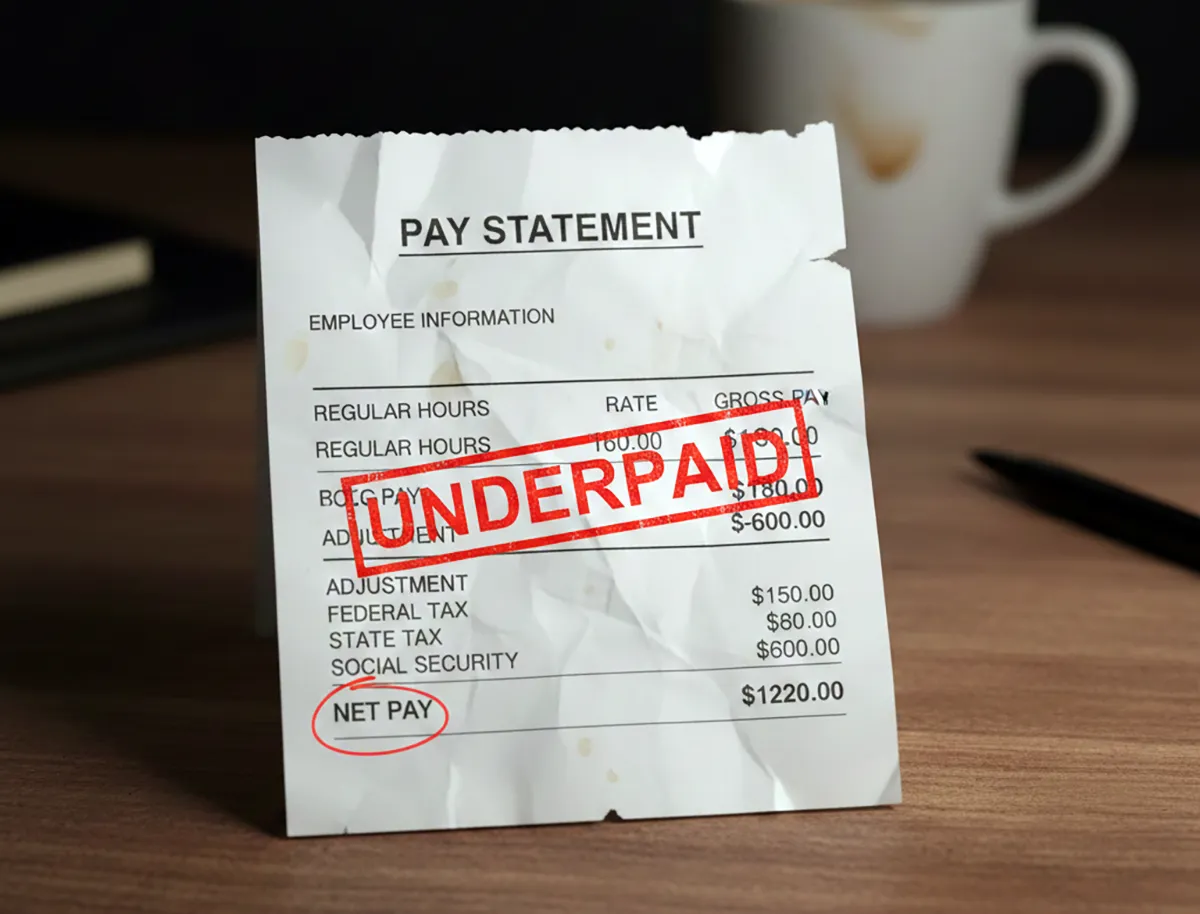
If your business filed for the Employee Retention Credit through a payroll company or PEO and the refund was withheld, misfiled, or hit with excessive fees, you may have a claim to recover it.


Plain-English Guide: What Are ERC, PEO, and WOTC, and Who Qualifies?
If you have heard the terms "ERC," "PEO," "ERTC," or "WOTC" thrown around but are not sure what they mean or whether they apply to your business, this section walks through the basics in plain English before getting into the legal claims.
Status
Investigation Active
Type of Claim
PEO & Payroll Company Disputes
breach of contract, fraud, conversion, negligence, and ERC fee disputes
Estimated Recovery
$25K to $750K+
based on claim size, conduct, and contract strength
Cost to Business
$0 (Contingency)
no upfront fees · no recovery, no fee
What is the ERC (Employee Retention Credit)?
The Employee Retention Credit, also called the ERTC (Employee Retention Tax Credit), is a refundable payroll tax credit Congress created during the COVID-19 pandemic. In plain terms, the federal government offered to send your business a check (or apply a credit against your payroll taxes) for keeping employees on the payroll during 2020 and most of 2021, even if you had to shut down or your revenue dropped sharply. The credit was worth up to $5,000 per employee for 2020 and up to $7,000 per employee per quarter for the first three quarters of 2021, meaning a business could potentially receive up to $26,000 per W-2 employee across the eligible period. Many small and mid-size businesses qualified but did not file the credit themselves; they relied on a payroll company, PEO, or ERC specialty firm to handle the paperwork and collect the refund.What is a PEO (Professional Employer Organization)?
A Professional Employer Organization (PEO) is an outsourcing company that handles human resources, payroll, benefits, and tax filings for small and mid-size businesses. In legal terms, a PEO becomes the "co-employer" of your workers and files payroll tax returns (Form 941) under the PEO's own federal Employer Identification Number (EIN), not yours. Examples include ADP TotalSource, Paychex (including Oasis), TriNet, Insperity, Vensure, BBSI, Justworks, and Gusto. Because the PEO files under its own EIN, the IRS sends ERC refund checks to the PEO, and the PEO is supposed to forward those funds to the underlying client business. The legal disputes covered by this investigation arise when the PEO received the ERC money but did not pass it through to the client, or when the PEO filed an inaccurate claim that later got the client business audited.What is the WOTC (Work Opportunity Tax Credit)?
The Work Opportunity Tax Credit (WOTC) is a separate federal tax credit available to employers who hire workers from certain target groups, including veterans, long-term unemployed individuals, ex-felons, SNAP recipients, summer youth employees, and others. Unlike the ERC, WOTC is an ongoing program rather than a COVID-era credit. WOTC is worth between $1,200 and $9,600 per qualifying hire, depending on the target group and hours worked. Many of the same payroll companies and PEOs that filed ERC claims also handle WOTC certification and filing for their clients, and the same kinds of disputes (delayed certification, incorrect target group designation, refund disbursement delays, or excessive contingency fees) come up with WOTC.Who Qualifies to File an ERC Payroll Lawsuit?
You may qualify if all of the following are true:• Your business filed for the Employee Retention Credit between 2020 and 2024 (most filings happened between 2020 and 2023).
• A third party handled some or all of the filing — a payroll company, PEO, ERC specialty firm, CPA firm, or "ERC mill."
• Something went wrong, such as: the IRS sent your refund to the PEO and you never got it, the IRS denied or clawed back the credit, the filer charged you an unusually large contingency fee (often 15 to 30 percent), the filer told you that you qualified when you actually did not, your PEO is refusing to give you copies of your filing records, or you received an audit letter or "notice of claim disallowance" from the IRS.
You do not need to know the legal theory or which contract clause applies. An attorney who handles ERC disputes can walk through the facts and determine whether the situation supports a claim.
Red Flags That You May Have Been Affected
Common red flags reported by affected businesses include:• The IRS confirmed your ERC refund was issued, but the money never reached your business bank account.
• You received an IRS Letter 105-C, Letter 106-C, or "notice of claim disallowance" denying part or all of the credit.
• Your PEO or payroll company will not return calls, emails, or document requests about your ERC.
• You signed a contingency fee agreement of 15 percent or more, especially with a firm that aggressively marketed ERC during 2022 to 2023.
• You were told you "qualified" even though your business stayed open and revenue did not drop significantly during the eligible quarters.
• Your filer pushed aggressive partial-suspension or supply-chain eligibility theories that the IRS later rejected.
• You are now facing IRS interest, penalties, or audit demands tied to an ERC claim you trusted someone else to verify.
• Your PEO is claiming the ERC records "belong to the PEO" and refusing to release them.
How Many Businesses May Be Affected?
Estimating the affected population is straightforward from public IRS data. The IRS has reported processing more than 3.6 million ERC claims through 2024, with hundreds of billions of dollars in credits paid or claimed. Per the IRS Taxpayer Advocate Service, the agency has issued more than 84,000 disallowance letters, including approximately 28,000 in summer 2024 alone, and audit and enforcement activity continues into 2026. Industry surveys indicate that roughly 60 to 70 percent of ERC filings were handled by a third-party filer (a payroll company, PEO, ERC specialty firm, or CPA), which means a conservative estimate of 1.5 to 2 million businesses used a third-party filer for ERC. Of those, attorneys conservatively estimate that several hundred thousand businesses may have a viable claim involving withheld refunds, denied credits, excessive fees, or record withholding. The actual qualifying population of any individual lawsuit is determined case by case during the free review.Did Your Payroll Company or PEO Mishandle Your ERC Refund?
Businesses across the United States are taking legal action against payroll companies, Professional Employer Organizations (PEOs), and ERC specialty firms that withheld Employee Retention Credit refunds, filed inaccurate ERC claims, charged excessive contingency fees, or refused to provide client businesses with their own filing records. If your business relied on a third-party filer to handle its ERC claim and the relationship has gone sideways, you may have a legal claim to recover the withheld refund, the fees you paid, and any IRS-imposed penalties or interest you now face. The ERC lawsuit landscape has expanded rapidly through 2025 and into 2026 as more businesses learn they can sue a payroll company that mishandled their pandemic tax credits.The Employee Retention Credit was a refundable payroll tax credit Congress enacted during the COVID-19 pandemic to help businesses keep employees on payroll during mandatory shutdowns and revenue declines. Many businesses, especially small and mid-size employers, relied on payroll companies, PEOs, and third-party ERC specialty firms to identify eligibility and file the necessary forms. Some of those firms performed competently. Others did not.
According to the IRS Taxpayer Advocate Service, the IRS has issued tens of thousands of disallowance notices and continues to investigate aggressive ERC marketing and improper claims. Businesses that trusted their payroll company or PEO to handle eligibility verification are now caught in the middle. They face IRS audits, repayment demands, penalties, and interest, while their payroll company in some cases holds ERC refund money it received but has not disbursed.
Many of the same payroll companies and PEOs that handled ERC filings also handled Work Opportunity Tax Credit (WOTC) filings during the same period. Businesses experiencing ERC refund withholding or improper filings often discover similar issues with their WOTC credits, including delayed certification, incorrect target group designation, or refund disbursement delays. The legal theories that apply to ERC payroll disputes (breach of contract, conversion, unjust enrichment, and fraud) apply equally to WOTC disputes, and many ERC payroll lawsuits now include WOTC claims as well.
30-Second Self-Test: Does Your Business Have an ERC Claim?
If you can answer yes to one or more of the questions below, your business may have a valid legal claim against the payroll company or PEO that handled your ERC.• Did your business file for the Employee Retention Credit between 2020 and 2023? The ERC was available for qualifying wages paid during 2020 and most of 2021 (with later filing deadlines extending into 2024). Most ERC payroll disputes involve filings during this period.
• Did a payroll company, PEO, or ERC specialty firm manage the filing on your business's behalf? Common third-party filers include ADP TotalSource, Paychex, TriNet, Insperity, Vensure Employer Services, Barrett Business Services, ShiftPixy, Engage PEO, Justworks, Gusto, Sequoia One, G&A Partners, Extensis Group, Tandem PEO, AmCheck, and dozens of others.
• Was your ERC refund withheld, reduced, or never disbursed? Some PEOs received the ERC refund directly from the IRS using their own EIN but failed to pass those funds to the underlying client business.
• Did you receive an IRS audit letter, denial, or notice of disallowance? Per the IRS Taxpayer Advocate Service, the IRS issued approximately 28,000 notices of disallowance in summer 2024 alone, with the broader enforcement effort producing more than 84,000 disallowance letters as of 2025.
• Did you pay high contingency fees for a claim that was later denied or reduced? Some ERC mills charged contingency fees of 15 to 30 percent of the credit, then disclaimed responsibility when the IRS disallowed the claim.
• Is your PEO refusing to share your ERC filing records? Some PEOs have argued that the filing records belong to the PEO rather than to the client business. Federal courts have begun rejecting this argument, but record-withholding is still a common dispute pattern.
• Were you misled into filing for a credit your business did not actually qualify for? Per the IRS, "honest businesses were misled into filing claims for the Employee Retention Credit by promoters who often misrepresented or oversimplified eligibility rules."
Why the IRS Crackdown Created a Wave of ERC Payroll Lawsuits
Per the IRS Taxpayer Advocate Service Annual Report to Congress, the Employee Retention Credit's complex eligibility framework, often-lucrative value, and largely unregulated preparer industry made the program vulnerable to aggressive marketing and improper claims by third-party filers. The IRS responded with a series of enforcement actions starting in late 2023:• Moratorium on processing new ERC claims (September 14, 2023). The IRS paused processing new ERC claims while it built out fraud detection and risk scoring systems.
• First ERC Voluntary Disclosure Program (December 22, 2023 to March 22, 2024). The IRS allowed businesses that received improper ERC payments to repay 80 percent of the credit with no penalties or interest. The program received 2,609 applications.
• Mass disallowance notices (summer 2024). Per IRS Taxpayer Advocate Service reporting, the IRS issued approximately 28,000 notices of disallowance after running ERC claims through its risk scoring model. The total disallowance count continued to climb past 84,000 letters as the enforcement effort expanded.
• Second ERC Voluntary Disclosure Program (August 15, 2024 to November 22, 2024). The IRS reopened the disclosure program for 2021 tax periods, this time with a 15 percent discount (repaying 85 percent of the improper credit) instead of 20 percent.
• Continuing audit activity through 2025 and 2026. The IRS continues to audit ERC claims, issue additional disallowance notices, and investigate ERC mills and aggressive promoters under criminal and civil enforcement authorities.
For businesses caught up in this enforcement wave, the question is who actually bears the cost of the disallowed claim. The IRS holds the business liable for repaying the credit, paying interest, and (in some cases) paying penalties. But the underlying contract between the business and its payroll company often included representations about claim accuracy, eligibility verification, and fee structure that may support a breach of contract claim against the filer. That is the legal theory driving the current wave of ERC payroll lawsuits.
Payroll Companies and PEOs Named in ERC Disputes
The companies listed below have been named in lawsuits, IRS disputes, or client complaints related to ERC mismanagement. Companies marked High Liability have the most documented exposure based on company size, claim volume, and active litigation. The presence of a company on this list does not establish wrongdoing in any specific case, but it does indicate that businesses in similar situations are pursuing legal claims.
High Liability
ADP TotalSource
One of the largest PEOs in the U.S. with significant ERC claim volume.
One of the largest PEOs in the U.S. with significant ERC claim volume.
High Liability
Paychex
Major national payroll provider, including via Oasis (Paychex) brand.
Major national payroll provider, including via Oasis (Paychex) brand.
High Liability
TriNet
Publicly traded PEO serving tens of thousands of businesses.
Publicly traded PEO serving tens of thousands of businesses.
High Liability
Insperity
Major publicly traded PEO with hundreds of thousands of worksite employees.
Major publicly traded PEO with hundreds of thousands of worksite employees.
High Liability
Vensure Employer Services, Inc.
Large PEO with reported ERC record withholding and disbursement disputes.
Large PEO with reported ERC record withholding and disbursement disputes.
High Liability
Barrett Business Services, Inc. (BBSI)
Publicly traded PEO with significant ERC claim issues reported.
Publicly traded PEO with significant ERC claim issues reported.
High Liability
PrismHR / Payroll Services Alliance
Platform-level ERC processing disputes across affiliated PEOs.
Platform-level ERC processing disputes across affiliated PEOs.
High Liability
ShiftPixy, Inc.
PEO clients have reported ERC refund withholding disputes.
PEO clients have reported ERC refund withholding disputes.
High Liability
Engage PEO
Reported disputes over ERC claim management and refund disbursement.
Reported disputes over ERC claim management and refund disbursement.
Justworks, Inc.
Mid-market PEO; ERC filing accuracy disputes reported.
Mid-market PEO; ERC filing accuracy disputes reported.
Justworks Employment Group, LLC
Affiliated PEO entity with ERC claim activity.
Affiliated PEO entity with ERC claim activity.
Gusto
SMB payroll platform; ERC eligibility guidance disputes reported.
SMB payroll platform; ERC eligibility guidance disputes reported.
Sequoia One
Tech-sector PEO with ERC record access disputes.
Tech-sector PEO with ERC record access disputes.
G&A Partners
Regional PEO with ERC claim discrepancy disputes.
Regional PEO with ERC claim discrepancy disputes.
Extensis Group
Mid-size PEO with ERC filing issue reports.
Mid-size PEO with ERC filing issue reports.
Tandem PEO
ERC claim processing and refund delivery disputes reported.
ERC claim processing and refund delivery disputes reported.
AmCheck
Regional payroll firm with ERC filing disputes.
Regional payroll firm with ERC filing disputes.
Innoworks Employment Services, Inc.
ERC filing disputes and claim accuracy questions reported.
ERC filing disputes and claim accuracy questions reported.
Employers' Innovative Network
PEO clients report ERC record access and disbursement issues.
PEO clients report ERC record access and disbursement issues.
Greenleaf HR
ERC documentation and claim discrepancy disputes reported.
ERC documentation and claim discrepancy disputes reported.
Alcott HR
Northeast regional PEO with ERC record access issues.
Northeast regional PEO with ERC record access issues.
Oasis (Paychex)
Paychex-affiliated PEO brand with ERC claim activity.
Paychex-affiliated PEO brand with ERC claim activity.
Avitus Group Payroll Services
Payroll firm with ERC filing dispute reports.
Payroll firm with ERC filing dispute reports.
Quality Business Solutions
PEO with ERC claim management disputes reported.
PEO with ERC claim management disputes reported.
Surge Resources
PEO with ERC filing dispute reports.
PEO with ERC filing dispute reports.
Empower HR
Payroll firm with ERC claim disputes reported.
Payroll firm with ERC claim disputes reported.
Solid Business Solutions
PEO with ERC claim accuracy disputes reported.
PEO with ERC claim accuracy disputes reported.
Offsite HR II
PEO with ERC filing dispute reports.
PEO with ERC filing dispute reports.
Epay Systems
Payroll firm with ERC filing accuracy reports.
Payroll firm with ERC filing accuracy reports.
Resource Management
PEO with ERC claim disputes reported.
PEO with ERC claim disputes reported.
National PEO
PEO with ERC dispute and disbursement reports.
PEO with ERC dispute and disbursement reports.
National PEO Payroll Management Company
Affiliated PEO entity with ERC claim activity.
Affiliated PEO entity with ERC claim activity.
Alliance Group / Star Source Staffing
Staffing/PEO with ERC claim dispute reports.
Staffing/PEO with ERC claim dispute reports.
Employers Resource Management Company
PEO with ERC filing disputes reported.
PEO with ERC filing disputes reported.
ABS Entertainment Payroll CA
Entertainment-sector payroll firm with ERC claim activity.
Entertainment-sector payroll firm with ERC claim activity.
What Are Businesses Alleging Against ERC Payroll Companies?
ERC payroll lawsuits and demand-letter disputes typically involve one or more of the following theories of misconduct. The strength of any particular claim depends on the underlying contract, the specific facts, and applicable state law. An experienced ERC dispute attorney can evaluate which theories apply to your situation.• Withheld refund payments. Some payroll firms and PEOs received the ERC refund directly from the IRS using their own EIN but failed to disburse the funds to the underlying client business, in some cases holding funds for months or years. Legal theories include breach of contract, conversion, unjust enrichment, and breach of fiduciary duty.
• Improper or fraudulent filings. Per IRS Taxpayer Advocate Service reporting, ERC mills and some payroll firms misled clients into applying for credits they did not qualify for, resulting in IRS audits, disallowance letters, and repayment demands. Legal theories include fraud, negligent misrepresentation, breach of contract (warranty of accuracy), and professional negligence.
• Excessive contingency fees. Some ERC specialty firms charged contingency fees of 15 to 30 percent of the credit, even for claims that were later denied, reduced, or found ineligible by the IRS. Legal theories include breach of contract, unjust enrichment, and (in some states) violation of fee regulation statutes.
• PEO record withholding. Some PEOs refused to provide clients with their own filing records, arguing the records belonged to the PEO as employer of record. Federal courts have begun rejecting this argument. Legal remedies include court-ordered discovery, breach of contract, and (in some cases) statutory record production requirements.
• Negligence and breach of contract. Firms are accused of failing to conduct proper due diligence before filing, ignoring IRS qualification criteria, and breaching contractual obligations to clients regarding accuracy and eligibility verification.
• IRS audit exposure caused by the filer. Businesses that relied on third-party filers now face IRS audits, penalties, and interest on disallowed claims despite trusting their payroll company to handle eligibility verification. Damages can include audit defense costs, repayment of the credit, interest, and penalties.
What Can a Business Recover from an ERC Payroll Lawsuit?
Recoverable damages in ERC payroll disputes depend on the specific facts but typically include several categories. Reported settlement ranges, based on industry outcomes, span:• Small business claims ($25,000 to $150,000): businesses with 5 to 25 employees whose ERC refund was withheld or whose claim was improperly filed, resulting in IRS penalties or denied credit.
• Mid-size business claims ($150,000 to $750,000): companies with 25 to 100 employees with withheld funds, excessive contingency fees, and resulting IRS audit costs and interest charges.
• Large and multi-location claims ($750,000 and up): larger employers or multi-location businesses with ERC claims exceeding $1 million, involving systemic PEO mismanagement across multiple filing periods.
Recoverable damage categories typically include:
• The withheld ERC refund itself (often the largest single component)
• Excessive contingency fees the business paid to the filer
• IRS-imposed penalties on disallowed claims
• Interest charged by the IRS on amounts owed back
• Costs of responding to IRS audits triggered by improper claims
• Attorneys' fees and litigation costs (in some cases, depending on the contract and applicable fee-shifting statutes)
• Other consequential damages caused by the payroll company's conduct
Past results do not guarantee any specific recovery in your case. Settlement amounts depend on the strength of the underlying contract, the specific conduct alleged, the financial scale of the harm, and applicable state law.
How Long Do I Have to File an ERC Payroll Lawsuit?
Statutes of limitations on breach of contract and fraud claims vary by state and generally run 2 to 6 years from the date of the breach. The clock typically starts running when the payroll company breached its obligations (for example, when the ERC refund was received and not disbursed, or when an improper claim was filed). For ERC claims filed in 2020 and 2021, the statute of limitations is actively running and may already have run in some states.General contract statute of limitations periods (verify with an attorney for your specific situation):
• California: 4 years contract / 3 years fraud
• Florida: 5 years contract / 4 years fraud
• New York: 6 years contract / 6 years fraud
• Texas: 4 years contract / 4 years fraud
• Illinois: 5 years contract / 5 years fraud
• Pennsylvania: 4 years contract / 2 years fraud
• Ohio: 6 years contract / 4 years fraud
• Georgia: 6 years contract / 4 years fraud
• Michigan: 6 years contract / 6 years fraud
• Arizona: 6 years contract / 3 years fraud
• North Carolina: 3 years contract / 3 years fraud (shortest window)
• All other states: typically 3 to 6 years contract / 2 to 6 years fraud
Discovery rules in some states extend the limitations period until the plaintiff knew or should have known of the breach, but reliance on discovery rules creates litigation risk and is not guaranteed. The practical takeaway is to consult counsel promptly rather than waiting. Only an attorney reviewing the specific dates and the governing state law can confirm whether a deadline is still open.
How an ERC Payroll Dispute Typically Proceeds
Pursuing one of these disputes does not necessarily mean filing a lawsuit. Many ERC disputes resolve through demand letters and negotiated settlements before a formal complaint is filed.• Step 1: Attorney consultation. A law firm that handles ERC disputes goes over the payroll company involved, the ERC amount in dispute, and the nature of the conduct, then advises on the legal options that may apply — breach of contract, fraud, and conversion claims among them.
• Step 2: Record recovery and documentation. Your attorney formally demands your full ERC filing records from the payroll company or PEO and reviews your contract for the firm's obligations regarding accuracy and disbursement.
• Step 3: Demand and resolution. Many ERC disputes are resolved through demand letters and negotiated settlements without a formal lawsuit. Your attorney pursues the fastest and most cost-effective path to recovery.
• Step 4: Compensation. You may be entitled to recover withheld refund funds, excessive fees paid, IRS penalties incurred, and other damages. Attorneys work on contingency, meaning you pay nothing unless you recover.
What If My Payroll Company Was Not Listed Above?
The list of named payroll companies and PEOs on this page reflects companies with the most documented ERC dispute exposure, but it is not exhaustive. Many regional payroll providers, smaller PEOs, and ERC specialty firms have also been named in client complaints and individual disputes. If your payroll company is not on the list but you believe it mismanaged your ERC, you may still have a valid legal claim.The strength of an ERC payroll dispute claim depends on the specific facts and the underlying contract, not on whether the company is on a particular list. The free strength of a claim turns on the contract and the documented conduct, regardless of which company handled the ERC filing.
ERC Payroll Dispute Lawsuit Updates
This investigation is updated regularly as new lawsuits are filed and IRS enforcement actions develop. The most recent developments in ERC payroll litigation:• April 2026 — New Lawsuit: A group of small business owners filed suit against a national PEO alleging the firm withheld ERC refunds received from the IRS for over 18 months. The suit alleges breach of contract, conversion, and unjust enrichment.
• March 2026 — IRS Action: The IRS continues processing disclosure applications for the second ERC Voluntary Disclosure Program (which formally closed November 22, 2024) and is processing related compliance referrals. Businesses considering future disclosure should consult counsel before participating, as disclosure may affect related claims against third-party filers.
• February 2026 — Litigation Update: Multiple breach of contract cases against ERC specialty firms are advancing past the motion to dismiss stage, with courts finding that contingency fee agreements created enforceable obligations around claim accuracy and eligibility verification.
• January 2026 — IRS Action: The IRS confirmed it has sent over 84,000 letters disallowing or reducing ERC claims, with enforcement activity expected to intensify through 2026. Businesses that relied on third-party filers are urged to review their exposure.
• November 2025 — Court Ruling: A federal court ruling affirmed that PEO clients are entitled to their own ERC filing records, rejecting the PEO's argument that records belonged to the organization as employer of record. The ruling is expected to support similar demands in other pending disputes.
Sources
All sources cited in this investigation are official IRS, IRS Taxpayer Advocate Service, or other government sources.• Internal Revenue Service, Employee Retention Credit official guidance
• Internal Revenue Service, Employee Retention Credit Voluntary Disclosure Program (closed November 22, 2024)
• Internal Revenue Service, Businesses should review Employee Retention Credit rules and resolve incorrect claims soon
• Internal Revenue Service, About Form 15434, Application for Employee Retention Credit Voluntary Disclosure Program
• IRS Taxpayer Advocate Service, Did You Receive a Notice of Claim Disallowance for Your Employee Retention Credit Refund Claim?
• IRS Taxpayer Advocate Service, 2024 Annual Report to Congress: Employee Retention Credit (Most Serious Problem #01)
• CARES Act, Section 2301 (Public Law 116-136), and Internal Revenue Code Section 3134 establishing the Employee Retention Credit
About This Legal Investigation
This page is a legal investigation summary, not legal advice. OpenClassActions.com is a consumer news site that covers active class action settlements and legal investigations. OCA does not evaluate claims, does not refer businesses to attorneys, and is not a law firm. Past results do not guarantee future outcomes. Every business's situation is different, and the strength of any legal claim depends on the specific facts, the underlying contract, and applicable state law.
For more class actions keep scrolling below.
| ERC Payroll Lawsuit Snapshot | |
| Status | Active — Investigations Ongoing |
|---|---|
| Type of Claim | Breach of contract, fraud, conversion, unjust enrichment, professional negligence |
| Who May Qualify | Businesses that filed for the Employee Retention Credit between 2020 and 2023 with the help of a payroll company, PEO, or ERC specialty firm and experienced refund withholding, improper filing, excessive fees, IRS disallowance, or record withholding |
| Estimated Recovery | $25,000 to $150,000 (small business); $150,000 to $750,000 (mid-size); $750,000+ (large and multi-location) |
| Cost to Business | $0 (contingency basis, no recovery no fee) |
| Statute of Limitations | 2 to 6 years from date of breach (varies by state) |
| Companies Named in Disputes | ADP TotalSource, Paychex, TriNet, Insperity, Vensure, Barrett Business Services (BBSI), PrismHR, ShiftPixy, Engage PEO, Justworks, Gusto, Sequoia One, G&A Partners, Extensis Group, Tandem PEO, AmCheck, and dozens of others (full list in body) |
| Geographic Scope | All 50 states |
| IRS Disallowance Letters Issued | 84,000+ as of 2025 per IRS Taxpayer Advocate Service |
| Government Authority | CARES Act Section 2301; Internal Revenue Code Section 3134 |