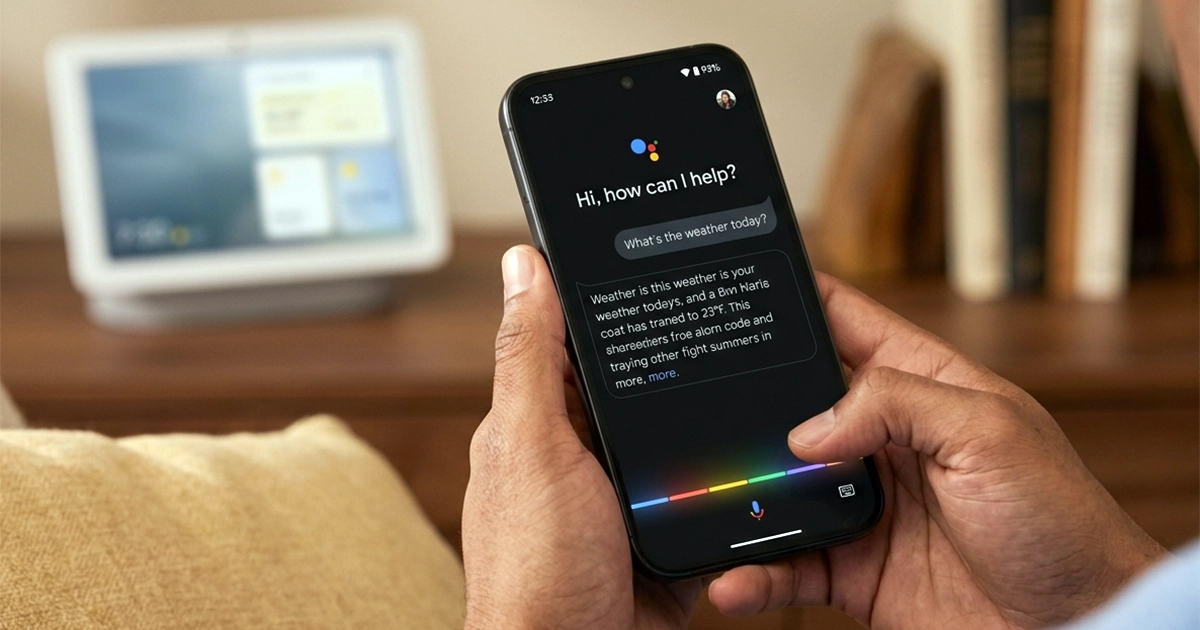
Google's $68 million settlement of claims that Google Assistant recorded people who never said "Hey Google" received final approval from a federal judge on October 13, 2026. Claims closed August 27, 2026, and no payment date has been announced.

Current Status: Final Approval Granted — Payments Pending
Claims are closed; the deadline was August 27, 2026. Judge Beth Labson Freeman granted final approval of the $68 million settlement in a written order on October 13, 2026 (ECF No. 584), after a hearing on October 1, and overruled all seven objections. The Court has directed Class Counsel to submit a proposed judgment, and payments follow entry of judgment and the end of any appeal. No payment date had been announced as of October 13, 2026. Claimants who already filed have nothing further to submit unless the Settlement Administrator contacts them.Emails About the Google Assistant Settlement — How to Check Them
During the claim period the Settlement Administrator emailed class members, including a REMINDER round headed "Google Assistant Privacy Litigation Settlement" that carried a Unique ID and PIN and stated the August 27, 2026 claim deadline. That deadline has passed, so a message urging you to file now is out of date. As the case moves toward payments, claimants may hear from the administrator again — and that is also when fake "settlement payment" messages tend to appear.Important: bulk-sent legal notices look like phishing to most inboxes, and a real message and a fake one can be hard to tell apart on sight. Do not sort it out by inspecting the email. Instead, open a browser, type GoogleAssistantPrivacyLitigation.com yourself, and compare what the email says with what the official site says. No legitimate settlement administrator charges a fee, and none will ask for a Social Security number, a bank login, or a payment to release a settlement check. If a message about this settlement asks for any of that, it is not the administrator.
If you are not sure whether a claim you submitted went through, look for the confirmation the claim form showed or emailed you at submission, or use the contact page on the official settlement website. Our Google Assistant settlement status update covers what happens between now and payments.
Free settlement alerts
Get notified when new class actions open to claims
Join thousands of readers who get the latest class action settlements you may qualify for — delivered straight to your inbox.
What Is the Google Assistant Privacy Class Action Settlement?
Did you buy a Google Home, Google Nest Hub, Google Home Mini, Google Home Max, Google Nest Hub Max, or Pixel smartphone in the last decade, or use Google Assistant on any Android phone, smart speaker, or smart TV? The $68 million Google Assistant privacy settlement covered those groups, but its claim deadline was August 27, 2026, and that date has passed. Claims could no longer be filed after it. Proof requirements varied by claim type: Privacy Class claims needed no receipt, while Purchaser Class claims required the device model, serial or IMEI number, and a receipt for every device claimed.The Google class action lawsuit, captioned In re Google Assistant Privacy Litigation, Case No. 5:19-cv-04286-BLF, is pending in the United States District Court for the Northern District of California before Judge Beth Labson Freeman. The Google lawsuit alleges that Google Assistant on Google-Made Devices and other Google Assistant Enabled Devices captured and transmitted audio recordings to Google's servers as a result of "False Accepts" (instances where the device incorrectly detected a Hot Word like "Okay Google" or "Hey Google" even though no one actually spoke one), and that Google then used those recordings, including by sharing them with third-party review vendors for human review.
The plaintiffs argued that this Google privacy conduct violated user privacy rights, breached Google's own Privacy Policy commitments, and constituted unlawful business practice under California consumer protection law. Google LLC and Alphabet Inc. deny all of the allegations and are settling without admitting fault. The Settlement Agreement was executed on January 22, 2026, and the Settlement Administrator is A.B. Data, Ltd.
30-Second Self-Test: Do I Qualify for the Google Assistant Settlement?
If you can answer yes to either of the two questions below, you likely qualify for the Google Assistant settlement. You can also qualify under both classes simultaneously.• Did you buy a Google Home, Google Home Mini, Google Home Max, Google Nest Hub, Google Nest Hub Max, or any Pixel smartphone in the United States between May 18, 2016 and March 19, 2026? If yes, you qualify under the Purchaser Settlement Class. You earn 4 points per device toward the pro rata payout, capped at 3 devices (12 points maximum from purchase claims).
• Did you use Google Assistant during that period (on any device, including non-Google phones and smart speakers), or were you a member of a household where someone else used Google Assistant? If yes, you may qualify under the Privacy Settlement Class if your communications were recorded by a False Accept or disclosed to a third-party review vendor. The Privacy Class earns 1 point.
The claim deadline for both classes was August 27, 2026, and it has passed, so answering yes now does not open a way to file. The Court granted final approval on October 13, 2026, so class members who filed are now waiting on judgment, the end of any appeal and claim review; those who did not file and did not opt out remain in the classes and are bound by its release.
Who Is Included in the Two Settlement Classes?
One distinctive feature of the Google Assistant settlement is its dual-class structure. Class members can qualify under one class, the other, or both, and benefits stack across classes. Both classes share the May 18, 2016 to March 19, 2026 class period, but their membership criteria are different.Purchaser Settlement Class: Users in the United States or its territories who purchased a Google-Made Device during the class period for personal use. The purchase can have been made directly from Google (Google Store) or through any authorized third-party retailer (Best Buy, Amazon, Target, Walmart, Costco, etc.). The Purchaser Class is defined by the actual purchase, not by who used the device after purchase. If you bought the device as a gift for someone else, you are still the class member.
Privacy Settlement Class: Users of Google Assistant (defined as individuals whose Google accounts were associated with at least one Google Assistant Enabled Device during the class period) or members of a User's Household whose communications were recorded by a False Accept or disclosed to any third-party review vendor. The Privacy Class is broader because it includes Google Assistant users on non-Google devices (Android phones from Samsung, OnePlus, Motorola, etc.; third-party smart speakers; smart TVs with built-in Google Assistant) and even non-users who happened to be present in a household where another person used Google Assistant.
Excluded from both classes are: judges and magistrates assigned to the case (and their staff and immediate families); Google, Alphabet, and their subsidiaries, officers, directors, and employees; previously-released claimants; people who validly opt out by the August 27, 2026 deadline; and people who file or serve a written arbitration demand against Google for the released claims and execute an individual release.
Eligible Google-Made Devices (Full List)
The Purchaser Settlement Class covers all Google-Made Devices manufactured and sold by Google between May 18, 2016 and March 19, 2026. The settlement specifically identifies three product categories of Google-Made Devices:| Google-Made Device | What It Is / Models Covered | Claim Points |
|---|---|---|
| Google Home | The original cylindrical smart speaker, released November 2016 and later discontinued | 4 per device |
| Google Home Mini | The puck-shaped compact speaker introduced in 2017; succeeded by the Nest Mini | 4 per device |
| Google Home Max | The large stereo speaker introduced in 2017 and discontinued in 2020 | 4 per device |
| Google Nest Hub | The 7-inch smart display, 1st generation (launched as Google Home Hub) and 2nd generation | 4 per device |
| Google Nest Hub Max | The 10-inch smart display with a built-in camera and stereo speakers | 4 per device |
| Pixel smartphones | Every Pixel model sold in the class period: Pixel and Pixel XL (2016), Pixel 2 / 2 XL, Pixel 3 / 3 XL / 3a, Pixel 4 / 4 XL / 4a, Pixel 5 / 5a, Pixel 6 / 6 Pro / 6a, Pixel 7 / 7 Pro / 7a, Pixel 8 / 8 Pro / 8a, Pixel 9 / 9 Pro / 9 Pro XL / 9a, and the Pixel 10 series through March 19, 2026 | 4 per device |
Device links go to Amazon and are affiliate links — OpenClassActions.com may earn a commission if you buy through them, at no cost to you. They are provided so you can identify or replace a device, not as a way to qualify: the class period closed on March 19, 2026, so a purchase made today is not a qualifying purchase. Buying a device does not create a claim, and the claim form asks for the serial or IMEI number and a receipt from the original purchase.
Each qualifying device is worth 4 points, and a claimant can submit up to three devices, so purchase claims top out at 12 points. Every device row on the claim form needs its own model name, serial or IMEI number, and uploaded proof of purchase.Important distinction for Android users: if you owned an Android phone made by Samsung, OnePlus, Motorola, Xiaomi, or another manufacturer (not Google) and used Google Assistant on that phone, your phone is not a Google-Made Device. You do not qualify under the Purchaser Class for that phone. However, you may still qualify under the Privacy Settlement Class as a Google Assistant user.
Other Google household products that do not have a microphone or that cannot run Google Assistant (Nest thermostats, Nest doorbells without microphones, certain Chromecast models without integrated microphones) are not Google Assistant Enabled Devices and do not qualify either class on their own.
Which Devices Qualify? (Samsung, Pixel, Nest & More)
The device you owned determines which class you can claim under, not whether you're shut out. There are two ways to qualify, and the same device can put you in one or both:Qualifies as a Google-Made Device (Purchaser Settlement Class): only hardware Google itself makes and sells. These earn purchase points (4 points each, up to 3 devices):
• Pixel smartphones — every model from the original Pixel/Pixel XL through the Pixel 10 series and a-series, Pro, and XL variants released through March 19, 2026
• Google Home, Google Home Mini, and Google Home Max smart speakers
• Google Nest Hub and Google Nest Hub Max smart displays
Qualifies only under the Privacy Settlement Class: non-Google devices that run Google Assistant. You don't get purchase points, but the Privacy Class (1 point) covered you if your communications were recorded by a False Accept or disclosed to a review vendor:
• Samsung Galaxy phones and other third-party Android phones (OnePlus, Motorola, Xiaomi, etc.) — a Samsung is not a Google-Made Device, so it does not qualify for the Purchaser Class, but a Samsung owner who used Google Assistant in the class period can qualify under the Privacy Class
• Third-party smart speakers and smart displays with Google Assistant built in
• Smart TVs and streaming devices with Google Assistant (for example, Chromecast with Google TV)
• Other Google Assistant–enabled devices such as Pixel Buds, Pixelbook, and tablets
Does not qualify on its own: Google products with no microphone or that cannot run Google Assistant — for example Nest thermostats, microphone-less Nest doorbells, and Chromecast models without an integrated microphone — are not Google Assistant Enabled Devices and do not qualify either class by themselves.
Bottom line on Samsung: yes, Samsung (and other non-Google Android) users can be part of the settlement — through the Privacy Class, not the Purchaser Class.
What Proof Did a Claim Require?
Claims closed on August 27, 2026. Proof requirements varied by claim type, which still matters during claim review:• Privacy Settlement Class: no purchase receipt was required. Claimants certified that they qualified under the Privacy Class definition and could be asked for identifying information about the applicable Google Assistant–enabled device depending on the claim-form path.
• Purchaser Settlement Class: documentation was mandatory. Claimants could list up to three Google-Made Devices, and for each one the claim form required the device model name, the serial number or IMEI number, and an uploaded proof of purchase (for example a Google Store or Best Buy receipt). A purchase claim could not be filed on an attestation alone.
In either case, the Claims Administrator (A.B. Data, Ltd.) may request additional information or documentation while reviewing a claim. Receiving a notice did not by itself establish eligibility — a claimant had to meet the applicable class definition and certify the claim accurately.
What Is a Google Assistant False Accept?
The technical heart of the Privacy Settlement Class allegation is a phenomenon called a False Accept. A False Accept is an instance where a Google Assistant Enabled Device records and transmits audio data to Google's servers because the device thought it heard a Hot Word (such as "Okay Google" or "Hey Google"), but no one actually spoke a Hot Word.False Accepts occur because voice-activated AI assistants use probabilistic acoustic models to detect Hot Words in ambient audio. The model produces false positives when it misinterprets ordinary speech, television audio, music, or background noise as a Hot Word. When a False Accept occurs, the device records a few seconds of subsequent audio and transmits it to Google's servers, where (during the class period) the audio was sometimes routed to third-party review vendors for human transcription and quality review.
The plaintiffs alleged that this practice exposed users' private conversations, sometimes including sensitive personal, medical, financial, or relationship discussions, to Google's review processes and third-party vendors without users' knowledge or consent. The plaintiffs argued this conduct violated California's Invasion of Privacy Act, breached Google's Privacy Policy commitments, and constituted an unlawful business practice. Google denies that any user audio was improperly captured or shared.
How Is the $68 Million Settlement Fund Allocated?
The Plan of Allocation uses a point system to divide the Net Settlement Fund among valid claimants. The Net Settlement Fund equals the gross $68 million minus court-approved attorneys' fees for Class Counsel — Scott+Scott Attorneys at Law LLP and Lowey Dannenberg, P.C. — up to one-third of the fund, expenses (up to $1.6 million), service awards to the named class representatives (up to $10,000 per representative), and notice and administration costs paid to the Settlement Administrator A.B. Data. Class Counsel filed the motion requesting those fees, expenses, and service awards on July 23, 2026. The Court ruled on it in the October 13, 2026 final approval order:• Attorneys' fees: $22,666,666.70, the full one-third requested. For its lodestar cross-check the Court lowered several attorneys' hourly rates it found unreasonable, and the fee still came to about 1.01 times the adjusted value of Class Counsel's recorded hours.
• Litigation expenses: $1,021,738.40, as requested.
• Service awards: $5,000 for each of the four class representatives, half the $10,000 requested.
Notice and administration costs are also paid from the fund before the per-point value is set.
Once the Net Settlement Fund is determined, points are allocated as follows:
• Purchaser Settlement Class members: 4 points per eligible Google-Made Device claimed, with a cap of 3 devices per claimant (maximum 12 points from Purchaser Class claims). A claimant who bought one Google Home gets 4 points; two devices yields 8 points; three or more devices yields the cap of 12 points.
• Privacy Settlement Class members: 1 point per claim. The Privacy Class covers a broader population (any Google Assistant user or household member affected by a False Accept) but pays a lower per-claimant amount because the harm theory differs from a direct purchase claim.
• Combined claims: A claimant who qualifies under both classes can claim under both. A purchaser of two Google-Made Devices who is also a Google Assistant user affected by False Accepts would receive 8 points (purchaser) plus 1 point (privacy) for a total of 9 points.
Final per-point dollar value will not be known until the Settlement Administrator finishes processing claims. The non-reversionary structure means that any unclaimed funds (after a possible second distribution to authorized claimants) flow to a court-approved nonprofit organization, not back to Google.
So what does that work out to per person? In a supplemental declaration filed September 17, 2026, A.B. Data preliminarily estimated a value of about $8 to $20 per point, based on more than 1.5 million claims. That is about $32 to $80 per device, $8 to $20 for a privacy-only claim, and $104 to $260 for the maximum 13-point claim (three devices plus the Privacy Class). The final approval order repeats an earlier estimate, made before claims were counted, of about $18 to $56 per Purchaser Class member and $2 to $10 per Privacy Class member; the September 17 per-point range is the more recent figure. Treat it as an estimate, not a promise: it assumes about $40 million is left after fees and costs, and it may change once claims are validated. The fee and expense awards were no larger than requested.
How Google Assistant Claims Were Filed
The claim window is closed, so this section records how filing worked for anyone checking a claim they submitted. Claims were filed online through the official Settlement Website or on a paper Claim Form postmarked by August 27, 2026. The form collected basic contact information from every claimant (name, current address, address during the class period, phone number, email address, and age verification). A Purchaser Class claim for Google-Made Devices also required the device model name, serial number or IMEI, and an uploaded proof of purchase for each device, while a Privacy Class claim needed no receipt. Class members who received an email notice could enter its Unique ID and PIN, and the form offered a separate path for people without those codes.Each claimant had to submit an individual Claim Form; bulk submissions by claims aggregators or assignees were not permitted, and a parent or legal guardian filed separately for a minor. The Settlement Administrator (A.B. Data, Ltd.) now reviews claims and may request additional information.
Key Google Assistant Settlement Deadlines
• Claim deadline: August 27, 2026 (passed)
• Opt-out deadline: August 27, 2026 (passed)
• Objection deadline: August 27, 2026 (passed)
• Notice of intent to appear at Final Approval Hearing: August 27, 2026 (passed)
• Final Approval Hearing: October 1, 2026 (held), before Judge Beth Labson Freeman, U.S. District Court for the Northern District of California, San Jose Courthouse
• Final approval granted: October 13, 2026 (ECF No. 584)
• Judgment: not yet entered as of October 13, 2026; Class Counsel were directed to submit a proposed judgment
The claim, opt-out, and objection windows all closed on August 27, 2026. The final approval order reports more than 40,000 late claims and notes that the Settlement Agreement gives the Settlement Administrator discretion to accept late claims; acceptance is not guaranteed. A class member with no accepted claim who did not opt out stays in the Settlement Classes, is bound by the release, and receives no payment.
When Will I Receive My Google Assistant Settlement Payment?
No payment date had been announced as of October 13, 2026. The Court granted final approval that day and directed Class Counsel to submit a proposed judgment with the list of people who opted out. Payments follow entry of judgment and the end of any appeal. In federal civil cases a notice of appeal is generally due within 30 days after judgment is entered; objectors whose objections were overruled can appeal, and an appeal can delay distribution by a year or more. Timing also depends on how long the administrator's claim review takes.The settlement agreement says payments are to be sent within 60 calendar days after the Effective Date, "or as soon as practicable thereafter," and the Effective Date arrives only once the judgment is final. By OCA's estimate, if judgment is entered soon and nobody appeals, that points to late January to February 2027 at the earliest. Our Google Assistant payout date estimate walks through each step.
The Settlement Administrator will calculate the per-point dollar value based on total valid claims, then issue payments by the method indicated on each claimant's Claim Form. Payment communications are expected to be sent digitally by email or text message. The final approval order lists the payment options as direct electronic transfer by ACH, Zelle, Venmo or PayPal, or a check. No payment can be issued before judgment is entered and any appeal is resolved.
What If I Did Not File a Claim?
If you did not file by August 27, 2026 and did not opt out, you remain in the Settlement Classes. With final approval granted on October 13, 2026, you are bound by the settlement and give up the right to sue Google or Alphabet over the released claims, including the False Accept and third-party review vendor disclosure claims, without receiving a payment unless the administrator accepts a late claim.Class members who opted out of the earlier certified Purchaser Class (September 9, 2024 opt-out deadline) could rejoin the expanded Settlement only by submitting a Claim Form by August 27, 2026. Those who did not rejoin, and anyone who opted out of this Settlement by the August 27, 2026 deadline, are excluded from it and keep the right to pursue their own claims. Written objections were also due by August 27, 2026. Seven class members objected, raising the size of the fee, the three-device cap, the serial-number and proof-of-purchase requirements, the value of the claims and the unnamed cy pres recipient; the Court overruled all seven.
Other Active Tech and AI Class Action Settlements
The Google Assistant settlement is one of several recent class actions involving tech companies and AI assistants. OCA covers related class actions on separate pages:• The Apple Siri Privacy Class Action Settlement (Lopez v. Apple), a $95 million settlement that resolved structurally similar allegations about Apple's Siri inadvertently recording private conversations. The Lopez settlement completed payments in January 2026.
• The Apple Intelligence iPhone 16 Class Action Settlement (Landsheft v. Apple), a $250 million proposed settlement filed May 5, 2026 over false advertising of Apple Intelligence Siri features. Different theory (false advertising rather than privacy violation), same defendant category.
Class members who own multiple voice-assistant-enabled devices (Google Home, Apple HomePod, iPhone with Siri, Pixel with Google Assistant, etc.) may qualify for one, both, or neither settlement depending on their devices and the relevant class periods. The settlements are independent.
Official Settlement Website: GoogleAssistantPrivacyLitigation.com
Official Settlement Notice
Sources
• Official Settlement Website: GoogleAssistantPrivacyLitigation.com• In re Google Assistant Privacy Litigation, Case No. 5:19-cv-04286-BLF, U.S. District Court for the Northern District of California, Hon. Beth Labson Freeman presiding
• Stipulation and Agreement of Settlement, dated January 22, 2026
• Long Form Notice of Proposed Class Action Settlement
• Motion for an Attorneys' Fees and Expense Award and for Plaintiffs' Service Awards, filed July 23, 2026 (posted on the official settlement website)
• Order Granting Final Approval of Class Action Settlement, Granting in Part and Denying in Part Fees Motion, and Overruling Objections (ECF No. 584), signed October 13, 2026: CourtListener
• Reminder Email Notice sent by the Settlement Administrator, A.B. Data, Ltd. (received by readers August 2026)
• TechRepublic: Google's $68 Million Settlement: Who Qualifies and How to File a Claim
• Yahoo Finance: Google $68 Million Privacy Settlement Payments coverage