If your teen cannot stop playing League of Legends and it is hurting their grades, sleep, or mental health, here is where the video game addiction litigation stands — and why there is no claim form yet.
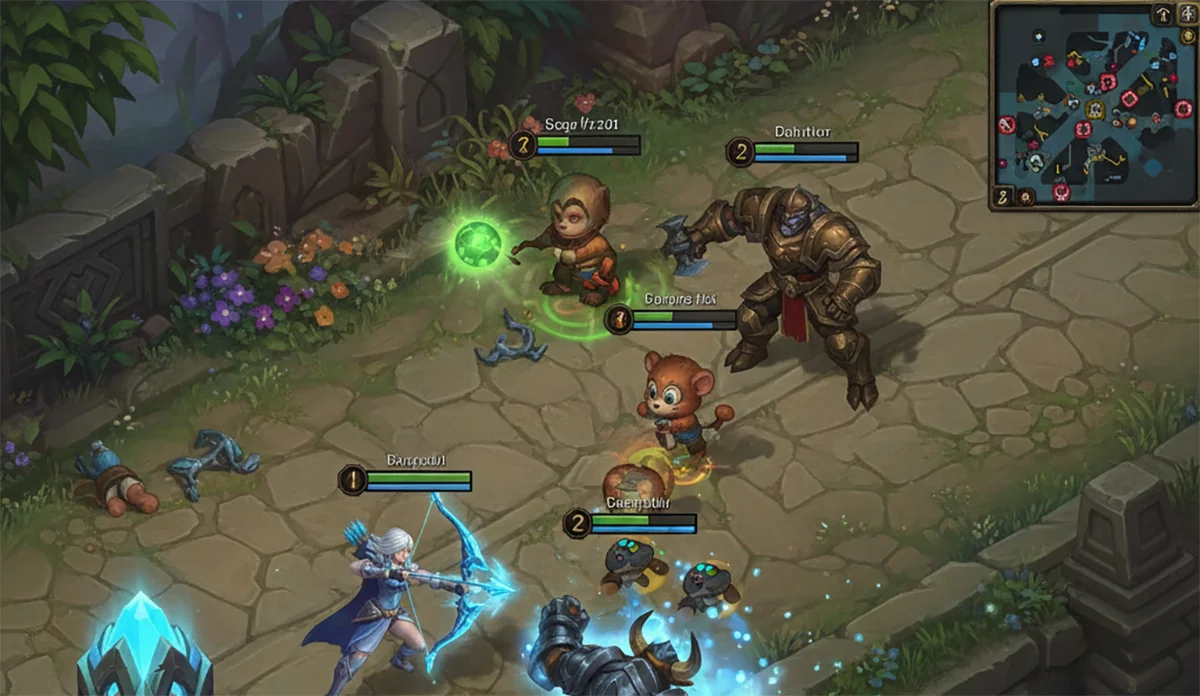

Background: The League of Legends Addiction Concerns
Riot Games, the maker of League of Legends, faced criticism over claims that the game was designed to be psychologically addictive — using ranked ladders, loot boxes, and matchmaking systems said to keep players, especially minors, playing compulsively for hours every day.The World Health Organization has recognized gaming disorder as a mental health condition.
What Made League of Legends Compulsive?
Critics pointed to specific design features said to keep players engaged:• Ranked ladder system: LoL's competitive ranked mode creates an endless chase for the next tier — Iron to Bronze to Silver to Gold and beyond. The system resets every season, forcing players to re-grind their rank. Every loss feels like it must be followed by "one more game" to recover lost progress
• Matches you can't leave: Ranked games typically last 25–45 minutes, and leaving early results in penalties and bans. Once you start a match, you're locked in — creating a commitment trap that extends play sessions far beyond what players originally intended
• Team-based social pressure: League is a 5v5 team game. Quitting or taking a break feels like abandoning your teammates. Friends and duo partners pressure each other to keep queuing. The social guilt keeps players logged in
• Loot boxes and Hextech Crafting: Riot Games sells randomized loot boxes where players spend real money (via Riot Points) without knowing what they'll receive. This mechanic mirrors gambling psychology — the random reward triggers a dopamine hit that drives compulsive spending. Multiple countries have classified loot boxes as gambling
• Manipulative matchmaking: The game's matchmaking algorithm is designed to alternate wins and losses, keeping players in an emotional roller coaster that makes it hard to stop on a loss and hard to stop on a winning streak
• Seasonal FOMO content: Limited-time skins, battle passes, and event rewards create fear of missing out, pushing players to log in daily and play more than they otherwise would
• Free-to-play model: By removing the financial barrier to entry, Riot ensures that anyone — including children with no spending money — can become hooked before the monetization kicks in
Hextech Chests, Keys, and Loot-Box Psychology in LoL
Riot Games’ Hextech Crafting system is the core loot-box mechanic inside League of Legends, and it is the feature most often cited in the investigation as a driver of compulsive spending by minors. Hextech Chests are loot boxes that can drop cosmetic skins, champion shards, emotes, and summoner icons. To open a chest, a player needs a Hextech Key, which can be earned slowly through play or — far more commonly — purchased with Riot Points (RP), Riot’s real-money currency. Chest rarities and drop rates are posted by Riot, but the key mechanic — uncertainty about what you will get — is the same variable-ratio reinforcement schedule that powers slot machines and has been recognized by researchers as structurally similar to gambling.Several jurisdictions have already classified paid loot boxes as a form of gambling or have restricted their sale to minors. Belgium’s Gaming Commission concluded in 2018 that loot boxes in multiple major games violated Belgian gambling law, and the Netherlands Gaming Authority reached similar findings. The United Kingdom’s Department for Digital, Culture, Media & Sport published a 2022 response to its loot-box consultation acknowledging evidence of a link between loot-box spending and problem gambling in adolescents. The LoL investigation draws on this same body of evidence.
Beyond Hextech, Riot operates the Prestige Shop and rotating event passes that gate limited-time skins behind currency earned by playing or purchasing. Mythic Essence — another Riot currency — can be converted from Hextech drops, creating layered currencies that make the real-dollar cost of any individual item difficult for a child to understand.
The Real Harm of League of Legends Addiction
This isn't about playing video games for fun. League of Legends addiction can cause serious, life-altering harm — especially in teens and young adults whose brains are still developing:Mental health damage:
• Depression and anxiety triggered by ranked losses and toxic teammates
• Emotional outbursts and rage (LoL's community is notorious for in-game toxicity that amplifies emotional distress)
• Diagnosed gaming disorder (recognized by the WHO)
• In severe cases, suicidal ideation linked to gaming addiction
Academic and career destruction:
• Failing grades from staying up all night playing ranked
• Dropping out of school or college
• Lost jobs from inability to focus or show up on time
Physical health problems:
• Computer vision syndrome (eye strain, blurred vision, headaches)
• Carpal tunnel and repetitive stress injuries from thousands of hours of clicking
• Chronic sleep deprivation from late-night gaming sessions
• Seizures in susceptible individuals
• Sedentary lifestyle leading to weight gain and related health issues
Social isolation:
• Withdrawing from real-world friends and family
• Replacing real relationships with online gaming relationships
• Missing family events, social activities, and milestones
Financial harm:
• Teens spending hundreds or thousands of dollars on Riot Points, skins, and loot boxes
• Parents discovering unexpected credit card charges from in-game purchases
• Money spent on cosmetics that have zero real-world value
What Parents Watched For
Warning signs that a child's League of Legends play had crossed from hobby into compulsive use included:• Playing 4+ hours every day and getting agitated when asked to stop
• Grades dropping after they started playing regularly
• Staying up late playing ranked games and being exhausted during the day
• Losing interest in activities they used to enjoy
• Becoming angry, hostile, or withdrawn when they couldn't play
• Spending significant money on skins, Riot Points, or loot boxes without a parent's knowledge
• Skipping meals, homework, or family events to keep playing
Where the League of Legends Addiction Litigation Stands
The video game addiction litigation is still active. The Judicial Panel on Multidistrict Litigation declined to create a consolidated MDL (Panel No. 3109 was denied in June 2024 and a second request, No. 3168, was denied in December 2025), but that rejection did not dismiss the underlying lawsuits. Individual cases continue, related cases in the Northern District of California are coordinated for discovery, and California state cases are coordinated as JCCP No. 5363. There is no settlement and no public claim form at this time, and some law firms are still reviewing potential individual cases involving serious, documented harm. Separately, the Social Media Addiction Lawsuit covers harm to minors from platforms like Instagram, TikTok, Snapchat, YouTube, and Facebook — that is a different, ongoing case, not a replacement for the video game addiction lawsuits.Video game addiction cases are still being reviewed
There is no settlement claim form or federal MDL
Some law firms are still reviewing potential individual cases involving serious, documented harm. To find out whether you may have an individual case, you would generally speak with a licensed attorney who handles this litigation. Submitting information does not guarantee representation, eligibility, compensation or the filing of a lawsuit.
Separately, social media addiction lawsuits (Instagram, TikTok, Snapchat, YouTube, Facebook) are a different, ongoing litigation — not a replacement for the video game cases.
Sources
• World Health Organization — Gaming Disorder (ICD-11)• Cleveland Clinic — Video Game Addiction