Published
February 10, 2026
Updated
September 28, 2026
The FTC ordered Amazon to pay $2.5 billion over deceptive Prime sign-up and cancellation practices — $1.5 billion goes to consumers, and many will get automatic refunds up to $51 with no claim form.
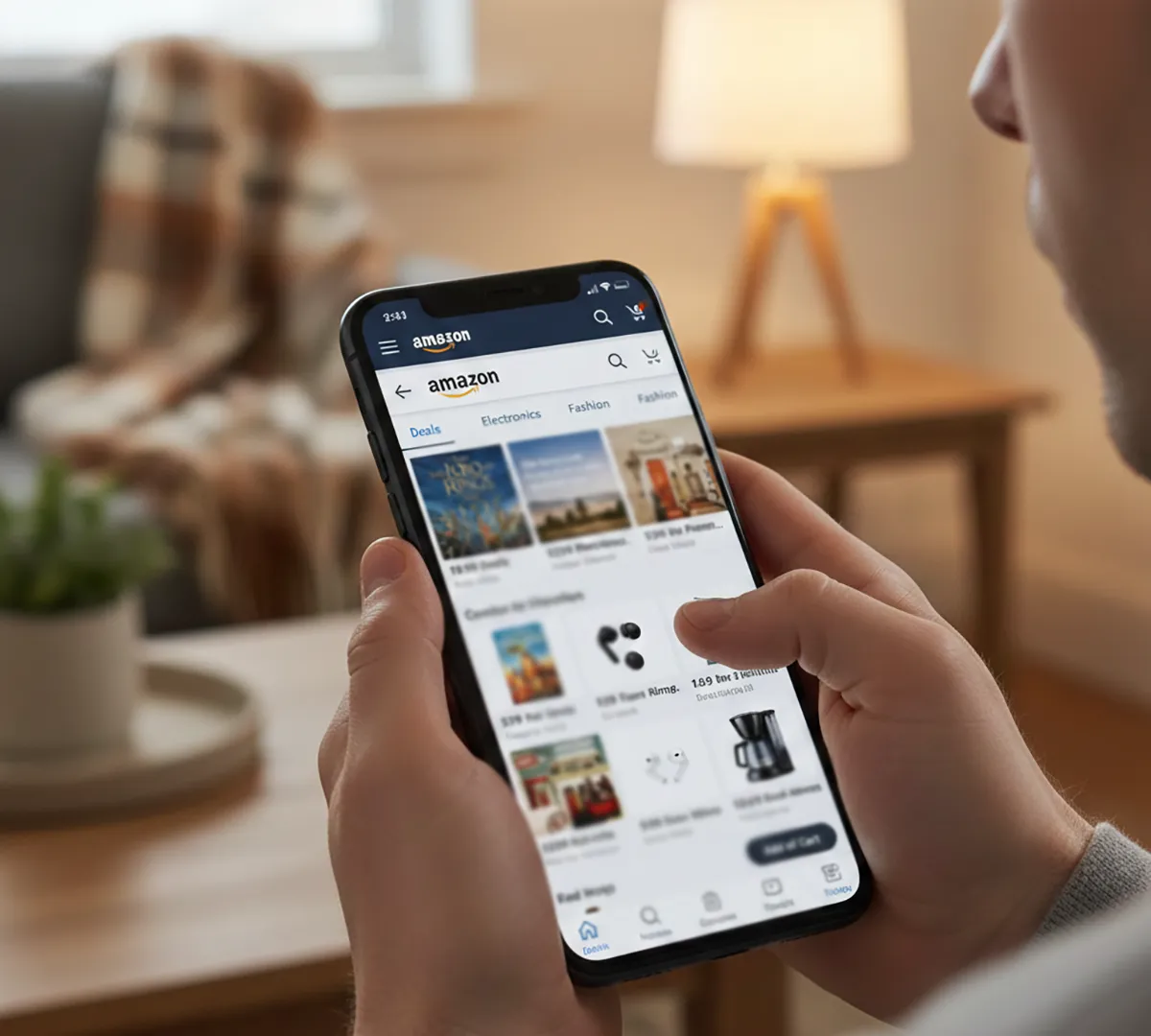

Of that total, $1.5 billion goes directly to consumers through a dedicated Consumer Fund. Eligible consumers can receive up to $51 per person, and some will get automatic refunds without filing any claim. The remaining $1 billion is a civil penalty paid to the U.S. government.
The court order was entered on September 25, 2025, by Judge John H. Chun in the U.S. District Court for the Western District of Washington. Amazon neither admitted nor denied the allegations.
What Is the Amazon Prime FTC Settlement About?
The FTC alleged that Amazon violated the FTC Act and the Restore Online Shoppers' Confidence Act (ROSCA) through two core practices:1. Deceptive enrollment ("Dark Patterns")
The FTC accused Amazon of using manipulative page designs — known as "dark patterns" — to trick consumers into unknowingly signing up for Prime during checkout. Amazon collected billing information before disclosing the full terms of the Prime subscription, and used confusing button layouts that made it easy to accidentally enroll.
Internal Amazon documents revealed the company was aware of the problem. Despite employee pushback urging changes, leadership allegedly slowed or rejected fixes because they feared it would hurt revenue.
2. Impossible cancellation ("The Iliad Flow")
Even after consumers realized they were signed up, canceling was designed to be extremely difficult. Amazon's cancellation process was internally nicknamed the "Iliad Flow" — a reference to Homer's epic — because it was long, complex, and filled with "save offers" designed to prevent you from completing the cancellation. Many consumers who tried to cancel either gave up or were tricked into accepting a save offer instead of actually canceling.
On September 17, 2025, the court granted the FTC's partial motion for summary judgment, finding that Amazon Prime is subject to ROSCA, that Amazon obtained billing information before disclosing material terms (a violation), and that individual defendants Neil Lindsay and Jamil Ghani had authority to control the enrollment and cancellation flows.
Status
Refunds Underway
FTC enforcement action · final order entered September 25, 2025
Settlement Amount
$2.5 Billion
$1.5B consumer refunds + $1B civil penalty
Award Amount
Up to $51 per person
a refund of Prime membership fees paid
Proof Required
Automatic Payment
auto-pay for many (≤3 Prime benefits/yr); a simple claim form for others (4–10)
How Much Is the Total Settlement?
The total judgment is $2,500,000,000, broken down as follows:• $1,500,000,000 — Consumer Fund for direct refunds to eligible consumers
• $1,000,000,000 — Civil penalty paid to the U.S. government ($500M due within 14 days, remaining $500M within 18 months)
Amazon must also pay all administration costs separately — nothing is deducted from the Consumer Fund. Every dollar of the $1.5 billion goes to consumers.
If less than $1 billion is paid out through the initial rounds, Amazon must continue making additional automatic payments to more consumers until at least $1 billion reaches consumers.
Learn More — FTC Prime Settlement
Free settlement alerts
Get notified when new class actions open to claims
Join thousands of readers who get the latest class action settlements you may qualify for — delivered straight to your inbox.
How Do I Qualify for a Refund?
You are an "Eligible Consumer" if either of the following happened to you between June 23, 2019 and June 23, 2025:• Unintentional enrollment: You were signed up for Amazon Prime through one of Amazon's deceptive enrollment pages (called "Challenged Enrollment Flows") without clearly understanding what you were agreeing to
• Failed cancellation: You tried to cancel your Amazon Prime subscription online but either couldn't complete the process or were tricked into accepting a "save offer" instead of actually canceling
The "Challenged Enrollment Flows" include the Universal Prime Decision Page, the Shipping Option Select Page, the Prime Video enrollment flow, and the Single Page Checkout.
How Much Will I Get Paid?
Eligible consumers can receive up to $51, representing a refund of Prime membership fees paid. The exact amount depends on which category you fall into:Tier 1: Automatic Pay Out (no claim form needed)
If you enrolled through a deceptive flow and used 3 or fewer Prime benefits in any 12-month period, Amazon will pay you automatically. You'll receive up to $51 (the total Prime fees you paid during that subscription), and Amazon must send these payments within 90 days of the court order. You don't need to do anything.
Tier 2: Claims Process (claim form required)
If you meet the eligibility criteria but used between 4 and 10 Prime benefits in any 12-month period, Amazon will send you a claim form. You'll need to confirm that you were unintentionally enrolled or unable to cancel. If approved, you'll receive up to $51. You'll have 180 days after receiving the form to submit it.
Tier 3: Expanded Automatic Payments (if funds remain)
If less than $1 billion has been paid out after Tiers 1 and 2, Amazon must keep making automatic payments to additional consumers — starting with those who used 4 benefits, then 5, then 6, and so on — until at least $1 billion reaches consumers.
Note: "Prime Benefits" includes goods or services you received because you were a Prime member (like Prime Video, Prime Music, Prime Reading, etc.) but does not include free expedited shipping if the item would have shipped at that speed for free anyway.
Do I Need to File a Claim?
For Tier 1 (Automatic Pay Out): No. If you qualify for automatic payment, Amazon must pay you within 90 days with no action on your part.For Tier 2 (Claims Process): Yes. Amazon will send you a claim form by email and/or mail. You'll have 180 days to return it. The form is simple — you just need to confirm you were unintentionally enrolled or couldn't cancel.
Amazon is setting up a settlement website (with links posted on amazon.com and amazon.com/amazonprime) where eligible consumers can find more official Amazon Settlement information. The entire settlement program must be completed within 16 months of the court order.
What Is the Relevant Time Period?
The settlement covers consumers affected between June 23, 2019 and June 23, 2025. If your enrollment or failed cancellation attempt happened outside this window, you are not covered by this settlement.What Changes Does Amazon Have to Make?
Beyond the money, the court order requires Amazon to make permanent changes to how it handles Prime subscriptions. These rules last 10 years:• Disclose all terms before collecting billing info: Amazon must clearly and conspicuously show all material Prime subscription terms — including cost, auto-renewal, and how to cancel — before it collects any payment information
• Get clear consent: Amazon must get express, affirmative consent before charging consumers for Prime
• Simple cancellation: Cancellation must not be "difficult, costly, confusing, or time consuming" and must be available through the same medium the consumer used to sign up
• Clear decline button: Every sign-up page must include a clear option to decline Prime (and it can't use manipulative language like "No thanks, I don't want free shipping")
• Remove double-stacked sign-up buttons: The confusing button layouts are banned
• Use the word "renews": All sign-up pages must indicate the auto-renewal feature
• Always show the price: The cost and auto-renewal terms must appear on every sign-up page
Who Are the Defendants?
• Amazon.com, Inc. — the company• Neil Lindsay — Amazon executive with authority over Prime enrollment and cancellation flows
• Jamil Ghani — Amazon executive with authority over Prime enrollment and cancellation flows
The order binds Amazon for 10 years and the individual defendants for 3 years.
Who Oversees the Settlement?
The court appointed an independent, third-party Claims Supervisor to monitor Amazon's compliance with the settlement. This supervisor:• Reviews all automatic payments and claims to ensure Amazon is following the rules
• Files reports with the Court every 3 months for 18 months
• Has full access to Amazon's documents and records
• Is paid by Amazon (not from the Consumer Fund)
The FTC also retains compliance monitoring authority for 5 years, including the power to request documents, conduct depositions, and send undercover representatives.
What Are the Important Dates?
• Court Order Entered: September 25, 2025
• Amazon Deposits $1.5B Into Consumer Fund: Within 30 days of order (~October 25, 2025)
• First Civil Penalty Payment ($500M): Within 14 days of order (~October 9, 2025)
• Automatic Payments Distributed: Within 90 days of order (~late December 2025)
• Claim Forms Sent to Eligible Consumers: Within 30 days after automatic payouts complete
• Claim Submission Window: 180 days from receiving claim form
• Entire Settlement Program Completed: Within 16 months of order (~January 2027)
• Second Civil Penalty Payment ($500M): Within 18 months of order (~March 2027)
• Order Expires: 10 years after entry (September 2035)
How Is This Different From a Typical Class Action?
This is not a class action lawsuit — it's an FTC enforcement action. That's an important distinction:• No opt-out or objection process: Unlike class actions, there's no deadline to exclude yourself or object. The settlement was reached between the FTC and Amazon.
• No attorneys' fees from the fund: The entire $1.5 billion Consumer Fund goes to consumers. Amazon pays all administration costs separately.
• Government oversight: A court-appointed Claims Supervisor and the FTC monitor the entire process, not a private settlement administrator.
• Civil penalties on top of refunds: Amazon pays an additional $1 billion in penalties to the government, on top of the consumer refunds.
What Should I Do Right Now?
• Check the FTC’s refund page: Go to the FTC’s Amazon refunds page for eligibility and payment updates. The claim filing period has passed.• Check your email: Amazon and the settlement administrator will send claim forms and settlement information by email. Make sure emails from Amazon and the settlement administrator aren't going to your spam folder.
• Check your bank account: If you qualify for automatic payment, a refund of up to $51 should appear within ~90 days of September 25, 2025.
• Watch amazon.com: Amazon is required to post settlement information on its homepage and Prime page. You can also check Amazon's official settlement help page.
• Don't contact Amazon Customer Service: Amazon has confirmed that Customer Service reps do not have information about the settlement. All questions must go through the settlement administrator.
• Bookmark this page: We'll update it as claim forms are distributed and payments are issued.
Where to File a Claim or Check Your Eligibility
Amazon has set up official settlement pages for both the FTC Prime Settlement and the Amazon Returns settlement. Here's where to go:FTC Prime Subscription Settlement:
If you were enrolled in Amazon Prime without your clear consent or couldn't cancel, see the FTC’s Amazon refunds page:
FTC Amazon refunds page
Customers who may be eligible for payment will receive notice from the settlement administrator. Amazon Customer Service does not have information about the settlement — all questions must go through the settlement administrator's website.
Amazon Return Policy Litigation (Separate Case):
If a refund for an Amazon return went missing, arrived late, came up short or was charged back, a separate $309.5 million class action settlement covers it, and its claim portal is now open at:
www.returnsettlement.com
Class members were notified by email and sign in with the Notice ID and Confirmation Code from that notice. Subclass A members are paid automatically and only choose a payment method; Subclass B members must file a claim, with proof they sent each item back, by December 1, 2026. Our Amazon returns settlement guide explains both subclasses and what to do without a Notice ID. You can also check the status of your Amazon returns and refunds through "Your Transactions" in your Amazon account.
Amazon's Official Settlement Information Page:
Amazon Help: Amazon Settlement
Official Court Order
Sources
• Court Docket: Federal Trade Commission v. Amazon.com, Inc. et al., Case No. 2:23-cv-0932-JHC (W.D. Wash.)• FTC Case Page: FTC v. Amazon.com, Inc. (ROSCA)
• Stipulated Final Order filed September 25, 2025 (ECF No. 535)
• Court's Partial Summary Judgment Order, September 17, 2025 (ECF No. 492)
• Amazon Help — Amazon Settlement: Amazon.com Settlement Page
• FTC Amazon refunds: FTC Amazon refunds page
• Amazon Returns Settlement Administrator: returnsettlement.com
About This Article
This page covers an FTC enforcement settlement, not a private class action. Amazon is administering the consumer refund process under court supervision. OpenClassActions.com is a consumer news site and is not affiliated with the FTC, Amazon, or any party in this case.
For more class actions keep scrolling below.