Illinois residents for whom Amazon created an Alexa Voice ID voiceprint on or after June 27, 2014 belong to a class a federal judge certified in a lawsuit alleging Amazon violated the Illinois Biometric Information Privacy Act. The Amazon Alexa case has not settled, and there is no claim form or payment.

Allegations Only · No Settlement Yet
This article describes a pending class action. The claims against Amazon are unproven allegations. A class has been certified, but certification is not a finding that Amazon did anything wrong. Amazon has not been found liable, there is no settlement, and there is nothing to claim at this time. This page is informational. It is not legal advice.
What Is This About?
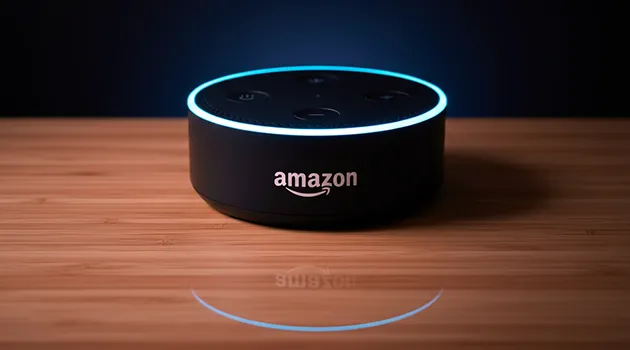
The case, captioned Wilcosky v. Amazon.com, Inc., Case No. 1:19-cv-05061, alleges that Amazon used its Alexa Voice ID feature to create voiceprints of people in Illinois without the written notice and consent required by the Illinois Biometric Information Privacy Act (BIPA). Voice ID lets Alexa recognize individual speakers in a household so it can personalize responses. Amazon denies the allegations.The lawsuit began in Illinois state court and was moved to the U.S. District Court for the Northern District of Illinois in July 2019, where it is assigned to Judge Franklin U. Valderrama. On November 6, 2025, the court certified a class. It is now one of the few BIPA voice-data cases against a major technology company to reach a certified class.
Free settlement alerts
Get notified when new class actions open to claims
Join thousands of readers who get the latest class action settlements you may qualify for — delivered straight to your inbox.
Who Is in the Certified Class?
The court's November 6, 2025 order certified a class of "all natural persons in Illinois for whom Amazon created a voiceprint on or after June 27, 2014." The class is limited to Illinois. People in other states are not members, even if they used Alexa Voice ID.Certification means the court found the claims suitable to proceed on behalf of the whole group rather than only the individuals who sued. It does not decide whether Amazon violated BIPA, and it does not create a settlement or a right to payment.
Timeline of the Case
- July 2019: The case is moved from Illinois state court to federal court in Chicago.
- November 6, 2025: The court grants class certification in part and certifies the Illinois class.
- February 9, 2026: The parties mediate before a retired magistrate judge. The session does not produce a settlement, and talks continue.
- March 13, 2026: The Seventh Circuit denies Amazon's petition for permission to appeal the certification order (No. 25-8032).
- April–July 2026: The parties file a series of joint status reports on discovery and settlement, and the class notice deadline is extended.
- August 11, 2026: The court postpones the deadline to seek approval of a class notice plan until after a second mediation.
- October 29, 2026: Second mediation scheduled.
- November 5, 2026: Joint status report on settlement due to the court.
What BIPA Provides
BIPA requires private companies to tell people in writing that biometric identifiers, such as a voiceprint, are being collected, explain the purpose and how long the data will be kept, and obtain a written release before collecting it. The statute also requires a public retention and destruction policy.BIPA lets people sue over violations and sets liquidated damages of $1,000 for each negligent violation and $5,000 for each intentional or reckless violation, or actual damages if greater. Whether Amazon is liable, and what any recovery would be, has not been decided.
What Happens Next
The next milestone is the October 29, 2026 mediation. The court ordered a settlement status report by November 5, 2026. If the parties reach a deal, it would go to the court for preliminary approval, and only then would a claims process, claim deadline and settlement website be set up.If the case does not settle, the plaintiffs are expected to ask the court to approve a plan for notifying class members, and the case would continue toward summary judgment or trial. OpenClassActions will update this page after the November status report.
Questions
Is there an Amazon Alexa Voice ID settlement?
No. As of October 7, 2026, the Amazon Alexa Voice ID biometric privacy case has not settled. There is no settlement fund, claim form, claim deadline or payment. A February 2026 mediation did not produce a settlement, and a second mediation is scheduled for October 29, 2026.
Who is in the certified Amazon Alexa Voice ID class?
The court certified a class of all natural persons in Illinois for whom Amazon created a voiceprint on or after June 27, 2014. People outside Illinois are not part of the certified class.
Is there anything to file in the Amazon Alexa Voice ID case?
No. There is no claim form because there is no settlement or judgment. The court has not yet approved a plan for notifying class members; that deadline was put off until after the October 29, 2026 mediation. A court-approved notice, if one is sent, would describe class members' options.
What happens after the October 29, 2026 mediation?
The court ordered the parties to file a status report on settlement by November 5, 2026. If the case settles, the settlement would need court approval before any claims process opens. If it does not settle, the case continues toward a class notice plan and further litigation.
What does the Amazon Alexa Voice ID lawsuit claim?
The plaintiffs allege that Amazon created voiceprints of Illinois Alexa users through its Voice ID feature without meeting the notice and written-consent requirements of the Illinois Biometric Information Privacy Act (BIPA). Amazon denies the allegations, and no court has found that Amazon violated the law.
Did Amazon appeal the class certification ruling?
Amazon asked the U.S. Court of Appeals for the Seventh Circuit for permission to appeal the November 6, 2025 class certification order. The Seventh Circuit denied that petition on March 13, 2026, so the certified class stands.
Sources
- Wilcosky v. Amazon.com, Inc., No. 1:19-cv-05061 (N.D. Ill.) — court docket on CourtListener, including the November 6, 2025 class certification order (Dkt. 272), the Seventh Circuit order denying review (Dkt. 287) and the August 11, 2026 scheduling order (Dkt. 303)
- Illinois Biometric Information Privacy Act, 740 ILCS 14