Published
December 7, 2025
Workers' comp is a no-fault safety net, but it isn't always the only path to recovery — here is how a third-party lawsuit can fill the gaps after a workplace injury.

The Exclusive Remedy of Worker's Compensation
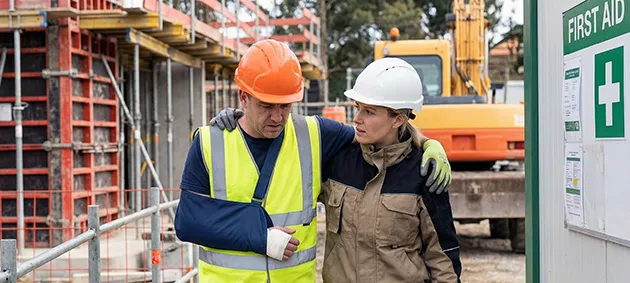
The path to compensation is rarely a single route when an employee is injured on the job. Workers' compensation insurance provides a necessary safety net but is not always the exclusive source of recovery. Knowing the difference between workers' compensation and third-party lawsuits helps injured workers get fair compensation. This blog explores how both legal avenues help injured workers pursue full recovery.The Exclusive Remedy of Worker's Compensation
Workers' compensation is a no-fault system that gives benefits to injured employees regardless of how the accident happened. This assures prompt access to coverage for medical expenses and a portion of lost wages. In return for this assured benefit, the employee usually gives up any right to sue the employer directly for negligence, making workers' comp the “exclusive remedy” against the employer.Yet, this system has inherent limitations. Workers' compensation does not cover non-economic damages, such as loss and suffering or pain of enjoyment of life. Benefits replace any part of a worker's weekly wage and may not match their total financial loss. This restricted scope is why seeking alternative compensation methods is frequently an essential next step.
Pursuing a Third-Party Liability Claim
A third-party lawsuit occurs when the legal responsibility for the injury in the workplace is attributed to a party other than the employer. It is a conventional negligence action against the at-fault party. Examples include a defective component in a company's machine, a careless driver who hits a worker on a worksite, or a careless property owner whose unsafe premises lead to an accident.An effective third-party claim enables an injured employee to recover damages unavailable under workers' comp. This includes full lost wages, future earning capacity, and compensation for pain and suffering. Strategic coordination is necessary to maximize recovery when workers' compensation is pursued alongside a third-party case, which is why many injured workers seek the help of a Boca Raton personal injury lawyer to identify liable parties and build a strong claim.
Coordinating the Two Recovery Paths
It is legally permitted to file a workers' compensation claim and a third-party lawsuit simultaneously. Nonetheless, the two actions are distinct and involve different processes and standards of proof. The worker's compensation insurer often takes a lien on third-party settlements to recover benefits paid, and this must be repaid from the lawsuit proceeds.A successful legal approach during these claims safeguards the injured worker's overall financial compensation. A resolution in a third-party lawsuit must consider the worker's comp lien while ensuring sufficient compensation for future medical expenses and additional damages. Proper handling ensures that the employee is made as whole as possible under the law, taking full advantage of both systems.
Endnote
The overlap between workers' compensation and third-party liability presents a complex yet significant opportunity for injured workers. Workers' compensation gives immediate benefits, but third-party claims may provide full compensation over time. To secure a stable future after a workplace injury, it helps to have skilled legal counsel.
For more class actions keep scrolling below!