If you shopped at a California Lowe's, a new class action alleges the retailer used Flock ALPR cameras to track your license plate and vehicle data without a legally compliant privacy policy — here's what the lawsuit claims and where the case stands.

Allegations Only · No Settlement Yet
This article describes a class action complaint. The statements below are unproven allegations. Lowe's has not been found liable, there is no certified class, and there is nothing to claim at this time. This page is informational and is not legal advice.
What Is the Lowe's License Plate Class Action About?
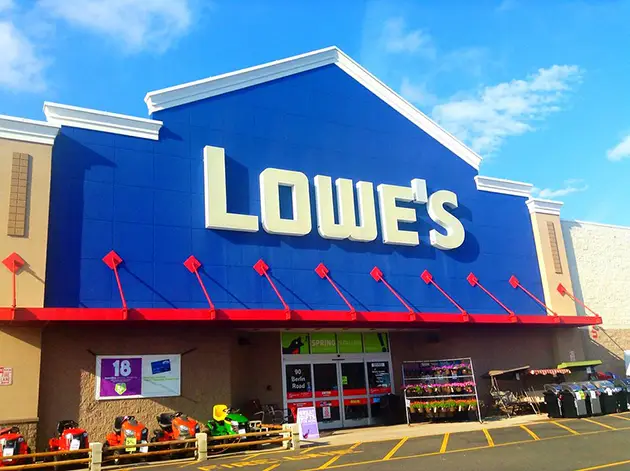
On April 2, 2026, two Sacramento County residents filed a proposed class action against Lowe's Home Centers, LLC and its parent, Lowe's Companies, Inc., alleging the home-improvement retailer used automated license plate recognition (ALPR) cameras to track shoppers' vehicles at its California stores without a privacy policy that meets the requirements of California law. The case, captioned Grimes et al. v. Lowe's Home Centers, LLC et al., was originally filed in the Superior Court of California, County of Sacramento, Case No. 26CV008109.According to the complaint, Lowe's installed ALPR cameras supplied by vendor Flock Safety at the Folsom, California Lowe's store, and — the complaint alleges — at many or all of its roughly 112 California locations. The cameras allegedly captured what the complaint calls "Vehicle Tracking Data": license plate numbers, vehicle make, model, and other identifying characteristics, plus a time-stamped record of each vehicle's location, and transmitted that data to Flock for aggregation into its nationwide surveillance database. The plaintiffs are represented by Siri & Glimstad LLP.
On May 8, 2026, Lowe’s removed the case to the U.S. District Court for the Eastern District of California, along with a second Lowe’s license plate case, Harhay v. Lowe’s Home Centers, LLC. U.S. District Judge Dena M. Coggins consolidated the two on June 29, 2026 for all purposes, including trial, under the lead case number 2:26-cv-01757-DC-JDP. The plaintiffs filed a consolidated complaint on July 14, 2026, and on August 28, 2026 Lowe’s filed a motion to dismiss and a second motion the docket lists under change of venue. As of October 25, 2026, the docket shows no ruling on either. Lowe’s has not admitted wrongdoing, and the allegations on this page have not been proven.
What Does the Lawsuit Claim Lowe's Did Wrong?
California's ALPR Privacy Act, enacted in 2015 (Cal. Civ. Code § 1798.90.5 et seq.), requires any business that operates or uses ALPR cameras to draft, publicly post, and adhere to a usage and privacy policy covering seven specific elements — including who is authorized to access the data, how long it is retained, and what restrictions apply to sharing it with third parties. You can read more about the law in our ALPR & license plate reader privacy explainer.The complaint acknowledges that Lowe's did post an ALPR usage and privacy policy on its website, but alleges the policy is deficient in several respects. According to the complaint, Lowe's policy:
• Lists only vague "authorized purposes." The complaint alleges Lowe's policy cites broad, largely undefined purposes like "security" and "safety" without describing any process or restriction on how that data is actually used.
• Names an inadequately defined custodian. The Act requires identifying the title of the official responsible for the ALPR system. The complaint alleges Lowe's names a "Vice President of Asset Protection" but does not describe that role's actual duties or authority under the statute.
• Sets an open-ended retention period. The complaint alleges Lowe's policy says data is kept "typically no more than 90 days" but may be retained longer for an "active investigation" or "legal obligation" — language the complaint calls a non-answer that permits effectively indefinite retention.
• Places few restrictions on sharing. The complaint alleges Lowe's shares ALPR data with law enforcement, the National Center for Missing and Exploited Children, and undefined "select service providers," without describing any process governing those disclosures.
• Provides no described training or audit process. The complaint alleges the policy does not adequately describe the training required for employees with access to the data, or how the system is monitored and audited for compliance.
Lowe's has not yet responded to these allegations in court, and the Court has not ruled on whether Lowe's policy actually violates the statute.
Free settlement alerts
Get notified when new class actions open to claims
Join thousands of readers who get the latest class action settlements you may qualify for — delivered straight to your inbox.
Why the Lawsuit Focuses on Flock Safety
Flock Safety (Flock Group, Inc.) is the vendor the complaint says supplied and operates the ALPR cameras at Lowe's California stores. The complaint describes Flock as one of the largest ALPR providers in the country, alleging its cameras are deployed by more than 5,000 law enforcement agencies, 6,000 communities, and 1,000 businesses, and that Flock's network processes roughly 20 billion license plate scans every month across at least 80,000 cameras nationwide.According to the complaint, once a Flock customer like Lowe's shares its camera feed with Flock, the data is merged into the broader "Flock Safety Network," which other Flock customers and, according to public reporting cited in the complaint, law enforcement agencies can search. The complaint alleges this arrangement lets Lowe's benefit from access to vehicle data captured by other businesses' cameras in exchange for contributing its own shoppers' data to the network — the basis for the complaint's unjust enrichment claim.
The complaint also cites several publicly reported incidents involving Flock's broader network — including allegations that a Kansas police chief used Flock to track an ex-girlfriend, and that a Texas sheriff searched thousands of camera networks to locate a woman who had obtained an abortion — as context for its argument that ALPR data, once aggregated into a searchable national database, carries a meaningful risk of misuse beyond its stated retail security purpose. These incidents did not involve Lowe's; they are cited in the complaint as background on Flock's network generally.
Who Is in the Proposed Class?
The complaint proposes a class of:"All citizens of the State of California who, as a result of Defendants' use of Flock ALPRs, had their Vehicle Tracking Data accessed and/or acquired while visiting Defendants' Lowe's properties located in California and/or while driving within a 75-foot radius of those locations."
Excluded from the class are Lowe's and its parents, subsidiaries, and affiliated entities; its officers, directors, and their families; the judge assigned to the case and their staff and family; and claims for personal injury, wrongful death, or property damage. The complaint alleges the class includes at least 1,000 people; separately, in seeking to remove the case to federal court, Lowe's own filings estimate the class could exceed 2,000 people given its roughly 112 California store locations. No class has been certified, and Lowe's is expected to contest certification.
What Laws Does the Lawsuit Invoke?
The complaint brings four counts: (1) violation of California's ALPR Privacy Act, Cal. Civ. Code § 1798.90.5 et seq.; (2) invasion of privacy under Article I, Section 1 of the California Constitution; (3) common-law invasion of privacy; and (4) unjust enrichment. Under the ALPR Privacy Act, the complaint seeks statutory liquidated damages of the greater of actual damages or $2,500 per class member, plus punitive damages and attorneys' fees. The other counts seek compensatory and punitive damages, injunctive relief, and disgorgement of any profits Lowe's gained through its participation in the Flock network.From State Court to Federal Court: The CAFA Removal
After being served with the complaint in April 2026, Lowe's removed the case from Sacramento County Superior Court to federal court on May 8, 2026, relying on the Class Action Fairness Act (CAFA). Under CAFA, a defendant can move a class action to federal court when the class has at least 100 members, there is "minimal diversity" (meaning at least one class member is a citizen of a different state than any defendant), and the amount in controversy exceeds $5 million.In its Notice of Removal, Lowe's argued all three requirements were met: the proposed class likely exceeds 2,000 people; the named plaintiffs are California citizens while both Lowe's entities are citizens of North Carolina; and multiplying an estimated 2,000-plus class members by the $2,500 statutory minimum alone would exceed $5 million, before accounting for punitive damages or attorneys' fees. Removing a case under CAFA is a common defense tactic in large consumer class actions and is not, by itself, a comment on the merits of the underlying claims. The case is now pending in the U.S. District Court for the Eastern District of California.
Consolidation and Lowe’s Motion to Dismiss
Lowe’s removed a second license plate case, Harhay v. Lowe’s Home Centers, LLC, No. 2:26-cv-01757, on the same day. Judge Coggins related the two cases on June 25, 2026 and, on the parties’ joint stipulation, consolidated them on June 29, 2026 for all purposes, including trial. Harhay is the lead case, and the Grimes docket has been administratively closed, with all filings now made under the lead case number. The order gave the plaintiffs 14 days to file a consolidated complaint and Lowe’s 45 days after that to respond.The plaintiffs filed the consolidated complaint on July 14, 2026. On August 28, 2026, Lowe’s filed a motion to dismiss, a request for judicial notice, and a motion the court’s docket indexes under change of venue. Those filings are not on the free public docket, so OCA has not reviewed Lowe’s arguments or where it may be asking the case to go. The court entered a scheduling minute order on October 20, 2026 whose contents are also not public. As of October 25, 2026, the docket shows no ruling on either motion.
Part of a Broader Wave of ALPR Lawsuits
The Lowe's case is not an isolated filing. Home Depot faces a similar pending complaint over its use of Flock ALPR cameras at California stores — see our coverage of the Home Depot license plate surveillance class action — and other retailers, medical centers, and commercial properties that deployed Flock cameras face comparable claims. A separate case takes aim at the vendor itself rather than its customers: see our coverage of the Flock license plate data class action, which alleges California plate scans were made searchable by federal and out-of-state agencies. Much of this litigation wave traces its legal theory to a February 2026 California Court of Appeal decision, Bartholomew v. Parking Concepts, Inc., which held that failing to post a compliant ALPR policy is itself an injury under the statute, without requiring proof that any individual's data was actually misused. That theory — if it holds up — is central to cases like this one.Where the Case Stands
• No settlement and no claim form. No class has been certified, and any recovery would depend on the case surviving Lowe’s motions, class certification and trial or a settlement. Any message offering a Lowe’s license plate payment does not come from this case.• Pending motions. Lowe’s August 28, 2026 motion to dismiss and its venue motion are awaiting a ruling.
• The legal backdrop. A July 20, 2026 California Court of Appeal decision, Mata v. Digital Recognition Network, Inc., is being cited by defendants in other California ALPR cases. Home Depot, in its own consolidated case, describes Mata as affirming judgment against ALPR plaintiffs who could not show the harm the statute requires, and contrasts it with the earlier Bartholomew ruling plaintiffs rely on.
Frequently Asked Questions
Is there a Lowe's license plate settlement?
No. The consolidated case is at the motion-to-dismiss stage, no class has been certified, and there is no settlement or claim form. Lowe’s moved to dismiss on August 28, 2026.
What does the lawsuit allege Lowe's did wrong?
That Lowe's used Flock ALPR cameras at its California stores to capture shoppers' license plate and vehicle data without a privacy policy that meets all the requirements of California's ALPR Privacy Act, including an adequately identified custodian, a defined retention period, and meaningful restrictions on data sharing.
Who filed the lawsuit, and where does it stand now?
Two Sacramento County residents, represented by Siri & Glimstad LLP, filed Grimes April 2, 2026 in Sacramento County Superior Court (Case No. 26CV008109). Lowe’s removed it to the U.S. District Court for the Eastern District of California on May 8, 2026, and the court consolidated it on June 29, 2026 with Harhay v. Lowe’s Home Centers, LLC, now the lead case, No. 2:26-cv-01757-DC-JDP, before Judge Dena M. Coggins.
How much is the lawsuit seeking?
At least $2,500 per class member in statutory damages under California's ALPR Privacy Act, plus punitive damages, restitution, injunctive relief, and attorneys' fees. These are requested damages, not an available payout.
Does this cover Lowe's stores outside California?
No. The proposed class is limited to California, because the lawsuit is based on California's ALPR Privacy Act, a state law.
Is there anything to file if I shopped at a California Lowe's?
No. There is no settlement, no certified class and no claim form at this stage.
Sources
• Grimes et al. v. Lowe's Home Centers, LLC et al., Case No. 2:26-cv-01760-JDP, U.S. District Court for the Eastern District of California (Notice of Removal and Class Action Complaint, filed May 8, 2026; originally filed as Case No. 26CV008109, Superior Court of California, County of Sacramento, April 2, 2026) — docket via Justia• Lead case: Harhay v. Lowe’s Home Centers, LLC, No. 2:26-cv-01757-DC-JDP (E.D. Cal.), CourtListener docket
• Order granting the parties’ joint stipulation to consolidate (June 29, 2026)
• California ALPR Privacy Act: Cal. Civ. Code § 1798.90.5 et seq.
• Plaintiffs' Counsel: Siri & Glimstad LLP
• Defendants' Counsel: Ballard Spahr LLP
• Related litigation: Home Depot license plate surveillance class action, N.D. Cal.
• ALPR Vendor Named: Flock Group, Inc. (d/b/a Flock Safety)