Published
March 18, 2026
Updated
June 19, 2026
If your child logs compulsive hours in Minecraft, here is where the video game addiction litigation actually stands — and why there is no settlement or claim form yet.

Background: The Minecraft Addiction Concerns
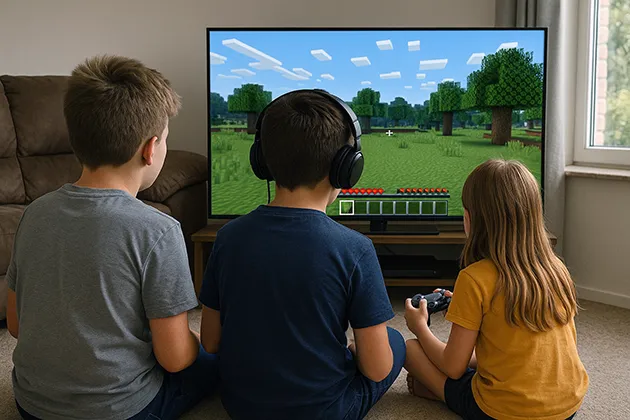
Minecraft is one of the best-selling video games in history, with over 300 million copies sold worldwide. A large portion of its player base is children — many under 13 years old. The game drew scrutiny over claims that its design features were engineered to create compulsive play patterns in children, and that the companies behind it — Mojang Studios and its parent company Microsoft — did not do enough to warn parents about the addictive potential or build meaningful safeguards into the product.
Status
Active Litigation
federal MDL rejected, but individual video game addiction lawsuits are still moving through the courts
Claim
None
no settlement or public claim form at this time
New Cases
Under review
some law firms are still reviewing potential individual cases involving serious, documented harm
Why Was Minecraft Considered Compulsive?
Minecraft looks simple. It looks creative. It looks safe. But the game's core mechanics are built on the same psychological principles that make slot machines and social media feeds compulsive. Here is what makes Minecraft particularly problematic for children.Minecraft has no ending. Unlike a book or a movie that reaches a conclusion, Minecraft is an infinite sandbox. There is always one more thing to build, one more cave to explore, one more village to find. For a child's developing brain, this open-ended structure removes the natural stopping points that help regulate play behavior. There is never a moment where the game says "you finished" — because you never do.
The mining and loot system uses variable-ratio reinforcement — the same reward pattern used in gambling. When a player mines blocks, they do not know when they will find diamonds, emeralds, or rare resources. This unpredictability is what makes the activity compulsive. The player keeps mining because the next block could be the jackpot. Behavioral psychologists have identified variable-ratio reinforcement as the most addictive reward schedule known.
Minecraft's multiplayer servers create social pressure. When children play on shared servers with friends — building towns together, defending against enemies, maintaining farms — the social obligation keeps them logged in. Leaving the game feels like abandoning their friends. This is especially powerful for children who may struggle with social connections in real life and find it easier to maintain friendships inside Minecraft.
The Minecraft Marketplace sells skins, worlds, texture packs, and add-ons for real money (using a virtual currency called Minecoins). Seasonal events and limited-time content create FOMO (fear of missing out) that pressures children into spending time and money in the game. The marketplace has generated hundreds of millions in revenue.
Minecraft's "survival mode" creates artificial urgency. If the player does not build shelter before nightfall, hostile mobs (zombies, skeletons, creepers) spawn and attack. This time-pressure mechanic keeps players engaged beyond when they intended to stop — they cannot log off until they are "safe."
How Bedrock Edition, the Marketplace, and Realms Plus Monetize Minors
Not every version of Minecraft is built the same, and the difference matters for parents trying to understand how their child’s in-game spending got out of hand. Minecraft ships in two primary editions: Java Edition (PC-only, no built-in Marketplace) and Bedrock Edition (Xbox, PlayStation, Nintendo Switch, Windows 10/11, iOS, Android, and Chromebook). Bedrock Edition is where nearly all of Mojang and Microsoft’s monetization of children happens.The Minecraft Marketplace is embedded directly into the main menu of Bedrock Edition. Children do not have to leave the game or open a browser to spend money — the store appears on the title screen. Purchases are priced in Minecoins, a proprietary virtual currency that deliberately disconnects the child from the real-dollar cost. Minecoin packs are sold in bundles starting around 320 coins ($1.99) and scaling up to 8,000 coins ($39.99 and up). Pricing items in coins rather than dollars makes a $5 skin pack feel like “500 coins,” which behavioral economists describe as currency obfuscation.
Minecraft Realms Plus is a subscription service ($7.99/month) that gives children access to a private persistent server plus a rotating library of Marketplace content. Subscription pressure, combined with the social obligation of maintaining a Realm with friends, was cited by critics as a mechanism that extends compulsive play.
Limited-time seasonal content — holiday bundles, Minecraft Live tie-ins, and event passes — creates fear-of-missing-out pressure identical to the mechanics used in much more overtly monetized live-service games. Children who do not buy before a window closes lose access to content permanently.
What Harm Can Minecraft Addiction Cause?
When a child plays Minecraft excessively — consistently more than 21 hours per week — the effects can ripple through every area of their life. Addiction is not just "playing too much." The World Health Organization recognized Gaming Disorder as a diagnosable condition in 2019, defined by impaired control over gaming, increasing priority given to gaming over other activities, and continuation despite negative consequences.The harms documented in video game addiction cases include social isolation (withdrawing from family and real-world friends), mental health impacts (anxiety, depression, emotional outbursts, irritability when not playing), academic decline (falling grades, missed assignments, inability to concentrate in class), sleep disruption (playing late into the night, chronic fatigue), physical effects (eye strain, repetitive stress injuries, sedentary lifestyle weight gain), and financial impact (unauthorized in-game purchases through the Minecraft Marketplace).
Where the Minecraft Addiction Litigation Stands
The video game addiction litigation is still active. The Judicial Panel on Multidistrict Litigation declined to create a consolidated MDL (Panel No. 3109 was denied in June 2024 and a second request, No. 3168, was denied in December 2025), but that rejection did not dismiss the underlying lawsuits. Minecraft is among the games named in the second MDL request and in the coordinated Northern District of California cases; individual cases continue, those NDCal cases are coordinated for discovery, and California state cases are coordinated as JCCP No. 5363. There is no settlement and no public claim form at this time, and some law firms are still reviewing potential individual cases involving serious, documented harm. Separately, the Social Media Addiction Lawsuit covers harm to minors from platforms like Instagram, TikTok, Snapchat, YouTube, and Facebook — a different, ongoing case, not a replacement for the video game lawsuits.Video game addiction cases are still being reviewed
There is no settlement claim form or federal MDL
Some law firms are still reviewing potential individual cases involving serious, documented harm. To find out whether you may have an individual case, you would generally speak with a licensed attorney who handles this litigation. Submitting information does not guarantee representation, eligibility, compensation or the filing of a lawsuit.
Separately, social media addiction lawsuits (Instagram, TikTok, Snapchat, YouTube, Facebook) are a different, ongoing litigation — not a replacement for the video game cases.
Related Investigations
• Video Game Addiction Lawsuit — All Games Under Investigation• Overwatch Addiction Lawsuit Investigation
• Fallout Addiction Lawsuit Investigation
Important Disclosures
This is a legal advertisement. Attorney advertising disclaimer: The information you obtain at this site is not, nor is it intended to be, legal advice. You should consult an attorney for advice regarding your individual situation. Contacting us does not create an attorney-client relationship. Prior results do not guarantee a similar outcome. No class action settlement has been reached in this matter and there is no public claim form at this time, but the video game addiction litigation is still active — the federal MDL was rejected but individual and coordinated lawsuits remain ongoing, and some law firms are still reviewing potential individual cases. OpenClassActions.com is a consumer advocacy and class action news site, and is not a class action administrator or a law firm.
For more class actions keep scrolling below.