Published
July 2, 2026
Updated
August 5, 2026
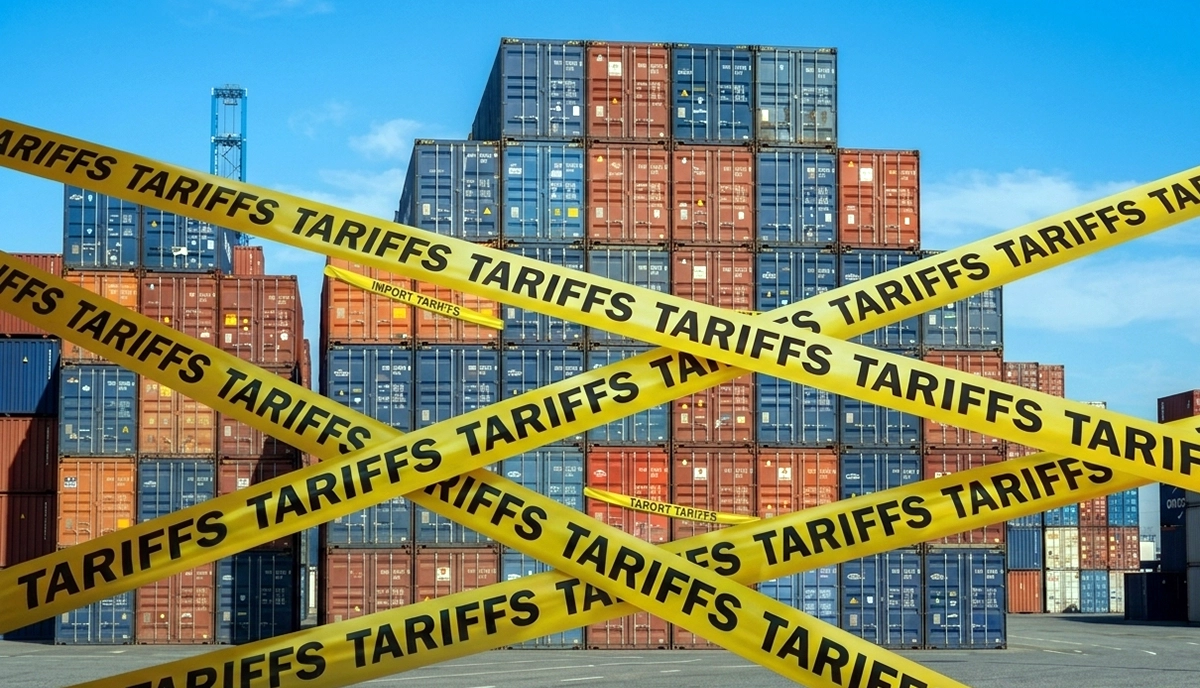
If you bought products from Amazon between February 2025 and February 2026 — imported or U.S.-made — these lawsuits could affect you, though there is no settlement or claim form yet.


Allegations Only · No Settlement Yet
This article describes a class action complaint. The statements below are unproven allegations. Amazon has not been found liable, there is no certified class, and nothing to claim at this time. This page is informational and is not legal advice.
What Is This About?
Amazon.com, Inc. is facing a proposed class action lawsuit alleging that the e-commerce giant raised prices to pass tariff costs along to shoppers — including on U.S.-sourced goods that were never subject to tariffs — and now stands to collect government refunds of those same tariffs, while the shoppers who allegedly paid the inflated prices have no comparable path to get their money back. Amazon has not been found liable, and the allegations remain unproven.The case is captioned Rittenhouse v. Amazon.com, Inc., Case No. 2:26-cv-03392, and is pending in the U.S. District Court for the Eastern District of New York. The named plaintiff, a New York resident from West Islip, says he bought garden tools such as hose nozzles, hose splitters, and an electric wood chipper shredder directly from Amazon during the tariff period. According to the complaint, Amazon acts as the importer of record for a substantial portion of the imported goods it sells, signing the customs declarations and paying the tariffs at the border, then setting the retail prices its customers pay. The complaint asserts claims under New York's consumer protection statutes (General Business Law §§ 349 and 350) along with unjust enrichment and money had and received. Amazon has not been found liable, and the claims remain unproven.
Status
Complaint Filed · Proposed Class Action
Four fronts — Rittenhouse (E.D.N.Y.), Lasseter (M.D. Fla.), Sangha (N.D. Ohio) & the consolidated Markland/Rosen case (W.D. Wash.)
Allegation
Tariff costs passed to shoppers — including on non-tariffed U.S. goods — while Amazon stands to collect government refunds
IEEPA tariffs were struck down; the complaint alleges a potential double recovery worth hundreds of millions of dollars
Can I Claim?
No — nothing to claim yet
No settlement announced, no class certified, and no public consumer claim form at this stage
Latest: Amazon Confirms a $600M Tariff Refund and Says Some Shoppers Will Be Repaid
On its second-quarter earnings call on July 30, 2026, Amazon disclosed that it received approximately $600 million in tariff refunds during the quarter and said it will return part of that money to customers. Chief Financial Officer Brian Olsavsky said Amazon has identified a limited set of circumstances where it can trace that it passed specific import charges on to customers, and that in those cases it will proactively contact affected customers and automatically issue refunds. The rest, he said, will be used to invest in low prices the way other large retailers are handling their refunds.Two details temper what that means for shoppers. Olsavsky said the roughly $600 million represents the significant majority of what Amazon expects to collect — modest next to the $2.2 billion Apple reported for the same quarter — because Amazon pre-positioned inventory ahead of the tariffs and is not the importer of record for the large majority of items sold in its store. Third-party sellers, who account for more than 60% of products sold on the platform, import many goods directly and have been pursuing their own refunds. There is no claim form, no eligibility list, and no timetable; Amazon said it will reach out to affected customers itself. Our full breakdown is here: Amazon got $600 million in tariff refunds — and some of it is going back to shoppers.
The disclosure matters most to a third case. Two proposed class actions filed May 15, 2026 in the U.S. District Court for the Western District of Washington — Markland v. Amazon.com, Inc. and Rosen v. Amazon.com, Inc., Nos. 2:26-cv-01670 and 2:26-cv-01823, before Judge Tana Lin — were consolidated on June 29, 2026. Those complaints alleged not only that Amazon passed tariff costs to shoppers but that it was declining to pursue the government refunds it was entitled to in order to curry favor with the administration, and that it had no intention of returning any of the money. Amazon's announcement that it both sought and received refunds, and will repay some customers, cuts against that specific allegation. It does not answer the broader theory in the New York, Florida, and Ohio cases below, which turn on price increases spread across Amazon's product line — including on U.S.-sourced goods — that no traceable, order-level refund would reach. Amazon has not been found liable in any of these cases, no class has been certified, and there is nothing to claim.
Free settlement alerts
Get notified when new class actions open to claims
Join thousands of readers who get the latest class action settlements you may qualify for — delivered straight to your inbox.
Amazon Now Faces a Parallel Tariff Class Action in Florida
The Rittenhouse case is no longer the only one. On July 14, 2026, a second proposed class action making the same core allegations was filed against Amazon in the U.S. District Court for the Middle District of Florida, captioned Lasseter v. Amazon.com, Inc., Case No. 8:26-cv-02019. The named plaintiff, a Florida resident from Ruskin, says she bought products directly from Amazon during the tariff period — including a Turnart electronic dartboard — at prices the complaint alleges were inflated by Amazon's pass-through of IEEPA tariff costs, and that she also paid higher prices on U.S.-sourced goods that were never tariffed.The Florida complaint tracks the same theory and the same February 4, 2025 through February 20, 2026 class period as the New York case, with the same two proposed subclasses (tariffed imported goods and non-tariffed U.S.-sourced goods). Where it differs is the legal vehicle: instead of New York's consumer statutes, it brings claims under the Florida Deceptive and Unfair Trade Practices Act (FDUTPA), Florida's false-advertising statute (Fla. Stat. § 817.41), unjust enrichment, and money had and received. Like Rittenhouse, it is a newly filed complaint — Amazon has not responded, no class has been certified, and there is nothing to claim. The parallel filings signal that plaintiffs' firms are pressing this tariff "double recovery" theory against Amazon in more than one court.
A Fourth Front: The Ohio Case Filed the Day Before Amazon's Refund Disclosure
On July 29, 2026, another proposed class action on the same pass-through theory was filed in the U.S. District Court for the Northern District of Ohio, Eastern Division, captioned Sangha v. Amazon.com, Inc., Case No. 1:26-cv-01777. It is the first of the tariff cases to name Amazon.com Services LLC — the subsidiary that runs Amazon's day-to-day U.S. e-commerce, logistics, and fulfillment operations — as a defendant alongside Amazon.com, Inc. The named plaintiff, an Ohio resident from North Royalton, says she bought goods listed as "Sold by: Amazon.com" during the tariff period, including a Neutrogena fragrance-free daily facial moisturizer purchased on February 16, 2025, and that she paid higher prices on both imported and U.S.-sourced items.The class period and the two proposed subclasses are the same as in the New York and Florida cases. The legal vehicle is again different: alongside unjust enrichment and money had and received, the Ohio complaint brings a claim under the Ohio Consumer Sales Practices Act (Ohio Rev. Code § 1345.02) and seeks statutory and treble damages under it. It also frames the refund gap in blunter terms than its predecessors, alleging that only the importer of record may seek a refund, that Amazon recouped the duty at the register, and that Amazon is therefore positioned to recover the same tariff twice — once from its customers and once from the government.
The timing is worth noting. The Ohio complaint was filed one day before Amazon's July 30 earnings call and alleges that Amazon "has not returned any portion of those costs it passed on to consumers, and it has no intention of doing so." Amazon's disclosure the following day — that it received roughly $600 million in refunds and would automatically repay customers where it can trace a specific import charge to an order — post-dates that allegation. Whether the disclosure answers it is a question for the court, and it does not reach the broader pass-through theory about prices spread across the product line. Amazon has not been found liable, no class has been certified, and there is nothing to claim.
The Tariff "Double Recovery" Problem
The lawsuit fits a wave of consumer cases built on how U.S. tariff law works, alongside similar tariff-refund suits already filed against other major retailers like Ralph Lauren, Puma, Columbia Sportswear, IKEA, Nike, Zara, Nintendo, Walmart, and Costco. When a tariff is imposed, the importer of record — here, Amazon, for a substantial share of the goods it sells — pays the duty at the border and typically raises retail prices to recover that cost, so the shopper effectively pays part of the tariff at checkout.When a tariff is later struck down, the refund mechanism gives importers of record — not retail consumers — the direct path to seek reimbursement from the government. The refund flows back to whoever paid the duty at the border, not to the shopper who paid the higher retail price. The complaint argues this lets a large retailer collect higher prices from consumers during the tariff period and then collect a refund afterward, recovering twice for the same economic burden. It asks the court to require Amazon to return the tariff costs it allegedly passed on to customers, with interest, or a proportionate share of any tariff refunds Amazon recovers.
Higher Prices on U.S.-Made Goods, Too
A notable feature of this complaint is that it does not stop at imported products. It alleges that rather than confining tariff costs to the imported goods that generated them, Amazon spread those costs across its product line — raising prices on U.S.-sourced goods that were never subject to IEEPA tariffs. On that theory, the complaint proposes two subclasses: purchasers of tariffed imported goods, and purchasers of non-tariffed U.S.-sourced goods whose prices were allegedly inflated to offset Amazon's tariff costs elsewhere.The complaint cites independent research in support. It points to analyses finding that retail prices rose on both imported and domestically produced goods as retailers spread tariff-related costs across their product lines, that tariff pass-through added roughly 0.7 percentage points to the Consumer Price Index by September 2025, and that the lowest-priced product varieties saw the steepest increases — around 5 percent — because retailers had the least margin room to absorb the cost. Federal Reserve research cited in the complaint found that U.S. businesses and consumers together bore nearly 90 percent of the cost of the 2025 tariffs, and the complaint says American consumers paid more than $231 billion in tariff costs between February 2025 and January 2026 — an average of roughly $1,745 per family.
Amazon's Own Statements About Tariffs and Prices
The complaint leans on public statements by Amazon's Chief Executive Officer, Andy Jassy. In April 2025, Mr. Jassy said he expected sellers to pass the cost of the IEEPA tariffs on to consumers, and by January 2026 he acknowledged the tariffs had begun to "creep" into Amazon's prices, with increases in some cases unavoidable. The complaint also cites a June 2025 analysis of more than 1,400 China-made products sold by Amazon that found their median price rose 2.6 percent between January and mid-June 2025 — outpacing core-goods inflation — and a July 2025 study of 2,500 products finding Amazon had raised prices on roughly 1,200 low-cost goods by an average of 5.2 percent.The complaint further alleges that Amazon knows exactly how much of each price is tariff-driven: in April 2025, Amazon reportedly prepared to display, for each product, the amount of its price attributable to the tariffs — a plan it abandoned within days after the White House publicly objected and the President spoke with Amazon's founder. The complaint argues this shows Amazon tracks the tariff component of its prices and can identify each consumer who paid a tariff-inflated price from its transaction records.
The IEEPA Tariffs and the Supreme Court Ruling
Beginning in February 2025, the federal government imposed tariffs on imports from numerous countries by invoking the International Emergency Economic Powers Act (IEEPA). On February 20, 2026, the U.S. Supreme Court ruled that IEEPA does not authorize the President to impose tariffs, invalidating those duties in Learning Resources, Inc. v. Trump, 607 U.S. ___ (2026). In March 2026, the Court of International Trade ordered that entries subject to IEEPA tariffs be liquidated or reliquidated "without regard to IEEPA duties," opening the door for importers of record to recover what they paid. A U.S. Customs and Border Protection official estimated the total IEEPA duties collected at approximately $166 billion.That refund process is what the lawsuit targets. Importers can apply to recover the duties through U.S. Customs and Border Protection's CAPE tariff-refund portal — but consumers who shouldered the cost through higher prices have no direct government mechanism to get their money back. Given Amazon's size, the complaint alleges the company is likely entitled to collect hundreds of millions of dollars in refunds attributable to costs its customers actually bore.
What the Lawsuit Seeks
The complaint brings four claims — deceptive acts and practices under New York General Business Law § 349, false advertising under § 350, unjust enrichment, and money had and received — and asks the court to:• Certify the case as a class action, with the two proposed purchaser subclasses, and appoint the named plaintiff's counsel as class counsel.
• Declare that Amazon must return to class members all funds paid by consumers to cover IEEPA tariff costs, with interest.
• Enjoin Amazon from continuing the alleged unlawful and unfair pricing practices.
• Award restitution, damages (including treble and punitive damages where available), disgorgement, pre- and post-judgment interest, and attorneys' fees and costs.
All of these are requests for relief tied to unproven allegations; Amazon has not been found to have done anything unlawful, and no money has been awarded.
Is There an Amazon Tariff Settlement Yet?
No. This is important: Rittenhouse v. Amazon.com, Inc. is a newly filed lawsuit, not a settlement.That means:
• There is no settlement fund.
• There is no claim form.
• There is no payout, and no deadline to act.
• Consumers do not need to do anything at this stage.
The filing of a complaint is the very beginning of a case, not the end. Amazon has not been found liable simply because a lawsuit was filed, and the case remains pending unless and until a newer docket entry says otherwise. If the case is ever resolved through a settlement or a class is certified, a formal claims process with its own eligibility rules and deadlines would be announced separately.
Who Could Be Affected?
The complaint proposes two subclasses covering purchases made between February 4, 2025 and February 20, 2026 — the period the complaint says the IEEPA tariffs were in effect:• An Imported Product Subclass: people who bought goods from Amazon that were themselves subject to IEEPA tariffs, at prices Amazon allegedly increased to pass those tariffs through.
• A U.S.-Sourced Product Subclass: people who bought U.S.-sourced goods from Amazon that were not tariffed, at prices Amazon allegedly increased to spread its tariff costs across its product line.
No class has been certified, and the final class definitions, if any, could change. The complaint estimates the proposed class includes tens of millions of purchasers nationwide, identifiable through Amazon's own order and payment records. If you bought products from Amazon during that window, it may be worth keeping your order history handy in case a class is later certified and a claims process opens. There is nothing to file right now.
Beware of Amazon Tariff Refund Scams
Important: whenever a class action is filed against a household-name brand, scammers send fake "tariff refund" texts, emails, and calls asking shoppers to click a link, confirm bank details, or pay a small "processing fee." There is no Amazon tariff refund claim form right now, and Amazon has not announced any consumer refund program. A legitimate claims process — if one ever exists — would be run by a court-appointed settlement administrator, would be free to participate in, and would never ask for your banking passwords, gift cards, or up-front fees.What Happens Next?
From here, the case will move through the normal early stages of federal litigation. Amazon may file a response to the complaint or a motion to dismiss, the parties may exchange information in discovery, and the plaintiff would, at some point, ask the court to certify a class. Any of these steps can take months, and the case could also be amended, narrowed, or resolved along the way.OpenClassActions.com will continue watching the docket for any major updates, including a motion to dismiss, settlement talks, class certification activity, or any future claim form.
Frequently Asked Questions
What does the Amazon lawsuit allege?
According to the complaint, Amazon raised prices to pass IEEPA tariff costs to shoppers — spreading those costs even onto U.S.-sourced goods that were never tariffed — and, as an importer of record, stands to collect government refunds of those same tariffs after they were struck down, while its customers have no comparable refund process. The allegations are unproven.Is there anything to claim right now?
No. There is no settlement, no fund, and no claim form. Anyone asking you to file a claim or pay a fee for an Amazon tariff refund today is running a scam.Who could be covered?
Generally, U.S. purchasers who bought either tariffed imported goods or non-tariffed U.S.-sourced goods from Amazon at allegedly tariff-inflated prices between February 4, 2025 and February 20, 2026. The exact class definitions are not final because no class has been certified.Is this the only Amazon tariff lawsuit?
No. Amazon faces proposed tariff class actions in four federal courts. Three of them cover the same February 4, 2025 through February 20, 2026 period and the same two subclasses, differing mainly in which state's consumer statute they invoke: Rittenhouse v. Amazon.com, Inc. in the Eastern District of New York; Lasseter v. Amazon.com, Inc., filed July 14, 2026 in the Middle District of Florida (FDUTPA and Fla. Stat. § 817.41); and Sangha v. Amazon.com, Inc., filed July 29, 2026 in the Northern District of Ohio (Ohio Consumer Sales Practices Act). Separately, two suits filed May 15, 2026 in the Western District of Washington — Markland v. Amazon.com, Inc. and Rosen v. Amazon.com, Inc. — were consolidated on June 29, 2026 on the theory that Amazon was declining to pursue the refunds it was entitled to, an allegation Amazon addressed with its July 30, 2026 disclosure. No case has been certified, and there is nothing to claim.Sources
• Class Action Complaint, Rittenhouse v. Amazon.com, Inc., No. 2:26-cv-03392 (E.D.N.Y., filed June 5, 2026).• Class Action Complaint, Lasseter v. Amazon.com, Inc., No. 8:26-cv-02019 (M.D. Fla., filed July 14, 2026).
• Class Action Complaint, Sangha v. Amazon.com, Inc. & Amazon.com Services LLC, No. 1:26-cv-01777 (N.D. Ohio, filed July 29, 2026).
• Class Action Complaints, Markland v. Amazon.com, Inc. & Rosen v. Amazon.com, Inc., Nos. 2:26-cv-01670 & 2:26-cv-01823 (W.D. Wash., filed May 15, 2026; consolidated June 29, 2026).
• CNBC — Amazon says it got $600 million in Trump tariff refunds and will pass return along to some customers (July 30, 2026).
• Amazon Investor Relations — Q2 2026 Quarterly Results.
• Learning Resources, Inc. v. Trump, 607 U.S. ___ (U.S. Feb. 20, 2026).
• Order, Atmus Filtration, Inc. v. United States, No. 1:26-01259 (Ct. Int'l Trade Mar. 4, 2026).
For more class actions keep scrolling below.
Status
Complaint Filed — Four Proposed Class Actions in Four Federal Courts
Case Title
Rittenhouse v. Amazon.com, Inc.
Case Number
2:26-cv-03392
Court
U.S. District Court, Eastern District of New York
Date Filed
June 5, 2026
Claims
NY GBL §§ 349 & 350; unjust enrichment; money had and received
Parallel Case
Lasseter v. Amazon.com, Inc., No. 8:26-cv-02019 (M.D. Fla., filed July 14, 2026) — FDUTPA; Fla. Stat. § 817.41; unjust enrichment; money had and received
Parallel Case
Sangha v. Amazon.com, Inc. & Amazon.com Services LLC, No. 1:26-cv-01777 (N.D. Ohio, filed July 29, 2026) — Ohio CSPA, Ohio Rev. Code § 1345.02; unjust enrichment; money had and received
Consolidated Case
Markland v. Amazon.com, Inc. & Rosen v. Amazon.com, Inc., Nos. 2:26-cv-01670 & 2:26-cv-01823 (W.D. Wash., Judge Tana Lin) — filed May 15, 2026, consolidated June 29, 2026
Company Disclosure
Amazon reported ~$600M in tariff refunds on July 30, 2026 and said it will automatically repay customers where a specific import charge is traceable