Walmart reported receiving about $2.9 billion in IEEPA tariff refunds in the quarter ended July 31, 2026, and two proposed class actions allege that shoppers who paid tariff-inflated prices from February 2025 to February 2026 should be repaid. No class has been certified and there is no claim form.


What Is the Walmart Tariff Class Action Lawsuit About?
On April 27, 2026, three Ohio shoppers filed a proposed federal class action against Walmart Inc. The complaint alleges the world's largest retailer is positioned to pocket billions of dollars at consumers' expense by keeping both the price increases it charged customers during the tariff period and the government refunds it is now eligible to receive.
The case is captioned Glase v. Walmart Inc., Case No. 1:26-cv-00988-DAR, pending in the U.S. District Court for the Northern District of Ohio, Eastern Division. The case is assigned to Judge David A. Ruiz.
The lawsuit centers on what the complaint calls a "double recovery" problem:
- Walmart allegedly raised retail prices in 2025 to pass through tariffs imposed under the International Emergency Economic Powers Act (IEEPA).
- Walmart's customers paid those higher prices at checkout.
- On February 20, 2026, the Supreme Court invalidated those tariffs as unlawful.
- The complaint estimated Walmart would receive about $10.2 billion in tariff refunds from the U.S. government, while the consumers who, the plaintiffs say, bore the economic cost would get nothing. Walmart has since reported receiving approximately $2.9 billion.
What Is the Tariff "Double Recovery" Problem?
The issue is unique to how U.S. tariff law works. When a tariff is imposed, the importer of record (Walmart, in this case) pays the duty at the border. To recover that cost, the importer typically raises retail prices. The end consumer pays part of the tariff in the form of higher prices at checkout.
Goldman Sachs research cited in the complaint estimates U.S. consumers shouldered roughly two-thirds of the cost of Trump-era tariffs.
When a tariff is later struck down, however, only the importer of record — not the consumer — has standing to seek a refund from the Court of International Trade. The government refund flows back to whoever paid the duty at the border, not to the shopper who paid the higher retail price.
Plaintiffs argue this creates an inequitable outcome: a large retailer can collect higher prices from consumers during the tariff period and then collect a full refund from the government afterward, recovering twice for the same economic burden. The complaint asks the court to order Walmart to either return the tariff component of the prices it charged or share any government refund with affected customers. Shoppers have brought the same theory against other big-box importers, including an IKEA tariff refund class action, a Costco tariff refund class action, a Ralph Lauren tariff refund class action, and a Puma tariff refund class action. A July 2026 Target tariff refund class action pushes the theory further, alleging Target also raised prices on US-sourced goods that were never tariffed.
Free settlement alerts
Get notified when new class actions open to claims
Join thousands of readers who get the latest class action settlements you may qualify for — delivered straight to your inbox.
Why Were Walmart Prices Higher During 2025?
Beginning in February 2025, the Trump administration issued a series of executive orders invoking IEEPA to impose tariffs on imports from nearly every foreign country. The complaint cites these major tariff actions:
- 25% tariffs on imports from Canada and Mexico (Executive Orders 14193 and 14194, February 2025).
- China-specific tariffs escalating to as high as 145% (Executive Orders 14195, 14228, 14259, and 14266, February through April 2025).
- A 10% baseline "reciprocal" tariff on nearly all other imports (Executive Order 14257, April 2, 2025).
- Higher country-specific rates from 11% to 50% applied to 57 countries.
Walmart sources a substantial portion of its U.S. merchandise from countries subject to those tariffs, including China, India, and Mexico. According to the complaint, Walmart paid the tariffs to U.S. Customs and Border Protection at the border, then passed part of the cost through to shoppers as higher retail prices.
Did Walmart Admit to Raising Prices Because of Tariffs?
The complaint cites multiple public statements by Walmart executives acknowledging tariff-driven price increases.
Walmart's Chief Financial Officer, John David Rainey, reportedly said the company is "wired for everyday low prices, but the magnitude of these increases is more than any retailer can absorb." On Walmart's May 15, 2025 earnings call, the company stated that "the higher tariffs will result in higher prices."
On a later earnings call, the CFO acknowledged that inflation for general merchandise — categories like electronics and appliances — rose more than 3%, up from 1.7% between July and September. The CFO conceded tariff-related costs had lifted prices across many categories.
Plaintiffs cite these admissions as direct evidence that Walmart consciously passed tariff costs through to consumers rather than absorbing them. The complaint also alleges, on information and belief, that Walmart shoppers across Ohio and other states reported price hikes of 20% to 30% or more on affected items, including electronics, apparel, and household goods.
What Did the Supreme Court Decide About IEEPA Tariffs?
On February 20, 2026, the U.S. Supreme Court issued a 6-3 decision in Learning Resources, Inc. v. Trump holding that the International Emergency Economic Powers Act does not authorize the President to impose tariffs. The Court's holding stated bluntly: "We hold that IEEPA does not authorize the President to impose tariffs."
What followed in quick succession:
- February 22, 2026: CBP announced it would stop collecting IEEPA duties effective February 24, 2026.
- March 4, 2026: The Court of International Trade ordered CBP to liquidate unliquidated entries without IEEPA duties and to reliquidate any entries not yet finally liquidated (Atmus Filtration, Inc. v. United States).
- ~$166 billion in IEEPA duties had been collected and were potentially refundable, per a sworn declaration by Brandon Lord, Executive Director of CBP's Trade Programs Directorate.
The Glase complaint estimated Walmart's share of those refunds at about $10.2 billion. Walmart's own quarterly report for the period ended July 31, 2026 puts the amount it actually received at approximately $2.9 billion, substantially all of what it requested. Over 2,000 companies have already filed CIT lawsuits seeking refunds, and the CIT has announced an administrative procedure for refunds that does not require a separate lawsuit.
Who Qualifies for the Walmart Tariff Class Action?
The complaint proposes two classes:
- Nationwide Class: Anyone who bought a good subject to the IEEPA tariffs from any Walmart retail channel (in-store or online) between February 1, 2025 and February 24, 2026.
- Ohio Class: Ohio residents who made the same kind of qualifying purchases during the same period.
The lawsuit covers Walmart-branded retail channels including Supercenters, discount stores, Neighborhood Markets, and Walmart's e-commerce platform. The complaint cites approximately 5,212 U.S. retail Walmart units operating as of January 31, 2026.
Excluded from the class are Walmart itself, its subsidiaries and affiliates, its officers and directors, any entity Walmart controls, and judicial officers presiding over the case.
Class certification is not automatic. The court will rule on whether the proposed class satisfies Federal Rule of Civil Procedure 23 (numerosity, typicality, adequacy, superiority, and predominance of common questions) at a later stage. If the court denies certification, the case may proceed only on behalf of the named plaintiffs.
A Second Walmart Tariff Class Action Was Filed in Texas
On October 2, 2026, a second proposed class action over the same tariff money was filed against Walmart Inc. in the U.S. District Court for the Northern District of Texas, Fort Worth Division. The case is docketed as Wolf v. Walmart Inc., Case No. 4:26-cv-01274. It was brought by two shoppers, one from Fort Worth, Texas and one from Gulfport, Mississippi, who say they each spent more than $500 at Walmart during the tariff period on groceries, baby products and household items. They are represented by Levi & Korsinsky, LLP.
The Texas complaint adds a figure the Ohio case did not have: what Walmart actually received. It quotes Walmart's quarterly report for the period ended July 31, 2026, which says the company received approximately $2.9 billion in tariff refunds, "substantially all of the refunds requested," recorded as a reduction to cost of sales. It also quotes Walmart's chief financial officer saying on the August 20, 2026 earnings call that the company had been eligible for about $2.9 billion in refunds and had received substantially all of it. That is well below the roughly $10.2 billion estimate in the Glase complaint, which was an estimate made before Walmart reported any refunds.
According to the complaint, Walmart has said it reinvested a significant portion of the refunds in lower prices, including more than 11,000 rollbacks in its U.S. stores during the quarter. The plaintiffs argue that does not make past shoppers whole: the price cuts go to anyone who shops at Walmart now, whether or not they paid tariff-inflated prices in 2025, and Walmart has offered no refund or credit for completed purchases.
The proposed class is nationwide: all natural persons in the United States who, between February 1, 2025 and February 24, 2026, bought one or more items from Walmart whose price was increased as a result of the IEEPA tariffs. That is the same class period as Glase. The complaint brings two claims, money had and received and unjust enrichment, and asks for class certification, compensatory damages for the tariff-related overcharges, restitution or disgorgement, interest, attorneys' fees, and an order requiring Walmart to return the overcharges to class members. It demands a jury trial. The complaint does not put a dollar figure on the class's damages; the $100 million figure on the civil cover sheet is the plaintiffs' stated demand. These are allegations and requests only, and Walmart has not yet responded to the Texas case.
Wolf v. Walmart Inc. — Class Action Complaint (PDF, October 2, 2026)
Walmart Tariff Class Action Case Timeline
Here is the procedural history of the IEEPA tariff dispute and the new Walmart class action, from the original tariff orders through the current motion-to-dismiss stage and the second Walmart suit filed in Texas.
Glase v. Walmart Tariff Case Timeline
-
February 7, 2025First IEEPA tariff orders issuedExecutive Orders 14193 and 14194 impose 25% tariffs on imports from Canada and Mexico
-
February to April 2025China-specific IEEPA tariffs escalate to as high as 145%Executive Orders 14195, 14228, 14259, and 14266 impose escalating duties on Chinese imports
-
April 2, 2025"Reciprocal tariff" baseline imposedExecutive Order 14257 imposes a 10% baseline tariff on nearly all imports, with country-specific rates from 11% to 50% on 57 countries
-
May 15, 2025Walmart earnings call: "Higher tariffs will result in higher prices"Walmart CFO publicly acknowledges tariff-driven price increases
-
May 17, 2025Trump tells Walmart to "eat the tariffs"Public pressure on Walmart not to pass tariff costs to consumers
-
August 13, 2025Goldman Sachs research: U.S. consumers bear two-thirds of tariff costEconomic analysis later cited in the Glase v. Walmart complaint
-
February 20, 2026Supreme Court invalidates IEEPA tariffsLearning Resources, Inc. v. Trump, 6-3 decision: "IEEPA does not authorize the President to impose tariffs"
-
February 22, 2026CBP announces end of IEEPA duty collectionEffective February 24, 2026
-
March 4, 2026Court of International Trade orders refundsAtmus Filtration v. United States: CBP directed to liquidate entries without IEEPA duties; ~$166 billion potentially refundable
-
April 27, 2026Glase v. Walmart class action complaint filedFiled in U.S. District Court for the Northern District of Ohio, Case No. 1:26-cv-00988-DAR
-
August 28, 2026Motion to dismiss filed in GlaseDocketed as a motion to dismiss for failure to state a claim; a motion to stay followed on October 2, 2026
-
October 2, 2026Second suit, Wolf v. Walmart, filed in Texas Current PhaseU.S. District Court for the Northern District of Texas, Case No. 4:26-cv-01274
-
2026 to 2027 (expected)Class certification briefingCourt will decide whether to certify the proposed Nationwide Class and Ohio Class
-
2027 or later (expected)Settlement negotiations or trialFederal class actions of this scale typically take 18 months to several years to resolve
What Are the Legal Claims in the Walmart Tariff Lawsuit?
The complaint pleads four legal theories against Walmart:
- Count I — Ohio Consumer Sales Practices Act (OCSPA) (Ohio Class only). Walmart's collection of inflated prices and refusal to refund tariff costs is alleged to be an unfair and unconscionable practice under Ohio Revised Code § 1345.03(B)(7), which addresses a supplier's refusal to refund without justification.
- Count II — Quasi-Contract / Unjust Enrichment (entire Class). Walmart allegedly received a benefit (tariff-related price increases) at consumers' expense, and it would be unjust for Walmart to retain that benefit while also receiving a government tariff refund.
- Count III — Money Had and Received (pleaded in the alternative to Count II). A common-law claim that the money consumers paid above what they would have paid absent the IEEPA tariffs belongs to the consumers. This count specifically targets any government refund proceeds Walmart receives.
- Count IV — Injunctive Relief Under Rule 23(b)(2) (entire Class). Asks the court to bar Walmart from spending or commingling any government tariff refunds, hold any refunds in a constructive trust, disclose the total amount received or anticipated, and establish a refund mechanism for class members.
Is There a Walmart Tariff Refund Claim Form? How Much Money Could I Get?
No claim form. No settlement. No money available — yet. The complaint was filed on April 27, 2026, and the case is at the motion-to-dismiss stage. Federal class actions of this scale typically take 18 months to several years to resolve.
Estimating any potential per-shopper recovery is impossible at this stage:
- The amount Walmart actually receives in IEEPA refunds is still being calculated.
- The court has not certified the class, so the eligible group is not finalized.
- The legal theories have not been tested against Walmart's defenses.
- Each shopper's share would depend on what they bought, when, and how much of the price increase was tariff-related versus other costs.
What is clear is that the alleged dollars at stake are large. Walmart has reported receiving approximately $2.9 billion in government tariff refunds, and if a court orders any portion to be paid to consumers, even a small percentage spread across millions of shoppers could matter at the per-class-member level. But that is a speculative scenario, not a guaranteed outcome.
Is the Walmart Tariff Refund a Scam? How to Spot Fake Walmart Refund Texts and Emails
Whenever a major class action is filed against a household-name retailer like Walmart, scammers immediately send fake "Walmart tariff refund" texts, emails, and robocalls asking shoppers to click a link, confirm bank details, or pay a small "processing fee."
A few signals separate this real lawsuit from a scam:
- No real claim form exists. Anyone asking you to file a claim, click a link, or submit personal information to claim a Walmart tariff refund today is running a scam.
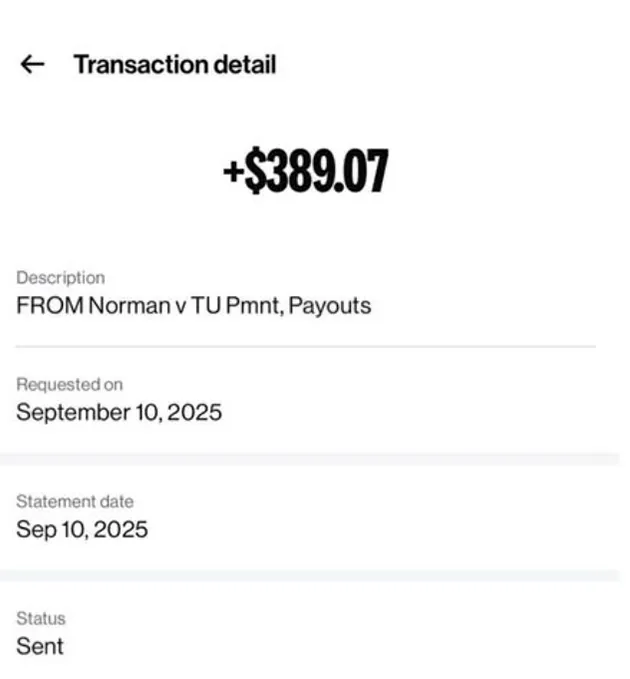
- Walmart has not announced any consumer refund program for tariff-related price increases. Any message claiming Walmart is sending refund checks or PayPal payments is fake.
- Real notices come from a court-appointed Settlement Administrator — only after class certification — not from Walmart directly and not from a third party demanding a fee.
- A real refund process never asks for your full Social Security number, banking passwords, gift cards, cryptocurrency, or up-front fees.
- Treat shortened or unfamiliar links in any "Walmart tariff refund" text or email as a phishing attempt. Do not click.
What Should Walmart Shoppers Do Right Now?
With the case in its earliest stage, the practical to-do list for shoppers who think they may be class members is short:
- Save Walmart receipts and order confirmations from the class period (Feb. 1, 2025 to Feb. 24, 2026) — especially for higher-value imported goods like electronics, small appliances, apparel, and household goods. Your order history is in the Walmart app and on Walmart.com under Account.
- Bookmark this article. We will publish updates as Walmart files its response, the court rules on motions, and class certification advances.
- Subscribe to the OpenClassActions.com newsletter (form below) for updates on this and other class actions.
- Track the docket on PACER if you want real-time updates: Glase v. Walmart Inc., Case No. 1:26-cv-00988-DAR, U.S. District Court for the Northern District of Ohio, Eastern Division.
- Do not contact Walmart customer service about the lawsuit. They cannot answer litigation questions, and Walmart's silence at this stage is normal — the company responds through court filings, not retail channels.
- Ignore unsolicited "Walmart tariff refund" texts, emails, or calls. They are scams.
Lawyers Representing the Walmart Tariff Class
The complaint was filed by three Ohio law firms acting as co-counsel for the proposed class:
- Schneider Bell LLP (Cleveland) — lead attorneys Thomas J. Connick, Theodore M. Dunn Jr., and Kevin Kozak.
- Mills, Mills, Fiely and Lucas, LLC (Canton) — Edward A. Proctor.
- Law Office of Edward W. Cochran (Shaker Heights).
Class counsel has not yet been appointed. Federal Rule of Civil Procedure 23(g) requires the court to appoint class counsel only after class certification, which has not occurred. If the case is certified, the court will formally appoint one or more of the firms above.
Class members are not personally responsible for paying class counsel. Class action attorneys' fees in cases like this are typically paid out of any settlement or judgment, subject to court approval.
Sources
- Glase v. Walmart Inc., Case No. 1:26-cv-00988-DAR (N.D. Ohio, filed April 27, 2026), Hon. David A. Ruiz.
- Glase v. Walmart Inc. docket on CourtListener.
- Wolf v. Walmart Inc., Case No. 4:26-cv-01274 (N.D. Tex., Fort Worth Division, filed October 2, 2026): Class Action Complaint (PDF) · Wolf v. Walmart Inc. docket on CourtListener.
- Class Action Complaint: Walmart Tariff Consumer Refunds Class Action Complaint (PDF).
- Learning Resources, Inc. v. Trump, 607 U.S. ___, Nos. 24-1287, 25-250, 2026 WL 477534 (U.S. Feb. 20, 2026).
- Atmus Filtration, Inc. v. United States, Court of International Trade Order (Mar. 4, 2026), Court No. 26-01259.
- Walmart Inc., Quarterly Report (Form 10-Q) for the period ended July 31, 2026, filed August 28, 2026: Walmart Form 10-Q on SEC EDGAR.
- Goldman Sachs research on tariff cost pass-through to U.S. consumers (Aug. 13, 2025).
Case Information
OpenClassActions.com is a consumer news site. We report on filed complaints, court orders, and class action settlements. We are not a law firm, class counsel, or a settlement administrator, and we do not process or decide claims.
This article is based on the publicly filed Class Action Complaint in Glase v. Walmart Inc. and on related public court records. The allegations described here are allegations only; no court has decided the merits of the plaintiffs' claims, and no class has been certified.