If your small business imported inventory between April 2025 and February 2026 and paid the tariffs directly, you may be able to reclaim the full amount plus 6% interest.
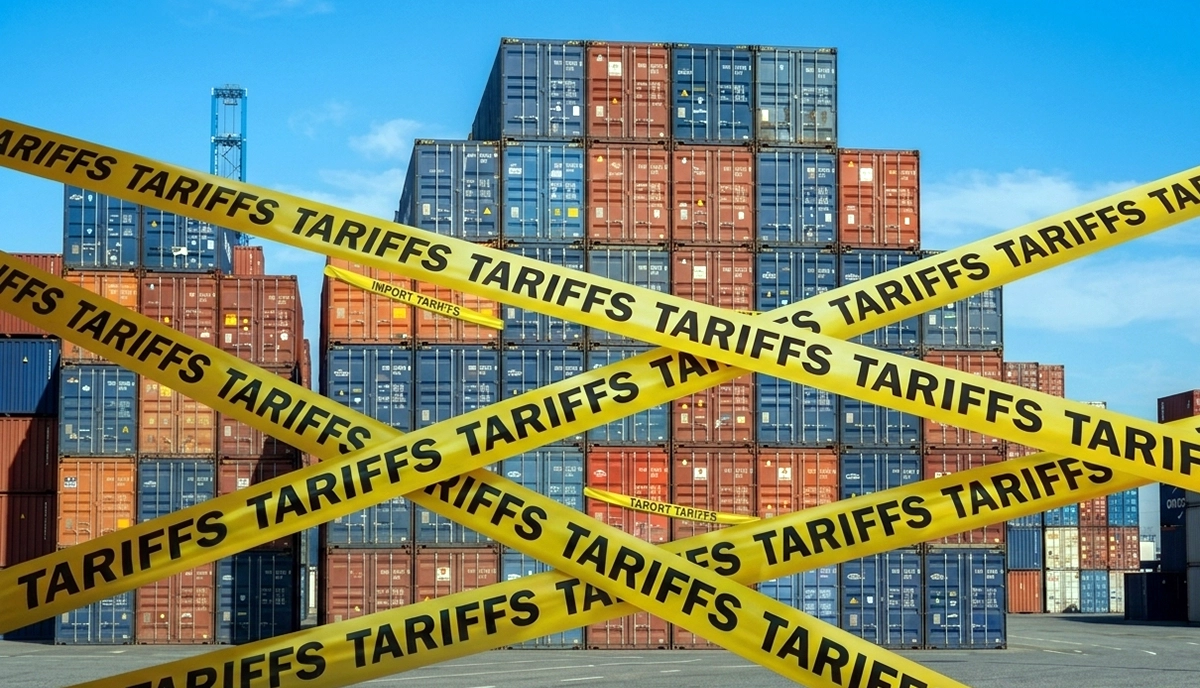

Launch Date: April 20, 2026 at 8:00 AM EST
Refunds Queued: ~$127 Billion
Registered Importers: 56,497 (as of April 14)
Expected Refund Timeline: 60-90 Days After Filing
Tariff Refund Eligibility Check (Closed)
Or go directly to the official CBP IEEPA Duty Refunds page or the ACE Secure Data Portal to file yourself.
Breaking: The Federal Tariff Refund Portal Is Now Live
US Customs and Border Protection flipped the switch on its new tariff refund system -- officially called CAPE (Consolidated Administration and Processing of Entries) -- at 8:00 AM Eastern today, April 20, 2026. In plain English, it is the first online channel where small business importers can file to get back the tariffs they paid under the International Emergency Economic Powers Act (IEEPA), which the US Supreme Court struck down as unlawful in February.As of April 14, approximately 56,497 importers had already completed ACH banking registration, queuing up roughly $127 billion in refund payments including accrued interest. The total refund pool is approximately $166 billion across more than 330,000 US importers and 53 million customs entries filed between April 2025 and February 2026.
Most small business importers reading this are potentially eligible. If your business paid tariffs on imported goods during that window and was the importer of record, you may be able to recover the full amount you paid plus 6 percent interest. Waiting is costly -- interest accrues at roughly $650 million per month across all eligible claimants, but individual refunds will not be paid until a filing is accepted.
How to Get Your Tariff Refund
The refund system lives inside the Automated Commercial Environment (ACE) Secure Data Portal, the same system customs brokers and importers of record already use for routine entry filings. Here is the short version of how to get your money back:• Step 1 -- Confirm you are eligible. You must be the importer of record (IOR) on US entries filed between April 2025 and February 24, 2026, and you must have paid IEEPA tariffs on those entries (fentanyl, reciprocal baseline, or India IEEPA duties).
• Step 2 -- Activate your ACE Portal account. Only IORs with an Importer sub-account can file. If you do not have one, create it through CBP Form 5106.
• Step 3 -- Register ACH banking info in ACE. Refunds are paid electronically only -- no paper checks. This is why the 56,497 importers already registered are ahead in the queue.
• Step 4 -- Pull your entry data. You or your customs broker needs a list of every CBP entry filed in the eligibility window. Each filing can include up to 9,999 entries in one CSV.
• Step 5 -- File the refund request. The importer of record or an authorized licensed customs broker uploads the CSV as a refund declaration in ACE.
• Step 6 -- Get paid. Once CBP accepts the filing, refunds are expected within 60-90 days, sent by ACH with interest included.
If you are not sure whether your entries qualify, or how to separate IEEPA duties from overlapping Section 232/301 duties, a free eligibility review is the fastest way to find out what you can recover today versus what has to wait for later phases.
Small Business Owner -- Tariff Refund Review (Closed)
Prefer to file yourself? Visit the official CBP IEEPA Duty Refunds page for filing instructions, or log in to the ACE Secure Data Portal if you already have an Importer sub-account.
Free settlement alerts
Get notified when new class actions open to claims
Join thousands of readers who get the latest class action settlements you may qualify for — delivered straight to your inbox.
How the Refund System Works Behind the Scenes
CAPE lives inside the Automated Commercial Environment (ACE) Secure Data Portal, the same system customs brokers and importers of record already use for routine entry filings. Filing a refund request is built around a single document called a CAPE Declaration, which the importer of record or an authorized licensed customs broker uploads as a CSV file listing eligible entry numbers.Once a CAPE Declaration is submitted, CBP performs five steps. First, the agency validates that each entry falls within Phase 1 eligibility rules. Second, it removes the IEEPA tariff line items from each entry record. Third, it recalculates the total duty owed using only the remaining non-IEEPA layers such as most-favored-nation base duty, Section 232, and Section 301. Fourth, it consolidates refund totals by liquidation date and by importer of record. Fifth, it issues the refund electronically via ACH along with statutory interest.
CBP expects refunds to be paid within 60 to 90 days of CAPE Declaration acceptance. That window assumes the declaration passes validation without errors and is not pulled for additional compliance review.
What Phase 1 Covers (and What It Does Not)
CAPE is rolling out in phases, and Phase 1 is deliberately narrow. It is designed to handle the highest-volume, lowest-complexity refund scenarios first while CBP builds out additional functionality for harder cases later in 2026.Phase 1 accepts:
• Certain unliquidated entries filed in ACE
• Entries within 80 days of liquidation as of the CAPE submission date
Phase 1 excludes:
• Entries more than 80 days past liquidation
• Entries subject to reconciliation or drawback claims
• Entries covered by open or suspended protests
• Certain antidumping or countervailing duty entries
• Entries not filed in ACE or lacking liquidation status in ACE
• Type 08 USMCA Duty Deferral entries and Temporary Importation Under Bond entries
• Entries with value reported on Chapter 98 Harmonized Tariff Schedule lines
Importers whose entries fall into the excluded categories are not out of luck -- they will be handled in future CAPE phases or through separate administrative remedies. But the fastest path to cash today is through Phase 1, and that means having clean ACH registration, organized entry data, and CSV files ready to upload.
Small Business Owners May Have Paid Without Knowing It
The refund path is built for importers of record, and that category is broader than it sounds. Anyone who owns a small business, side hustle, or ecommerce shop and imported inventory between April 2025 and February 2026 may have paid IEEPA tariffs as the importer of record without realizing it. Etsy sellers, Amazon FBA sellers, Shopify store owners, and any other small retailer that imported goods from China, Mexico, Canada, the EU, or elsewhere during that window should check.Separately, there is a parallel story playing out for US consumers. A new Costco class action lawsuit alleges that major retailers passed tariff costs on to shoppers through higher prices in 2025 and early 2026, and that if the retailers now collect the federal tariff refunds themselves, they would be unjustly enriched at customers' expense. That consumer case is in its early stages. For now, the only people who can file refund claims today are the importers of record -- the businesses that paid the tariffs directly to CBP.
For the full mechanics of the small business refund path, see OCA's small business tariff refund guide.
Background: How $166 Billion Became Refundable
The IEEPA tariffs at issue were imposed starting in February 2025 under the International Emergency Economic Powers Act. Three categories of IEEPA duties were collected: fentanyl-emergency tariffs on imports from China, Mexico, and Canada; reciprocal baseline tariffs of 10 percent or more on imports from nearly every country; and 25 percent additional India-specific tariffs in effect from August 2025 to February 2026.On February 20, 2026, the US Supreme Court ruled 6-3 that the IEEPA statute does not authorize the president to impose tariffs. The case is cited in different reporting as Learning Resources, Inc. v. Trump and V.O.S. Selections Inc. v. United States. The ruling meant that every dollar of IEEPA tariffs collected during the roughly 12 months the tariffs were in effect became refundable to the importers who paid them.
In March 2026, the US Court of International Trade in Atmus Filtration, Inc. v. United States ordered CBP to begin issuing refunds. CBP told the court that manually processing 53 million entries through existing refund procedures would require more than 4.4 million staff hours, and asked for additional time to build an automated system. The CAPE portal launching today is the result of that 45-day build.
What Happens Next
Several things to watch over the coming weeks:• Volume and speed. With $127 billion in refunds queued, CBP's ability to process CAPE Declarations within its stated 60-90 day window will be tested immediately.
• Phase 2 timing. CBP has indicated additional phases of CAPE will roll out later in 2026 to cover more complex entry types, including reconciliation entries, drawback claims, and entries more than 80 days past liquidation.
• Possible appeal. The Department of Justice has not yet announced whether it will appeal the Court of International Trade's order. An appeal could pause or complicate refund processing.
• Scam activity. The US Chamber of Commerce has warned that scammers are already targeting small business importers with fake refund services demanding large upfront fees, and with buyers offering to purchase refund rights for pennies on the dollar. Small businesses should only work with legitimate contingency-based legal teams or their existing customs brokers.
Sources
• US Customs and Border Protection -- IEEPA Duty Refunds official page• CBP Cargo Systems Messaging Service bulletin CSMS #68315804 (April 10, 2026)
• OpenClassActions -- Small Business Tariff Refund How to Apply
• OpenClassActions -- Costco Class Action Tariff Refund Overcharge
• Learning Resources, Inc. v. Trump, 24-1287 (US Supreme Court, February 20, 2026)
• Atmus Filtration, Inc. v. United States, Court No. 26-01259 (US Court of International Trade)
Case Information
News Event: CBP CAPE Portal Launch
Launch Date: April 20, 2026 at 8:00 AM EST
Portal Location: Automated Commercial Environment (ACE) Secure Data Portal
Legal Basis: Learning Resources, Inc. v. Trump, US Supreme Court (6-3), February 20, 2026
Court Order Requiring Refunds: Atmus Filtration, Inc. v. United States, US Court of International Trade, March 2026
Total Refund Pool: ~$166 billion (up to ~$175 billion with interest)
Eligible Importers: 330,000+
Already ACH-Registered: 56,497 importers (as of April 14, 2026) representing ~$127 billion in queued refunds
Eligibility Window: April 2025 through February 24, 2026
Refundable Tariffs: IEEPA fentanyl, reciprocal baseline, and India tariffs only
Not Refundable: Section 232 (steel/aluminum), Section 301 (China existing trade), Section 201 (safeguard), antidumping/countervailing duties
Interest Rate: 6 percent (~$650 million per month accruing)
Who Can File: Importer of record (IOR) or authorized licensed customs broker only
Filing Format: CSV file (up to 9,999 entries each) uploaded as CAPE Declaration in ACE
Expected Refund Timeline: 60-90 days after CAPE Declaration acceptance
Payment Method: Electronic ACH only (no paper checks)
Phase 1 Scope: Unliquidated entries and entries within 80 days of liquidation
Phase 2+ Timing: Later in 2026 for more complex entry types