Published
March 25, 2026
If you have bought a Costco rotisserie chicken or Kirkland raw chicken since 2019, here is what the salmonella-contamination complaint alleges — and why there is nothing to claim yet.

Allegations Only · No Settlement Yet
This article describes a class action complaint. The statements below are unproven allegations. Costco Wholesale Corporation has not been found liable, there is no certified class, and nothing to claim at this time. This page is informational and is not legal advice.
What Is This Lawsuit About?
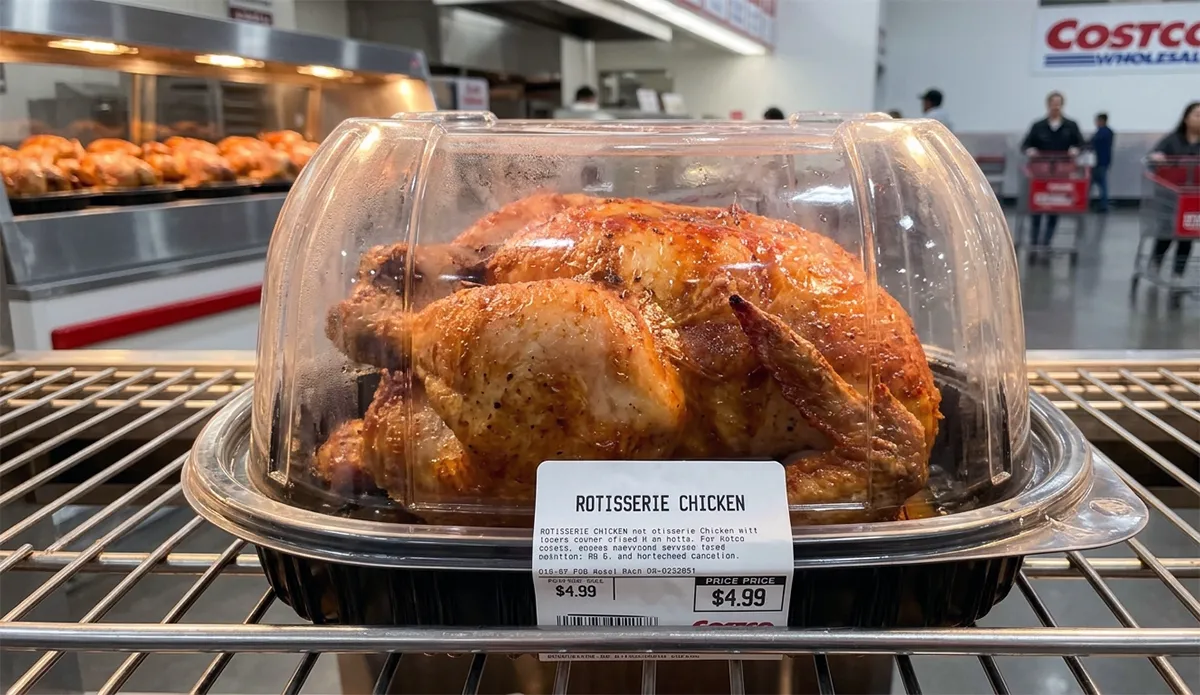
The $4.99 Costco rotisserie chicken is one of the most famous food products in America. Costco sells over 150 million of them every year. The price has not changed in decades. It is a deliberate loss leader -- Costco loses money on every chicken it sells because the price drives millions of customers into its stores, where they spend money on everything else. The chicken is the bait. The membership fees and ancillary purchases are the profit.A class action lawsuit filed in February 2026 alleges that behind that $4.99 price tag is a food safety disaster. The lawsuit claims Costco's famous rotisserie chickens and its Kirkland Signature raw chicken products come from a Nebraska poultry plant that has failed federal salmonella safety standards nearly continuously since it opened in 2019.
The numbers in the complaint are staggering. According to USDA inspection data cited in the lawsuit, Costco's Lincoln Premium Poultry plant in Fremont, Nebraska earned the USDA's worst food safety rating (Category 3) in approximately 92% of all reporting periods since the facility began operations. From September 2023 through July 2025, the plant failed every single monthly salmonella test. Consumer Reports flagged it as one of the "most contaminated poultry plants" in the nation.
The lawsuit alleges that roughly 1 in 10 whole chickens and 1 in 6 packages of raw chicken parts leaving the plant were contaminated with salmonella -- and that Costco knew about it the entire time but never told consumers, never issued warnings, and never stopped selling the products.
Status
Complaint Filed — Early Stage
Filed
February 12, 2026
W.D. Wash. · Case No. 2:26-cv-00528
Damages Sought
Treble — up to $25,000 per person
Washington Consumer Protection Act · plus disgorgement & injunctive relief
Can I Claim?
No — nothing to claim yet
No settlement, no claim form. Watch this page for updates.
There Is No Settlement and No Claim Form Yet
This lawsuit was filed on February 12, 2026. It is in its earliest stage. There is no settlement. There is no claim form. There is no money available. You cannot file a claim right now. If anyone tells you otherwise, they are wrong.If the case eventually settles or the plaintiffs win at trial, a claims process would be established at that point and eligible consumers would be notified. That could take months to years. For now, this is a case to watch, not a case to act on.
Who Could Qualify If This Lawsuit Succeeds?
The proposed class in the complaint includes all persons in the United States (including territories) who purchased any Kirkland Signature branded rotisserie chicken or raw chicken product sold by Costco for personal or household use from January 1, 2019 to the present.Given that Costco sold over 150 million rotisserie chickens in 2025 alone, and the class period goes back to 2019, the potential class could include millions of Americans. If you have bought a Costco rotisserie chicken or Kirkland Signature raw chicken at any point since January 2019, you would likely fall within the proposed class definition.
The class has not been certified by the court. Until it is, the definition could change.
What Costco Allegedly Knew and Did Not Tell You
The lawsuit does not allege a one-time contamination event. It alleges a chronic, years-long pattern of salmonella contamination that Costco knew about and chose not to address or disclose.In 2019, Costco invested $450 million to build its own poultry complex in Fremont, Nebraska, operated by its subsidiary Lincoln Premium Poultry. The company took full control of every stage of chicken production -- from breeding and raising birds to slaughtering, processing, and distribution. The lawsuit states Costco has "100% control" over how the birds are bred, fed, housed, and processed.
Despite that total control, the plant has been classified as Category 3 (the worst possible rating) by the USDA in 56 out of 65 reporting periods for whole chicken carcasses and 18 out of 65 for chicken parts. Category 3 means the plant exceeded the USDA's allowable salmonella contamination rate of 9.8% for whole chickens. The USDA even issued a formal Notice of Warning to the plant on April 22, 2025.
Meanwhile, Costco continued marketing its chicken as safe, high-quality, and produced under strict standards. The lawsuit alleges Costco's Kirkland Signature branding, its quality guarantee language on packaging, and its USDA Grade A marks all conveyed a message of safety that was directly contradicted by what was actually happening at the plant.
Why the Contamination Allegedly Kept Getting Worse
The lawsuit traces the contamination problem directly to Costco's business model. The complaint alleges that Costco's drive to keep chickens at $4.99 led to production shortcuts that created ideal conditions for salmonella to spread: overcrowded barns with poor ventilation, birds bred for rapid growth with compromised immune systems, stressful transport conditions (including incidents where thousands of birds died in transit from freezing, suffocation, and a trailer fire), and high-speed processing lines where contamination from one bird can spread to many.A 2021 undercover investigation documented birds in "dim barns thick with ammonia, birds too large to stand, open sores, and animals unable to reach food or water." Costco's response, according to the complaint, was to dismiss the footage as "normal and uneventful activity."
The lawsuit argues that Costco prioritized keeping the $4.99 price over ensuring the chickens were safe to eat.
What the Lawsuit Is Asking For
The complaint seeks compensatory damages (refund of purchase prices or the difference in value between safe chicken and contaminated chicken), treble (triple) damages under the Washington Consumer Protection Act (up to $25,000 per class member), restitution and disgorgement of profits Costco made from selling the contaminated products, and injunctive relief requiring Costco to fix its contamination problems, implement improved testing, and disclose salmonella risks to consumers.The lawsuit also requests a jury trial.
There Is Also a Separate "No Preservatives" Lawsuit
This salmonella case is not the only class action Costco is facing over its rotisserie chicken. A separate lawsuit was filed in January 2026 in the Southern District of California (Johnston et al. v. Costco Wholesale Corporation) alleging that Costco falsely advertised its rotisserie chicken as containing "no preservatives" when the products allegedly contain sodium phosphate and carrageenan, which the plaintiffs argue function as preservatives. That case is also in its early stages with no settlement or claim form.What Should You Do Right Now?
There is no action required today. No claim form exists. But if you want to be prepared in case this lawsuit eventually leads to a settlement, hold onto your Costco membership records and any receipts showing chicken purchases. Costco tracks member purchases through its membership system, so your purchase history may be available even if you do not have paper receipts.Be cautious of any website or social media post claiming you can "file a Costco chicken claim" right now. No legitimate claims process exists. When one does, it will be announced by the court.
Complaint PDF
Download the Full Class Action Complaint (PDF)About This Lawsuit
This is an active, early-stage class action lawsuit. There is no settlement, no claim form, and no money available at this time. If the case results in a settlement or verdict, eligible consumers will be notified through the court system. OpenClassActions.com will update this page as the case progresses. OpenClassActions.com is a consumer advocacy and class action news site, and is not a class action administrator or a law firm.
For more class actions keep scrolling below.
Status
Complaint Filed — Early Stage (No Settlement)
Case Title
Taylor v. Costco Wholesale Corporation
Case Number
2:26-cv-00528
Court
U.S. District Court, Western District of Washington (Seattle)
Date Filed
February 12, 2026
Plaintiff
Lisa Taylor (Affton, Missouri)
Defendant
Costco Wholesale Corporation
Facility
Lincoln Premium Poultry, Fremont, Nebraska
Proposed Class
U.S. consumers who bought Kirkland Signature rotisserie or raw chicken from Costco since Jan 1, 2019
Claims
Washington Consumer Protection Act, breach of implied warranty, unjust enrichment
Damages Sought
Compensatory, treble (up to $25,000/person), disgorgement, injunctive relief
Plaintiff's Counsel
Tousley Brain Stephens PLLC and Chimicles Schwartz Kriner & Donaldson-Smith LLP