Published
June 26, 2026
Updated
July 1, 2026
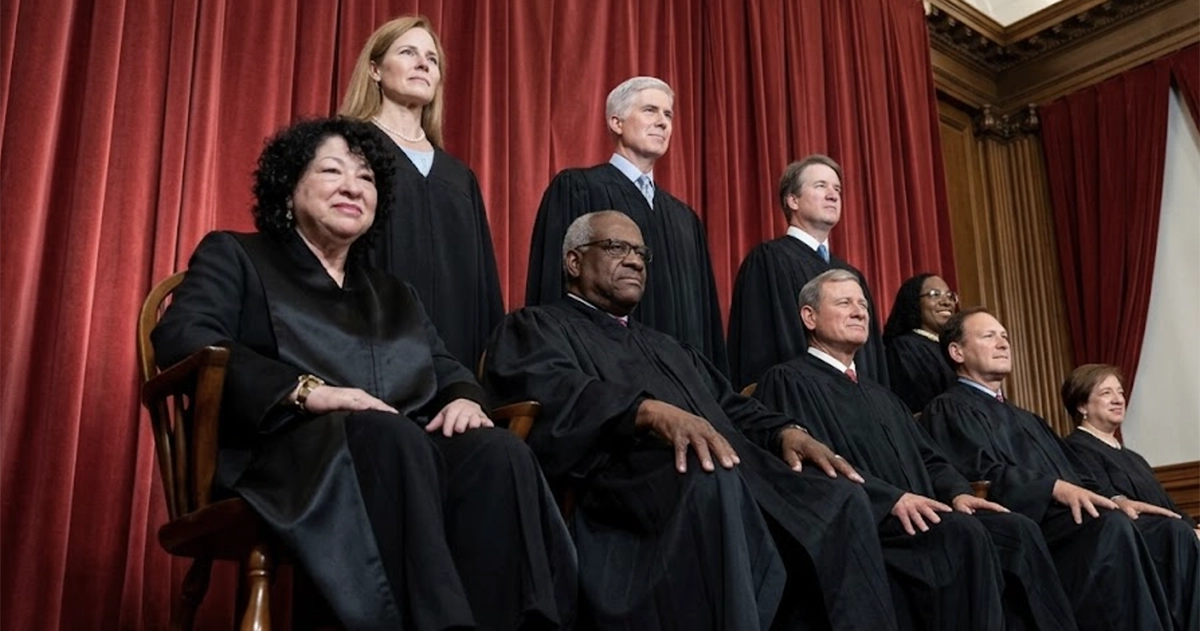

Court Rulings · No Claim or Settlement
This article explains Supreme Court decisions in ongoing immigration litigation. Where parties' characterizations are described — including statements quoted in the majority, plurality, concurring, and dissenting opinions — they are attributed to the opinion or party that made them and are not stated as proven fact. This is not a class action settlement; there is nothing to claim. This page is informational and is not legal advice.
What Happened?
On June 25, 2026, the Supreme Court of the United States handed the federal government two major immigration wins, each by a 6-3 vote split along the Court's usual ideological lines. In Mullin v. Doe (No. 25-1083), the Court ruled that federal courts generally cannot review the Department of Homeland Security's (DHS) decision to end a country's Temporary Protected Status (TPS) — clearing the way to strip protections from hundreds of thousands of Haitian and Syrian nationals. In Mullin v. Al Otro Lado (No. 25-5), the Court ruled that a person standing on the Mexican side of the border has not yet "arrived in" the United States, allowing officers to turn asylum seekers away before they reach U.S. soil.Both opinions were written by Justice Samuel Alito. They are court rulings, not settlements — there is no fund, no claim form, and nothing to file. This page breaks down, in plain English, what the Court decided, who is affected, and what may come next.
Status
Decided 6-3 · June 25, 2026
Mullin v. Doe (No. 25-1083) & Mullin v. Al Otro Lado (No. 25-5) · U.S. Supreme Court
TPS Ruling
Courts can't review most TPS terminations
Lifts lower-court orders that had paused the end of TPS for Haiti & Syria
Asylum Ruling
Standing in Mexico isn't "arriving in" the U.S.
Allows officers to turn people away before they cross the border
Who's Affected
~350,000 Haitians · ~6,000 Syrians
Plus a clearer path for DHS to end TPS for other countries
Can I Claim?
No — a court ruling
Not a class action settlement; no money, no claim form
First, What Is TPS — and Why Did This Reach the Supreme Court?
Temporary Protected Status is a program Congress created in 1990. It lets the Secretary of Homeland Security give temporary protection from deportation — plus a work permit — to people already in the United States whose home countries are too dangerous to return to because of war, disaster, or other extraordinary conditions. Haiti, Syria, Venezuela, El Salvador, Ukraine, and a number of other countries have been designated over the years.The TPS law contains a clause, found at 8 U.S.C. § 1254a(b)(5)(A), saying there shall be "no judicial review" of the Secretary's "determination" to designate, extend, or terminate a country's status. After taking office, the administration moved to end TPS for most designated countries. Then-Secretary Kristi Noem announced terminations for Haiti and Syria. Haitian and Syrian TPS holders sued, arguing in their complaints that DHS skipped legally required steps — such as genuinely reviewing current conditions and consulting other agencies — before pulling the protections. Federal judges in New York (Syria) and Washington, D.C. (Haiti) temporarily paused the terminations, finding the challengers were likely to win. The government appealed, and the Supreme Court took the consolidated cases. By the time they were decided, Markwayne Mullin had been sworn in as DHS Secretary, which is why his name now leads the case.
Free settlement alerts
Get notified when new class actions open to claims
Join thousands of readers who get the latest class action settlements you may qualify for — delivered straight to your inbox.
What the Court Held in Mullin v. Doe (the TPS Case)
Writing for the six-justice majority, Justice Alito held that the "no judicial review" clause is broad. The Court read the word "determination" to cover not just the Secretary's final decision but the whole process leading up to it, and read the phrase "with respect to" as widening the bar even further. The practical upshot: even if DHS skips a step Congress required — such as consulting other agencies or seriously evaluating safety on the ground — federal courts generally cannot step in to review a non-constitutional challenge. The majority framed this as Congress deliberately keeping courts out of what it called a temporary, politically accountable program.The Haitian challengers had also raised a constitutional claim: that the termination was driven by racial bias, in violation of equal protection. On that point the Court splintered. A four-justice plurality (Chief Justice Roberts and Justices Alito, Thomas, and Kavanaugh) concluded the bias claim was unlikely to succeed, reasoning that the cited public statements were not, in the plurality's view, overtly about race and could rest on race-neutral policy grounds — and that the administration's push to end nearly every TPS designation suggested across-the-board opposition to the program rather than animus aimed at one nationality. Justices Gorsuch and Barrett agreed with the result but declined to join that part of the opinion. Justice Thomas wrote separately to argue, more sweepingly, that the federal government's power over immigration is not limited by equal-protection principles in the way the challengers claimed.
In dissent, Justice Elena Kagan sharply disagreed, writing that the record of bias was, in her view, plain in the President's own past statements, several of which she quoted — including a vulgar slur about Haiti and a debunked claim that Haitian immigrants in Ohio were abducting and eating pets. Kagan argued those statements should have been enough to keep the terminations paused while the bias claim was tested. Those characterizations are the dissent's position; the majority reached the opposite conclusion.
What the Court Held in Mullin v. Al Otro Lado (the Asylum Case)
The second case is about "metering" — a border-management practice in which officers cap how many people can approach a port of entry to ask for asylum, sometimes turning people away while they are still physically in Mexico. The legal question was narrow but consequential: when does someone "arrive in the United States" for purposes of the inspection and asylum statutes (8 U.S.C. §§ 1225(a)(1) and 1158(a)(1))?The Ninth Circuit had said a person "arrives in" the U.S. the moment they present themselves to a U.S. officer at the border line, even while standing on the Mexican side. The Supreme Court reversed. Justice Alito wrote that, in ordinary English, you have not arrived "in" a place until you are physically inside it — comparing it to a guest who has not arrived "in" a house while still knocking at the door outside. The majority added that reading the law to require officers to process people on Mexican soil would push U.S. law beyond U.S. borders, and pointed to a 1996 change in the statute's wording as evidence Congress meant to tie these rights to physically crossing the line.
Justice Sonia Sotomayor read her dissent from the bench — a step justices reserve for cases of strong disagreement — calling the ruling a "tragedy" that lets the government "slam the door" on people fleeing persecution. She warned that an administration could now insulate itself from asylum claims simply by blocking access to U.S. soil. The bench announcement was unusually tense: after Sotomayor finished, Alito delivered a rare unscripted response defending the decision and noting that metering had been used as an operational tool under both Democratic and Republican administrations. Justices Kagan and Ketanji Brown Jackson joined Sotomayor's dissent.
A Third Ruling the Same Week: Green Card Holders
Two days earlier, on June 23, 2026, the Court issued a related immigration decision in Blanche v. Lau (No. 25-429), in an opinion by Justice Thomas. By another 6-3 vote, the Court held that border officers do not need "clear and convincing evidence" that a returning lawful permanent resident (green card holder) committed a crime involving "moral turpitude" before treating that person as an applicant for admission rather than as someone already admitted. In plain terms, the ruling makes it easier for the government to scrutinize and potentially remove some long-term green card holders with criminal issues when they re-enter the country. Together, the three decisions point in the same direction: a more restrictive reading of noncitizens' protections across several categories.Who Is Affected, and How Soon?
The most immediate impact falls on TPS holders. The TPS ruling clears the way for DHS to finalize terminations affecting roughly 350,000 Haitian and about 6,000 Syrian nationals, and it removes a major legal obstacle to ending TPS for other designated countries. Once a termination takes effect on the date DHS sets, affected people can lose their work authorization and their protection from removal.That ripples into workplaces. Many TPS holders work in health care, senior living, construction, agriculture, and hospitality, and are authorized to work only through their TPS-based Employment Authorization Documents (EADs). When those permits lapse, employers face a hard choice between keeping workers they may no longer be able to lawfully employ and losing staff in already-stretched sectors. Advocacy groups and some local governments have warned of economic strain in cities with large affected communities. For people who would be returned, immigrant-rights organizations argue conditions in countries like Haiti — which has faced widespread gang violence and a prolonged state of emergency — remain extremely dangerous; attorneys for the Haitian challengers described those dangers in court filings, including reported killings of recent returnees. Those safety claims are the advocates' and filings' characterizations.
What Happens Next?
Because these rulings interpret existing statutes, the ball is now largely in Congress's court. Immigrant-rights groups are pressing lawmakers to pass legislation that would restore protections or create a longer-term pathway, but as of late June 2026 no such bill had become law. A future administration could also re-designate countries for TPS or change border policy. In the meantime, DHS sets the effective dates for each TPS termination, and the asylum ruling lets the government continue managing — and limiting — how many people can request protection at the southern border. We will update this page as the agencies act and as any legislation moves.If you may be affected, the practical step most attorneys recommend is to track the exact dates on your own documents and seek qualified immigration legal advice about your options before any protection lapses — this page cannot give individual legal advice.
Frequently Asked Questions
What did the Supreme Court decide about TPS on June 25, 2026?
In Mullin v. Doe, the Court ruled 6-3 that the TPS statute (8 U.S.C. § 1254a(b)(5)(A)) bars federal courts from reviewing most non-constitutional challenges to a decision by the Secretary of Homeland Security to end a country's TPS designation. That lifted lower-court orders that had paused the terminations of TPS for Haiti and Syria. It is a ruling about who can sue, not a settlement, and there is nothing to claim.Who is affected by the TPS ruling?
The decision clears the way for DHS to finalize the end of TPS for roughly 350,000 Haitian and about 6,000 Syrian nationals, and it removes a major legal roadblock to terminating TPS for other countries. Affected people can lose work authorization and protection from removal once the terminations take effect on the dates DHS sets.What is "metering" and what did Mullin v. Al Otro Lado decide?
Metering limits how many people can approach a port of entry to ask for asylum, sometimes turning people away while they are still on the Mexican side. In Mullin v. Al Otro Lado, the Court ruled 6-3 that a person standing in Mexico has not "arrived in" the United States simply by trying and failing to set foot on U.S. soil, so the asylum-inspection rules are not triggered until the person physically crosses the border.Is this a class action settlement? Is there anything to claim?
No. These are Supreme Court decisions in ongoing immigration litigation, not class action settlements. There is no settlement fund, no claim form, and nothing to file. This page is informational and is not legal advice.Can Congress or a future administration change this?
Yes. The rulings interpret existing statutes, so Congress can amend the law and a future administration could re-designate countries for TPS or change border policy. Advocacy groups are urging Congress to act, but as of late June 2026 no such bill had become law.Sources
• U.S. Supreme Court — Mullin v. Doe, No. 25-1083 (decided June 25, 2026)• U.S. Supreme Court — Mullin v. Al Otro Lado, No. 25-5 (decided June 25, 2026)
• U.S. Supreme Court — Blanche v. Lau, No. 25-429 (decided June 23, 2026)
• Statute — 8 U.S.C. § 1254a (Temporary Protected Status); 8 U.S.C. §§ 1225, 1158 (inspection and asylum).
For more class actions keep scrolling below.
Status
Decided 6-3 · June 25, 2026
Case (TPS)
Mullin v. Doe (consolidated with Trump v. Miot)
Docket (TPS)
No. 25-1083
Case (Asylum)
Mullin v. Al Otro Lado
Docket (Asylum)
No. 25-5
Court
Supreme Court of the United States
Author
Justice Samuel Alito (majority, both cases)
Opinions
Supreme Court Slip Opinions