Supreme Court Could End Roundup Cancer Lawsuits — What 61,000 Victims Need to Know
By Steve Levine
Published: February 11, 2026
🚨 KEY UPDATE — February, 2026
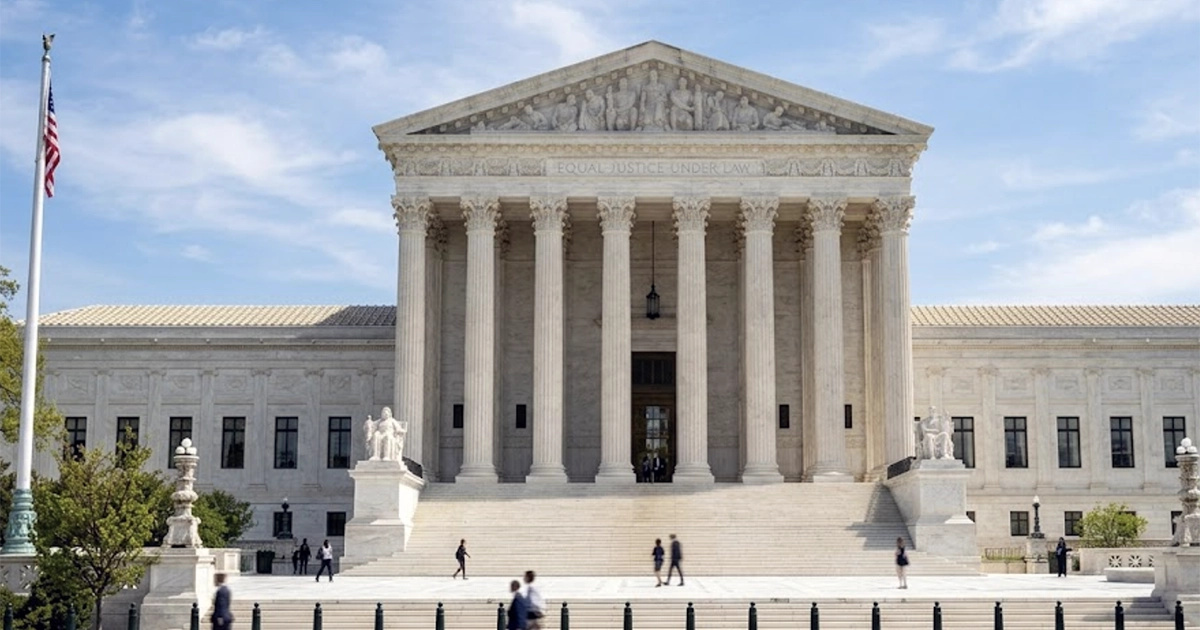
The U.S. Supreme Court agreed to hear
Monsanto Co. v. Durnell (No. 24-1068) — the case Bayer hopes will
shut down all Roundup failure-to-warn lawsuits. The Trump administration's Solicitor General filed a brief supporting Bayer's position. Oral arguments are expected between October 2026 and April 2027, with a decision anticipated by mid-2027.
61,000 Roundup lawsuits remain active. If you were diagnosed with Non-Hodgkin lymphoma after Roundup exposure, the window to file may be narrowing.
➡
Start a Free Case Review Now
On January 16, 2026, the U.S. Supreme Court announced it would review Monsanto Co. v. Durnell, a case with the potential to reshape one of the largest mass tort litigations in American history. The question before the Court is narrow but explosive: Does federal pesticide law prevent cancer victims from suing Roundup's maker for failing to warn them?
The case originates from St. Louis, where John Durnell sued Monsanto after developing Non-Hodgkin lymphoma following years of Roundup use. A jury awarded him $1.25 million, finding Monsanto liable for failing to warn consumers about cancer risks. The jury rejected defective design and negligence claims but unanimously agreed the company should have warned users.
Bayer — which acquired Monsanto for $63 billion in 2018 — appealed all the way to the Supreme Court, arguing that because the EPA approved Roundup's label without requiring a cancer warning, no state court can hold the company liable for not adding one. This legal concept is called federal preemption.
The stakes could not be higher. If the Supreme Court agrees with Bayer, it could effectively eliminate the primary legal theory behind tens of thousands of pending Roundup cancer lawsuits.
Federal preemption is the legal principle that when federal law governs a subject, state laws cannot impose different or additional requirements. Bayer argues that the Federal Insecticide, Fungicide, and Rodenticide Act (FIFRA) — the law that gives the EPA authority over pesticide labeling — preempts state-level failure-to-warn lawsuits.
In plain terms: Bayer says it followed federal rules, so states cannot punish it for not adding a cancer warning that the EPA didn't require.
Plaintiffs' attorneys argue the opposite — that EPA approval of a label doesn't mean the label is safe, just that the manufacturer never asked the EPA to add a cancer warning. Durnell's legal team points out that Monsanto updated Roundup's label 44 times over the years and even proposed adding cancer information as part of a prior settlement. The company could have sought a label change but chose not to.
Lower courts are split on this question. The Third Circuit sided with Bayer. The Ninth Circuit, Eleventh Circuit, and state courts in Missouri, California, and Oregon allowed lawsuits to proceed. The Supreme Court took the case to resolve this conflict.
Monsanto v. Durnell — Supreme Court Timeline
✅ April 4, 2025: Monsanto files petition for Supreme Court review
✅ December 2025: Trump administration Solicitor General urges Court to hear the case
✅ January 16, 2026: Supreme Court agrees to hear the case
● October 2026 – April 2027: Oral arguments expected
● May – June 2027: Decision expected
⚠️ During this period, Roundup lawsuits remain active and new cases can still be filed. The MDL judge has urged plaintiffs who declined settlement offers to "reconsider" in light of the Supreme Court review.
If the Supreme Court rules that FIFRA preempts state failure-to-warn claims, the consequences for Roundup litigation would be severe:
• Most pending lawsuits could be dismissed — failure to warn is the primary legal theory in the vast majority of Roundup cases.
• New lawsuits would be much harder to file — plaintiffs would need to rely on alternative legal theories like defective design, which juries have been less receptive to.
• Settlement leverage shifts to Bayer — plaintiffs currently in negotiations could see their bargaining power decline dramatically.
• Broader impact beyond Roundup — other pesticide and chemical manufacturers could use the ruling to shield themselves from state-level lawsuits.
However, preemption rulings are often narrow. The Court could rule in Bayer's favor on specific types of label claims while leaving other legal avenues open.
If the Court rules against Bayer, the floodgates stay open:
• All 61,000 active lawsuits proceed with the failure-to-warn theory intact.
• New cases can continue to be filed as people are diagnosed with Non-Hodgkin lymphoma after latent exposure.
• Bayer faces pressure to settle — the company has already set aside an additional $1.37 billion for Roundup litigation and has stated it plans to "significantly contain" the lawsuits by end of 2026.
• Jury verdicts continue — recent awards include $2.1 billion (Georgia, 2025), $611 million (Missouri, upheld on appeal), and $175 million (Pennsylvania, upheld on appeal).
Three forces are converging that make 2026 a critical year for anyone considering a Roundup lawsuit:
1. The Supreme Court creates urgency. Hundreds of Roundup cases are already leaving the federal MDL, with some being remanded to state courts. The MDL judge has noted that plaintiffs who declined settlement offers "may wish to reconsider" given the looming Supreme Court review. If Bayer gets a favorable ruling, current settlement offers could disappear.
2. Bayer's financial health is declining. Bayer was worth roughly $63 billion when it bought Monsanto in 2018. Today it is worth approximately $26 billion. Average settlements in the original program ranged from $100,000 to $160,000 per plaintiff. Legal analysts do not expect higher payouts in future rounds because, as one firm put it, "a company worth $26 billion cannot pay $26 billion in settlements." Waiting could mean smaller payouts.
3. Statutes of limitations are running. Most states give you one to three years from diagnosis — or from when you should have known Roundup may have caused your cancer — to file. Miss that window and you're permanently barred, regardless of what the Supreme Court decides.
One of the most damaging elements of Roundup litigation has been the release of internal Monsanto documents — known as the "Monsanto Papers" — which revealed systematic efforts to downplay glyphosate's cancer risks.
Key revelations include:
• Ghostwritten safety studies: In December 2025, the journal Regulatory Toxicology and Pharmacology retracted a widely cited 2000 study on glyphosate's safety after finding that Bayer influenced the research and contributed to drafting the paper without disclosing its involvement.
• Suppressed research: Internal emails showed Monsanto employees discussing how to "orchestrate" favorable scientific reviews and build networks of scientists to work "directly or indirectly/behind the scenes" to promote glyphosate safety.
• Regulatory influence: Documents suggested Monsanto had close relationships with EPA officials and attempted to influence the agency's review of glyphosate.
These documents have been central to jury verdicts. The retraction of the safety study in December 2025 gives Bayer less scientific cover heading into the Supreme Court case.
In a significant development, U.S. Solicitor General John Sauer filed a brief supporting Bayer's position, urging the Supreme Court to take the case. Sauer argued that allowing state courts to require cancer warnings that the EPA has not mandated would "allow juries to ignore the expert scientific decisions made by the U.S. EPA."
This is a reversal from the Biden administration's position. In 2022, Biden's Solicitor General told the Court not to hear a similar Bayer appeal, stating that "FIFRA does not preempt" such claims. The change in administration changed the legal landscape.
Bayer had previously been rejected by the Supreme Court in 2022. The Trump administration's support was a key factor in the Court agreeing to hear the case this time.
Key Statistics — February 2026
• Total claims filed: ~170,000
• Claims settled: ~100,000+
• Active lawsuits remaining: ~61,000
• Cases in federal MDL (California): 3,902
• Total paid by Bayer: $11+ billion
• Additional reserves set aside: $1.37 billion (September 2025)
• Average settlement (original program): $100,000 – $160,000
• Largest jury verdict: $2.1 billion (Georgia, March 2025)
• Successful plaintiff verdicts since Oct 2023: 8 (totaling $6B+)
Roundup settlements use a point-scoring tier system that most people don't understand. When Bayer agreed to settle a large group of lawsuits in 2020, the company set up this system to determine how much each plaintiff would receive:
Each case is evaluated based on factors including:
• Type and stage of cancer
• Age of the plaintiff
• Duration and frequency of Roundup use
• Impact on ability to work
• Intensity of medical treatment
• Whether the person has passed away (wrongful death claims score higher)
• Strength of the causal link between exposure and diagnosis
These points sort cases into settlement tiers. Higher scores get larger payouts. Unlike a class action where everyone gets the same check, each Roundup plaintiff receives compensation based on their individual circumstances.
Despite the Supreme Court uncertainty, new Roundup lawsuits are being filed every week. You may qualify if:
• You used Roundup weed killer (at work, on a farm, or at home)
• You were later diagnosed with Non-Hodgkin Lymphoma (NHL) or a related cancer
• Your state's statute of limitations has not expired (typically 1–3 years from diagnosis)
High-risk groups that attorneys are reviewing include:
• Farmers and agricultural workers who used Roundup in crop production
• Landscapers and groundskeepers who sprayed glyphosate regularly
• Homeowners who applied Roundup in yards and gardens
• Families of deceased victims filing wrongful death claims
Qualifying cancer diagnoses include Non-Hodgkin Lymphoma (NHL), Diffuse Large B-Cell Lymphoma (DLBCL), Follicular Lymphoma, Mantle Cell Lymphoma, Burkitt Lymphoma, Chronic Lymphocytic Leukemia (CLL), and Peripheral T-cell Lymphomas.
Strong documentation can significantly strengthen a Roundup case. Typical evidence includes:
• Medical records confirming your cancer diagnosis and treatment history
• Proof of Roundup use — purchase receipts, photos, timecards, work orders, equipment logs
• Employment records — if you were exposed through work (farming, landscaping, groundskeeping)
• Witness statements — coworkers, employers, or family members who can confirm your exposure
• Notes on usage — when and how often you used Roundup, how long each application took, and whether you wore protective gear
Since 2018, juries have consistently sided with Roundup cancer victims. Here are the most significant outcomes:
• $2.1 billion — Georgia (March 2025): A homeowner who used Roundup for 20 years developed NHL.
• $611 million — Missouri (upheld on appeal, 2025): Four plaintiffs. Missouri Supreme Court rejected Bayer's attempt to overturn.
• $175 million — Pennsylvania (affirmed on appeal): Ernest Caranci, a home gardener.
• $289 million — California (2018): Dewayne Johnson, a school groundskeeper. Later reduced to $78 million.
• $2 billion — California (2019): A married couple who both developed lymphoma. Later reduced.
• $80 million — Federal jury (2019): Edwin Hardeman, diagnosed with NHL after decades of use.
• $28 million — California (affirmed Nov 2025): Mike Dennis, who used Roundup for decades.
Award amounts are often reduced on appeal, but even reduced amounts remain substantial. Many additional cases have resolved through confidential settlements.
The scientific debate is at the heart of this litigation:
• WHO/IARC (2015): The International Agency for Research on Cancer classified glyphosate as "probably carcinogenic to humans."
• U.S. EPA: Maintains that glyphosate is "not likely to be carcinogenic to humans" when used as directed.
• University of Washington (2019): A meta-analysis found that people with high glyphosate exposure had a 41% higher risk of developing NHL.
• Journal retraction (December 2025): Regulatory Toxicology and Pharmacology retracted a key safety study after finding Bayer influenced the research without disclosure.
This regulatory conflict — the WHO saying "probably carcinogenic" while the EPA says "not likely" — is exactly why the Supreme Court's preemption decision matters so much. The Court must decide whose science controls.
Yes. Roundup remains on sale in the United States. However, Bayer removed glyphosate from residential lawn and garden versions of Roundup starting in 2023, replacing it with different active ingredients. Agricultural and commercial Roundup products still contain glyphosate.
Bayer made this change to reduce future litigation — over 90% of Roundup lawsuits came from residential users — not because of safety concerns, according to the company. Globally, some countries and municipalities have restricted or banned glyphosate, but there is no nationwide U.S. ban.
A common misconception is that Roundup is a class action lawsuit. It is not. Roundup cases are handled as mass tort litigation, where each plaintiff files an individual lawsuit. Cases are consolidated for pretrial purposes in a federal multidistrict litigation (MDL No. 2741) in the Northern District of California, but each plaintiff's compensation is determined individually based on their specific circumstances.
This distinction matters because your payout depends on your case — your cancer type, your exposure history, your losses. There is no fixed settlement amount that everyone receives equally.
Timelines vary. Many cases resolve in one to two years through negotiated settlements. Cases that go to trial can take longer, especially if appealed. The MDL structure consolidates discovery and pretrial rulings, which can speed up individual case resolution. The pending Supreme Court decision adds another variable — some cases may be paused while the Court deliberates.
The next year will be decisive for Roundup litigation. Bayer has stated it plans to "significantly contain" the lawsuits by end of 2026. The Supreme Court's oral arguments (expected late 2026 to early 2027) and eventual ruling (likely mid-2027) will determine whether tens of thousands of cancer victims retain their right to sue.
In the meantime, settlements are still being negotiated, new cases are still being filed, and juries are still awarding large verdicts. The litigation is not over — but the clock is ticking.
Will the Supreme Court end Roundup lawsuits?
The Court agreed to hear Monsanto v. Durnell on January 16, 2026. If it rules that federal pesticide law preempts state failure-to-warn claims, it could effectively end the legal basis for most Roundup cancer lawsuits. Oral arguments are expected between October 2026 and April 2027, with a decision by mid-2027.
Can I still file a Roundup lawsuit in 2026?
Yes. Approximately 61,000 Roundup lawsuits remain active, and new cases are still being filed weekly. However, the pending Supreme Court review creates uncertainty about how long this window will remain open. State statutes of limitations also apply — typically 1 to 3 years from diagnosis.
How much are Roundup settlements worth?
Average settlements in the original Bayer program ranged from $100,000 to $160,000 per plaintiff. Amounts vary based on a point-scoring system that considers cancer type, severity, exposure duration, and impact on quality of life. Jury verdicts have ranged from $1.25 million to $2.1 billion, though large awards are typically reduced on appeal.
What cancers qualify for a Roundup lawsuit?
Non-Hodgkin Lymphoma (NHL) is the primary qualifying diagnosis. Subtypes include Diffuse Large B-Cell Lymphoma, Follicular Lymphoma, Mantle Cell Lymphoma, Burkitt Lymphoma, and Chronic Lymphocytic Leukemia. Scientific evidence is strongest for NHL and related lymphomas.
What is the Monsanto Papers scandal?
Internal Monsanto documents revealed the company ghostwrote safety studies, built networks of scientists to promote glyphosate as safe, and attempted to influence EPA regulatory reviews. In December 2025, a key safety study was retracted after a journal found Bayer had influenced the research without disclosure.
Did the Trump administration support Bayer?
Yes. Solicitor General John Sauer filed a brief supporting Bayer's position that federal law preempts state failure-to-warn claims. This reversed the Biden administration's 2022 position, which told the Court not to hear a similar appeal.
• U.S. Supreme Court — Monsanto Co. v. Durnell, No. 24-1068
• Bayer — Statement on Supreme Court Review of Durnell
• SCOTUSblog — Monsanto Company v. Durnell Case File
• The New Lede — Bayer Gets Boost as Supreme Court Takes Roundup Case
• Ohio State Farm Office — Supreme Court Preemption Analysis
• IARC — Glyphosate Classification
• U.S. EPA — Glyphosate Regulatory Materials
• University of Washington — Glyphosate and NHL Risk Study
• Reuters — $2.1B Georgia Verdict Coverage
Health and Safety Note
This page provides legal information only. For medical guidance, speak with your doctor. If you are currently using herbicides, follow label directions and safety precautions.
Disclaimer
OpenClassActions.com is not a law firm and is not a claims administrator. This page is for informational purposes only. For legal advice, speak with an attorney licensed in your state. OpenClassActions is a participant in the Amazon affiliate advertising program and this post may contain affiliate links, which means we may earn a commission or fees if you make a purchase via those links.