Published
June 30, 2026
Updated
July 1, 2026
In one of the most consequential decisions of the term, the Supreme Court has rejected the federal government's attempt to narrow birthright citizenship — holding that the Fourteenth Amendment guarantees citizenship to nearly every child born on American soil, including the children of parents who are in the country unlawfully or only temporarily.

The Court's Decision
The Supreme Court ruled on June 30, 2026 that children born in the United States to parents who are unlawfully or temporarily present are "subject to the jurisdiction" of the United States and are citizens at birth under the Fourteenth Amendment's Citizenship Clause. By a 6-3 vote, the Court struck down President Trump's Executive Order No. 14160, which had sought to deny citizenship to those children, and affirmed a lower court that blocked the order before it took effect. The decision keeps the long-standing rule of birthright citizenship in place. Because this is a ruling on the meaning of the Constitution, there is no settlement, no fund, and nothing to claim.
Status
Executive Order Struck Down · Affirmed
Decided
June 30, 2026
Supreme Court of the United States · No. 25-365
Can I Claim?
No — nothing to claim (constitutional ruling)
How the Justices Lined Up
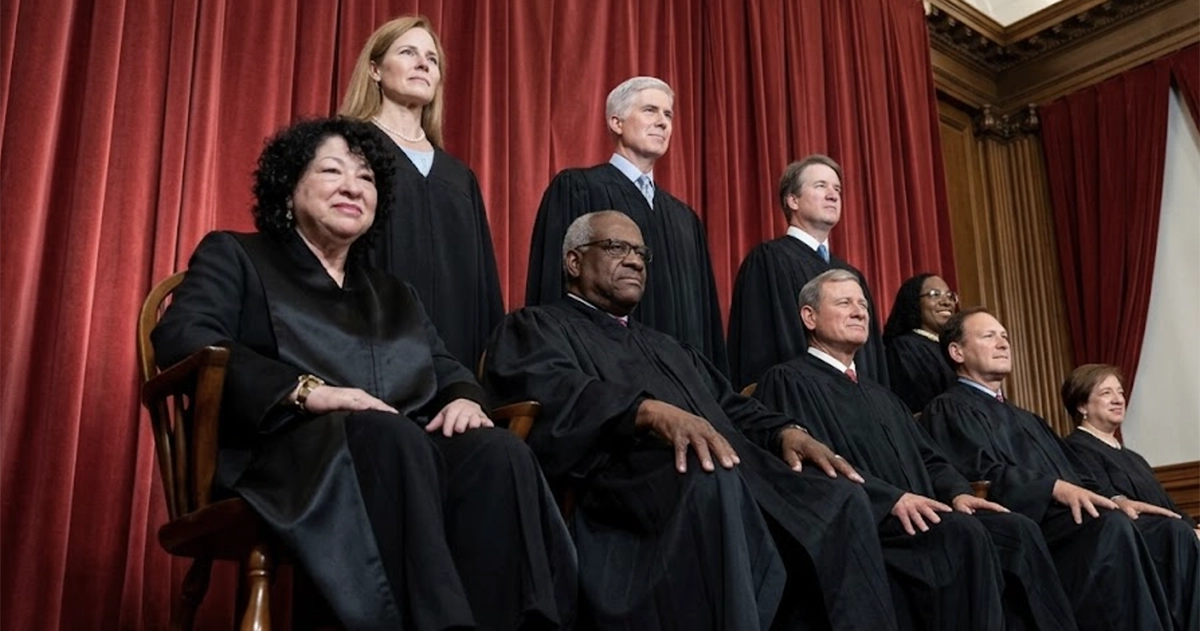
Chief Justice Roberts wrote the majority opinion, joined by Justices Sotomayor, Kagan, Barrett, and Jackson. Justice Jackson filed a concurring opinion. Justice Kavanaugh concurred in the judgment but reached it on a different path — he wrote that the Executive Order conflicts with a federal citizenship statute, 8 U.S.C. § 1401(a), rather than the Fourteenth Amendment itself, and that Congress has not authorized the order's new exceptions. Because of his vote, the Executive Order was held unlawful by a 6-3 vote, even though the constitutional holding commanded five.Justice Thomas dissented, joined by Justice Gorsuch, arguing that the Citizenship Clause requires domicile and that the order is consistent with the Constitution as applied to children of parents not domiciled here. Justice Alito and Justice Gorsuch each filed additional dissents. The dissenters contended that "subject to the jurisdiction" demands complete allegiance to the United States, unimpaired by any obligation to a foreign power.
Free settlement alerts
Get notified when new class actions open to claims
Join thousands of readers who get the latest class action settlements you may qualify for — delivered straight to your inbox.
What It Means for You
The ruling preserves the status quo for the millions of children born in the United States each year. Because the district court had blocked Executive Order 14160 before it took effect, no child's citizenship was actually stripped, and the Supreme Court's decision keeps the long-standing birthright-citizenship rule in place. The order would have applied only to children born after a future effective date; that order is now invalid.For readers following related government cases, OCA has also covered a federal court's decision to strike down the DHS SAVE voter-verification database and a recent Supreme Court ruling on mail-ballot deadlines.
What Happens Next
The judgment of the District Court for the District of New Hampshire is affirmed, which leaves the Executive Order blocked. The majority noted that Congress remains free to legislate in this area within constitutional limits, and Justice Kavanaugh's separate opinion emphasized that lawmakers — not the President acting alone — would need to act to change the current statutory rule. For now, birthright citizenship continues as it has for more than a century.Background: The Order and the Challenge
President Trump issued Executive Order No. 14160, titled Protecting the Meaning and Value of American Citizenship, on January 20, 2025. It declared that children born in the United States are not "subject to the jurisdiction" of the country — and therefore not citizens under the Fourteenth Amendment or the Immigration and Nationality Act — when their mother was unlawfully present, or lawfully but only temporarily present, and their father was not a citizen or lawful permanent resident at the time of birth. 90 Fed. Reg. 8449.Several parents, some suing in the name of their children, challenged the order. The U.S. District Court for the District of New Hampshire agreed with them, provisionally certified a nationwide class of children who would be denied citizenship by the order, and preliminarily blocked it from taking effect. The Supreme Court granted review before judgment, setting up the decision issued today.
Background: The Common-Law Rule and Wong Kim Ark
The majority traced the rule of citizenship by birth — known as jus soli, or "right of the soil" — from the English common law, through the widespread condemnation of Dred Scott v. Sandford, to the Civil Rights Act of 1866 and the ratification of the Fourteenth Amendment, which was intended to repudiate Dred Scott. It read the Clause's key phrase in light of Chief Justice Marshall's 1812 decision in Schooner Exchange v. McFaddon, which described a nation's jurisdiction as its "full and complete power" over those within its territory.The decision also leans heavily on the Court's 1898 precedent United States v. Wong Kim Ark, which held that the Fourteenth Amendment was "declaratory" of the common-law rule of citizenship by birth and granted citizenship to nearly all children born in the United States, whether to permanent residents or temporary visitors. The majority concluded that the reasoning of Wong Kim Ark cannot be squared with the government's proposed requirement that a child's parents be domiciled in the country.
Frequently Asked Questions
Is there a settlement or anything to claim?No. This is a constitutional ruling on a government policy, not a class action settlement. Although the case was litigated as a class action, there is no fund, claim form, or payment.
What did the Supreme Court decide?
It held that children born in the United States to parents who are unlawfully or temporarily present are citizens at birth under the Fourteenth Amendment, and it affirmed the lower court's order blocking Executive Order 14160.
How did the Justices vote?
Chief Justice Roberts wrote for a majority of five. Justice Kavanaugh concurred in the judgment on statutory grounds, making the vote to hold the order unlawful 6-3. Justices Thomas, Alito, and Gorsuch dissented.
Does this change the citizenship of children already born here?
No. The decision keeps the existing birthright-citizenship rule in place. The Executive Order was struck down before it ever took effect.
Sources
- Opinion of the Court, Trump v. Barbara, No. 25-365, 609 U.S. ___ (June 30, 2026)
- Executive Order No. 14160, Protecting the Meaning and Value of American Citizenship, 90 Fed. Reg. 8449 (Jan. 20, 2025)
- Supreme Court of the United States
For more class actions keep scrolling below.
Status
Executive Order Struck Down · Judgment Affirmed
Case Title
Trump v. Barbara
Case Number
No. 25-365
Court
Supreme Court of the United States
Date Decided
June 30, 2026
Official Source
Supreme Court of the United States