After the Supreme Court struck down the IEEPA tariffs, U.S. Customs has paid roughly $71 billion in refunds — all of it to the importers that paid the duties, none to the shoppers who paid higher prices. That gap between who paid and who gets reimbursed is exactly what a wave of consumer tariff class actions is fighting over.

Allegations Only · No Settlement Yet
This article describes pending class action complaints and macroeconomic reporting. The claims described against individual companies are unproven allegations. No company named here has been found liable, there is no certified class, and there is nothing to claim at this time. This page is informational and is not legal or tax advice.
The Money Is Flowing Back — Just Not to Shoppers
For a year and a half, U.S. importers paid tariffs imposed under the International Emergency Economic Powers Act, and much of that cost worked its way into higher prices at the register. Now the money is coming back — but to the companies, not the customers. According to a court filing, U.S. Customs and Border Protection had authorized about $104.3 billion in tariff refunds and paid out roughly $71 billion, including interest, as of late June 2026. Customs issued about $49.2 billion of that in June alone.Every dollar of it goes to the importer of record — the retailer, brand, or manufacturer that actually paid the duty when goods crossed the border. There is no government refund line for the household that paid $8 more for a jacket or $50 more for a game console while the tariffs were in effect. That structural mismatch — companies made whole, consumers not — is the single fact driving the growing set of consumer tariff class actions, and a new round of reporting on how companies are spending the windfall has put it back in the spotlight.
How $71 Billion Ended Up Owed Back to Importers
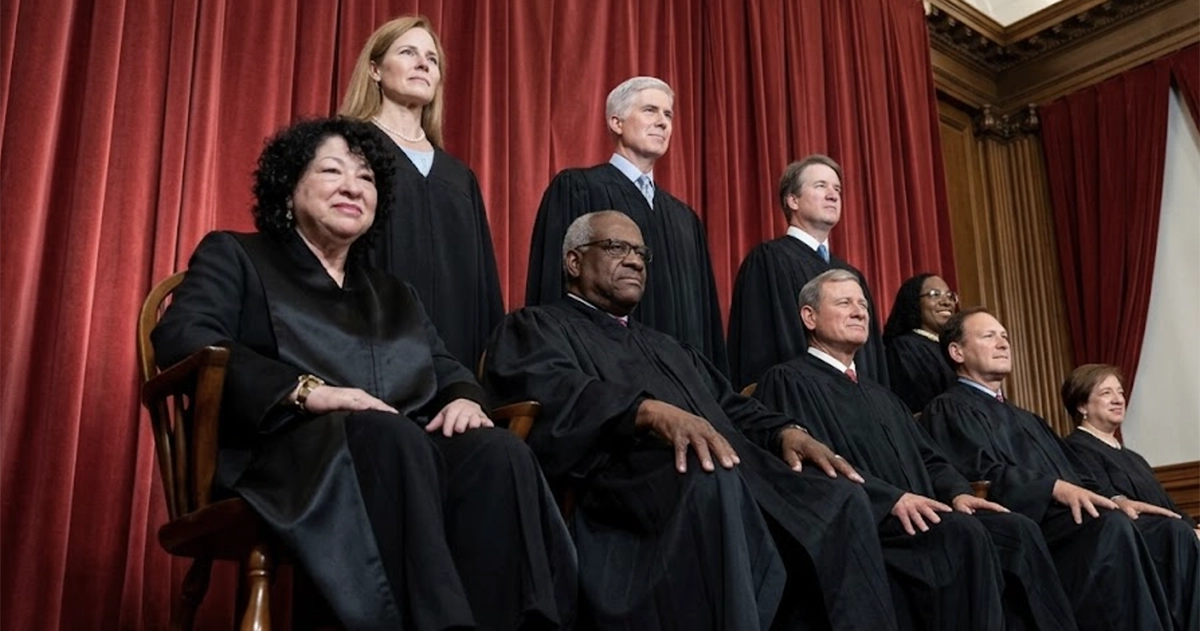
The refunds trace to a single decision. On February 20, 2026, the U.S. Supreme Court ruled 6-3 in Learning Resources, Inc. v. Trump — decided together with Trump v. V.O.S. Selections, Inc. — that IEEPA does not authorize the President to impose tariffs. Because the Court found the duties were unlawful from the moment they were imposed, the importers that paid them became entitled to get them back.Estimates of the total at stake run high: roughly $166 billion in IEEPA duties had been collected and were potentially refundable, per a sworn Customs declaration, while economists at the Penn Wharton Budget Model have put total IEEPA collections closer to $175–179 billion. Customs built a dedicated processing system — the Consolidated Administration and Processing of Entries, or CAPE, reached through the ACE portal — that went live on April 20, 2026 to handle the flood of refund requests. Importers generally have 180 days after their entries are "liquidated" to protest and request a refund, and more than 2,000 companies have filed cases at the Court of International Trade seeking their share.
The $71 billion paid so far is only about 60% of what has been authorized, and friction in the CAPE process has slowed the rest. For a plain-English walkthrough of who is eligible and how the importer refunds work, see our explainers on the CBP CAPE refund portal and how a small business applies for an IEEPA tariff refund.
Free settlement alerts
Get notified when new class actions open to claims
Join thousands of readers who get the latest class action settlements you may qualify for — delivered straight to your inbox.
What Companies Say They'll Do With the Money
The latest reporting is less about the refund total than about where it lands. Companies that have described their plans generally say the money will offset higher costs and inflation — some of it tied to the economic fallout of the Iran war — rather than flow back to shoppers as refunds:• McCormick & Company has said its roughly $31 million in refunds will counterbalance higher costs, after the spice maker raised prices twice over the prior year in response to tariffs and tight freight capacity.
• BJ's Wholesale Club told investors that tariff refunds could help reduce in-store prices modestly — on the order of half a percent.
• More broadly, surveys of affected importers suggest any consumer benefit is far more likely to show up as slower future price increases than as a direct payment — a modest disinflationary nudge, not a check in the mail.
In other words, the households that absorbed the tariffs in the form of higher prices are, at best, in line for slightly smaller price hikes going forward. The dollars themselves are landing on corporate balance sheets. That is the exact gap the consumer lawsuits are built around.
Where the Class Actions Come In: The "Double Recovery" Theory
The consumer tariff class actions don't ask Customs for anything. They go after individual companies on a theory that the refund windfall has sharpened: a business that raised prices or tacked on a separate tariff surcharge to cover the IEEPA duties, and now collects a government refund of those very same duties, would be paid twice for one cost — once by its customers and once by Customs. The suits allege that pocketing both is a double recovery and, under theories such as unjust enrichment, ask that the refunded amount be shared with the customers who paid.The highest-profile example is the Walmart tariff class action, where shoppers allege the retailer is keeping its IEEPA refunds without reimbursing the people who paid more during the tariff period. Walmart later reported receiving about $2.9 billion in tariff refunds, below the $10.2 billion the first complaint had estimated, and a second Walmart suit was filed in Texas in October 2026. A parallel Costco tariff refund lawsuit makes a similar overcharge claim. Beyond the big-box retailers, a cluster of complaints targets brands that raised prices or itemized a tariff charge, including:
• IKEA and Nike, each accused of leaving shoppers with the tariff cost while the company may keep the refunds;
• Ford, where buyers say they're owed a cut of the automaker's estimated $1.3 billion refund;
• console makers Sony (PS5) and Nintendo (Switch), sued over price hikes while they stand to collect refunds;
• and retailers and brands from Amazon to Columbia Sportswear, Ralph Lauren, and Five Below.
These are complaints, not verdicts. None of the companies has been found liable, no class has been certified, and the refund figures cited in the suits are estimates. What the $71 billion milestone changes is the factual backdrop: the "companies may get refunds" premise the suits were filed on is no longer hypothetical — the checks are actually being written.
What This Means If You Paid More During the Tariffs
There is no government portal where a shopper can claim a tariff refund, and any text, email, or call promising you a personal "tariff refund" in exchange for a fee or your bank details should be treated as a scam. The realistic path for consumers runs entirely through the class actions, which are at an early stage — no claim forms, no deadlines, and no guaranteed outcome. The practical steps are modest: keep receipts for large purchases made during the tariff window (roughly early 2025 through late February 2026), watch the cases against companies you actually bought from, and be skeptical of any "act now" refund pitch. If and when any of these cases produce a settlement with a claims process, OCA will cover it.Frequently Asked Questions
Who is getting the $71 billion in tariff refunds?
The refunds go to importers of record — the companies that actually paid the duties to U.S. Customs and Border Protection when goods entered the country. That means retailers, manufacturers, and brands, not the individual shoppers who paid higher shelf prices while the tariffs were in effect.
Why are companies getting tariff money back?
On February 20, 2026, the U.S. Supreme Court ruled 6-3 in Learning Resources, Inc. v. Trump that the International Emergency Economic Powers Act (IEEPA) does not authorize the President to impose tariffs. Because the duties were unlawful from the start, importers that paid them can seek refunds through U.S. Customs. As of late June 2026, Customs had authorized about $104 billion in refunds and paid out roughly $71 billion, including interest.
Can consumers claim a tariff refund?
No. There is no government refund for shoppers. The Customs refund process only reimburses the importer that paid the duty. Consumers who believe they paid higher prices or a separate tariff surcharge are pursuing that money through class action lawsuits against individual companies, not through Customs. Those cases are at an early stage, so there is nothing to claim yet.
What is the tariff "double recovery" problem?
Several class action complaints allege that a company raised prices or added a tariff surcharge to cover the IEEPA duties, and now stands to collect a refund of those same duties from Customs. The suits allege that keeping both the extra money from consumers and the government refund would be a double recovery, and ask that the refunded amount be shared with the customers who paid. These are allegations that have not been proven in court.
Are companies passing the refunds on to shoppers?
Mostly not as direct refunds. Companies that have described their plans generally say they will use the money to offset higher costs and inflation rather than send checks to customers. Some, such as BJ's Wholesale Club, have said the refunds could modestly slow price increases; others, like McCormick, have said the money will counterbalance costs after earlier tariff-driven price hikes.
Sources
• Fortune — U.S. companies have finally gotten $71 billion in tariff refunds• Axios — Tariff shock reversal sends billions back to businesses
• Penn Wharton Budget Model — Supreme Court Tariff Ruling: IEEPA Revenue and Potential Refunds
• Holland & Knight — IEEPA Tariff Refund Update
• Reason (Volokh Conspiracy) — Tariff Refund Update