Every settlement we cover traces back to a case number in a district court. Here's what these courts actually do, who the judges are, and how to decode the "N.D. Cal." shorthand you see in every class action story.
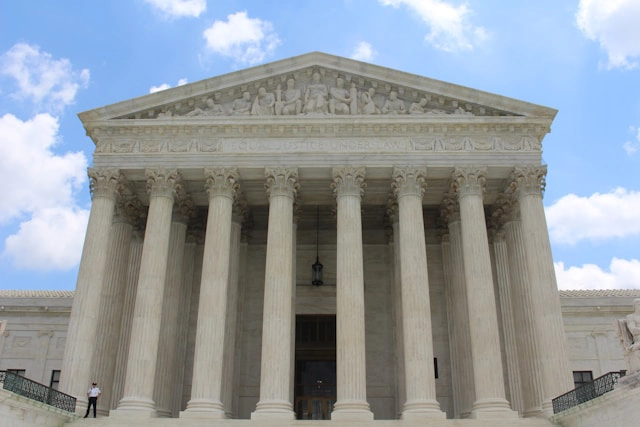

The Trial Floor of the Federal System
District courts are the trial courts of the federal judiciary — the ground floor where federal cases start. This is where complaints get filed, evidence gets gathered, witnesses testify, juries sit, and judges rule on the motions that decide most cases long before any trial. When you read that a company "was sued in federal court," that means a complaint landed in a district court.There are 94 federal judicial districts: at least one for every state, plus the District of Columbia, Puerto Rico, and the territories. Small states get one district (the District of Connecticut covers the whole state); big ones are carved up — California, New York, and Texas each have four districts, which is why you see names like the Northern District of California or the Southern District of New York.
What District Courts Handle
District courts hear both sides of federal law: criminal prosecutions brought by U.S. Attorneys, and civil cases — contract disputes, civil rights claims, securities fraud, antitrust, privacy, and consumer protection suits. (If the civil/criminal split is fuzzy, our civil vs. criminal explainer covers it.) Bankruptcy courts operate as units of the district courts, and each district also handles the unglamorous work of naturalization ceremonies, subpoenas, and warrants.For readers of this site, the district court is where the class action lifecycle plays out. The complaint is filed there; the judge decides whether to certify a class; and if the parties settle, the same judge must grant preliminary approval, oversee notice to the class, hold a fairness hearing, and approve attorneys' fees before checks go out. When you see a settlement website citing a case like In re Something Antitrust Litigation, No. 1:24-cv-03219 (N.D. Ill.), that's a district court docket.
Free settlement alerts
Get notified when new class actions open to claims
Join thousands of readers who get the latest class action settlements you may qualify for — delivered straight to your inbox.
The Judges
District judges are nominated by the President and confirmed by the Senate, and under Article III of the Constitution they serve for life "during good Behaviour" — a design meant to insulate them from political pressure. Each district also has magistrate judges, appointed by the district's judges for renewable eight-year terms, who handle much of the day-to-day motion practice, settlement conferences, and (when the parties consent) entire civil cases.A single district judge wields real power in a class action: they decide whether millions of people proceed as one case or none at all (class certification), whether a proposed settlement is "fair, reasonable, and adequate," and how much of the fund goes to the lawyers.
District Courts vs. Appeals Courts vs. the Supreme Court
The federal judiciary is a three-story building. District courts occupy the first floor: trials, facts, evidence. The 13 U.S. Courts of Appeals are the second: they don't hold trials or hear new evidence, they review what the district court did for legal error, usually through three-judge panels. The Supreme Court is the penthouse, choosing a few dozen cases a year from the thousands that seek review.The practical takeaway: when a class action settlement is "appealed," the case moves up a floor, and payments usually wait until the appeal resolves. When headlines say a ruling was "affirmed" or "reversed," that's the appeals court grading the district judge's work. Related federal cases filed in many districts at once can also be consolidated for pretrial proceedings into one district through multidistrict litigation (MDL).
How to Read a Federal Case Number
Every district court case gets a docket number, and once you can read one, class action coverage gets easier to follow. Take 3:26-cv-05610 (N.D. Cal.):- 3: the courthouse or division within the district (here, San Francisco).
- 26: the year the case was filed — 2026.
- cv: a civil case ("cr" marks a criminal one).
- 05610: the sequential case number for that year.
- N.D. Cal.: the court — the Northern District of California. Similarly, S.D.N.Y. is the Southern District of New York and E.D. Tex. is the Eastern District of Texas.
Want to read the actual filings behind a case number? The federal courts' records system is covered in our PACER explainer, including the free alternatives.
"District Court" Can Also Be a State Court
One naming trap: plenty of states call their own trial courts "district courts" — Texas, Colorado, Minnesota, Nevada, and others. Those are state courts applying state law, entirely separate from the U.S. District Courts. (New York goes the other direction and confusingly names its main trial court the "Supreme Court.") The tell is the "U.S." or "United States" in the federal courts' names.Whether a lawsuit belongs in a federal district court or a state trial court is its own set of rules — federal question jurisdiction, diversity jurisdiction, and removal — which we walk through in plain English in Federal vs. State Court: When Does a Case Go Federal?
Frequently Asked Questions
How many federal district courts are there?
There are 94 federal judicial districts, with at least one in every state plus the District of Columbia, Puerto Rico, and the U.S. territories. Larger states are split into multiple districts — California, New York, and Texas each have four.
What does "N.D. Cal." mean in a case citation?
It's shorthand for the U.S. District Court for the Northern District of California, the federal trial court based in the San Francisco Bay Area. Citations abbreviate every district the same way: S.D.N.Y. is the Southern District of New York, E.D. Tex. is the Eastern District of Texas, and so on.
Is a district court a federal or state court?
It can be either — the name is used by both systems. A U.S. District Court is always federal. But many states, including Texas, Colorado, Minnesota, and Nevada, also call their own trial courts "district courts." Check for "U.S." or "United States" in the court's name to tell them apart.
Do class actions go to trial in district court?
They can, but most don't. The vast majority of class actions settle, and the district judge stays at the center of the process — deciding class certification, granting preliminary and final approval of the settlement, and approving attorneys' fees before any money goes out.
Sources
• U.S. Courts — Court Role and Structure• U.S. Courts — About the U.S. Courts of Appeals
• Cornell Law School LII — District Court