Can you get a refund for tariffs you paid through higher prices? Not directly, and not from the government. Tariff refunds run only to the importer of record — the business that paid the duty at the border. A shopper who paid a higher shelf price is not the importer and cannot file in the Court of International Trade.
After the Supreme Court held on February 20, 2026 in Learning Resources, Inc. v. Trump that the International Emergency Economic Powers Act does not authorize the President to impose tariffs, roughly $165 billion in collected duties became refundable to importers, with interest. At least 27 consumer class actions have since been filed arguing that companies which raised prices to cover those tariffs should pass the refund through to the people who funded it.
None of them is claimable. Every case below is at the complaint stage: no class certified, no settlement, no fund, no claim form, no deadline. Anyone asking you to file a claim or pay a fee for a consumer tariff refund today is running a scam.
Every Tariff Refund Class Action, Compared
All 27 consumer tariff pass-through cases OCA is tracking, newest filing first. Every one alleges the same core theory — price raised to cover a tariff, refund kept when the tariff fell — but they differ in which statutes they invoke and whether the tariff appeared as a visible surcharge or was folded into the shelf price.
| Defendant | Sector | Filed | Court | Case | Claims Pleaded |
|---|---|---|---|---|---|
| Lowe's Companies, Inc. | Home Improvement | Sep 3, 2026 | N.D. Ohio | McCoy v. Lowe's Companies, Inc. 5:26-cv-02156 |
Ohio CSPA · unjust enrichment · money had and received · injunctive relief (constructive trust) |
| Dollar Tree, Inc. | Retail | Sep 3, 2026 | E.D. Va. | Fennessy v. Dollar Tree, Inc. 2:26-cv-00932 |
Unjust enrichment · money had and received · declaratory judgment · state consumer protection |
| Logitech Inc. | Consumer Tech | Aug 18, 2026 | N.D. Cal. | SJK Development, Inc. et al. v. Logitech Inc. 5:26-cv-08570 |
Unjust enrichment · money had and received · California UCL |
| The Campbell's Company | Grocery | Aug 11, 2026 | D.N.J. | McCormick v. The Campbell's Company 1:26-cv-10134 |
PA UTPCPL · NJ CFA · unjust enrichment · money had and received |
| Stanley Black & Decker, Inc. | Tools | Aug 7, 2026 | D. Conn. | Skelton v. Stanley Black & Decker, Inc. 3:26-cv-01268-SRU |
Declaratory relief (28 U.S.C. § 2201) · unjust enrichment · money had and received · Maine UTPA |
| Target Corporation | Retail | Jul 21, 2026 | S.D.N.Y. | Cavallaro v. Target Corporation 7:26-cv-06165 |
NY GBL §§ 349 & 350 · unjust enrichment · money had and received |
| Adidas America, Inc. | Apparel | Jul 21, 2026 | D. Or. | Chaidez v. Adidas America, Inc. 3:26-cv-01511 |
Declaratory relief · unjust enrichment · money had and received · California UCL · Illinois Consumer Fraud Act |
| Five Below, Inc. | Retail | Jul 16, 2026 | E.D. Pa. | Johns v. Five Below, Inc. 2:26-cv-04954-MMB |
Unjust enrichment · money had and received · declaratory judgment |
| Ford Motor Company | Auto | Jul 9, 2026 | E.D. Mich. | Bullock v. Ford Motor Company | Unjust enrichment · restitution |
| Graco Children's Products, Inc.; Newell Brands, Inc. | Baby Products | Jul 6, 2026 | N.D. Ga. | Perica v. Graco Children's Products, Inc. 1:26-cv-03758-SDG |
Unjust enrichment · money had and received · declaratory relief |
| Lululemon USA, Inc. | Apparel | Jun 30, 2026 | W.D. Wash. | Alsaady v. Lululemon USA, Inc. 3:26-cv-05708 |
WA CPA · MI CPA · NY GBL § 349 · unjust enrichment · constructive trust |
| Microsoft Corporation | Consumer Tech | Jun 17, 2026 | W.D. Wash. | Hastings v. Microsoft Corporation 2:26-cv-02537-MLP |
Unjust enrichment / restitution · money had and received · declaratory judgment |
| Zara USA, Inc. | Apparel | Jun 12, 2026 | S.D.N.Y. | Trocchio v. Zara USA, Inc. 1:26-cv-05009 |
Illinois Consumer Fraud Act · unjust enrichment · money had and received |
| Dyson, Inc. and Dyson Direct, Inc. | Consumer Tech | Jun 11, 2026 | N.D. Ill. | Hernandez v. Dyson Inc. 1:26-cv-06898 |
Unjust enrichment · money had and received · declaratory judgment |
| Puma United North America, LLC | Apparel | Jun 11, 2026 | D. Mass. | Lemense v. Puma United North America, LLC 1:26-cv-12654-JEK |
Unjust enrichment · money had and received |
| Columbia Sportswear Company | Apparel | Jun 9, 2026 | D. Or. | Tan v. Columbia Sportswear Company 3:26-cv-01170 |
Oregon Unlawful Trade Practices Act · unjust enrichment · money had and received |
| Amazon.com, Inc. | Retail | Jun 5, 2026 | E.D.N.Y. | Rittenhouse v. Amazon.com, Inc. 2:26-cv-03392 |
NY GBL §§ 349 & 350 · unjust enrichment · money had and received |
| Ubiquiti Inc. | Consumer Tech | Jun 4, 2026 | D. Del. | Higgins v. Ubiquiti Inc. 1:26-cv-00659 |
NY GBL §§ 349–350 · MI CPA (alt.) · unjust enrichment · declaratory relief |
| Specialized Bicycle Components | Consumer | Jun 1, 2026 | N.D. Cal. (reported) | Reported filed — caption not yet public Not yet available |
Reported — counts not yet public |
| Ralph Lauren Corporation | Apparel | Jun 1, 2026 | S.D.N.Y. | Rippman v. Ralph Lauren Corporation 1:26-cv-04619 |
Unjust enrichment / restitution · money had and received · declaratory judgment |
| IKEA North America Services LLC | Retail | May 29, 2026 | E.D. Pa. | Matthews v. IKEA North America Services LLC et al. 2:26-cv-03712 |
Unjust enrichment · money had and received |
| The J.M. Smucker Company | Grocery | May 21, 2026 | N.D. Ill. | Mulconrey v. The J.M. Smucker Company 1:26-cv-08832 |
Illinois Consumer Fraud and Deceptive Business Practices Act · unjust enrichment |
| Sony Interactive Entertainment LLC | Consumer Tech | May 15, 2026 | N.D. Cal. | Walker v. Sony Interactive Entertainment LLC Not yet available |
Unjust enrichment · restitution |
| Toyota Motor North America, Inc. | Auto | May 12, 2026 | C.D. Cal. | Cornejo v. Toyota Motor North America, Inc. 2:26-cv-04729 (reported) |
Unjust enrichment · restitution · money had and received · California consumer law |
| Nike, Inc. | Apparel | May 8, 2026 | D. Or. | Caldwell et al. v. Nike, Inc. 3:26-cv-00923 |
Unjust enrichment · money had and received |
| Nintendo of America, Inc. | Consumer Tech | Apr 21, 2026 | W.D. Wash. | Hoffert v. Nintendo of America, Inc. 2:26-cv-01360 |
Washington Consumer Protection Act · unjust enrichment · money had and received |
| Fabletics, LLC | Apparel | Mar 6, 2026 | Cook County, Ill. (Chancery) | Flaherty v. Fabletics, LLC 2026-CH-02139 |
Illinois Consumer Fraud and Deceptive Business Practices Act · unjust enrichment |
Scroll the table sideways on a narrow screen. Filing dates and docket numbers come from the complaints; two cases have no public docket number yet and are labeled as reported.
Case-by-Case Detail
 HOT
HOT
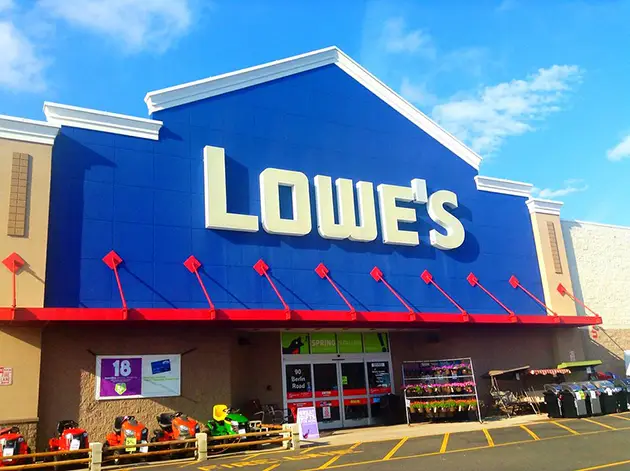
Lowe's Tariff Refund Class Action
Dollar Tree Tariff Refund Class Action
Logitech Tariff Refund Class Action Lawsuit
Campbell's Tariff Refund Class Action

Stanley Black & Decker DEWALT Tariff Refund Class Action
 HOT
HOT
Target Tariff Refund Class Action

Adidas Tariff Refund Class Action
Five Below Tariff Refund Class Action
 HOT
HOT
Ford Tariff Refund Class Action

Graco & Newell Brands Tariff Refund Class Action

Lululemon Tariff Refund Class Action

Microsoft Xbox Tariff Refund Class Action

Zara Tariff Refund Class Action

Dyson Tariff Refund Class Action

Puma Tariff Refund Class Action

Columbia Sportswear Tariff Refund Class Action
 HOT
HOT
Amazon Tariff Refund Class Action

Ubiquiti Tariff Surcharge Class Action

Specialized Bicycle Tariff Surcharge Class Action

Ralph Lauren Tariff Refund Class Action

IKEA Tariff Refund Class Action
Smucker Folgers Tariff Refund Class Action

Sony PS5 Tariff Refund Class Action
 HOT
HOT
Toyota Tariff Refund Class Action
 HOT
HOT
Nike Tariff Refund Class Action

Nintendo Switch Tariff Refund Class Action

Fabletics Tariff Surcharge Class Action
How the Tariff "Double Recovery" Problem Works
The mechanics are the same in every case, and they are worth understanding before reading any individual complaint.
When a tariff is imposed, the importer of record pays the duty to U.S. Customs and Border Protection at the border. That importer — a retailer, a manufacturer, a brand — typically raises prices to recover the cost, so the customer effectively reimburses part of the tariff at checkout. Economists broadly accept that consumers in the tariff-imposing country bear much of the burden, and the complaints cite Federal Reserve and Yale Budget Lab work finding the same pattern for the IEEPA tariffs specifically.
When the tariff is later struck down, the refund runs back to whoever paid the duty at the border. It does not follow the money down the chain to the person who actually absorbed it. So the importer can recover the cost twice: once from customers during the tariff period, and again from the government afterward.
Justice Kavanaugh flagged exactly this in dissent, writing that the government "may be required to refund billions of dollars to importers who paid the IEEPA tariffs, even though some importers may have already passed on costs to consumers or others." Nearly every complaint on this page quotes that line — it is the closest thing the theory has to a judicial endorsement, and it comes from a dissent.
The Legal Theories, and Why They Are Untested
These cases are not ordinary false-advertising suits. In most of them nothing was misrepresented: the price was displayed, the customer paid it. That pushes plaintiffs toward equitable claims rather than deception claims.
- Unjust enrichment — the most common count. The argument is that retaining money collected for a tariff that was never lawfully owed, while also recovering that tariff from the government, is a benefit the company should not in equity keep.
- Money had and received — usually pleaded in the alternative and aimed specifically at the refund proceeds, on the theory that money the government returns is, in equity, a return of costs the customer bore.
- Declaratory relief and an accounting — the Stanley Black & Decker and Five Below complaints lead here. Only the importer knows what it paid and recovered, so a declaration plus an accounting is a way to get at facts the plaintiff cannot otherwise reach.
- State consumer protection statutes — where pleaded (New York GBL, the Illinois Consumer Fraud Act, the Washington and Oregon acts, the Maine UTPA and others), the theory usually rests on unfairness rather than a false statement, and sometimes on an omission: that the company never disclosed it could later recoup the same tariffs from the government.
Every one of these theories faces the same threshold problem. A customer who paid a shelf price is several steps removed from the duty payment, which raises questions about Article III standing, about whether pass-through can be traced product by product, and about whether a court can identify a specific overcharge at all. No court has yet ruled on the merits of a consumer tariff pass-through claim. The first motion-to-dismiss rulings will be the real test.
Not Every Tariff Is Refundable
This is the most common misreading of the story, and it matters for judging any company's exposure.
The Supreme Court invalidated tariffs imposed under IEEPA — and only those. Section 232 tariffs on imported steel and aluminum rest on separate authority under the Trade Expansion Act. Section 301 tariffs on Chinese goods rest on a third. Neither was touched by the ruling, and neither generates a refund.
So a company's headline tariff-exposure figure is not the refundable amount. Campbell's has told investors that steel and aluminum account for roughly 60% of its gross tariff exposure; a toolmaker like Stanley Black & Decker is similarly steel-intensive. In both cases the refundable IEEPA slice is meaningfully narrower than the total tariff bill, and separating the two — product by product, entry by entry — is one of the hardest factual problems these cases face.
Surcharge Cases vs. Embedded-Price Cases
The cases split into two groups, and the distinction is legally significant.
Itemized surcharge cases — Ubiquiti, Fabletics and Specialized — involve a visible line item labeled as a tariff charge. Ubiquiti's complaint alleges its 7.2% "Tariff Surcharge Fee" exceeded the duties actually owed. These are the cleaner cases: the amount is stated, tied to a declared purpose, and easy to total.
Embedded-price cases — everything else — involve tariff costs folded into the shelf price with no separate line. The plaintiff has to establish that a price increase was attributable to tariffs and by how much, which is a far heavier evidentiary lift. It is why several of these complaints lean so hard on the defendant's own earnings-call statements: an executive saying the company raised prices in response to tariffs is the closest thing to an admission available.
What Consumers Should Do Now
Nothing is required, and nothing can be filed. Concretely:
- There is no claim form in any tariff case, and no deadline to miss.
- Keep purchase records from the tariff period — order history, receipts, card statements. This costs nothing and could matter if a class is ever certified.
- Ignore any "tariff refund" text, email or call. No legitimate process exists yet. A real claims process would be run by a court-appointed administrator, would be free, and would never ask for banking passwords, gift cards or up-front fees.
- If you imported directly — as a small business rather than a retail customer — you may be the importer of record and may have a real refund path. See our guide on how a small business applies for an IEEPA tariff refund.
Background: The IEEPA Tariffs and the Refund Machinery
Beginning in February 2025, the federal government imposed tariffs on imports from most countries by invoking the International Emergency Economic Powers Act: 25% on goods from Canada and Mexico, escalating rates on Chinese goods that reached as high as 145%, and a baseline 10% "reciprocal" tariff on nearly all other imports, with higher country-specific rates on dozens of nations. The de minimis exemption that let low-value shipments enter duty-free was eliminated for China and Hong Kong in May 2025 and for all countries at the end of August 2025.
After the February 20, 2026 ruling, the U.S. Court of International Trade ordered CBP to liquidate covered entries without regard to IEEPA duties, reasoning that a narrower approach would deny the benefit of the decision to importers who had not filed their own suits. CBP launched its CAPE refund portal on April 20, 2026, and refunds began reaching businesses in May 2026. We have written separately on where that refund money is actually going.
Update: The Tariffs Came Back Under Different Statutes
The Supreme Court's February ruling ended the IEEPA tariffs, not tariffs generally. Within days, comparable rates were rebuilt on other statutory authority, and which authority applies to a given purchase is what determines whether there is any refund sitting behind it. Two replacements matter for the cases on this page.
Section 122, February 24 to July 24, 2026. Four days after the ruling, Proclamation 11012 imposed a temporary 10% surcharge on nearly all imports under Section 122 of the Trade Act of 1974 — a provision allowing duties of up to 15% for no more than 150 days to address "fundamental international payments problems." The Court of International Trade held on May 7, 2026 that the proclamation had not identified the kind of balance-of-payments deficit the statute requires. But that 2-1 decision granted relief only to the prevailing plaintiffs — two importers and one state — rather than to importers generally, and the Federal Circuit stayed the injunction on June 11, 2026 while the government's appeal proceeds. The surcharge then lapsed on its own 150-day clock on July 24.
The distinction that matters here: expiring is not the same as being struck down. Section 122 duties collected during those five months have not been refunded, and whether they ever are depends on how the Federal Circuit resolves the appeal. If that court affirms and the relief is broadened, a second refund pool opens and the pass-through question on this page repeats with a new set of dates. If it reverses, the money stays collected and there is nothing to pass through.
Section 301 forced-labor duties, July 24, 2026 onward. The U.S. Trade Representative opened investigations in March 2026 into 60 economies over their failure to impose or effectively enforce bans on importing goods made with forced labor, issued findings in June, and imposed additional duties effective 12:01 a.m. Eastern on July 24 — the day the Section 122 surcharge expired. The rate is 10% for economies that maintain such a prohibition or have committed to one and 12.5% for the rest, with product exclusions and a reduced-rate mechanism for certain apparel and textiles set out in the accompanying Federal Register notice. These duties rest on Section 301 of the Trade Act of 1974, the same authority behind the China tariffs described above, and no court has invalidated them.
Why this narrows, rather than expands, the cases on this page
It is tempting to read a continuing tariff burden as a continuing claim. The opposite is closer to the truth.
- Only the IEEPA period generates a refund. A company paying Section 301 forced-labor duties today has nothing to recover from the government, so there is no double recovery to allege on the theory these complaints run on.
- It sharpens the class period. The pass-through argument depends on a window in which a company both charged more and later got money back. That window is the IEEPA window, not the whole tariff era. A complaint pleading a class period that runs past February 2026 will have to explain what refund funds the later part of it.
- A price that never came down is not itself evidence. A shelf price still elevated today may reflect duties the company genuinely owes under a different statute. Separating those from the refundable IEEPA slice is the same evidentiary problem described earlier, now with more moving parts.
Meanwhile the refunds themselves have moved from theory to cash: CBP told the Court of International Trade that it had paid roughly $100 billion in IEEPA refunds as of July 31, 2026, out of a pool of about $166 billion. We track what companies are doing with that money in our report on tariff refunds landing in corporate earnings. The Budget Lab at Yale, whose pass-through research several of these complaints cite, has put the average effective U.S. tariff rate near 11.8% heading into the end of 2026 — close to the highest level since the 1940s even with the IEEPA tariffs gone. That is the practical picture for shoppers: the invalidated tariffs are being refunded to importers, while different tariffs keep applying going forward.
Frequently Asked Questions
Can consumers get a refund for tariffs they paid through higher prices?
Not directly, and not from the government. Tariff refunds run only to the importer of record — the business that actually paid the duty to U.S. Customs and Border Protection. A shopper who paid a higher shelf price is not the importer and cannot file in the Court of International Trade. That structural gap is why every case on this page exists: they are private lawsuits asking a court to order the company to pass its refund through to the customers who allegedly funded it. None has succeeded yet, and there is no claim form in any of them.
What is a tariff pass-through class action?
A tariff pass-through class action is a consumer lawsuit alleging that a company raised its prices to recover import tariffs, and then became eligible to recover those same tariffs from the government after they were ruled unlawful — collecting twice for one cost. The claims are usually pleaded as unjust enrichment and money had and received, sometimes with a state consumer protection statute or a request for declaratory relief and an accounting. The theory is new: it depends on the Supreme Court's February 2026 decision invalidating the IEEPA tariffs, so no court has yet ruled on whether it works.
What did the Supreme Court decide about the IEEPA tariffs?
On February 20, 2026, in Learning Resources, Inc. v. Trump, the U.S. Supreme Court held that the International Emergency Economic Powers Act does not authorize the President to impose tariffs. That invalidated the IEEPA-based duties imposed beginning in February 2025, which had included 25% tariffs on Canada and Mexico, rates on Chinese goods reaching as high as 145%, and a baseline 10% reciprocal tariff on most other imports. The U.S. Court of International Trade then ordered CBP to liquidate covered entries without regard to those duties, making importers eligible for refunds with interest.
How much money is at stake in the IEEPA tariff refunds?
According to figures cited in the Court of International Trade litigation, CBP collected roughly $165 billion in IEEPA duties, with interest accruing at approximately $650 million per month. Refunds began reaching businesses in May 2026 through CBP's CAPE processing system, which launched April 20, 2026. The dispute these lawsuits raise is who that money ultimately belongs to — the importers who paid it at the border, or the customers who allegedly reimbursed it at the register.
Is there a claim form or settlement in any tariff class action?
No. Every case tracked on this page is at the complaint stage. No class has been certified, no settlement has been reached, no fund exists, and there is no claim form or deadline in any of them. Nothing on this page is claimable today. Anyone asking you to file a claim or pay a fee for a consumer tariff refund right now is running a scam — a legitimate claims process would be run by a court-appointed administrator and would always be free.
Are the steel and aluminum tariffs being refunded too?
No. The Supreme Court decision addressed only tariffs imposed under IEEPA. Section 232 tariffs on steel and aluminum rest on separate statutory authority under the Trade Expansion Act, and Section 301 tariffs on Chinese goods rest on a third authority. Neither was invalidated, and neither generates a refund. This matters when reading any company's headline tariff-exposure number: the refundable IEEPA portion is narrower than the total tariff bill, and how much of a given price increase traces to refundable duties rather than to duties that still stand is one of the central factual problems in these cases.
Do I need receipts to join a tariff class action?
There is nothing to join yet — no class has been certified in any of these cases. If a class is later certified and a claims process opens, eligibility rules and any proof requirements would be set by the court and announced by an administrator at that point. Keeping order history, receipts and card statements from the tariff period costs nothing and could matter later, but no case currently requires or accepts any submission.
Which companies are facing tariff refund class actions?
Consumer tariff pass-through class actions have been filed against Amazon, Target, Ford, Toyota, Nike, Lululemon, Microsoft, Nintendo, Sony, IKEA, Zara, Puma, Ralph Lauren, Columbia Sportswear, Five Below, Campbell's, J.M. Smucker, Stanley Black & Decker, Ubiquiti, Fabletics and Specialized Bicycle Components. They span retail, grocery, apparel, automotive, consumer technology and tools, and are spread across more than a dozen federal district courts plus one Illinois state court. All are allegations; none of these companies has been found liable.
What is the difference between a tariff surcharge case and a price increase case?
Some companies added a visible, itemized tariff line to the order — the Ubiquiti and Fabletics cases involve a labeled surcharge, and Ubiquiti's complaint alleges the 7.2% fee exceeded the duties actually owed. Most others embedded the cost in the shelf price with no separate line. The distinction matters legally: an itemized surcharge is a specific, traceable amount tied to a stated purpose, which makes both the accounting and the deception theory more straightforward than proving how much of a general price increase was attributable to tariffs.
What happens next in these cases?
Each defendant will respond to its complaint, and in cases of this type the first move is almost always a motion to dismiss. The recurring arguments are whether a customer who paid a shelf price has Article III standing to sue over a duty someone else paid, whether pass-through can be traced product by product, and whether equitable claims survive when the plaintiff cannot identify a specific price that provably moved. Cases against the same defendant in the same district are likely to be consolidated. Rulings on those motions will be the first real signal of whether the theory works.
Sources
• Learning Resources, Inc. v. Trump (U.S. Feb. 20, 2026), including the dissent quoted across these complaints.
• Atmus Filtration, Inc. v. United States, No. 26-01259 (Ct. Int'l Trade Mar. 5 and Mar. 6, 2026) — collected-duty and interest figures.
• The class action complaints in each case listed above; see the individual case pages for per-case citations.
• U.S. Customs and Border Protection CAPE refund process announcements.
• Executive Orders 14193, 14194, 14195, 14228, 14256, 14257, 14259, 14266 and 14324.
• Proclamation 11012 (Section 122 temporary import surcharge, effective Feb. 24, 2026).
• U.S. Court of International Trade, Slip Op. 26-47 (May 7, 2026) — Section 122 authority; Federal Circuit stay pending appeal (June 11, 2026).
• Office of the U.S. Trade Representative, Section 301 forced-labor investigations of 60 economies: initiation (Mar. 2026), determinations (June 2026) and final action, 91 Fed. Reg. (July 28, 2026).
• CBP status report to the Court of International Trade on CAPE refunds paid as of July 31, 2026.
• The Budget Lab at Yale, State of U.S. Tariffs — effective tariff rate and consumer pass-through estimates.
Last updated October 11, 2026. OpenClassActions.com tracks each docket for motion-to-dismiss rulings, consolidation, class certification and any future settlement or claim form.
Free settlement alerts
Get notified when new class actions open to claims
Join thousands of readers who get the latest class action settlements you may qualify for — delivered straight to your inbox.