
Hydromax USA WA Job Postings Settlement

Scribd WA Job Postings Settlement

Talkdesk WA Job Postings Settlement

Mercurys Coffee WA Job Postings Settlement

Cosco Fire Protection WA Job Postings Settlement
Gosiger Machine Tools WA Job Postings Settlement

Covenant Transport WA Team Driver Job Postings Settlement

Sizzling Platter WA Job Postings Settlement

Emerald City Pizza WA Job Postings Settlement
Lily Transportation WA Job Postings Settlement

Belcan WA Job Postings Settlement
Recently Closed Washington Job Posting Settlements
Claim deadlines for these settlements have passed. They're kept here for reference only — you can no longer file a claim. Claims Closed
Saint-Gobain & CertainTeed WA Job Postings Settlement
 Claims Closed
Red Robin WA Job Postings Settlement
 Claims Closed
Quality Inn SeaTac (Seawind Hotel) WA Job Postings Settlement
 Claims Closed
T-Mobile WA Job Postings Settlement
 Claims Closed
BrandSafway WA Job Postings Settlement
 Claims Closed
Jiffy Lube (Team Car Care) WA Pay Transparency Settlement
 Claims Closed
AVI-SPL WA Job-Posting Pay Transparency Settlement
 Claims Closed
Domino's (Carpe Diem & King Beast) WA Job Postings Settlement
 Claims Closed
DOWL WA Job Postings Settlement
 Claims Closed
Oldcastle APG West WA Job Postings Settlement
 Claims Closed
Delphinus Engineering WA Job Postings Settlement
 Claims Closed
Seven Motor Corporation WA Job Postings Settlement
Claims Closed
Lennox International WA Job Postings Settlement
 Claims Closed
Boeing WA Job Postings Settlement
Claims Closed
ACV WA Job Postings Settlement
 Claims Closed
Potbelly WA Pay Transparency Settlement
 Claims Closed
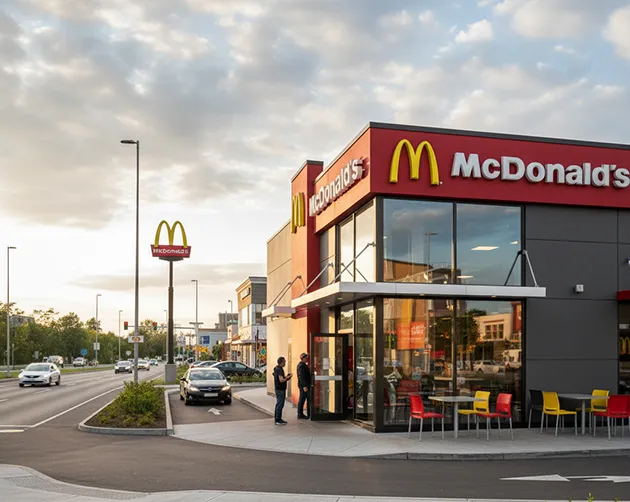
McDonald's (KTC) WA Job Postings Settlement
 Claims Closed
Mastercard WA Job Posting Settlement
What Are Washington Job Posting Settlements?
These are class action settlements over a single, specific violation: a Washington job posting that failed to list the pay. Under Washington's Equal Pay and Opportunities Act (EPOA), employers have to tell applicants up front what a job pays — and for several years many didn't. When a company settles those claims, it creates a fund that pays money to the people who applied to its non-compliant postings.Unlike a data breach or a defective-product case, you don't need to have lost anything. The claim is triggered by the posting itself — if you applied to a covered Washington job whose ad left out the required pay information during the class period, you're generally in the class, whether or not you got the job or were ever harmed.
The short version: Washington law requires most job postings to show a pay range. Employers who left it off are settling class actions. If you applied to one of the companies above in Washington (or to a Washington-open remote role) during its class period, watch for a mailed or emailed notice with a Claim ID and PIN — that's your ticket to file before the deadline.
The Law: Washington's Pay Transparency Rule (EPOA)
Effective January 1, 2023, Washington amended the Equal Pay and Opportunities Act (RCW 49.58.110) to require employers with 15 or more employees to include, in every job posting, the wage scale or salary range and a general description of the benefits and other compensation offered. The rule covers postings the employer places directly and those placed on its behalf through third-party sites such as Indeed and LinkedIn.The amendment also gave job applicants a private right of action. For postings in that window, an applicant could recover statutory damages of $5,000 or their actual damages, whichever is greater, plus interest, costs, and attorneys' fees. Because a single non-compliant posting could expose an employer to that amount for every applicant, the law prompted a wave of class action filings across Washington — and the settlements now closing are the result.
Two developments shaped who can recover. In Branson v. Washington Fine Wine & Spirits, LLC (2025), the Washington Supreme Court held there is no good-faith or bona fide requirement — a person who applies to a non-compliant posting is a covered job applicant regardless of whether they genuinely intended to take the job, which broadened exposure. Separately, a 2025 legislative amendment added a short window for employers to fix a posting and moved future penalties to a graduated range of $100 to $5,000 depending on employer size and other factors. Many of the settlements on this page cover postings from before those changes.
Who Qualifies?
Eligibility is set by each settlement's class definition, but the common thread is:• You applied for a job with the named company (a formal application, not just viewing the ad);
• The job was located in Washington or open to Washington-based remote workers;
• The posting omitted the required pay range or benefits information; and
• You applied during the class period (most start January 1, 2023).
You don't have to still live in Washington — these classes are defined by where you applied, not where you are now. Because the details differ, always confirm the dates and definition on the individual settlement page before you file.
How Much Can You Get?
Payouts depend on the size of the settlement fund and how many people file valid claims. On the settlements tracked above, estimates generally land between about $1,000 and $2,200 per valid claim, and some are built around the statute's $5,000-per-applicant figure. These are estimates: the final per-person amount is set during administration and can move up or down based on the number of valid claims and the court-approved fees and costs. A few settlements pay a flat or automatic amount instead.How to File a Claim
• Find your notice. Most administrators mail or email a notice with a Claim ID (or Notice ID) and a PIN. That identifier is how you file.• Use the official settlement website. Each settlement page above links to the court-approved claim site. File there before the deadline shown on the card.
• Do you need documentation? No receipts or proof of loss are required — but the Claim ID/PIN acts as proof that you're in the class, so keep the notice.
• Automatic-payment cases. A few (like the Domino's franchisee settlement) pay class members automatically with no claim form; you only act if you want to opt out or object.
• Lost your notice? Use the settlement website's contact page to request your identifier — never pay a fee to anyone to "release" a settlement payment.
Frequently Asked Questions
What is the Washington pay transparency law behind these settlements?
Washington's Equal Pay and Opportunities Act (RCW 49.58.110), amended effective January 1, 2023, requires employers with 15 or more employees to list the wage scale or salary range and a general description of benefits in every job posting, including postings placed through sites like Indeed or LinkedIn. It gives applicants a private right of action; for postings in that period an applicant could recover statutory damages of $5,000 or actual damages, whichever is greater, plus interest, costs, and fees.
Who qualifies for a Washington job posting settlement?
Generally, people who applied for a job with the named company that was located in Washington (or open to Washington-based remote workers) during the class period — most start January 1, 2023 — where the posting left out the required pay range or benefits. Each settlement sets its own dates and class definition. In Branson v. Washington Fine Wine & Spirits (2025), the Washington Supreme Court held there is no bona fide or good-faith requirement, so applying to a non-compliant posting can qualify you regardless of intent.
How much money can I get?
It varies by fund size and how many people file. Estimated payouts on the settlements listed here range from roughly $1,000 to over $2,000 per valid claim, and some are structured around the statute's $5,000-per-applicant figure. These are estimates that can change after the deadline depending on valid-claim volume and court-approved fees.
Do I need proof or my notice to file?
You don't need receipts or proof of a loss, but most of these settlements require the Notice ID (or Claim ID) and PIN from your mailed or emailed notice, which serves as proof of class membership. A few, like the Domino's franchisee settlement, pay automatically with no claim form. Lost your notice? Use the official settlement website's contact page to request your identifier.
Do I have to live in Washington to file?
Not necessarily. These classes are defined by where you applied, not where you live now. If you applied to a job located in Washington or open to Washington-based workers during the class period, you may qualify even if you've since moved. Confirm the class definition on the individual settlement page.
Is it free to file?
Yes. Class action claim forms are always free. If anyone asks for a fee or a payment to "release" a settlement, it's a scam — report it to the FTC at ReportFraud.ftc.gov.
Sources & References
• Washington Equal Pay and Opportunities Act, RCW 49.58.110 (job posting disclosure & remedies) — Washington State Legislature• Washington State Dept. of Labor & Industries — Equal Pay & Opportunities Act guidance — L&I
• Branson v. Washington Fine Wine & Spirits, LLC, Wash. Supreme Court (2025) — Justia
OpenClassActions.com is a consumer news site, not a law firm, and does not provide legal advice or process claims. Deadlines and payout figures on each linked settlement page are authoritative — always prefer the individual page over this summary.