South Carolina has no minimum wage law and no overtime law, but its Payment of Wages Act is sharper than either: it allows triple damages, and it makes a deduction unlawful unless the employer put it in writing before taking it.

Attorney Advertising · Time-Sensitive
OpenClassActions.com is an attorney-advertising and informational resource — not a law firm. It does not provide legal advice and does not recommend or endorse any particular lawyer. Submitting a form on this page does not create an attorney-client relationship, file a lawsuit, or pause any legal deadline, and it does not guarantee that an attorney will review or respond to your case.
These claims are time-sensitive. Legal deadlines (statutes of limitations) vary by state and can permanently bar a claim once they pass — so don't wait for a callback. You are free to choose any attorney you wish, and if you are considering a claim you should speak with a qualified attorney of your choosing as soon as possible. Prior results do not guarantee a similar outcome. This page explains how South Carolina wage rules generally work. It is not advice about your situation, and only a lawyer who knows your facts can tell you what you are owed or what to do next.
South Carolina at a Glance
South Carolina looks like a minimal-regulation state on the surface. It has no minimum wage statute, no overtime statute, no break law, and it preempts cities from setting a local wage floor. Minimum wage and overtime for South Carolina workers come entirely from federal law.But the state does have one substantial wage statute, and it is stronger than that summary suggests. The South Carolina Payment of Wages Act governs what an employer must tell you about your pay, what it may take out of your check, and when it has to pay you — and it backs those rules with treble damages and attorney fees.
The most useful thing on this page is the deduction rule, because it does not depend on whether the money was fairly owed. If the employer did not give written notice of the deduction before taking it, the deduction is unlawful.
The Written Notice Rule — and Why It Decides Deduction Cases
The Payment of Wages Act starts with disclosure. An employer must notify each employee in writing at the time of hiring of the normal hours and wages agreed upon, the time and place of payment, and the deductions that will be made from the wages — including insurance payments. If any of those terms change, the employer must give written notice at least seven calendar days before the change takes effect.The enforcement provision then locks that to the paycheck: an employer may not withhold or divert any portion of an employee's wages unless the law requires or permits it, or the employer has given the written notification the statute requires.
Read together, those two provisions produce a rule that is unusually clean for a worker to apply:
- If it was not disclosed in writing, it cannot be deducted. A verbal agreement does not satisfy the statute. Neither does a policy the employee was told about but never given in writing.
- Timing matters. A deduction introduced mid-employment needs seven days written notice before it starts. Applying a new charge to the very next check is a violation on its own.
- The fairness of the underlying charge is a separate question. Even where an employer has a real grievance — a register shortage, a damaged tool, an unreturned uniform — the failure to give written notice makes the self-help deduction unlawful. The employer's remedy is to pursue the debt, not to take it out of wages.
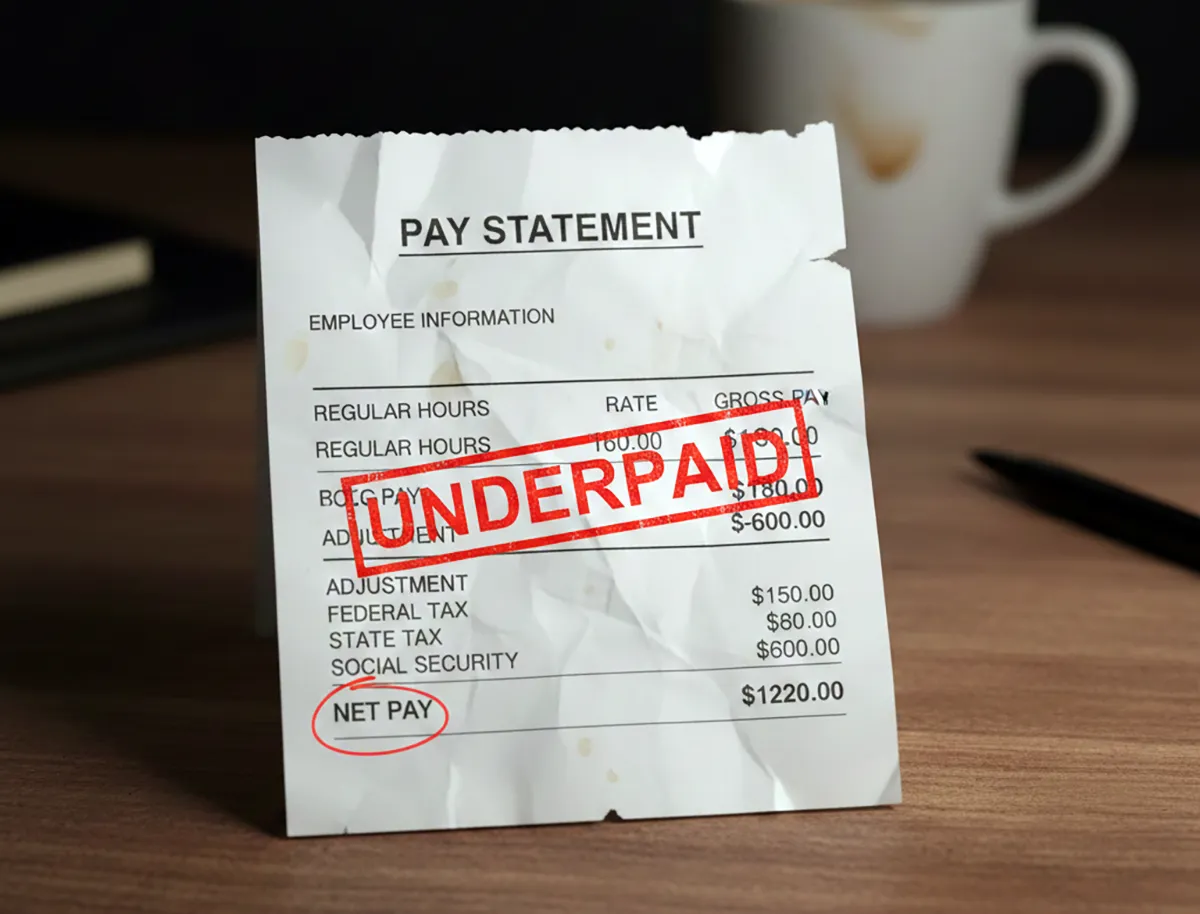
Employers at or above a small size threshold must also keep records of hours and wages and provide an itemized statement showing gross pay and each deduction. A missing or vague pay stub is often the first sign that a deduction practice will not survive scrutiny.
Free settlement alerts
Get notified when new class actions open to claims
Join thousands of readers who get the latest class action settlements you may qualify for — delivered straight to your inbox.
Treble Damages and Attorney Fees
The remedy provision allows an employee to recover in a civil action an amount equal to three times the full amount of the unpaid wages, together with costs and reasonable attorney fees.South Carolina courts have read that as conferring discretion on the trial court rather than mandating trebling in every case. The usual reason a court declines is a genuine good-faith dispute about whether the wages were owed at all — the employer's state of mind and the reasonableness of its position do real work here, much as they do under Maryland's bona fide dispute standard.
The fee provision is the part that makes ordinary claims viable. A few weeks of unpaid final wages will not fund a lawsuit on its own; fee-shifting is what allows a claim of everyday size to be brought.
The Act reaches a broad definition of wages, including amounts due under an employment agreement — which brings earned commissions, agreed bonuses and vacation payable under a policy inside the statute rather than leaving them to ordinary contract law.
Minimum Wage and Overtime Come From Federal Law
South Carolina has no state minimum wage and no state overtime statute, and it preempts local governments from adopting their own wage mandates. For a South Carolina worker, the federal floor is the only floor and the federal overtime rule is the only overtime rule: one and a half times the regular rate after 40 hours in a workweek, for employees who are not exempt.That makes most South Carolina overtime cases federal cases, and the recurring problems are the federal ones:
- Misclassification as exempt. A salary and a title do not create an exemption — actual duties measured against the federal tests do, alongside the salary threshold.
- Independent contractor labels. Employee status turns on the economic reality of the working relationship, not the agreement signed at hire.
- The regular rate. Non-discretionary bonuses, shift differentials, attendance incentives and most commissions belong in the regular rate; time and a half on the base hourly figure understates the premium.
- Off-the-clock work and rounding. Pre-shift setup, post-shift closing, required training, and rounding that consistently favors the employer produce the same shortfall across an entire crew, which is what makes these collective rather than individual claims.
- Tipped work. The federal tip credit rules apply, including the requirement that tips actually bring the employee to the full minimum in each workweek and the prohibition on managers and supervisors sharing in a tip pool.
Breaks work the same way. South Carolina requires none, so what governs is the federal treatment of a break the employer chooses to give: short breaks are paid working time, and a meal period is unpaid only where the employee is fully relieved of duties. In South Carolina an automatic lunch deduction from a shift that was worked straight through has a second problem as well — it is a deduction, and the Payment of Wages Act polices those.
Final Paychecks, Vacation and Where to File
Final wages are due within 48 hours of the separation or by the next regular payday, which may not exceed 30 days. The rule does not distinguish between quitting and being fired. There is no per-day waiting-time penalty, but unpaid final wages are unpaid wages under the Act, which brings the treble damages and fee provisions with them.Accrued vacation is payable at separation where the employer's policy or an agreement provides for it. Because the Act's definition of wages reaches amounts due under an employment agreement, a policy promising a payout makes that payout a wage — and withholding it a Payment of Wages Act violation rather than a mere contract breach. A policy that clearly conditions payout on notice or on remaining employed through a date generally controls, which is why the written policy is usually the document that decides these disputes.
A civil action for the recovery of wages must be commenced within three years after the wages became due. Federal FLSA claims run two years, or three where the violation was willful, with the opt-in rule for collective actions.
The Office of Wages and Child Labor at the South Carolina Department of Labor, Licensing and Regulation accepts wage complaints and can assess civil penalties against employers, though its authority is narrower than a court's — the treble damages and fee-shifting are reached through a private lawsuit. The U.S. Department of Labor Wage and Hour Division handles the federal minimum wage and overtime claim.
Retaliation for asserting a federal wage right is prohibited by the FLSA and carries its own remedies and deadline.
Frequently Asked Questions
Can I recover triple my unpaid wages in South Carolina?
The statute allows it. Under S.C. Code 41-10-80, an employee may recover in a civil action an amount equal to three times the full amount of the unpaid wages, plus costs and reasonable attorney fees. South Carolina courts have read that as giving the trial court discretion rather than making trebling automatic, and a genuine good-faith dispute over whether the wages were owed is the usual reason a court declines to award it. So it is a real ceiling, not a guaranteed multiplier.
Can my employer take a deduction I agreed to in South Carolina?
Not unless it was disclosed in writing first. The Payment of Wages Act requires employers to notify employees in writing at the time of hiring of the wages agreed upon, the time and place of payment, and the deductions that will be made — and to give written notice at least seven calendar days before changing any of those terms. An employer may not withhold or divert wages unless the law requires or permits it or that written notification was given. So a deduction the employer never put in writing is unlawful even if the employee verbally agreed to it.
When is my final paycheck due in South Carolina?
Under S.C. Code 41-10-50, an employer must pay all wages due within 48 hours of the separation or by the next regular payday, which may not exceed 30 days. The rule is the same whether you quit or were fired. South Carolina has no per-day waiting-time penalty, but unpaid final wages fall under the Payment of Wages Act, which carries the treble damages and attorney fee provisions.
Does South Carolina have a minimum wage or overtime law?
No to both. South Carolina has never enacted a general state minimum wage statute or a state overtime law, so those questions are answered by the federal Fair Labor Standards Act: the federal minimum wage, and time and a half after 40 hours in a workweek for employees who are not exempt. South Carolina also preempts local governments from setting their own minimum wage, so no city rate applies either.
Am I entitled to breaks in South Carolina?
No. South Carolina has no state law requiring meal or rest breaks. Federal rules still govern breaks an employer chooses to give: a short break of roughly 20 minutes or less counts as paid working time, and a meal period is unpaid only where the employee is fully relieved of duties. An automatic 30-minute lunch deduction taken from a shift that was actually worked straight through is unpaid wages, and in South Carolina it is also a deduction problem under the Payment of Wages Act.
How long do I have to sue for unpaid wages in South Carolina?
Three years. S.C. Code 41-10-80 requires a civil action for the recovery of wages to be commenced within three years after the wages became due. A federal Fair Labor Standards Act claim for minimum wage or overtime runs two years, or three where the violation was willful, and in a collective action an opt-in plaintiff's clock keeps running until the consent form is filed.
Sources
• S.C. Code Ann. 41-10-10 through 41-10-110 (South Carolina Payment of Wages Act).• S.C. Code Ann. 41-10-30 (written notice at hiring of hours, wages, time and place of payment and deductions; seven calendar days written notice before a change; recordkeeping and itemized statements).
• S.C. Code Ann. 41-10-40 (payment of wages due and the prohibition on withholding or diverting wages absent legal authority or the required written notification).
• S.C. Code Ann. 41-10-50 (final wages within 48 hours of separation or by the next regular payday, not to exceed 30 days).
• S.C. Code Ann. 41-10-80 (civil penalties, treble damages, costs and attorney fees, and the three-year period to commence an action).
• S.C. Code Ann. 6-1-130 (preemption of local minimum wage requirements).
• South Carolina Department of Labor, Licensing and Regulation — Office of Wages and Child Labor.
• U.S. Department of Labor — Fair Labor Standards Act.