On November 25, 2026 1Password disclosed that an attacker reached some of its backend systems through an employee's corporate GitHub account and copied customer account records, including the names and email addresses people use to sign in. The company says what matters most was not touched: vault contents, the items in them, and the keys that protect them. The practical risk left behind is a phishing problem rather than a password one.

Start With What Was Not Taken
A breach at a password manager invites one assumption, and in this case the company says that assumption is wrong. So it is worth putting the negative first.According to 1Password, vault data, the items inside vaults, and the keys that protect them were not affected, and at no point were customer vault contents accessed by or available to the attacker. Account recovery keys, the apps and the browser extensions are also listed as unaffected. The company says it does not hold your account password or Secret Key at all, which is the design reason a breach of its servers is not supposed to expose vault contents.
It also says customers do not need to update anything in their account, and that its apps and services are working normally.
Everything on this page is 1Password's own account of its own incident, published in its disclosure of November 25, 2026.
Free settlement alerts
Get notified when new class actions open to claims
Join thousands of readers who get the latest class action settlements you may qualify for — delivered straight to your inbox.
What Happened, by the Company's Account
1Password says it began investigating on November 19, 2026 after indications that an attacker had gained access to an employee's corporate GitHub account.From there, by its description, the actor used that account to reach source code and push malicious code into backend services, which then downloaded administrative data about customers. That is the mechanism worth noticing: not a database left exposed, but a developer account used to change the code that the company's own systems run.
The records downloaded include names and email addresses, account and user identifiers, account creation and last sign-in times, public keys, Secure Remote Password protocol parameters, tokens present in certain emailed links for invitations, provisioning and account recovery, and other non-secret account metadata.
Two of those need translating. The company notes public keys are public by design and carry no impact to user security, and that the Secure Remote Password parameters cannot be used to access an account.
Separately, the attacker copied source code from private repositories and gained access to the company's CI/CD system. 1Password says source code is not customer data and contains no user secrets, but that CI/CD does hold infrastructure-related secrets, and that it has triggered a rotation of all credentials that may have been exposed.
The Part That Actually Affects You
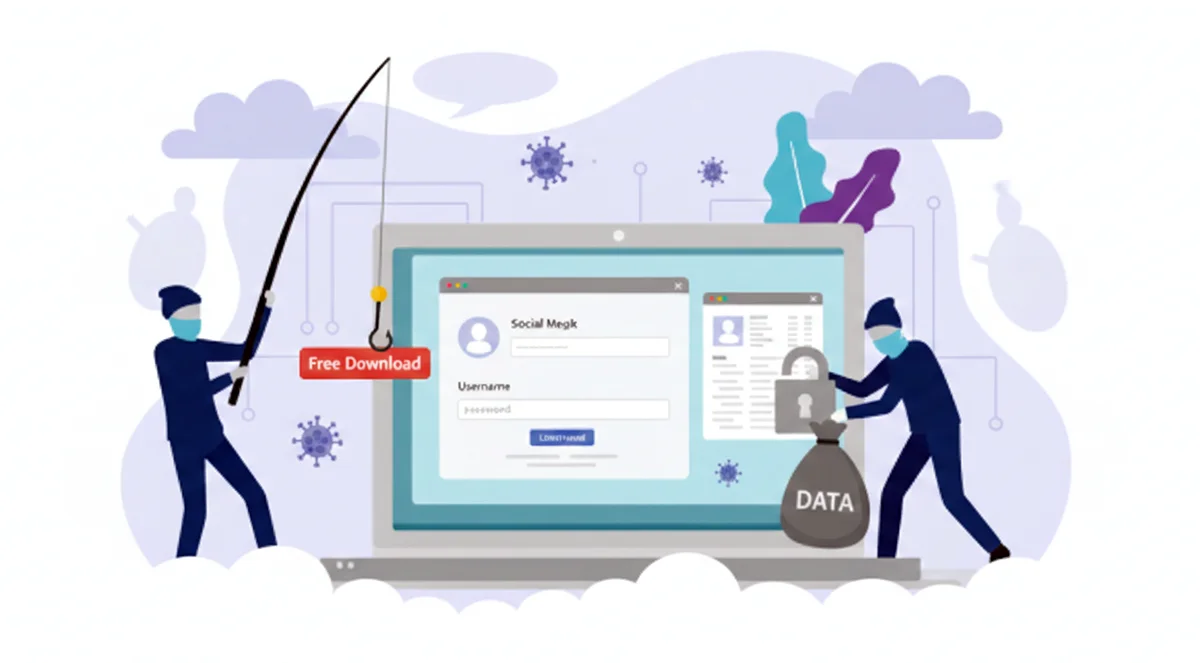
Names and email addresses sound like the mildest possible breach disclosure. In this specific combination they are not nothing.An attacker holding your name, the exact email address you sign in with, when you created the account and when you last signed in can write a message far more convincing than a generic scam. And the copied data included tokens embedded in invitation, provisioning and account recovery emails — which is precisely the kind of message a person might act on without much thought.
1Password's position on those tokens is that a token alone cannot get into an account: completing an invitation or recovery also requires either an SSO sign-in or a six-digit code sent to the registered email address. It says only a small number of users were in that state during the incident, and that those users have been notified individually. As a precaution it has lengthened those codes from six numeric digits to ten alphanumeric characters, which it says makes brute-force guessing practically impossible.
The rule that does the work here: 1Password says it will never contact you to ask for your account password or Secret Key. Any message that does is not from them, however well it is addressed.
Treat an unexpected email, text or call mentioning 1Password, an invitation, or an account recovery you did not start as suspicious — that is the company's own advice, and it is pointed, because those are exactly the message types whose tokens were copied.
Enter your account password and Secret Key only in the official app or on the official site, and only after opening the app or typing the address yourself rather than following a link. Your Secret Key is only needed the first time you sign in on a new device or browser, so being asked for it at any other moment is itself the warning.
What 1Password Says It Did
The company lists the following steps: it disabled the affected GitHub account, revoked the stolen token and removed the access the attacker had created; rotated or revoked all internal credentials that may have been exposed; lengthened the invitation and recovery codes as described above; tightened its internal GitHub, CI/CD and endpoint controls and added new detections for this kind of attack; validated that it found no internal evidence of account takeovers or compromise using any exposed provisioning tokens; and brought in independent cybersecurity experts to validate its containment and remediation.It also says it restored clean versions of the affected service and will keep its disclosure current if anything changes.
Is There a Lawsuit?
Not that OpenClassActions.com can confirm, and the honest answer includes why.There is no settlement, no fund, no administrator, no claim form and no deadline here — this is a company disclosure, not a legal proceeding. Breach disclosures involving a widely used consumer product are frequently followed by proposed class actions within days, but OCA has not verified any filing against 1Password over this incident. The public docket search OCA would normally run was unavailable at the time of writing, so rather than assert that no case exists, the accurate statement is that none has been confirmed.
This page will be updated if a complaint is filed, if the company revises its account, or if a number of affected customers is published.
Sources
• “Update on a security incident involving 1Password's backend systems,” 1Password, November 25, 2026 — the company's own disclosure and the single source for this page• No affected-customer count, regulator filing or litigation has been identified; where this page says something is not known, that is the state of the public record as OCA found it
Questions
Were 1Password passwords or vaults stolen?
No, according to the company. 1Password says vault data, the items in vaults, and the keys that protect them were not affected, and that at no time were customer vault contents accessed by or available to the attacker. It also says it does not hold your account password or Secret Key, which is the design reason a breach of its servers should not expose vault contents. Account recovery keys, apps and browser extensions are also listed as unaffected. This is the company's own account of its incident.
What did the attacker actually take?
1Password says account records for a subset of users were downloaded, including names and email addresses, account and user identifiers, account creation and last sign-in times, public keys, Secure Remote Password protocol parameters, tokens present in certain emailed links for invitations, provisioning and account recovery, and other non-secret account metadata. The attacker also copied source code from private repositories and gained access to the company's CI/CD system, which holds infrastructure-related secrets. The company says it has triggered rotation of all credentials that may have been exposed.
Do I need to change my 1Password password?
The company says you do not need to update anything in your 1Password account. It has not asked customers to change their account password or Secret Key, and it says there is no impact to its services, availability or product security. What it does recommend is caution about phishing.
Why is phishing the main risk here?
Because of the specific combination that was taken. An attacker holding your name, the email address you sign in with, and knowledge of your account history can write a far more convincing message than a generic scam. The company also says tokens embedded in invitation, provisioning and account recovery emails were among the copied data, which makes an unexpected invitation or recovery email the thing to treat with suspicion. 1Password says it will never contact you to ask for your account password or Secret Key.
How many 1Password customers were affected?
The company has not said. Its disclosure describes a limited amount of information from a subset of customers, and separately says a small number of users were in an invitation or recovery state at the time and have been notified individually. No figure has been published, and OCA is not estimating one.
Is there a 1Password lawsuit or settlement to claim?
There is no settlement, no fund, no administrator, no claim form and no deadline, and nothing to claim. Data breach disclosures of this size are often followed by proposed class actions, but OCA has not confirmed any filing against 1Password over this incident and is not asserting that one exists. This page will be updated if that changes.