Double jeopardy is one of the few legal phrases almost everyone knows and almost everyone gets slightly wrong. It does not mean one act produces one case. It bars a second criminal prosecution for the same offense by the same government — which leaves room for a state and the federal government to each bring their own, and leaves civil lawsuits untouched entirely.

Quick Answer
Double jeopardy bars a second criminal prosecution for the same offense by the same sovereign. It does not stop the federal government and a state from each prosecuting the same act, because the dual sovereignty doctrine treats them as separate sovereigns charging separate offenses. Some states, including New York, give defendants more protection than the Constitution requires and bar a state case following a federal one, with exceptions. And double jeopardy has no application at all to civil lawsuits — a class action or wrongful death suit can proceed no matter how the criminal case ended.
What the Clause Actually Says
The relevant words of the Fifth Amendment are short: no person shall "be subject for the same offence to be twice put in jeopardy of life or limb."Courts have read that single clause to supply three distinct protections. You cannot be prosecuted again for the same offense after being acquitted. You cannot be prosecuted again for the same offense after being convicted. And you cannot be punished multiple times for the same offense. The protection binds the states as well as the federal government.
The whole doctrine turns on two words that sound simpler than they are: "same offence." Almost every double jeopardy fight is really an argument about whether the second charge is the same offense as the first, and courts have built two very different answers to that question — one about what the charges are, and one about who is bringing them.
Same Act Is Not the Same Offense
Start with the charges themselves. The standard test comes from Blockburger v. United States, decided in 1932: where the same act violates two statutory provisions, they are the same offense unless each provision requires proof of a fact that the other does not.That test does a lot of work. It means a prosecutor can bring several counts arising from one act in a single indictment without any double jeopardy problem, so long as the counts have distinct elements. It also means a lesser included offense — one whose elements are entirely contained within a greater offense — generally cannot be prosecuted separately from the greater one.
What Blockburger does not do is limit how many sovereigns get a turn.
Free settlement alerts
Get notified when new class actions open to claims
Join thousands of readers who get the latest class action settlements you may qualify for — delivered straight to your inbox.
The Dual Sovereignty Doctrine
This is the part that surprises people, and it is the reason high-profile defendants routinely face parallel state and federal cases.Under the dual sovereignty doctrine — also called the separate sovereigns doctrine — the federal government and each state are independent sovereigns, each with its own authority to define crimes and enforce its own laws. When one act violates the laws of two sovereigns, the law treats it as two offenses rather than one. A second prosecution therefore is not a prosecution for "the same offence," and the Fifth Amendment does not bar it.
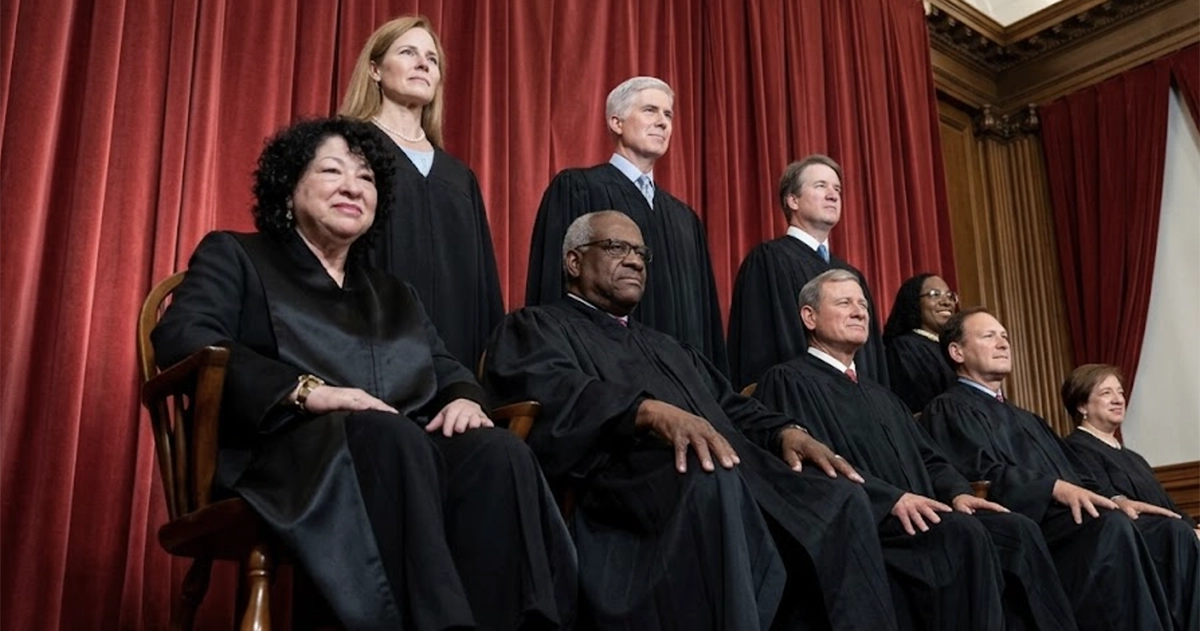
The doctrine got a serious challenge in Gamble v. United States. Terance Gamble was prosecuted by Alabama for being a felon in possession of a firearm, then prosecuted federally for the same possession. He asked the Supreme Court to abandon the separate sovereigns rule outright. In June 2019 the Court declined, 7 to 2, in an opinion by Justice Alito, holding that the doctrine is deeply rooted in the text and history of the clause. Justices Ginsburg and Gorsuch dissented separately.
A few consequences follow that are worth stating plainly:
• Two states can each prosecute conduct that crossed a state line and violated both states' laws.
• A federal acquittal does not, by itself, block a state prosecution — or the reverse.
• A municipality is not a separate sovereign from its state, so a city ordinance prosecution and a state prosecution generally are the same sovereign.
• Tribal prosecutions are treated as a separate sovereign, on the theory that tribal authority predates the Constitution.
The Justice Department has an internal policy, known as the Petite policy, that discourages federal prosecution after a state case arising from the same conduct unless a substantial federal interest was left unvindicated. It is a matter of internal discipline, not a right a defendant can enforce.
When Does Jeopardy Attach?
Timing is the most practical part of this doctrine and the part most often missed. The protection does not exist from the moment charges are filed. It attaches at a specific point:• In a jury trial, when the jury is sworn.
• In a bench trial, when the first witness is sworn.
• On a guilty plea, when the court accepts the plea.
Before that moment, a prosecution can generally be dismissed and refiled without any double jeopardy consequence. This is why two pending cases against the same defendant can coexist indefinitely without the issue ever ripening, and why the sequence in which parallel cases resolve can matter enormously to a defense strategy.
Attachment is also not the end of the analysis. Jeopardy has to terminate for the bar to apply. If a jury hangs and the judge declares a mistrial out of manifest necessity, jeopardy is treated as continuing and the case can be retried. If a defendant wins an appeal, the reversal ordinarily permits a new trial — the defendant is treated as having asked to set aside the first result. A true acquittal is the hard stop: it ends jeopardy, it cannot be appealed by the government, and it cannot be revisited even if it was plainly wrong.
States That Go Further Than the Constitution
The Constitution sets a floor, not a ceiling. A state is always free to give defendants more protection than the federal minimum, and a number of states have closed the dual sovereignty gap by statute.New York is the clearest example. Criminal Procedure Law section 40.20 provides that a person may not be separately prosecuted for two offenses based upon the same act or criminal transaction, and New York courts have read the statute to reject the dual sovereignty doctrine — meaning a prior federal prosecution can bar a later state one. The statute then carves out a set of enumerated exceptions. The most heavily litigated asks whether each offense contains an element the other does not and the statutes are designed to prevent very different kinds of harm or evil.
Two features of that structure decide most real cases. First, the protection depends on a "previous prosecution," which under New York law means one that reached a conviction — including by guilty plea — or proceeded far enough for a jury to be sworn. A federal case that is merely pending does not trigger it. Second, because the exceptions turn on the elements and the harms addressed, a prosecutor facing such a motion will argue that the two statutes target genuinely different wrongs.
The live illustration right now is the pair of prosecutions arising from the December 2024 killing of a UnitedHealthcare executive in Manhattan, where the defendant faces a federal stalking case and a separate New York murder case. The order in which those two resolve is precisely what the double jeopardy question turns on, and we lay out where each case stands in our report on the short-notice federal hearing set for August 14.
Why None of This Protects Against a Class Action
Here is the part that matters most for readers of this site, and it is the cleanest rule in the whole area: double jeopardy applies to criminal prosecutions only.A civil lawsuit brought by a private plaintiff is not jeopardy of life or limb. It is a claim for money or an injunction, decided under a lower standard of proof. So a company or an individual can be prosecuted and sued for the same conduct, in either order, and the criminal outcome does not close the civil door. A defendant acquitted of a crime can still be found liable in a civil case over the same facts, because the civil plaintiff only has to prove the claim by a preponderance of the evidence — more likely than not — rather than beyond a reasonable doubt.
The relationship runs the other way too. A criminal conviction is often a gift to civil plaintiffs suing over the same conduct, because the conviction was established under a higher standard than their own case requires, and in many jurisdictions it can be used to establish facts the civil defendant would otherwise contest. That is one reason plaintiffs' firms watch criminal dockets and government enforcement actions closely — a guilty plea by a company frequently precedes a wave of civil filings. We go deeper on that dynamic in our explainer on civil versus criminal lawsuits.
One more distinction worth keeping straight: a government civil penalty is normally treated as civil rather than criminal punishment, so it usually does not trigger the multiple-punishments branch of double jeopardy either. Courts will look past the label if a nominally civil sanction is so punitive that it functions as a criminal penalty, but that is a narrow exception rather than the rule.
Frequently Asked Questions
What does double jeopardy actually protect against?
The Fifth Amendment says no person shall be subject for the same offence to be twice put in jeopardy of life or limb. Courts read that as three protections: no second prosecution for the same offense after an acquittal, no second prosecution for the same offense after a conviction, and no multiple punishments for the same offense. It applies to criminal prosecutions by the same sovereign. It does not create a general rule that one act can only ever produce one case.
Why can the federal government and a state both charge me for the same act?
Because of the dual sovereignty doctrine, sometimes called the separate sovereigns doctrine. The federal government and each state are treated as independent sovereigns, each entitled to define and enforce its own criminal laws. When a single act violates the laws of two sovereigns, it is treated as two distinct offenses rather than one, so a second prosecution is not a second prosecution for the same offense. The Supreme Court reaffirmed this 7 to 2 in Gamble v. United States in 2019.
When does jeopardy attach?
Timing matters more than most people expect. In a jury trial, jeopardy attaches when the jury is sworn. In a bench trial, it attaches when the first witness is sworn. If the case resolves by guilty plea, it attaches when the court accepts the plea. Before that moment, charges can generally be dismissed and refiled without triggering the protection, which is why a case that is merely pending does not yet block anything.
Do some states give more protection than the Constitution?
Yes. A state may always give defendants more protection than the federal floor, and several do exactly that by statute for successive prosecutions. New York is the clearest example: Criminal Procedure Law section 40.20 generally bars a state prosecution for an offense based on the same act or criminal transaction as a previous prosecution, including a federal one, subject to enumerated exceptions. Those exceptions matter, and the most commonly litigated one asks whether each offense requires proof of a fact the other does not and whether the two statutes are designed to prevent very different kinds of harm.
Does double jeopardy stop a civil lawsuit or a class action?
No. Double jeopardy applies only to criminal prosecutions. A civil case brought by a private plaintiff, including a class action or a wrongful death suit, can proceed regardless of what happened in a criminal case, and can succeed even after an acquittal because the burden of proof is lower. A civil plaintiff must show liability by a preponderance of the evidence, meaning more likely than not, rather than beyond a reasonable doubt.
Is a retrial after a hung jury double jeopardy?
Generally no. When a jury cannot reach a verdict and the judge declares a mistrial out of manifest necessity, jeopardy is treated as continuing rather than terminating, and the prosecution may retry the case. The same is usually true when a defendant successfully appeals a conviction: the reversal ordinarily clears the way for a new trial. A retrial is barred after a genuine acquittal, and an acquittal cannot be appealed by the government.
Can a defendant be charged with several counts for one act?
Yes, within the same case. Double jeopardy limits successive prosecutions and multiple punishments, not the number of counts a single indictment may contain. Whether two counts are really the same offense is usually analyzed under the test from Blockburger v. United States, which asks whether each provision requires proof of a fact that the other does not. If so, they are separate offenses even though they arise from one act.
Sources
• U.S. Const. amend. V (Double Jeopardy Clause).• Gamble v. United States, 587 U.S. 678 (2019) — Supreme Court opinion upholding the dual sovereignty doctrine.
• Cornell Legal Information Institute — Gamble case summary.
• Blockburger v. United States, 284 U.S. 299 (1932) — the same-elements test.
• N.Y. Crim. Proc. Law § 40.20 — New York's statutory bar on successive prosecutions and its enumerated exceptions.
• People v. Mangione, 2025 NY Slip Op 25213 — Justia, applying New York's double jeopardy provisions to parallel prosecutions.
• Justice Manual § 9-2.031 — the Petite policy on successive federal prosecutions.
This page is general legal information, not legal advice. If you are facing charges in more than one court, talk to a criminal defense lawyer licensed in the relevant jurisdictions.