Published
May 19, 2026
GPS fleet tracking is legal — but personal vehicles, off-duty monitoring, and weak notice are where a business crosses into legal risk. Here is how to keep a fleet program compliant.
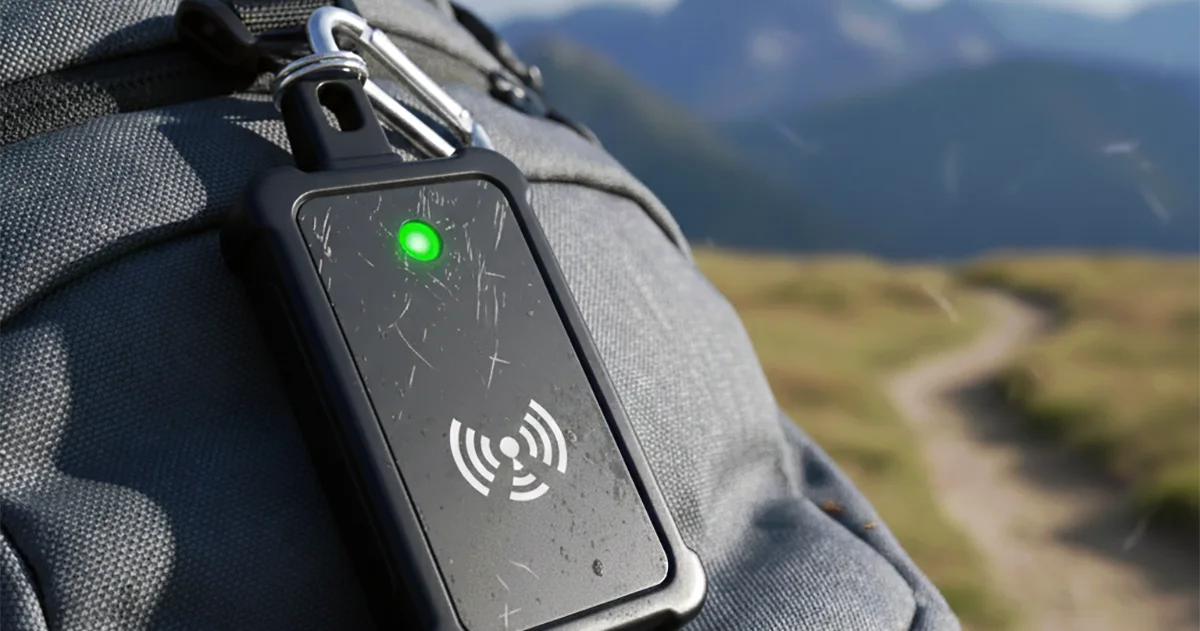

Compliance depends on how the system is used, not just whether tracking exists. Businesses need to address written notice, employee consent in higher-risk scenarios, vehicle ownership, and how location data is collected, accessed, and stored. State laws differ, which means a setup that works in one situation may not meet requirements in another.
Businesses should focus on whether each part of the tracking program can be justified and controlled. Clear rules on when tracking is active, who can access the data, and how long it is retained help reduce risk and keep fleet tracking aligned with privacy laws.
What Is GPS Fleet Tracking and Why It Matters
GPS fleet tracking is a telematics function that turns vehicles into connected operating assets. Location pings, route histories, stop times, geofence events, speed data, and sometimes driver-behavior signals move from in-vehicle hardware into a dashboard where dispatchers, safety managers, and operations teams can act on them in real time.Practical business value appears across multiple operational touchpoints. Service companies rely on tracking to verify arrival times, while logistics teams reduce idle time and wrong turns through route visibility. Fleet managers locate stolen units, confirm job completion, and react quickly when route deviations occur, making efficiency, accountability, theft recovery, and service visibility key drivers behind the continued expansion of telematics adoption across commercial fleets.
Privacy tension begins when vehicle data starts revealing personal patterns rather than business movement alone. One route history can expose home addresses, religious visits, medical appointments, after-hours habits, or family routines. Same technology, therefore, serves two roles at once: operations tool on one side, potential surveillance mechanism on the other. That dual nature is the reason privacy law enters the conversation so quickly.
Is GPS Fleet Tracking Legal for Businesses?
GPS fleet tracking is generally legal when a business tracks vehicles it owns or controls for a clear work-related reason, such as dispatching, theft prevention, route management, or driver safety.Legal risk increases when tracking shifts away from the vehicle and toward the individual. Personal vehicles, off-duty monitoring, hidden tracking, and vague surveillance practices create much more exposure because the business is no longer just managing an asset.
A simple way to judge legality is to use this test: asset, purpose, timing, notice.
When a business tracks its own asset, for a defined purpose, during work-related use, and with clear driver awareness, the setup typically falls on stronger legal ground. Missing any one of these elements increases compliance risk considerably.
Free settlement alerts
Get notified when new class actions open to claims
Join thousands of readers who get the latest class action settlements you may qualify for — delivered straight to your inbox.
What Determines the Legality of GPS Fleet Tracking?
Five filters usually decide whether a tracking program looks defensible or reckless.Legitimate business purpose
Route optimization, asset security, proof of service, driver safety, and dispatch coordination are all operationally recognizable reasons. “We want maximum visibility into employee behavior” is not the same kind of reason. Broad surveillance language weakens a company’s position because it suggests curiosity-driven monitoring rather than a defined business need.Transparency
Notice does more than reduce complaints; it establishes that tracking is part of a disclosed work system. Connecticut’s monitoring law and New Jersey’s notice requirement both reinforce the same principle: hidden monitoring creates avoidable legal exposure.Control of the asset
Monitoring equipment attached to a company-owned truck is easier to justify than tracking a worker’s own vehicle or phone. Asset control narrows the argument to business property. Personal property expands the issue into personal privacy.Time boundaries
Work-hour tracking can often be explained in operational terms. After-hours tracking usually needs a separate and much stronger justification.Data governance
Poor data handling can turn a lawful collection practice into a privacy problem. Precise geolocation is treated as sensitive personal information under the CCPA, so “we collected it legally” does not settle how it must be used or protected afterward.Tracking program becomes stronger as more of those filters are satisfied at the same time. Drop two or three of them, and compliance confidence falls quickly.
Does Vehicle Ownership Affect GPS Tracking Rules?
Ownership is not a footnote. It’s the dividing line between asset management and personal monitoring.Company-owned vehicles
Businesses usually have a stronger legal basis for tracking a van, truck, trailer, or service unit they own or lease. Monitoring supports dispatching, maintenance, theft prevention, route compliance, and insurance-related safety controls. Clear notice still matters, however, because legal authority and employee trust are not the same issue. Secretive or overly broad tracking can still trigger disputes even when the company has the right to monitor the vehicle.Employee-owned vehicles
Risk increases sharply once a business tracks a personal vehicle. Work, travel and private life happen in the same physical space. One GPS log can show a client stop at 3 p.m. and a child’s school pickup at 5 p.m. That overlap is why consent becomes much more important and why non-consensual tracking statutes can become relevant faster. NCSL’s state-law summary reflects how many jurisdictions treat location tracking as a matter involving the person, not just the object.Mixed-use arrangements create friction
Mixed-use fleets often create the hardest cases: take-home vans, mileage- reimbursement programs, field sales teams, and contractors using personal cars. Compliance problems usually appear not because a company intended misconduct, but because policy never answered one basic question: When does business visibility stop and private movement begin?Do Businesses Need Employee Consent or Written Notice?
Notice and consent serve different legal functions in GPS tracking. Notice explains monitoring, including what data is collected, when tracking occurs, and why it is used. Consent captures affirmative agreement, which becomes more relevant when tracking extends into personal vehicles, personal devices, or more intrusive tools such as dash cams with audio.Legal exposure increases as monitoring moves beyond strictly controlled business assets. Company-owned vehicles used only during shifts can rely on clear written notice and policy acknowledgment. Personal vehicles used for reimbursed travel or mobile apps collecting continuous location data require stronger justification, often supported by explicit written consent due to expanded privacy impact.
Effective compliance separates two questions instead of merging them. Have employees been clearly informed about monitoring practices, and does any specific use case require agreement beyond notice? Programs built on that distinction create stronger legal defensibility and reduce disputes around employee privacy.
What Data Privacy Risks Come With GPS Fleet Tracking?
Collection is only the first decision. Every decision after collection can create a separate privacy problem.Risk pattern 1: collecting more than the business really needs
Some systems can capture far more than a fleet operator actually requires: continuous location, long route histories, detailed stop behavior, geofence alerts, driver scoring, app data, and linked camera records. Capability should not automatically become policy. Data minimization remains one of the most practical ways to reduce privacy exposure because unused data still creates storage, breach, and misuse risk.Risk pattern 2: keeping location history indefinitely
Retention creep is common. Businesses begin by saving data “for a little while,” then years of precise movement logs accumulate without a clear reason. Long retention increases the consequences of a breach, internal misuse, subpoena response, or employment dispute. California’s privacy framework does not permit casual treatment of precise geolocation simply because a company collected it during operations.Risk pattern 3: broad internal access
Privacy failures are not always external hacks. Sometimes the problem is a supervisor viewing routes for personal reasons, an administrator exporting reports without approval, or a vendor handling data without enough safeguards. FTC business guidance emphasizes that companies handling personal data should limit access and oversee service providers responsibly.Risk pattern 4: repurposing data
Fleet tools bought for dispatch may later be used for discipline, productivity scoring, or performance surveillance without policy updates. Repurposing is dangerous because employees were told one story while the business adopted another. Scope drift often triggers trust problems before it triggers legal ones, but both matter.Strong privacy programs usually treat geolocation records like controlled operational evidence, not like a free-flowing management convenience.
When Does GPS Tracking Expand Into Higher Privacy Risk?
GPS fleet tracking moves into higher privacy risk when data collection goes beyond work-related vehicle monitoring. Tracking during work hours for dispatch, route optimization, and asset security is easier to justify. Risk increases when tracking continues outside work hours, applies to personal vehicles or devices, or lacks a defined business purpose.Location data becomes sensitive when it reveals movement patterns and personal behavior. Route history can expose home addresses, medical visits, religious activity, or other private locations. When GPS data is combined with additional monitoring layers such as video or audio, the system shifts from vehicle tracking to employee monitoring, increasing legal scrutiny.
Compliance depends on limiting scope, purpose, and access. GPS tracking for fleet operations can be justified with clear boundaries, while video and audio require separate evaluation due to higher sensitivity. Strong programs define when tracking is active, restrict access to location data, and set clear retention rules to prevent unnecessary or excessive monitoring.
What Should a GPS Fleet Tracking Policy Include?
A good policy should read less like a vague warning and more like an operating constitution.Start with purpose
State exactly why tracking exists. Route efficiency, service verification, theft prevention, regulatory compliance, driver safety, or asset recovery all create understandable business context. Generic phrases like “management oversight” leave too much room for misuse.Define the scope
Specify whether the policy covers company vehicles, leased units, employee-owned vehicles, personal devices, mobile apps, trailers, or equipment. Unclear scope leads to accidental overreach.Define the clock
List when tracking begins, when it ends, and what exceptions exist. Shift-based schedules, emergency overrides, and take-home vehicle rules should not be left to verbal interpretation.Define the data
Spell out whether the business collects live location, trip history, idle time, speed, geofence events, harsh-braking alerts, video footage, or audio. Employees should not need to guess.Define the gatekeepers
Identify who can access data, approve exports, review exception events, and respond to complaints. Role-based access supports both privacy and internal accountability. FTC guidance consistently points businesses toward limiting access and supervising vendors that handle sensitive information.Define the lifespan
Retention rules matter. Without them, fleet systems tend to become archives of unnecessary movement history.Define the remedy
Explain how employees can ask questions, report misuse, contest inaccurate conclusions, or escalate privacy concerns.Policy becomes credible when it answers operational questions before conflict arises.
How Do Privacy Laws Vary Across States or Regions?
Privacy laws for GPS tracking vary based on what each jurisdiction regulates, including the act of tracking, employee notice, and the treatment of location data after collection. Some states restrict non consensual use of tracking devices, which makes unauthorized tracking itself unlawful. Others require employers to give advance notice of monitoring, which turns transparency into a legal requirement instead of a recommended practice.Broader privacy laws also affect how GPS data is stored, used, and shared. Regulations such as the California Consumer Privacy Act treat precise geolocation as sensitive personal information, which means businesses need a defined purpose for collecting it, limits on who can access it, and a process for handling privacy rights requests. Recent legal changes show that lawmakers increasingly treat location data as sensitive information rather than routine operational data.
Businesses operating across multiple states face a harder compliance burden because legal duties can change when drivers, vehicles, or routes cross state lines. Separate policies for each jurisdiction are possible, but they become difficult to maintain as operations grow. Most businesses reduce risk by applying the strictest standard across the fleet, which creates a more consistent approach to notice, tracking limits, and data handling.
How Should Businesses Compare GPS Tracking Laws Across States?
State variation usually appears in notice rules, consent requirements, and geolocation privacy obligations, so businesses should compare compliance categories rather than rely on a single blanket assumption.| Compliance Area | What It Means for Businesses | Example State Approach | Why It Matters |
|---|---|---|---|
| Written notice before tracking | Employers must inform employees in writing before using tracking in certain workplace contexts | Connecticut requires prior written notice for certain electronic monitoring; New Jersey requires written notice before using a tracking device in a vehicle used by an employee | Reduces hidden-monitoring risk and strengthens policy defensibility |
| Consent-focused restrictions | Tracking a person or personal vehicle without consent can trigger higher legal risk | Several states summarized by NCSL restrict non-consensual location tracking more broadly | Becomes critical in personal-vehicle, mixed-use, and off-duty scenarios |
| Geolocation data privacy rules | Precise location data may be regulated not just at collection, but also in storage, disclosure, and deletion | California treats precise geolocation as sensitive personal information under the CCPA | Shifts compliance from “Can we track?” to “How do we govern the data?” |
| Off-duty and mixed-use monitoring | Tracking outside work hours or on take-home/personal vehicles creates added privacy concerns | State anti-tracking rules and privacy expectations become more relevant when business purpose becomes less clear | Helps businesses separate asset monitoring from personal surveillance |
| Multi-state fleet compliance | Businesses operating across states may face different notice, consent, and privacy obligations | Multi-state employers often adopt the strictest common rule across operations as a safer compliance model | Prevents policy gaps when vehicles, drivers, and routes cross jurisdictions |
How Can Businesses Use GPS Tracking Without Violating Privacy?
Below is a practical operating model rather than a legal slogan.Limit Purpose First
Choose specific business goals before deployment. A company that needs service verification does not automatically need continuous, high-precision tracking across every hour of the day.Match Tool to Asset
Vehicle-based tracking is easier to justify when the business owns or controls the asset. Personal vehicles and personal phones create more privacy risk because business activity and private life overlap in the same space.Make Notice Routine
Written notice should come before rollout, not after complaints begin. Policy updates should also happen when the system gains new features such as video, audio, driver scoring, or app-based tracking.Reduce Intrusion Early
Scheduled shutdowns, narrow geofence use, shorter retention periods, and restricted access rights often prevent privacy issues before they start. Technical limits usually work better than relying only on managerial restraint.Audit Manager Use
Misuse often comes from people, not devices. Training, approval workflows, and audit logs help ensure location data is used for operational reasons rather than curiosity, retaliation, or informal surveillance.Choosing a Privacy-Compliant Fleet Tracking System
Choosing a privacy-compliant fleet tracking system means choosing a platform that helps a business control when, why, and how location data is collected. Map accuracy and price matter, but compliance depends more on whether the system can limit unnecessary tracking and support a legitimate business purpose.Scheduling and monitoring controls should come first during evaluation. Systems should allow tracking during work hours only, support clear geofence settings, and avoid continuous collection when no business need exists. Features that reduce over-collection are more valuable than features that simply increase visibility.
Access, storage, and vendor data practices should be reviewed before purchase. Location records should be limited to authorized users, retention periods should be configurable, and the provider should offer secure storage with clear policies for reviewing, deleting, or managing data. Strong systems do not collect the most data; they help businesses collect only the data they can justify and govern.
FAQs
Is GPS tracking legal on a company vehicle?Often yes, especially when the vehicle is company-owned and tracking supports dispatch, security, route management, or safety. Hidden monitoring, unlimited after-hours tracking, or weak notice can still undermine that position.
Can employers track employees outside working hours?
Employers can track employees outside working hours only in limited situations where a clear business purpose still exists, such as theft recovery or emergency response. Ongoing after-hours tracking creates much higher privacy risk because it can reveal personal activities, home locations, and other sensitive behavior patterns.
Does a business always need employee consent?
Not always in the same form, but written notice is frequently the minimum prudent step, and some scenarios call for more than notice. Personal vehicles, mobile app tracking, and tools that collect more intrusive data make explicit consent more important.
Why is off-duty tracking treated differently?
Because business rationale weakens after work and privacy sensitivity rises. After-hours location can reveal intimate personal patterns that have nothing to do with route efficiency or asset control.
Is geolocation data really that sensitive?
Yes. California’s Attorney General states that precise geolocation is sensitive personal information under the CCPA, reflecting a broader policy trend that treats movement data as highly revealing.
Can a company use one policy for every state?
It can, but only if that policy is built to satisfy stricter jurisdictions. Multi-state fleets often reduce risk by adopting the highest common privacy and notice standard across operations rather than relying on the lowest bar.
Final Thoughts
GPS fleet tracking helps businesses improve visibility, safety, and efficiency, but compliance depends on how the system is used. Clear purpose, proper notice, limited access, and reasonable data controls matter more than the technology itself.Strong programs set clear boundaries around collection, retention, and off-duty tracking. Businesses that build those controls early are more likely to gain the benefits of fleet tracking without creating unnecessary privacy risk.
For more class actions keep scrolling below.