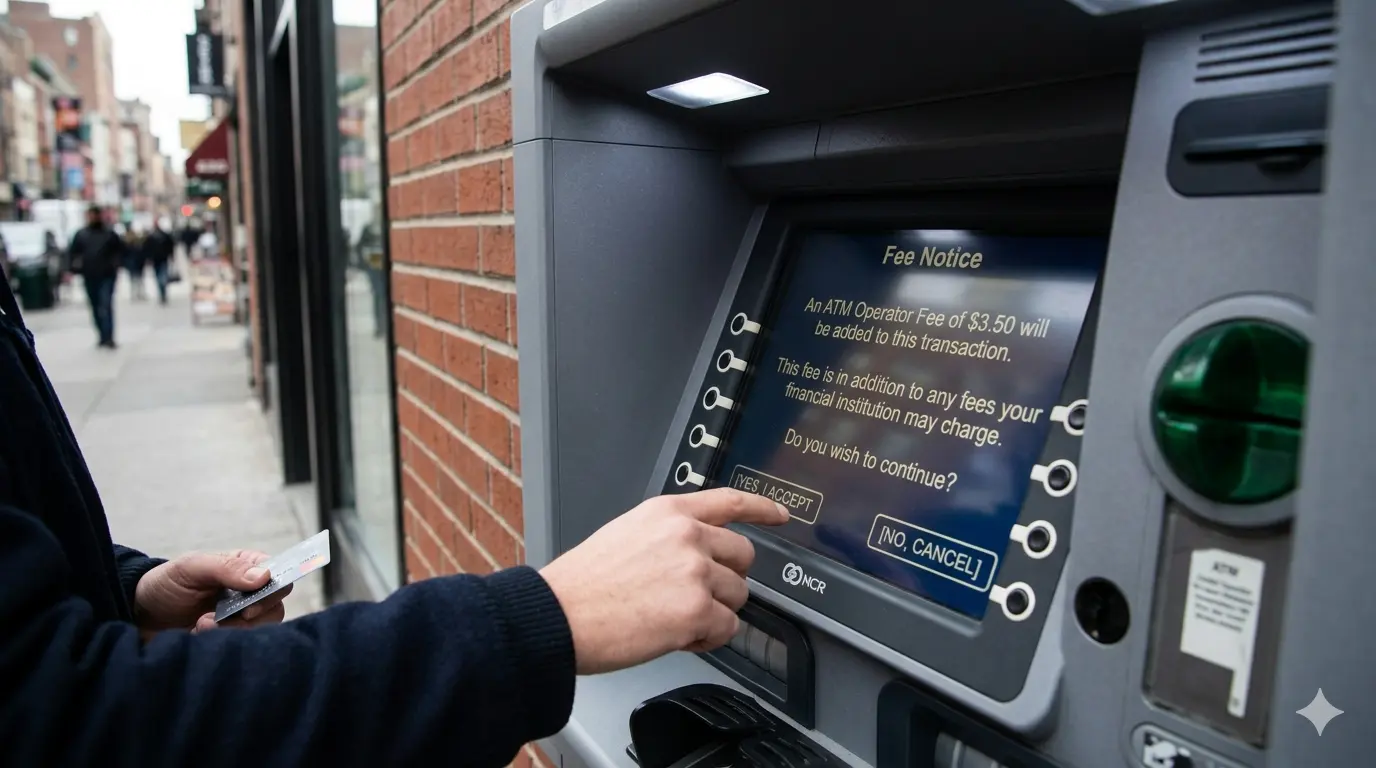
Banks and credit unions charge an overdraft fee when they pay a transaction an account cannot cover and an NSF fee when they return it unpaid, and federal law requires the customer’s opt-in only for overdraft fees on ATM and one-time debit card transactions. Congress repealed the CFPB’s $5 overdraft rule in May 2025, so refund requests, regulator complaints and class action settlements remain the ways consumers recover the fees.


Overdraft Fee vs. NSF Fee
The two fees cover opposite outcomes of the same problem — a payment the account cannot cover.• An overdraft fee is charged when the bank or credit union pays the transaction anyway. The account goes negative, and the customer owes back the shortfall plus the fee.
• An NSF fee — for non-sufficient funds, also called a returned-item or bounced-check fee — is charged when the institution declines or returns the payment unpaid.
Both have commonly been around $30 or more per item. In monitoring that ran from December 2022 through August 2023, the CFPB found a median overdraft fee of $35 among the large institutions that still charged one, and a median NSF fee of $32 among those still charging NSF fees.
“Overdraft protection” can mean something different. Some accounts cover a shortfall by transferring money from a linked savings account or by drawing on an overdraft line of credit. Those arrangements carry their own terms and are treated differently under federal rules from the per-item overdraft fee.
Monthly statements must show the total overdraft fees and the total returned-item fees for the statement period and for the year to date, under Regulation DD. That year-to-date line is the fastest way to see how much an account has actually paid.
The Opt-In Rule for Debit Cards and ATMs
Since 2010, Regulation E (12 C.F.R. § 1005.17) has barred a bank from charging an overdraft fee on an ATM withdrawal or a one-time debit card purchase unless the customer received a written notice, affirmatively opted in to overdraft coverage, and got written confirmation. For accounts opened before July 1, 2010, consent had to be obtained by August 15, 2010. A bank also may not condition the payment of checks or other transactions on the customer opting in.The rule has limits that surprise people:
• It does not cover checks, ACH payments or recurring debit card payments such as a gym membership. Those can be paid into overdraft, with a fee, without any opt-in.
• A customer who opted in can cancel at any time. ATM withdrawals and one-time card purchases that would overdraw the account are then generally declined instead.
Regulators have treated a bank’s failure to get valid consent as a serious violation. In 2020 the CFPB announced a $122 million order against TD Bank — about $97 million in restitution and a $25 million penalty — over how it enrolled customers in its overdraft service. A 2023 CFPB order against Atlantic Union Bank over opt-in practices required at least $5 million in redress and a $1.2 million penalty.
What Happened to the $5 Overdraft Rule
On December 12, 2024, the CFPB finalized a rule for banks and credit unions with more than $10 billion in assets. Starting October 1, 2025, those institutions would have had three choices for overdraft charges: a $5 fee, a fee no higher than their own costs and losses, or treating overdraft as a loan subject to the Truth in Lending Act. The CFPB projected savings of up to $5 billion a year.The rule never took effect. Congress passed S.J. Res. 18 under the Congressional Review Act — 52–48 in the Senate on March 27, 2025, and 217–211 in the House on April 9, 2025 — and it was signed on May 9, 2025, as Public Law 119-10, which says the rule “shall have no force or effect.” Under the Congressional Review Act, an agency cannot reissue a rule in substantially the same form without new authorization from Congress.
Other federal overdraft and NSF measures were rolled back around the same time:
• A 2024 CFPB proposal to bar NSF fees on transactions declined instantly, at the card swipe or ATM, was withdrawn on January 14, 2025.
• On May 12, 2025, the CFPB withdrew dozens of guidance documents, including its 2022 circular on surprise overdraft fees, its 2022 bulletin on fees for returned deposited items and its 2024 circular on improper opt-in practices.
• On April 10, 2026, the FDIC rescinded its 2023 supervisory guidance on multiple NSF fees for the same re-presented transaction (FIL-32-2023), calling it overly broad and saying it had created uncertainty about when re-presentment disclosures raise unfairness concerns. The FDIC told the banks it supervises to make sure their disclosures accurately reflect their practices.
• The CFPB terminated its 2022 consent order with Regions Bank on July 21, 2025, and its 2024 consent order with Navy Federal Credit Union on July 1, 2025, stating in each case that it had waived any alleged non-compliance.
Not every regulator pulled back. The Office of the Comptroller of the Currency, which supervises national banks, still posts its April 2023 bulletin on overdraft programs, OCC Bulletin 2023-12; the only change it notes is the March 20, 2025 removal of references to reputation risk. The bulletin says authorize-positive, settle-negative fees and fees charged on each re-presentment of the same item can be unfair under Section 5 of the FTC Act even when they are disclosed, and that having no daily limit on fees and charging recurring “sustained” overdraft fees have contributed to OCC unfairness findings.
None of that changed Regulation E’s opt-in rule or Regulation DD’s disclosure rules, which remain in force. It did shift more of the fight over specific fee practices to private lawsuits under state contract and consumer protection law.
How Much Consumers Pay
The CFPB’s most recent figures come from the call reports of banks with more than $1 billion in assets, which leaves out smaller banks and all credit unions. By that measure, overdraft and NSF revenue was $11.96 billion in 2019 and $5.83 billion in 2023, a drop of more than half. The CFPB estimated the 2019 total across the whole market at $15.47 billion, and found that fewer than 9% of accounts — those with ten or more overdrafts a year — generated close to 80% of overdraft revenue.Much of the decline came from NSF fees. By October 2023, according to the CFPB, every bank with more than $75 billion in assets had stopped charging NSF fees, along with all but seven of the 63 banks with more than $25 billion. The CFPB put the savings at almost $2 billion a year.
The CFPB has not published a figure for 2024 or 2025. The National Consumer Law Center, a consumer advocacy group, estimated in June 2026 that overdraft and NSF fees across banks and credit unions came to about $12.4 billion in 2025. That estimate covers a broader set of institutions than the CFPB’s call-report series, so the two numbers are not directly comparable.
Banks That Dropped or Cut Their Fees
Policies changed quickly between 2021 and 2023. As described in the CFPB’s April 2024 review of 2023 fee revenue:• Capital One and Citibank eliminated both overdraft and NSF fees.
• Bank of America cut its overdraft fee to $10, stopped charging overdraft fees on ATM withdrawals and eliminated NSF fees.
• JPMorgan Chase, Wells Fargo and Regions eliminated NSF fees and gave customers a grace period, until the end of the next day, to bring the account back up before a fee posts; Chase also does not charge if the account is overdrawn by $50 or less.
• TD Bank, U.S. Bank, Truist and PNC eliminated NSF fees, and PNC limits overdraft fees to one per day.
Fee schedules change, and the account agreement and fee schedule in effect for a given account control what that account can be charged.
The Practices Behind Overdraft Lawsuits
Most overdraft class actions do not argue that overdraft fees are illegal. They argue that a bank charged fees its own account agreement did not allow, or that its practices were unfair. Four patterns account for most of the cases.Reordering transactions from largest to smallest
Posting the day’s debits from the largest amount to the smallest drains the balance faster and can turn one overdraft into several fees. That practice was the center of In re Checking Account Overdraft Litigation, MDL No. 2036, in federal court in Miami. Bank of America settled its part for $410 million, approved on November 22, 2011, with payments calculated from the bank’s records and made without a claim form; JPMorgan Chase agreed in 2012 to a $110 million settlement in the same litigation. The court’s approval order noted that high-to-low posting was “by no means clearly unlawful.” A California case against Wells Fargo went to trial instead. In Gutierrez v. Wells Fargo, filed in federal court in San Francisco in 2007, Judge William Alsup found after a two-week bench trial in 2010 that the bank’s high-to-low posting of debit card transactions was unfair and fraudulent under California’s Unfair Competition Law, and ordered about $203 million in restitution. In December 2012 the Ninth Circuit held that the National Bank Act preempts state-law challenges to a national bank’s choice of posting order itself, but affirmed the finding that Wells Fargo made misleading representations about its posting practices. On remand in May 2013, the district court reinstated the full restitution award on that fraud theory. Wells Fargo appealed again. In October 2014 the Ninth Circuit affirmed the restitution award but narrowed the injunction that came with it, and on April 4, 2016 the Supreme Court denied the bank’s petition for review. The court authorized payment on May 10, 2016. Class members who still banked with Wells Fargo received account credits, and those who did not were mailed checks, with post-judgment interest added and court-approved fees and costs deducted. About $50 million in checks went uncashed, and in December 2016 the court sent that money through state unclaimed-property procedures, under which it remains available to the class members it belongs to.“Authorize positive, settle negative” fees
A debit card purchase is approved when the account has enough money, but by the time it settles days later, other transactions have pushed the balance negative, and the bank charges an overdraft fee on the purchase anyway. The CFPB’s 2022 order against Regions Bank found the bank charged these fees and required at least $141 million in refunds and a $50 million penalty; the CFPB’s 2024 order against Navy Federal Credit Union required at least $80.7 million in redress and a $15 million penalty before it was terminated in 2025. Private cases continue: in June 2025 the Sixth Circuit revived a breach-of-contract claim over these fees against Flagstar Bank, and the Nevada Supreme Court reached a similar result against a credit union in April 2025, each finding the account terms could be read in the customer’s favor. The $32.2 million TD Bank settlement paid account holders automatically over the same kind of fee.Repeat NSF fees on a retried payment
When a check or ACH payment bounces, the merchant often submits it again, sometimes more than once, and some institutions charged a new NSF fee each time. The CFPB’s 2023 order found Bank of America did this and required at least $80.4 million in refunds and a $60 million penalty. The FDIC withdrew its own re-presentment guidance in April 2026, while the OCC’s 2023 bulletin treating the practice as potentially unfair remains posted, and private breach-of-contract claims continue; the Sixth Circuit’s 2025 Flagstar ruling covered NSF fees on each retry as well as authorize-positive fees. Smaller cases follow the same theory: the Stanford Federal Credit Union settlement and the Country Bank for Savings settlement pay members automatically for repeat fees on the same item, and the South Central Bank settlement in Kentucky covered both retry fees and authorize-positive fees. In Canada, a proposed $10 million CAD CIBC NSF fee settlement goes to an approval hearing on October 19, 2026.Fees as interest under state law
Some cases turn on state statutes rather than contract terms. A long-running Georgia case alleged that SunTrust’s flat overdraft fees on ATM and debit card transactions worked as interest above the state’s usury limits; it settled without an admission of liability for up to $240 million, and its claim deadline passed on September 14, 2026. The SunTrust overdraft settlement page tracks its payments.Free settlement alerts
Get notified when new class actions open to claims
Join thousands of readers who get the latest class action settlements you may qualify for — delivered straight to your inbox.
How to Get Overdraft Fees Back
There is no single refund process. The realistic routes, roughly in order:• Ask the bank. Banks sometimes reverse a fee on request, but no federal rule requires them to.
• Turn off debit card and ATM overdraft coverage if it was never wanted, so those transactions are declined rather than charged.
• File a complaint with the CFPB if a fee was charged on an ATM or one-time debit transaction without an opt-in, or if the bank will not explain a charge. The CFPB forwards the complaint to the bank and says companies generally respond within 15 days.
• Watch the mail and email for a class notice. Overdraft settlements often identify class members from the bank’s own records, and many pay without a claim form — Bank of America’s $410 million settlement did, and the South Central Bank settlement credits current customers’ accounts and mails checks to former ones. Others require a claim, so the notice and the official settlement website are the documents to read.
Leaving a negative balance unpaid has its own consequences. The CFPB says a bank that closes an account over an unpaid balance can report it to checking-account reporting companies such as ChexSystems and Early Warning, which can make opening a new account harder, and a collector that takes over the balance may report it to the credit bureaus. Collection of that balance by a third-party collector is covered by the federal rules in OCA’s guide to debt collector harassment and the FDCPA.
A Checklist for Overdraft and NSF Fees
• Read the year-to-date overdraft and returned-item totals on the most recent statement.• Match each fee to a transaction. A fee on a debit purchase that was approved when the balance was positive, or a second NSF fee on the same check or ACH payment, is worth questioning.
• Check whether debit card overdraft coverage is turned on, and turn it off if it is not wanted.
• Ask for a reversal, and keep a record of the request and the answer.
• Keep old statements. Class settlements often reach back many years, and records help confirm membership if a notice arrives.
• For card charges that were not authorized at all, a different set of deadlines applies; see how to dispute an unauthorized card charge.
Frequently Asked Questions
What is the difference between an overdraft fee and an NSF fee?
An overdraft fee is charged when a bank or credit union pays a transaction even though the account does not have enough money to cover it. An NSF (non-sufficient funds) fee, also called a returned-item fee, is charged when the institution declines or returns the payment unpaid.
Can I get overdraft fees refunded?
A customer can ask, and banks sometimes waive fees, but no federal rule requires a goodwill refund. A customer charged an overdraft fee on an ATM withdrawal or one-time debit card purchase without having opted in to overdraft coverage can file a complaint with the CFPB. Customers may also be part of a class action settlement over the bank’s fee practices, many of which pay automatically from the bank’s records.
How many overdraft fees can a bank charge in one day?
Federal law sets no daily limit. The CFPB notes that some banks and credit unions set their own maximum number of overdraft fees per day, and the account agreement and fee schedule state that limit if there is one.
Are overdraft fees legal?
Generally, yes. Federal rules require a customer’s opt-in before a bank charges overdraft fees on ATM and one-time debit card transactions, require overdraft and returned-item fee totals on statements, and the bank must follow its own account agreement. Regulators and courts have challenged specific practices, such as fees on transactions that were authorized with enough money in the account and repeat fees on the same retried payment.
Did the $5 overdraft fee cap take effect?
No. The CFPB’s December 2024 overdraft rule for banks and credit unions with more than $10 billion in assets would have taken effect October 1, 2025, but Congress overturned it under the Congressional Review Act, and the resolution was signed into law on May 9, 2025.
Can I avoid overdraft fees on debit card purchases?
Yes. Without an opt-in, a bank cannot charge an overdraft fee on ATM withdrawals or one-time debit card purchases, and a customer who already opted in can cancel at any time. Those transactions are then usually declined. Checks, ACH payments and recurring debit payments can still trigger overdraft or NSF fees.
Can a bank charge an NSF fee every time a merchant retries a payment?
No federal rule bans it outright, and on April 10, 2026 the FDIC rescinded its supervisory guidance warning banks about multiple NSF fees on the same re-presented item, although the OCC’s 2023 bulletin calling the practice potentially unfair for national banks remains posted. Repeat fees have still drawn enforcement and lawsuits: in 2023 the CFPB ordered Bank of America to refund at least $80.4 million in such fees, and several credit union and bank settlements have resolved claims that account agreements did not allow a second fee on a re-presented payment.
Can overdrafts hurt my credit?
Not directly. But according to the CFPB, if a negative balance goes unpaid and the bank closes the account, the closure can be reported to checking-account reporting companies such as ChexSystems or Early Warning, and a debt collector that takes over the balance may report it to the credit bureaus.
How do overdraft class action settlements pay?
It depends on the settlement. Many overdraft settlements calculate each class member’s share from the bank’s own records and pay automatically — in some, as an account credit for current customers and a mailed check for former customers. Others require a claim form. The class notice and the official settlement website say which applies.
Sources
• 12 C.F.R. § 1005.17 — Requirements for overdraft services (Regulation E)• 12 C.F.R. § 1030.11 — Overdraft and returned-item fee disclosures (Regulation DD)
• CFPB — Final overdraft rule announcement (December 12, 2024)
• Public Law 119-10 (S.J. Res. 18), disapproving the overdraft rule
• Federal Register — Withdrawal of the NSF fee proposal (January 14, 2025) (PDF)
• Federal Register — CFPB withdrawal of guidance documents (May 12, 2025) (PDF)
• CFPB — Overdraft/NSF revenue in 2023 down more than 50% (April 2024)
• CFPB — Research on banks’ dependence on overdraft fees (December 2021)
• CFPB — Vast majority of NSF fees have been eliminated (October 2023)
• CFPB — Overdraft and NSF fee monitoring report (December 2023) (PDF)
• CFPB — What can I do if my bank charged me an overdraft fee?
• CFPB — How many overdrafts can I get in a single day?
• CFPB — Will it hurt my credit if my bank closed my checking account?
• OCC Bulletin 2023-12 — Overdraft Protection Programs: Risk Management Practices (April 26, 2023)
• FDIC — FIL-14-2026, Rescinding Supervisory Guidance on Multiple Re-Presentment NSF Fees (April 10, 2026)
• CFPB enforcement action — TD Bank, N.A. (2020)
• CFPB enforcement action — Regions Bank (2022)
• CFPB enforcement action — Bank of America, N.A. (2023)
• CFPB enforcement action — Atlantic Union Bank (2023)
• CFPB enforcement action — Navy Federal Credit Union (2024)
• In re Checking Account Overdraft Litigation, MDL No. 2036 (S.D. Fla.) — Bank of America final approval order (PDF)
• In re Checking Account Overdraft Litigation — JPMorgan Chase settlement order (PDF)
• Gutierrez v. Wells Fargo, No. C 07-05923 WHA (N.D. Cal.) — First amended class action complaint, April 2008 (PDF)
• Gutierrez v. Wells Fargo Bank, N.A., 730 F. Supp. 2d 1080 (N.D. Cal. 2010) — findings after bench trial
• Gutierrez v. Wells Fargo Bank, N.A., 704 F.3d 712 (9th Cir. 2012)
• Gutierrez v. Wells Fargo Bank, N.A., 944 F. Supp. 2d 819 (N.D. Cal. 2013) — order on remand
• Gutierrez v. Wells Fargo Bank, N.A., Nos. 13-16195, 13-16598 & 13-16749 (9th Cir. October 29, 2014) — memorandum disposition (PDF)
• Wells Fargo Bank, N.A. v. Gutierrez, No. 14-1230 — U.S. Supreme Court docket (petition denied April 4, 2016)
• Gutierrez v. Wells Fargo, No. C 07-05923 WHA (N.D. Cal.) — Updated scheduling order re distribution, Dkt. 688 (July 22, 2015) (PDF)
• Gutierrez v. Wells Fargo — Order authorizing plan of distribution to proceed, Dkt. 700 (May 10, 2016) (PDF)
• Gutierrez v. Wells Fargo — Order re distribution of unclaimed funds, Dkt. 719 (December 15, 2016) (PDF)
• Gardner v. Flagstar Bank, FSB, No. 24-1436 (6th Cir. June 20, 2025) (PDF)
• Vial v. Great Basin Federal Credit Union, No. 88195 (Nev. April 17, 2025)
• National Consumer Law Center — Overdraft and NSF fees rise above $12 billion (advocacy analysis, June 2026)