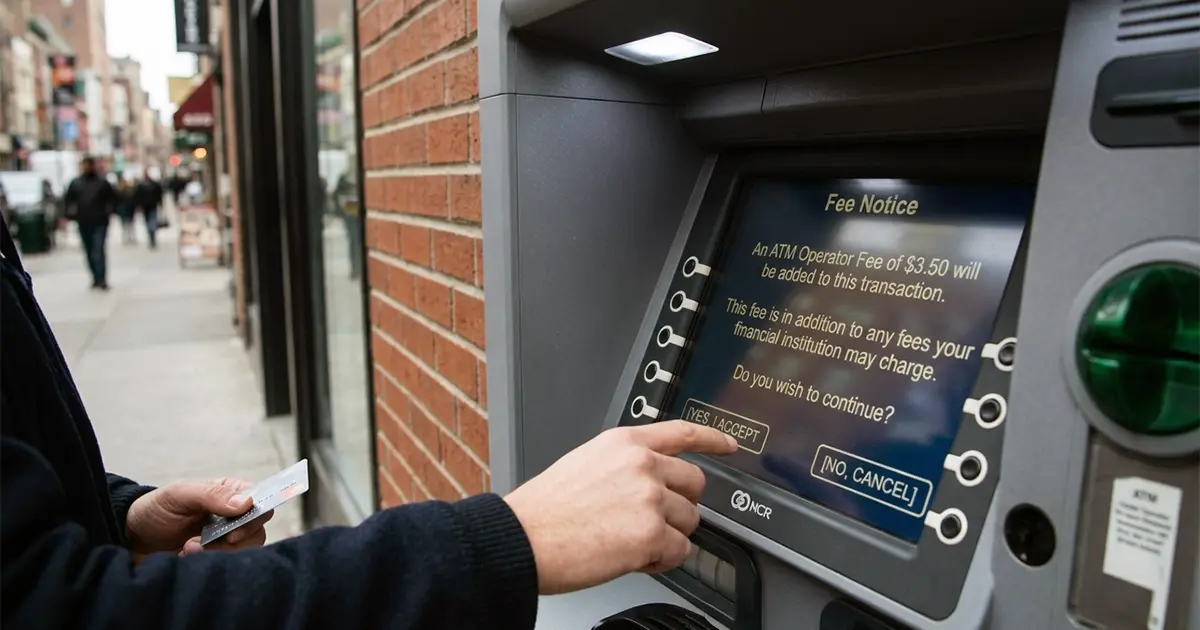
Connecticut changed the default in 2015: a court now has to double an unpaid wage award unless the employer proves it genuinely believed it was complying. A fired worker is also owed their final check the next business day.

Attorney Advertising · Time-Sensitive
OpenClassActions.com is an attorney-advertising and informational resource — not a law firm. It does not provide legal advice and does not recommend or endorse any particular lawyer. Submitting a form on this page does not create an attorney-client relationship, file a lawsuit, or pause any legal deadline, and it does not guarantee that an attorney will review or respond to your case.
These claims are time-sensitive. Legal deadlines (statutes of limitations) vary by state and can permanently bar a claim once they pass — so don't wait for a callback. You are free to choose any attorney you wish, and if you are considering a claim you should speak with a qualified attorney of your choosing as soon as possible. Prior results do not guarantee a similar outcome. This page explains how Connecticut wage rules generally work. It is not advice about your situation, and only a lawyer who knows your facts can tell you what you are owed or what to do next.
Connecticut at a Glance
Connecticut is a protective state, and the single most important thing about it is a change to who has to prove what.Before 2015, double damages for unpaid wages were discretionary, and Connecticut courts generally required a showing of bad faith or arbitrariness before awarding them. A 2015 amendment inverted that: the court now shall award twice the wages unless the employer establishes a good faith belief that its underpayment complied with the law. The multiplier became the default and the burden moved across the table.
The rest of Connecticut's regime is consistent with that posture — next-business-day final pay after a discharge, a meal period whose timing is regulated, deduction authorizations that have to be on a form the Labor Commissioner approved, and a paid sick leave law now stepping down to reach every employer in the state.
The one thing that runs the other way is the deadline. Connecticut gives two years, which is short for a state whose remedy is this strong.
Double Damages and the 2015 Burden Shift
Conn. Gen. Stat. 31-72 is the enforcement provision, and its current form dates to a 2015 amendment that changed the default rather than the ceiling.The section now directs that in an action for unpaid wages, the court shall award the employee twice the full amount of the wages, with costs and such reasonable attorney fees as the court allows — unless the employer establishes that it had a good faith belief that the underpayment was in compliance with the law.
Three consequences follow, and they are what make Connecticut cases run differently from cases in states with a superficially similar provision:
- The employee does not have to prove bad faith. Under the prior standard, that was effectively the burden. Now the doubling attaches unless something displaces it.
- The employer has to build the record. A good faith belief that the pay practice complied with the law is something an employer demonstrates — with the advice it took, the analysis it did, the policy it followed — not something it asserts at trial.
- Attorney fees make ordinary claims viable. As everywhere, fee-shifting is what allows a claim of a few weeks' wages to be brought at all.
Connecticut's definition of wages is broad, covering compensation for labor or services rendered whether calculated by time, task, piece or otherwise, which brings commissions and agreed bonuses inside the statute rather than leaving them to contract law.
It is worth noting the contrast with Massachusetts next door, where treble damages are mandatory and good faith is not a defense at all. Connecticut sits one step short of that: doubling by default, with a genuine good-faith showing as the only exit.
Free settlement alerts
Get notified when new class actions open to claims
Join thousands of readers who get the latest class action settlements you may qualify for — delivered straight to your inbox.
Final Paychecks and Deductions
Conn. Gen. Stat. 31-71c splits final pay by how the job ended:- Discharged. Wages earned are due by the next business day after the discharge. The obligation runs automatically — there is no demand requirement of the kind Missouri and Minnesota attach to their fastest remedies.
- Quit. Wages are due on the next regular payday.
Deductions are governed by Conn. Gen. Stat. 31-71e, and the operative detail is the form. An employer may withhold from wages only where the deduction is required or permitted by law, where it is for medical, surgical or hospital care, or where the employee has authorized it in writing on a form approved by the Labor Commissioner.
That last condition catches a lot of otherwise routine practice. A signature on the employer's own deduction form, on a handbook acknowledgment, or on an email consent does not meet a statute that specifies an approved form. Charges for uniforms, tools, equipment, register shortages, breakage and walked tabs are the usual candidates, and the federal floor applies on top independently — no deduction may push effective pay below the minimum wage or cut into the overtime premium.
Accrued vacation is payable at separation where the employer's policy or an agreement provides for it, and once a policy makes it payable it is wages, with the doubling and fee provisions attached.
Minimum Wage, Overtime and the Meal Break Rule
Connecticut's minimum wage reached a fixed statutory figure and then moved to automatic annual adjustment based on a federal economic index rather than a legislated schedule. Because the rate now changes on its own each January, confirm the operative figure with the Connecticut Department of Labor rather than relying on a published number.Overtime is one and a half times the regular rate for hours over 40 in a workweek, with no daily premium. The state exemptions parallel the federal ones, and Connecticut applies its own regulations to particular sectors including restaurants and hotels, mercantile trade and beauty shops — wage orders that add requirements a general summary of the overtime rule does not capture.
The break rule is Conn. Gen. Stat. 31-51ii, and it regulates timing as well as length. An employee who works seven and a half consecutive hours or more must be given a meal period of at least 30 minutes, and it must fall some time after the first two hours and before the last two hours of the shift. Limited exemptions apply, including where the employer's operation requires continuous coverage or where the employer and employees have a written agreement approved by the Labor Commissioner.
That placement requirement matters more than it first appears. A schedule that consistently parks lunch in the first hour or holds it until the ninth is a documented pattern across a workforce, not a series of individual complaints — which is exactly the shape a collective claim needs. And under federal law a meal period during which the employee is still covering a station is compensable time, so an automatic 30-minute deduction from a shift worked straight through is unpaid wages carrying the doubling provision.
Paid Sick Leave, Pay Transparency and Your Records
Connecticut passed the first state paid sick leave law in the country in 2011, but for a decade it applied only to designated service workers at larger employers. A 2024 amendment rebuilt it:- Coverage widened to all employees rather than a defined list of service occupations.
- The employer-size threshold steps down over three years — reaching employers with 25 or more employees in 2025, 11 or more in 2026, and one or more in 2027.
- Accrual is one hour for every 30 hours worked, subject to an annual cap, usable for the employee's own health needs, a family member's, and certain safety-related absences.
Connecticut also requires employers to disclose the wage range for a position to applicants and to employees on request, and separately runs a Paid Family and Medical Leave program funded by employee payroll contributions and administered by the state.
One practical provision worth knowing when a pay dispute is forming: Connecticut gives employees a statutory right to inspect their personnel file, and to obtain copies, within a short period after a written request. Pay records, schedules and disciplinary documents obtained that way are frequently what a wage claim is built from, and they are considerably easier to get while still employed.
Deadlines, Retaliation and Where to File
Conn. Gen. Stat. 52-596 sets a two-year limitations period for an action for payment of remuneration for employment payable periodically. Federal FLSA claims run two years, or three where the violation was willful, with the opt-in rule for collective actions.Two years is the weak point in an otherwise strong regime. A worker with a doubling-eligible claim who waits loses the reach of it rather than the remedy, and the loss is invisible until it is calculated.
The Wage and Workplace Standards Division of the Connecticut Department of Labor accepts and investigates wage complaints at no cost to the worker. A private lawsuit is the route that reaches the doubling and fee-shifting. The U.S. Department of Labor Wage and Hour Division handles the federal minimum wage and overtime claim.
Retaliation against an employee for making a wage complaint, using paid sick leave or participating in a proceeding is prohibited, and those claims run on their own deadlines separate from the wage claim.
Frequently Asked Questions
Are double damages automatic for unpaid wages in Connecticut?
Close to it, since a 2015 amendment. Conn. Gen. Stat. 31-72 now directs that a court shall award twice the full amount of the unpaid wages, with costs and reasonable attorney fees, unless the employer establishes that it had a good faith belief that the underpayment complied with the law. That reversed the previous approach, under which doubling was discretionary and the employee effectively had to justify it. Now the default is doubling and the employer carries the burden of avoiding it.
When is my final paycheck due in Connecticut?
If you were discharged, by the next business day after the discharge — one of the fastest deadlines in the country, and it runs automatically rather than from a demand. If you quit, wages are due on the next regular payday. Unpaid final wages carry the same doubling and attorney fee provisions as any other unpaid wages.
Am I entitled to a meal break in Connecticut?
Yes, on longer shifts, and the placement is regulated as well as the length. Conn. Gen. Stat. 31-51ii requires a meal period of at least 30 minutes for an employee who works seven and a half or more consecutive hours, and it must be given some time after the first two hours and before the last two hours of the shift. That placement rule is what makes a violation provable across a schedule rather than shift by shift. Limited exemptions apply, including where the employer's operation requires continuous coverage.
Can my Connecticut employer deduct money from my paycheck if I sign for it?
Only in specific ways. Conn. Gen. Stat. 31-71e allows a deduction where it is required or permitted by law, where it is for medical, surgical or hospital care, or where the employee has authorized it in writing on a form approved by the Labor Commissioner. That last condition is the one employers most often miss — a signature on the company's own form, or on a handbook acknowledgment, does not satisfy a statute that specifies an approved form.
Does Connecticut require paid sick leave?
Yes, and the coverage has been widening on a set schedule. Connecticut passed the first state paid sick leave law in 2011, originally limited to service workers at larger employers. A 2024 amendment expanded it to all employees and stepped the employer-size threshold down over three years — reaching employers with 25 or more employees in 2025, 11 or more in 2026, and one or more in 2027. Accrual is one hour for every 30 hours worked, up to an annual cap.
How long do I have to sue for unpaid wages in Connecticut?
Two years. Conn. Gen. Stat. 52-596 sets a two-year period for an action for payment of remuneration for employment payable periodically. A federal Fair Labor Standards Act claim also runs two years, or three where the violation was willful, and in a collective action an opt-in plaintiff's clock keeps running until the consent form is filed. Two years is short relative to how strong the Connecticut remedy is, so the calendar deserves attention early.
Sources
• Conn. Gen. Stat. 31-72 (civil action for unpaid wages — twice the full amount plus costs and reasonable attorney fees unless the employer establishes a good faith belief of compliance, as amended in 2015).• Conn. Gen. Stat. 31-71c (final wages by the next business day after a discharge, or the next regular payday on a voluntary separation) and 31-71e (permitted deductions, including written authorization on a form approved by the Labor Commissioner).
• Conn. Gen. Stat. 31-58 and following (minimum wage, and the move to annual adjustment by economic index) and 31-76c (overtime after 40 hours in a workweek), together with the Connecticut wage orders applying to particular industries.
• Conn. Gen. Stat. 31-51ii (meal period of at least 30 minutes on shifts of seven and a half consecutive hours or more, placed after the first two and before the last two hours, with limited exemptions).
• Conn. Gen. Stat. 31-57s and following (paid sick leave, as expanded in 2024 with the employer-size threshold stepping down through 2027) and 31-40z (wage range disclosure).
• Conn. Gen. Stat. 31-128a and following (personnel file inspection and copies) and 52-596 (two-year limitations period for remuneration payable periodically).
• Connecticut Department of Labor — Wage and Workplace Standards Division.
• U.S. Department of Labor — Fair Labor Standards Act.