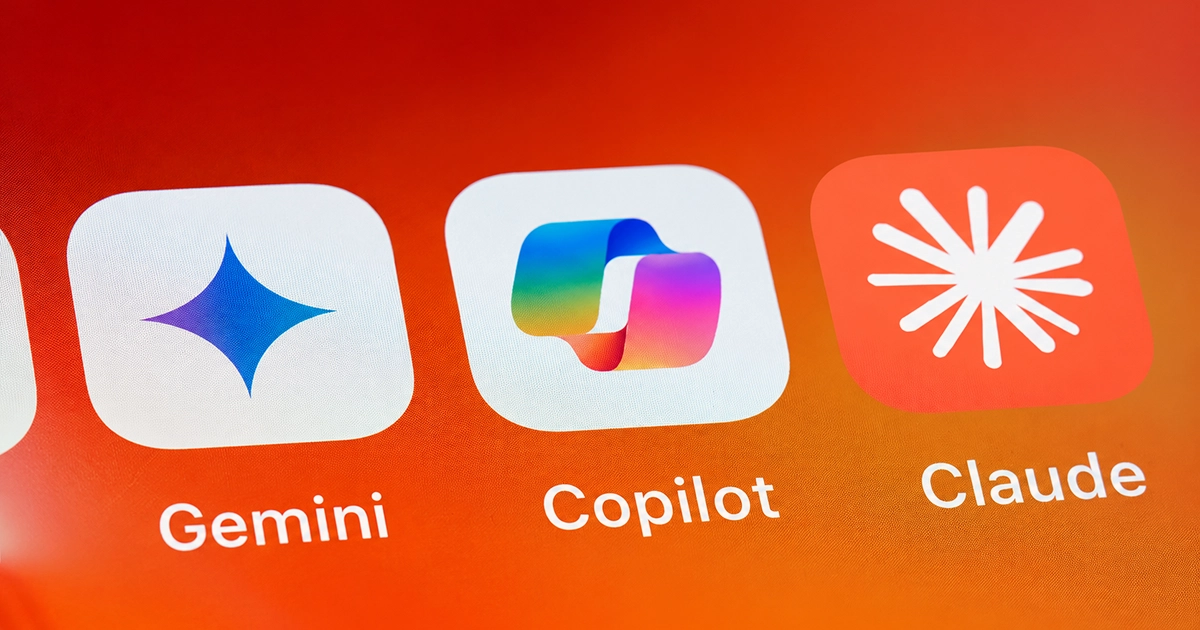
People who pay for ChatGPT, Claude, Grok or Google AI subscriptions may be covered by a proposed class action alleging Anthropic, OpenAI, SpaceXAI and Google agreed with each other to slow how quickly their AI models improve. No class has been certified and there is nothing to file yet.

Allegations Only · No Settlement Yet
This article describes a class action complaint. The statements below are unproven allegations. Anthropic, OpenAI, SpaceXAI and Google have not been found liable, there is no certified class, and nothing to claim at this time. This page is informational and is not legal advice.
What Is This About?
Four people who pay for AI chatbot subscriptions have sued the companies behind ChatGPT, Claude, Grok and Gemini, alleging that the four agreed among themselves to slow down how fast their competing models improve. The case is Buist v. Anthropic, PBC, No. 3:26-cv-10693, filed September 18, 2026 in the U.S. District Court for the Northern District of California against Anthropic, PBC, OpenAI OpCo, LLC, SpaceXAI LLC and Google LLC.The legal theory is a single count under Section 1 of the Sherman Act: an agreement among horizontal competitors to hold back the rate at which their products improve is, the complaint argues, an agreement to restrain output and quality, and courts have condemned that kind of restraint for more than a century. The plaintiffs seek treble damages under Section 4 of the Clayton Act and an injunction under Section 16.
None of it has been tested. All four defendants have been served but have not yet responded to the complaint, no class has been certified, there is no settlement and there is nothing for a subscriber to file.
Free settlement alerts
Get notified when new class actions open to claims
Join thousands of readers who get the latest class action settlements you may qualify for — delivered straight to your inbox.
What the Complaint Alleges
The alleged agreement is unusual in the respect the complaint leans on hardest: the plaintiffs say it was proposed in public, accepted in public and confirmed in public, rather than arranged in private the way a price-fixing case is normally pleaded.According to the complaint, Anthropic chief executive Dario Amodei published an essay on the morning of September 12, 2026 titled We Must Pace the Frontier, which argued that "we must slow the pace at which we improve the capabilities of AI models" and called for "industry-wide coordination" among frontier laboratories to set "limits on the rate of unchecked AI progress." The complaint alleges the essay also described the commercial problem such coordination would solve, saying it would let participants slow down "without sacrificing commercial advantage."
Within roughly an hour, the complaint alleges, Elon Musk quote-posted the proposal and wrote "Dario is right." It alleges that OpenAI chief executive Sam Altman then wrote "I agree with Dario that we need to pace the frontier" and committed OpenAI to the first step of the plan, and that Google DeepMind co-founder Demis Hassabis called the essay the right path forward and tied it to the industry-wide standards body he had proposed two months earlier. Two days later, the complaint says, Altman stated that AI progress "should be slower than it otherwise could be."
The complaint also alleges a private track running underneath the public one: a July 2026 statement signed by executives of Anthropic, OpenAI and Google acknowledging that each company faced "intense competitive pressure not to unilaterally slow" development, a working group of company representatives meeting regularly since July, and a September 15 confirmation from OpenAI's global policy chief that the three companies had already been working together for several weeks. Each of those characterizations is the plaintiffs' own, and none has been established in court.
Why the Plaintiffs Say They Were Overcharged
An antitrust plaintiff normally points at a price that went up. These plaintiffs point at a price that stayed the same while the product allegedly got worse relative to what competition would have delivered.The argument runs this way: a paid AI subscription is sold on access to the seller's most capable models and to the stream of improvements the seller keeps shipping, and the companies market and price those tiers on exactly that basis. If the rate of improvement slows by agreement, a subscriber pays the same monthly figure for less than the bargain was worth. The complaint calls that a quality-adjusted overcharge and says it is recoverable under Section 4 of the Clayton Act.
The complaint concedes the timing problem this creates for itself. The alleged agreement was formed in September 2026, development cycles run months, and so the effect on shipped products has not yet shown up. It argues that the agreement has nonetheless already changed each defendant's investment and release incentives, and that its continuation is the ongoing injury Section 16 of the Clayton Act exists to enjoin.
Who the Proposed Class Would Cover
The proposed nationwide class is everyone in the United States who, from September 12, 2026 through the date the alleged conduct's effects cease, bought a paid individual consumer subscription directly from one of the defendants giving premium access to ChatGPT, Claude, Grok or Gemini. Four defendant-specific subclasses are proposed alongside it, one per product.Two boundaries are worth reading closely. The class is limited to individual consumer subscriptions bought directly from a defendant, which as written leaves out enterprise and business plans, API spending and anything bought through a reseller. And it is limited to paid tiers: free accounts are outside it, though the complaint argues separately that free tiers impose no competitive discipline on the paid market because the same four companies control both.
Defendants, their affiliates, their officers and directors, governmental entities, the court and its staff, and anyone who validly opts out are excluded. A class definition written into a complaint is a proposal, not a ruling — it frequently changes, and sometimes disappears, by the time a court decides whether to certify.
What the Complaint Says It Is Not Challenging
The complaint spends several pages drawing a line around itself, and the line matters for understanding what is actually at issue.It states that the plaintiffs take AI risk seriously, that each defendant remains free to set its own safety thresholds, retain independent evaluators, build its own product guardrails, reduce its own environmental footprint and slow its own development, and that none of those unilateral choices is challenged. It draws an analogy to car manufacturers, which do not need an agreement with one another to decline to build a 300-mile-per-hour family sedan.
It also disclaims any attempt to impose liability on the defendants for lobbying. Statements the companies made to Congress, the White House or any agency — including advocacy for AI regulation, for a statutory standards body, or for an antitrust exemption — are pleaded only as evidence of what the companies understood, not as the conduct being sued over. That carve-out is how an antitrust complaint navigates the constitutional protection for petitioning the government.
What is left, on the complaint's framing, is a private agreement among rivals about the pace of their competing products, formed without any statutory exemption. The complaint alleges Amodei's essay itself acknowledged that the government would need to issue a narrow waiver for certain safety conversations, and that Altman said OpenAI would not wait for one.
How Hard This Case Is to Win Is Mostly a Question of Which Test Applies
The complaint pleads its Sherman Act claim three ways, in descending order of how favorable each is to the plaintiffs, and which one a court picks will shape the whole case.The first is per se illegality, reserved for restraints so plainly anticompetitive that no justification is heard. The plaintiffs argue a naked agreement to reduce product quality and output belongs in that category, and that the defendants share no productive assets, no risk and no joint output that would make the restraint ancillary to a legitimate venture.
The second is a quick-look analysis, where an obviously anticompetitive arrangement gets abbreviated scrutiny. The third is the full rule of reason, which requires the plaintiffs to define a relevant market and prove anticompetitive effects in it. For that alternative the complaint defines a "Paid Frontier AI Assistant Subscription Market" covering the paid tiers of the four products, alleges on information and belief that the defendants together hold at least 80 percent of it, and argues that search engines, ordinary productivity software and narrow machine-learning tools are not substitutes for it.
Defendants in a case like this typically contest all three routes, and a motion to dismiss is the usual first move. Nothing of the sort has been filed yet; the first response deadlines fall on October 14 and 15, 2026.
Where the Case Stands
The case was assigned to Magistrate Judge Nathanael M. Cousins on the day it was filed, and the court's own filings now carry his San Jose case number, 5:26-cv-10693-NC. On September 29, 2026, the plaintiffs filed a form consenting to have him handle the case through trial and final judgment. A magistrate judge can do that only if every party consents, so the case stays with Judge Cousins only if all four defendants also consent; each defendant's election is due within 14 days of appearing, and if any one declines, the case is reassigned to a district judge. Lead counsel Nicholas C. Rowley of Trial Lawyers for Justice entered a formal appearance for the plaintiffs on September 30.Summonses issued for Anthropic on September 21 and for Google, OpenAI and SpaceXAI on September 22. According to the proofs of service filed September 25, OpenAI was served September 23 and the other three defendants September 24, which puts OpenAI's deadline to answer or otherwise respond at October 14, 2026 and the other three defendants' at October 15, 2026. Deadlines at this stage are often pushed back by agreement between the parties, and a defendant's first filing is frequently a motion to dismiss rather than an answer.
That order puts the case on the Northern District of California's Alternative Dispute Resolution Multi-Option Program and sets the early calendar: ADR certification and the Rule 26(f) meet-and-confer are due December 2, 2026; initial disclosures and the joint case management statement are due December 16, 2026; and the initial case management conference is set for December 23, 2026 at 10:00 a.m. by Zoom.
The defendants have not yet responded to the complaint. A case at this stage produces no notice to consumers, no opt-out window and no deadline of any kind for a subscriber, and it will not do so unless and until a court certifies a class and approves a notice program.
Questions
Is there an AI slowdown class action settlement?
No. The complaint in Buist v. Anthropic, PBC was filed on September 18, 2026 and the defendants have not yet responded to it; their deadlines to respond are October 14 and 15, 2026. No class has been certified, there is no settlement fund, there is no claim form and there is no deadline for a subscriber to meet.
Who would the proposed class cover?
As pleaded, people in the United States who bought a paid individual consumer subscription directly from one of the four defendants providing premium access to ChatGPT, Claude, Grok or Gemini, from September 12, 2026 onward. The complaint also proposes four defendant-specific subclasses, one for each product. A class definition in a complaint is only a proposal until a court rules on class certification.
Do free ChatGPT, Claude, Grok or Gemini accounts count?
Not under the class as written. The proposed class is limited to people who paid one of the defendants directly for an individual consumer subscription, so free tiers fall outside it. The complaint argues separately that free tiers do not discipline the paid market because the same companies control both.
What law does the lawsuit say was broken?
Section 1 of the Sherman Act, 15 U.S.C. section 1, which prohibits agreements among competitors that restrain trade. The plaintiffs seek treble damages under Section 4 of the Clayton Act and an injunction under Section 16. The complaint pleads the alleged agreement as unlawful per se, alternatively under an abbreviated quick-look analysis, and alternatively under the rule of reason.
Does the lawsuit claim AI safety work is illegal?
The complaint says it does not. It states that each defendant remains free to set its own safety thresholds, retain outside evaluators, slow its own development and ask Congress for regulation, and that the plaintiffs do not seek to impose liability for lobbying or petitioning the government. What it challenges is the alleged private agreement among competitors about how fast their competing products will improve.
What should an AI subscriber do right now?
Nothing is required at the complaint stage. There is no sign-up, no registration and no legitimate service that can file an AI slowdown class action claim on anyone's behalf today. If a class is later certified, class members are reached through a court-approved notice program. Subscription receipts and billing records are worth keeping in the meantime.
Sources
• U.S. District Court, Northern District of California — docket in Buist v. Anthropic, PBC, No. 3:26-cv-10693• CourtListener RECAP archive — class action complaint filed September 18, 2026 (PDF)
• CourtListener RECAP archive — order setting initial case management conference and ADR deadlines (PDF)
• CourtListener RECAP archive — plaintiffs' consent to magistrate judge jurisdiction filed September 29, 2026 (PDF)
• Dario Amodei — We Must Pace the Frontier, September 12, 2026
• U.S. District Court, Northern District of California — Alternative Dispute Resolution Multi-Option Program