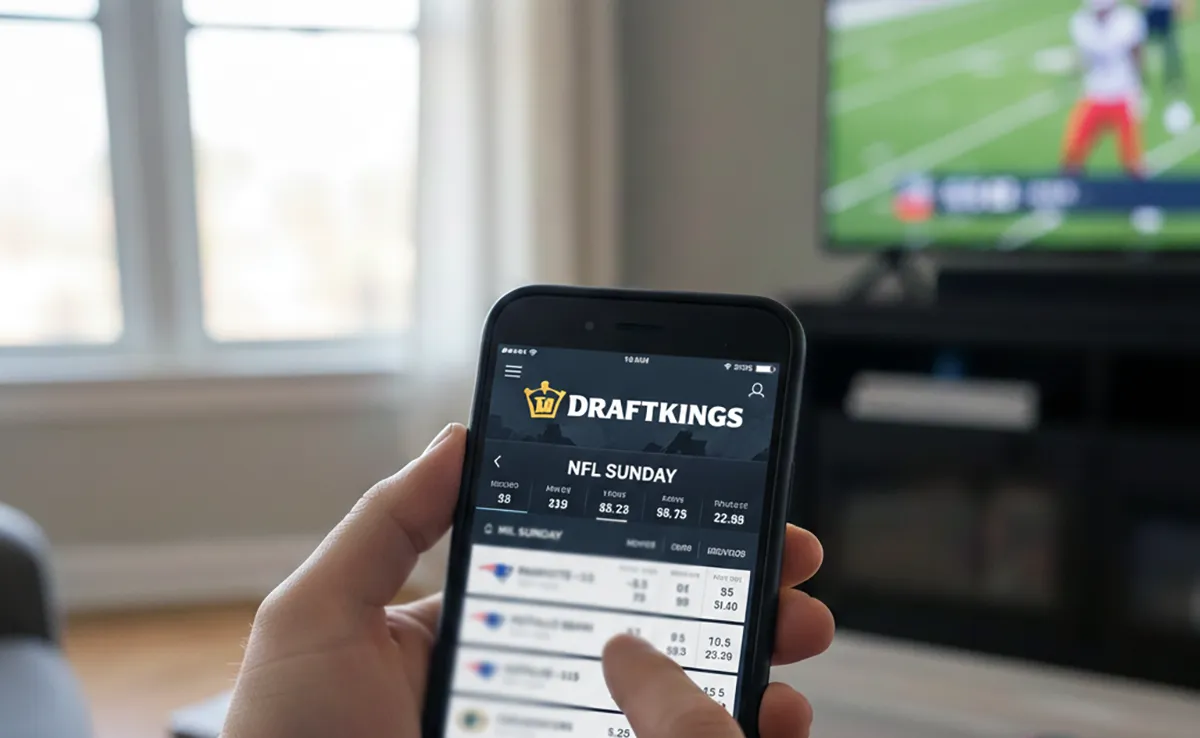
A new class action targets DraftKings Predictions, the prediction-market app DraftKings launched in states where it has no sports betting license. The suit says the "event contracts" sold there are ordinary sports bets, and it asks a federal court to give users their money back.

Allegations Only · No Settlement Yet
This article describes a class action complaint. The statements below are unproven allegations. DraftKings has not been found liable, has not yet responded to the complaint, there is no certified class, and nothing to claim at this time. This page is informational and is not legal advice.
What Is This About?
A proposed class action accuses DraftKings of running an unlicensed sportsbook through DraftKings Predictions, the prediction-market product it launched in December 2025. The complaint, Chan v. DraftKings Inc. and GUS III LLC (Case No. 1:26-cv-13442-PGL, U.S. District Court for the District of Massachusetts), was filed on July 28, 2026 by a California resident who says he signed up for Predictions through the DraftKings app and lost money on it.The theory is straightforward. DraftKings runs a state-licensed sportsbook in 27 states and Washington, D.C. In eight other states named in the complaint, it has no sports betting license — but it does offer Predictions, where users buy sports "event contracts" regulated federally by the Commodity Futures Trading Commission rather than by state gaming regulators. The suit alleges those contracts are the same wagers, on the same games, priced off the same infrastructure, sold through the same app, and that the label is the only meaningful difference. It asks the court to make DraftKings give back what users in those states wagered. DraftKings has not yet responded, and the allegations are unproven.
The 8 States at the Center of the Case
The complaint calls them the "Illegal Operation States": Alabama, California, Florida, Georgia, Minnesota, New Mexico, South Carolina, and Texas. They are not all the same. Most prohibit online sports betting outright. Florida permits it but, according to the complaint, licenses a single operator that is not DraftKings. Either way, the suit's point is the same — DraftKings cannot legally take an online sports bet in any of them, and it alleges Predictions lets the company do it anyway.California gets extra attention in the complaint because voters there rejected sports betting directly. In November 2022, Proposition 26 would have legalized in-person sports betting on tribal land and Proposition 27 would have legalized it online. Both failed — Proposition 26 with 67 percent voting no, and Proposition 27 with 82 percent voting no, which the complaint describes as the largest margin of defeat in California ballot proposition history. The suit notes that online sportsbook operators, DraftKings among them, backed the online measure with heavy campaign spending and lost.
Free settlement alerts
Get notified when new class actions open to claims
Join thousands of readers who get the latest class action settlements you may qualify for — delivered straight to your inbox.
What the Complaint Says About the Two Products
Most of the complaint is built from DraftKings' own public statements to investors, which it quotes at length. It alleges that the company describes Predictions and Sportsbook internally as one business serving one customer base, while presenting them to the public as different things.Among the allegations drawn from those statements: that DraftKings has said Predictions and Sportsbook "serve the same customers in the same live moments and leverage shared underlying infrastructure"; that its chief executive said "customers don't really even understand the difference" between the two and called that a competitive advantage; that the company targeted prediction markets at states without legal online sports betting because there was little incremental revenue in states where it already operates a sportsbook; and that DraftKings told investors it would begin reporting Predictions and Sportsbook revenue as a single combined "Sports" figure. The complaint characterizes those statements as admissions. DraftKings has not responded to the suit, and a company's description of shared technology and shared customers is not itself a finding that a product is illegal.
On the product side, the complaint alleges the two offerings match feature for feature: single-game wagers, point spreads, over/unders, player props, season-long futures, live in-game betting, and "combos" that function like parlays. It alleges more than 30 percent of Predictions bets are combos, and that both products run inside the same DraftKings "super app," which routes a user to one or the other based on where they are.
The "House" Allegation
A prediction market is supposed to match buyers against other buyers, with the operator taking a fee and no position. The complaint alleges DraftKings does not work that way in practice.It alleges that when there are not enough users on one side of a contract, DraftKings steps in and takes the opposite side itself to provide liquidity — which the suit says makes it the house, holding positions with a preferred outcome, while also charging a per-contract transaction fee it describes as the functional equivalent of a sportsbook's vig. For combo contracts, the complaint alleges the pricing runs through a back-end system only DraftKings and approved institutional market makers can reach, so an ordinary user cannot take the other side of the trade at all.
The suit alleges this makes DraftKings' description of itself as a neutral broker with no stake in outcomes inaccurate, and that the arrangement leaves retail users trading against professionals with better models, better data, and better fee terms. These are allegations; no court has evaluated them.
Who Is Covered by the Proposed Classes?
The complaint proposes two classes:• Multistate Class — all persons in the Illegal Operation States who spent money wagering on sports on DraftKings Predictions.
• California Class — all persons in California who spent money wagering on sports on DraftKings Predictions.
Excluded are the judges assigned to the case and their families, DraftKings and its related entities and their officers, directors, and employees, counsel for both sides, anyone who timely opts out, and anyone whose claims were already resolved. The complaint says the classes number in the thousands and can be identified from DraftKings' own records. Neither class has been certified, so the definitions could change as the case proceeds — or the case could be dismissed.
What the Lawsuit Seeks
The complaint brings two counts. The first is unjust enrichment on behalf of the multistate class, arguing DraftKings should not keep money it took through what the suit calls an unlawful betting operation, and asking the court to order those proceeds disgorged into a common fund. The second is a California Unfair Competition Law claim on behalf of the California class, alleging DraftKings' conduct was unlawful, unfair, and fraudulent under Business and Professions Code section 17200 — unlawful because it allegedly violates California's Gambling Control Act and several Penal Code gambling provisions, and unfair and fraudulent because, the suit says, consumers were led to believe the activity was lawful and that they were not betting against the house.The prayer for relief asks the court to certify the classes, declare the conduct unlawful, enjoin DraftKings from continuing it, award damages and restitution, order disgorgement, and award interest, attorneys' fees, and costs. The plaintiff demands a jury trial. All of this is relief requested on unproven allegations; nothing has been awarded and no defendant has been found to have done anything unlawful.
Is There a Settlement or Claim Form?
No. This is a lawsuit at the complaint stage, not a settlement.That means:
• There is no settlement fund.
• There is no claim form.
• There is no payout and no deadline to act.
For money to reach anyone, the case would first have to survive DraftKings' expected motions — including the federal-preemption argument prediction-market operators have raised in similar cases, and likely a push to send the claims to arbitration under the app's terms, which is how two earlier individual suits against sportsbooks ended up out of court. It would then need class certification, and then a settlement or a win at trial. That takes years and may not happen. Be cautious of any site claiming you can file a claim against DraftKings over Predictions losses today. If a class is ever certified and a settlement or judgment results, a formal process with its own eligibility rules and deadlines would be announced separately.
Where This Fits in the Prediction-Market Fight
This is the first of the gambling-loss cases to name DraftKings, but the legal theory is not new. Nearly identical suits are already pending against other operators: the Kalshi Oregon gambling-loss class action and the Kalshi Kentucky case both seek to recover users' losses under state loss-recovery statutes, and Mazza v. Robinhood makes the same argument about Robinhood's Prediction Markets Hub. The industry has pushed back through the courts as well — Kalshi has won federal-preemption rulings in some districts and has gone after state regulators directly, as in its challenge to Illinois' SB 3019. Our overview of the prediction-market legal challenges tracks how those cases have split.What makes the DraftKings case different is the defendant. Kalshi and Polymarket built prediction markets first; DraftKings built a licensed sportsbook first and added a prediction market second, and the complaint argues that sequence is the problem — that the company used the trust and customer base it earned as a regulated operator to sell an unregulated product to people who could not tell the two apart.
DraftKings already faces separate litigation on a different theory, over how it markets to users who develop gambling problems. Our page on the DraftKings gambling-addiction class action covers that case, which was dismissed and is now on appeal to the Third Circuit, and our sports-gambling addiction investigation covers the broader wave of suits against DraftKings and FanDuel. The company also settled an unrelated $10 million NFT marketplace class action in the same Massachusetts federal court.
What Happens Next
The immediate milestones are procedural. DraftKings and GUS III will respond to the complaint, most likely with a motion to dismiss raising federal preemption under the Commodity Exchange Act, and possibly a motion to compel arbitration. If the case clears those, it moves to discovery and eventually a class certification motion. Any of those stages can end it.Worth watching alongside the case: the Commodity Futures Trading Commission has an open rulemaking on prediction markets, and a group of state attorneys general has urged it to treat sports event contracts as gambling. If federal regulators or Congress draw a clearer line, that could matter more to this dispute than any single ruling.
Frequently Asked Questions
Is there a DraftKings Predictions settlement or claim form?
No. This is a newly filed class action complaint, not a settlement. There is no settlement fund, no claim form, and no payout. DraftKings has not been found liable, no class has been certified, and there is nothing to claim at this time.What does the DraftKings Predictions lawsuit allege?
That the sports contracts sold on Predictions are functionally the same wagers DraftKings offers in its licensed sportsbook, and that selling them in states where DraftKings has no sports betting license is unlawful. The complaint brings claims for unjust enrichment and for violations of California's Unfair Competition Law. These are unproven allegations.Which states does the lawsuit cover?
Alabama, California, Florida, Georgia, Minnesota, New Mexico, South Carolina, and Texas, plus a separate California-only class. No class has been certified, so the definitions could change — or the case could be dismissed.What is the difference between DraftKings Sportsbook and DraftKings Predictions?
Sportsbook is DraftKings' state-licensed online sportsbook, available in 27 states and Washington, D.C. Predictions sells sports event contracts, which are federally regulated derivatives overseen by the CFTC rather than state gaming regulators. The complaint alleges the two are functionally identical for sports and that the label is the only real difference. DraftKings has not yet responded to the complaint.What should I do if I lost money on DraftKings Predictions?
There is nothing to claim right now because there is no settlement. Keep records of your deposits, contracts, and losses, and follow the case for updates. If a class is ever certified and a settlement or judgment results, a formal process with its own eligibility rules and deadlines would be announced. This page is informational and is not legal advice.Sources
• Chan v. DraftKings Inc. and GUS III LLC — Class Action Complaint, No. 1:26-cv-13442-PGL (D. Mass., filed July 28, 2026).• CourtListener — DraftKings federal docket search
• Commodity Futures Trading Commission — press releases and rulemaking notices
• DraftKings Inc. investor materials cited in the complaint — Q4 2025 earnings call, Q1 2026 shareholder letter and earnings presentation, and the June 26, 2026 announcement of its DKeX exchange.
• California Secretary of State — November 8, 2022 General Election results for Propositions 26 and 27.