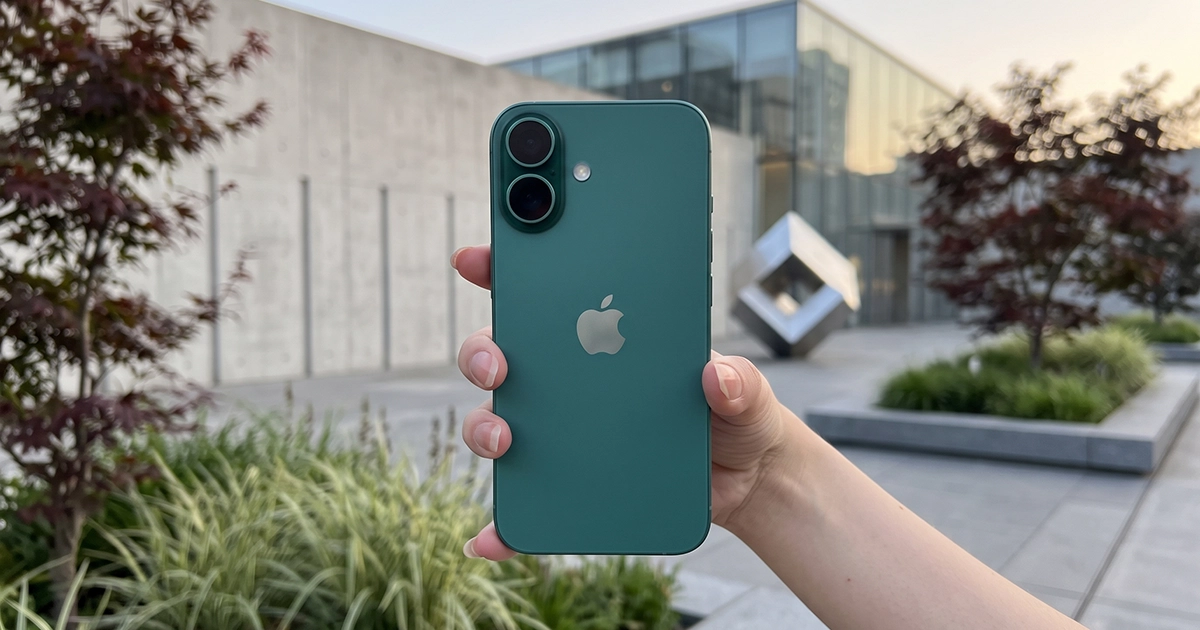
California buyers of new iPhone 17, iPhone 17 Pro, iPhone 17 Pro Max, iPhone 18 Pro and iPhone 18 Pro Max phones may be covered by a proposed class action alleging Apple sold the phones as Wi-Fi 7 devices even though their wireless chip lacks two of the standard’s headline features. No class has been certified and there is nothing to file yet.

Allegations Only · No Settlement Yet
This article describes a class action complaint. The statements below are unproven allegations. Apple has not been found liable, there is no certified class, and nothing to claim at this time. This page is informational and is not legal advice.
What Is This About?
A proposed class action filed October 16, 2026 in the Superior Court of California for Santa Clara County accuses Apple of overstating the wireless capabilities of its newest iPhones. The case, Smith v. Apple Inc., No. 26CV506247, centers on a single phrase on Apple’s product and spec pages: “Wi-Fi 7.” According to the complaint, the iPhone 17 and iPhone 18 Pro models run on Apple’s N1 wireless chip, which is capped at the channel width and data density of the previous Wi-Fi generation, so buyers who paid for Wi-Fi 7 did not get what that label promises.The suit brings one claim, under California’s Unfair Competition Law, and asks for partial refunds and an order requiring Apple to qualify its Wi-Fi 7 marketing. Apple has not yet responded, and none of the allegations has been tested in court.
Free settlement alerts
Get notified when new class actions open to claims
Join thousands of readers who get the latest class action settlements you may qualify for — delivered straight to your inbox.
The Two Wi-Fi 7 Features at Issue
The Wi-Fi Alliance, the industry group that owns the Wi-Fi trademark, launched its Wi-Fi 7 certification in January 2024. The complaint focuses on two of the upgrades the group promoted for the new generation. The first is channel width: Wi-Fi 7 allows a 320 MHz channel, twice the 160 MHz ceiling of Wi-Fi 6 and 6E, which works like doubling the lanes on a road. The second is modulation, a measure of how much data is packed into each radio signal: Wi-Fi 7 moves from 1024-QAM to 4096-QAM. Together, the complaint says, those changes are behind the Alliance’s figure of a maximum device data rate of roughly 5.8 gigabits per second, about 2.4 times the Wi-Fi 6 figure.The lawsuit alleges the iPhone 17 and 18 Pro models support neither feature. Because the limits are built into the N1 chip, it says, no setting, accessory or software update can add them, and the phones can never take full advantage of a router that uses them. Paired with such a router, the complaint claims, the phones receive data at well under half the speed the router can deliver. The 160 MHz cap itself is not new information: MacRumors reported in September 2025, citing FCC filings, that the N1 chip supports Wi-Fi 7 only up to 160 MHz. The complaint adds the 1024-QAM limit and argues that neither restriction was disclosed to ordinary buyers.
The complaint also points to a competitor to argue the trade-off was not necessary, alleging that Samsung’s Galaxy S24 Ultra supports both 320 MHz channels and 4096-QAM.
How the Complaint Says Apple Presented Wi-Fi 7
According to the complaint, Apple’s iPhone sales pages list “Wi-Fi 7” among the phones’ must-have features, and the spec sheets describe the N1 chip as supporting “Wi-Fi 7 (802.11be) with 2x2 MIMO.” Each mention carries the same footnote, which says Wi-Fi 7 is available in countries and regions where supported. The suit argues that note is misleading: it suggests the only limits are regional, when the missing 320 MHz channels are unavailable on these phones everywhere, including the United States, where the 6 GHz band those channels use is authorized.The complaint further alleges that Apple mentioned the 160 MHz limit only on a technical deployment page aimed at corporate IT staff, never mentioned the 1024-QAM limit, and maintains a consumer support page stating that iPhone 16 Pro and later models, other than the 16e and 17e, support all of the features of Wi-Fi 7. It also claims retailers such as Best Buy repeat Apple’s Wi-Fi 7 wording, including the footnote, and that Apple controls that reseller content.
The named plaintiff says he bought an iPhone 17 Pro Max at a California Best Buy in November 2025 after seeing the Wi-Fi 7 marketing, and that in his own comparison an older iPhone 15 with Wi-Fi 6 delivered about the same internet speeds and was sometimes faster.
What the Lawsuit Asks the Court to Order
The complaint seeks class certification, a finding that Apple violated the Unfair Competition Law under its “unfair” and “fraudulent” prongs, and restitution of a portion of what class members paid for their phones. It also asks for an injunction that would bar Apple from calling these phones, or other devices built on the N1 chip, Wi-Fi 7 without disclosing the missing features; require corrected disclosures on Apple’s own sales materials and on reseller content it controls; require Apple to fix its Wi-Fi 7 availability support page; and require notice to buyers who purchased before any disclosure is added. It also requests interest, attorneys’ fees and costs, and demands a jury trial.Where the Case Stands
Judge Elizabeth C. Peterson signed an order on October 21, 2026 deeming the case complex, which places it on the court’s complex civil litigation track. A proof of service on Apple was filed October 22, and no attorney for Apple had appeared on the court record as of October 24. The court set a case management conference for February 3, 2027. Whether the case can proceed on behalf of a class is a separate question the court has not reached.Because the class is limited to California purchasers who were California citizens when the suit was filed, buyers elsewhere are not part of this proposed case. Nothing in the case requires anyone to act right now, and there is no settlement or claim process.
Read the Complaint
Questions
Which iPhones does the Wi-Fi 7 lawsuit cover?
The proposed class lists five models: the iPhone 17, iPhone 17 Pro, iPhone 17 Pro Max, iPhone 18 Pro and iPhone 18 Pro Max. It covers people who bought one new, at retail and not for resale, in California, and who were California citizens when the complaint was filed on October 16, 2026. The iPhone Air and iPhone 17e are not among the listed models. No class has been certified.
Is there money available from the Apple Wi-Fi 7 lawsuit?
No. The case was filed on October 16, 2026 and is at the complaint stage. There is no settlement, no certified class and no claim form. The complaint asks for restitution of part of the purchase price, but that would happen only if the plaintiff wins or the case settles.
What do 320 MHz channels and 4096-QAM mean?
They are two of the speed upgrades the Wi-Fi Alliance promoted for Wi-Fi 7. Channel width is how wide a lane the radio signal uses; Wi-Fi 7 allows 320 MHz, double the 160 MHz maximum of Wi-Fi 6 and 6E. QAM is how much data is packed into each signal; Wi-Fi 7 raises it from 1024-QAM to 4096-QAM. The complaint alleges the iPhone 17 and 18 Pro models support neither.
Can a software update add these Wi-Fi 7 features to an iPhone?
The complaint alleges it cannot, because the 160 MHz and 1024-QAM limits are built into the N1 wireless chip and no setting, accessory or update can change them. Apple has not yet responded to the lawsuit, and no court has ruled on that claim.
What happens next in Smith v. Apple?
Judge Elizabeth C. Peterson deemed the case complex on October 21, 2026, and the court set a case management conference for February 3, 2027. A proof of service of the summons on Apple was filed October 22, 2026, and Apple has not yet filed a response. The court has not ruled on whether the case can proceed as a class action.
Sources
• Class Action Complaint, Smith v. Apple Inc., No. 26CV506247 (Cal. Super. Ct., Santa Clara County, filed October 16, 2026), embedded above• Santa Clara County Superior Court public portal, case 26CV506247: register of actions (order deeming case complex, October 21, 2026; proof of service, October 22, 2026) and hearing calendar
• MacRumors, “Apple’s New N1 Chip in iPhone 17, iPhone 17 Pro, and iPhone Air Has a Wi-Fi 7 Limitation” (September 13, 2025)
OpenClassActions.com is a consumer news site, not a law firm, and is not affiliated with the court or the parties. This article is for informational purposes only. It is not legal advice.