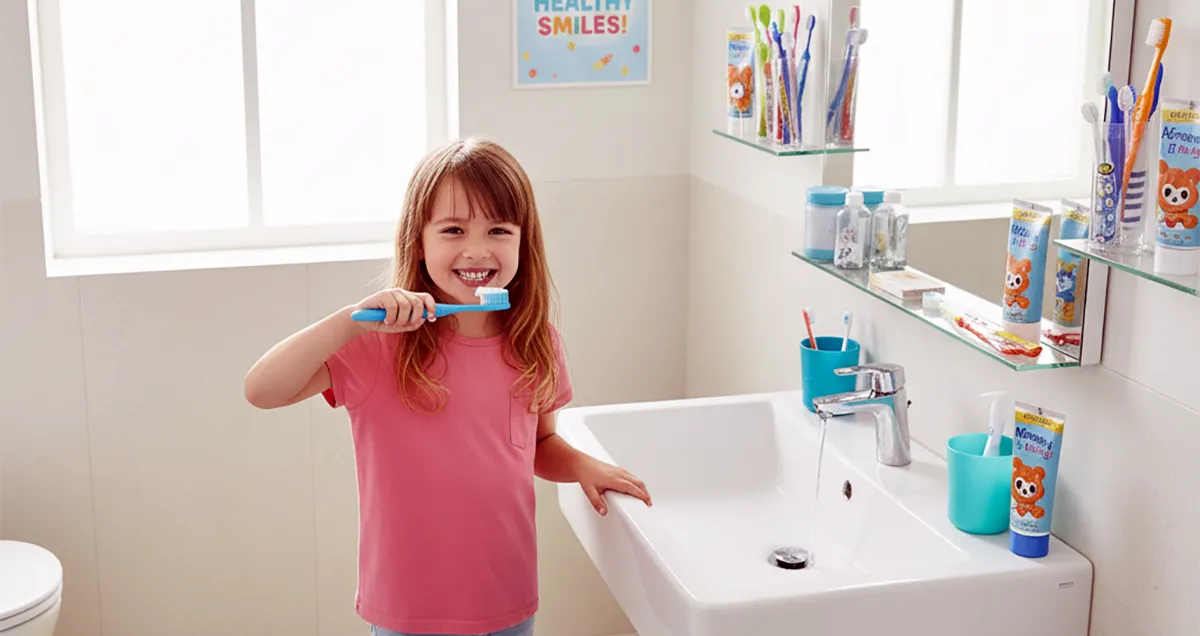
People who bought Orajel Naturals children’s fluoride toothpaste may be covered by a proposed class action alleging Church & Dwight sold the line as “natural” even though every product contains cocamidopropyl betaine, an ingredient the complaint calls a synthetic detergent. No class has been certified and there is nothing to file yet.

Allegations Only · No Settlement Yet
This article describes a class action complaint. The statements below are unproven allegations. Church & Dwight has not been found liable, there is no certified class, and nothing to claim at this time. This page is informational and is not legal advice.
What Is This About?
A New York consumer filed a proposed class action on October 8, 2026, in the U.S. District Court for the Eastern District of New York, claiming that Church & Dwight Co., Inc. misleads parents by selling its Orajel Naturals children’s anti-cavity fluoride toothpastes as “natural.” The case is Ross v. Church & Dwight Co., Inc., No. 2:26-cv-06491. According to the 19-page complaint, every toothpaste in the line is made with cocamidopropyl betaine, a foaming ingredient the plaintiff describes as an industrially manufactured detergent that does not occur anywhere in nature. Church & Dwight has not yet responded in court, and none of the allegations has been proven.Free settlement alerts
Get notified when new class actions open to claims
Join thousands of readers who get the latest class action settlements you may qualify for — delivered straight to your inbox.
What Does the Complaint Say Is Not Natural?
The lawsuit centers on a single ingredient. Cocamidopropyl betaine, often shortened to CAPB, is a surfactant that helps toothpaste foam. On the Orajel Naturals ingredient panel it appears as “Cocamidopropyl Betaine (coconut-derived).” The complaint argues that label note is itself misleading. According to the plaintiff:- CAPB is produced in two chemical reactions: fatty acids, which may come from coconut or palm oil, are combined with a petrochemical amine called DMAPA, and the result is then reacted with sodium chloroacetate.
- The coconut supplies only a starting material, and the finished molecule is not found in coconuts or any other natural source.
- Commercial CAPB can carry leftover manufacturing byproducts, and the complaint points out that the American Contact Dermatitis Society named CAPB its “Allergen of the Year” in 2004.
- Church & Dwight chose the ingredient, buys it from chemical suppliers and therefore knew the products contained a synthetic component when it branded them “Naturals.”
The complaint does not claim any child was harmed. Its theory is economic: that parents paid more for Orajel Naturals than for comparable children’s toothpastes not sold as natural, and would have paid less, or not bought the product, had they understood what was in it.
Where Does the “Natural” Message Appear?
The complaint identifies several places where it says the natural claim is made: the “Orajel Naturals” brand name on the front of the package, flavor names that begin with the word “Natural,” and ingredient-panel notes that tie ingredients to sources such as “vegetable,” “tree pulp,” “mineral” and “coconut-derived.” It also cites a retailer listing that advertised the toothpaste as containing “over 99 percent naturally sourced ingredients.” The products are labeled for children ages 2 and up, and the complaint notes the directions tell parents to supervise brushing to minimize swallowing, which it argues makes the ingredient list especially important to buyers.The complaint also says the FDA has never adopted a regulatory definition of “natural” for cosmetics or over-the-counter drugs, and it points to 2016 Federal Trade Commission actions against personal-care companies that marketed products as “all natural” while using synthetic ingredients. The plaintiff says she is not asking the court to require any new label warning, only to stop the “natural” representations.
Who Is in the Proposed Class?
The complaint asks the court to certify two groups:- Nationwide class: all persons who, during the class period, bought the products in the United States for personal use and not for resale.
- New York subclass: all persons who, during the class period, bought the products in New York for personal use and not for resale.
The class period would start as early as the applicable statute of limitations allows and run through the date of class notice. Church & Dwight, its affiliates, officers and directors, the judges assigned to the case and people who bought the toothpaste to resell it are excluded. Whether any class is certified, and what it covers, is for the court to decide later.
What Laws and Relief Are Involved?
The complaint brings three claims. For the New York subclass, it alleges violations of New York General Business Law § 349, which prohibits deceptive business practices, and § 350, which prohibits false advertising. Those statutes provide for actual damages or minimum statutory damages of $50 and $500 per violation, respectively, with higher amounts available for willful violations. For the nationwide class, it brings a common-law fraud claim and seeks punitive damages on it.The plaintiff also asks for restitution, a court order stopping the challenged marketing, interest and attorneys’ fees. She is represented by Furia Law LLC.
What Happens Next?
Church & Dwight has not yet filed anything in the case, and no judge was listed on the public docket when this page was published. Consumer labeling suits like this one typically move next to a motion to dismiss, where the court decides whether a reasonable consumer could be misled by the label as described, before any question of class certification. “Natural” labeling cases have reached different outcomes in different courts, and nothing has been decided here. OCA will update this page as the case develops.Questions
Is there an Orajel Naturals toothpaste settlement or claim form?
No. The case was filed on October 8, 2026 and is at the complaint stage. There is no settlement, no certified class and no claim form. If the case settles or a class is certified later, the court would approve a notice describing any claim process.
What ingredient does the Orajel Naturals lawsuit focus on?
Cocamidopropyl betaine, a foaming agent the label lists as “coconut-derived.” The complaint alleges it is made by reacting coconut or palm fatty acids with two synthetic chemicals, so the finished ingredient does not exist in nature. Church & Dwight has not yet responded in court.
Does the lawsuit claim Orajel kids’ toothpaste is unsafe?
No. The legal claims are about labeling and price, not injury. The complaint argues buyers paid extra for a “natural” product they did not get. It mentions that the ingredient is a known skin allergen in the dermatology literature as background, but it does not seek damages for any health effect.
Who is in the proposed Orajel Naturals class?
The complaint proposes a nationwide class of people who bought Orajel Naturals children’s fluoride toothpastes in the U.S. for personal use, not resale, and a subclass of people who bought them in New York. The class period runs as far back as the statute of limitations allows. No class has been certified.
Is this the first Orajel “natural” lawsuit?
This complaint targets the Orajel Naturals children’s toothpaste line specifically. It is a new case, filed in the Eastern District of New York, and OCA has not found any court ruling on whether the toothpaste’s “natural” branding is misleading.
Sources
• Ross v. Church & Dwight Co., Inc., No. 2:26-cv-06491 (E.D.N.Y.) — docket and complaint• DailyMed (U.S. National Library of Medicine) — Orajel PAW Patrol fluoride toothpaste label cited in the complaint