People who bought a Sig Sauer P320 pistol without an external thumb safety in Washington since November 17, 2021 may be covered by a proposed class action alleging Sig Sauer concealed a design defect that makes the pistol prone to unintended discharge. No class has been certified and there is nothing to file yet.

Allegations Only · No Settlement Yet
This article describes a class action complaint. The statements below are unproven allegations. Sig Sauer has not been found liable, there is no certified class, and nothing to claim at this time. This page is informational and is not legal advice.
What Is This About?
Patrick Schreiber, a Washington resident, filed a proposed class action against Sig Sauer, Inc. on November 17, 2025 in the U.S. District Court for the Western District of Washington. The case is Schreiber v. Sig Sauer, Inc., No. 2:25-cv-02303, and it is assigned to U.S. District Judge James L. Robart. The complaint alleges that Sig Sauer violated the Washington Consumer Protection Act by selling the P320 pistol with a design defect it knew about and did not disclose. The plaintiff says he bought a new P320 without a manual safety in Bothell, Washington in November 2021 for about $1,093.82 after reading safety claims on Sig Sauer’s website.On May 27, 2026, Judge Robart denied Sig Sauer’s motion to dismiss. Sig Sauer has since answered the complaint, and the case is in discovery. These are allegations; Sig Sauer denies them, and the court has not decided whether the P320 is defective.
Free settlement alerts
Get notified when new class actions open to claims
Join thousands of readers who get the latest class action settlements you may qualify for — delivered straight to your inbox.
What the Complaint Alleges
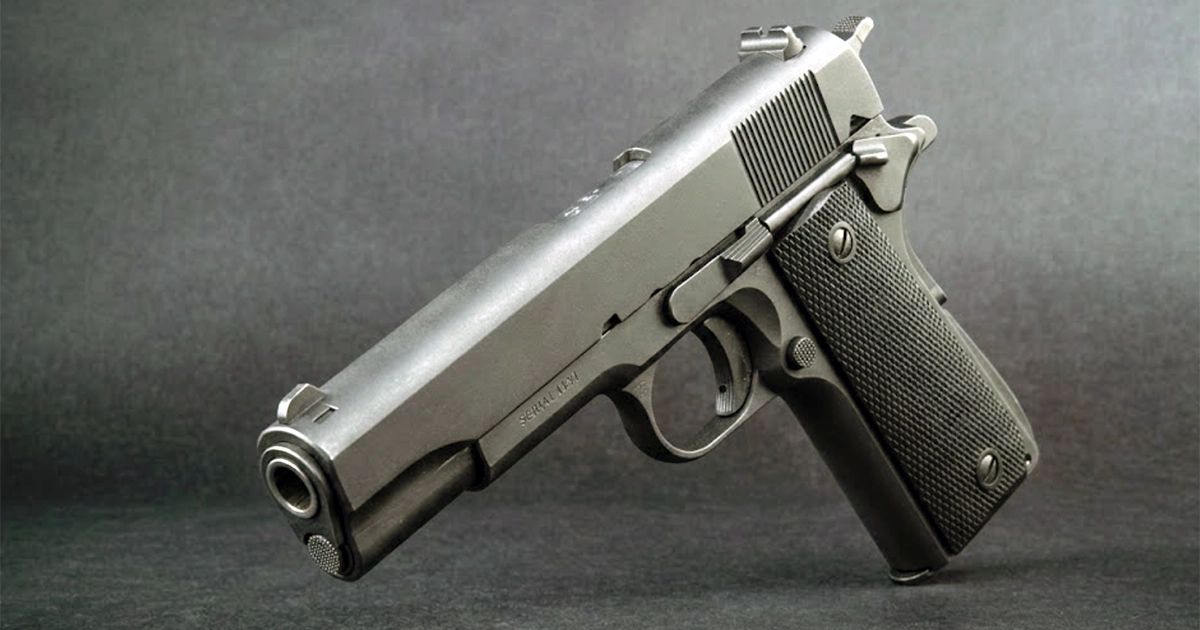
The complaint describes what it calls “the Defect” as three features that, combined, allegedly make the P320 unreasonably dangerous: the pistol is effectively fully energized and ready to fire as soon as a round is chambered; it has a short, light trigger pull; and it lacks an external safety such as a manual thumb safety. The complaint alleges that, as a result, a chambered P320 is functionally equivalent to a cocked gun with no external safety, and it points to news reports and lawsuits describing unintended discharges.The complaint also relies on a 2017 safety-hazard study by Sig Sauer, known as an FMECA, which it alleges identified a risk that, without a manual safety, an unintended discharge could occur. It notes that the military M17 and M18 versions of the pistol include a manual safety while the standard civilian P320 does not. The plaintiff alleges that buyers would not have purchased the pistol, or would have paid substantially less, had the defect been disclosed.
The complaint brings three counts under the Washington Consumer Protection Act — unfair acts or practices, deceptive acts or practices, and a claim for injunctive relief — and seeks actual damages, treble damages under the Act, an order requiring Sig Sauer to disclose or repair the alleged defect, and attorneys’ fees.
Why the Judge Let the Case Proceed
Sig Sauer argued that the alleged defect does not exist — in part because the P320’s trigger guard is an external safety feature — that the plaintiff failed to state a claim under the Washington law, and that he lacked standing to seek an injunction. Judge Robart rejected each argument at the pleading stage. He held that whether the trigger guard prevents trigger movement well enough that the pistol is not defective is a question of fact that cannot be decided on a motion to dismiss.The court also found that the complaint plausibly alleged Sig Sauer had presale knowledge of the alleged defect, noting that the plaintiff bought his pistol more than four years after Sig Sauer completed the 2017 study. It held that the plaintiff adequately pleaded an economic “overpayment” injury and has standing to pursue injunctive relief. The ruling decides only that the case may go forward; it is not a finding that the P320 is defective.
Sig Sauer’s Position
Sig Sauer denies the allegations. In a July 17, 2026 statement, the company said the P320 “cannot under any circumstance discharge without a trigger pull” and that nobody, including experts retained by plaintiffs, “has ever replicated a P320 pistol firing without a trigger pull.” In the same statement it said a federal appeals court ruling that month added to roughly 20 dismissals of P320 cases.Related P320 Class Actions
According to an October 2026 joint filing in the Washington case, it is one of six related proposed class actions brought against Sig Sauer over the P320’s design:- Glasscock v. Sig Sauer, Inc., No. 22-cv-3095 (W.D. Mo.) — the U.S. Court of Appeals for the Eighth Circuit vacated the district court’s class certification order and remanded with instructions to dismiss, and the case was dismissed. Sig Sauer said the appeals court held that a plaintiff “must experience an actual defect” on a product claim.
- Shepherd v. Sig Sauer, Inc., No. 25-cv-2023 (S.D. Ill.)
- Farrell v. Sig Sauer, Inc., No. 25-cv-5701 (E.D.N.Y.)
- Altman v. Sig Sauer, Inc., No. 26-cv-3862 (N.D. Fla.)
- Schnau v. Sig Sauer, Inc., No. 26-cv-274 (N.D. Okla.)
What Happens Next
On the parties’ joint request, the court extended the schedule in October 2026 so the Washington case lines up with the related cases. Fact discovery related to class certification now closes March 31, 2027, initial expert disclosures are due May 14, 2027, and the plaintiff’s motion for class certification is due August 13, 2027, with Sig Sauer’s opposition due October 13, 2027. No trial date has been set. There is no settlement, and nothing to claim.Questions
Who is included in the Sig Sauer P320 class action in Washington?
The complaint proposes a class of all persons who bought a Sig Sauer P320 pistol without an external thumb safety in Washington from November 17, 2021 through the present. No court has certified that class, and the case covers Washington purchases only.
What does the Sig Sauer P320 lawsuit allege?
The complaint alleges that the P320 has a three-part defect: it is effectively fully energized when a round is chambered, it has a short, light trigger pull, and it lacks an external safety such as a manual thumb safety. It alleges Sig Sauer knew of the risk and did not disclose it, so buyers overpaid. These are allegations; Sig Sauer denies them.
Did the court dismiss the Sig Sauer P320 class action?
No. On May 27, 2026, U.S. District Judge James L. Robart denied Sig Sauer’s motion to dismiss, finding the plaintiff had plausibly alleged a defect, presale knowledge and an overpayment injury, and had standing to seek an injunction. That ruling did not decide whether the allegations are true.
What does Sig Sauer say about the P320?
Sig Sauer has said publicly that the P320 cannot under any circumstance discharge without a trigger pull. In court it argued that no defect exists, that the pistol’s trigger guard is an external safety feature, and that it had no presale knowledge of the alleged defect.
Can I get money from the Sig Sauer P320 lawsuit?
Not now. The case is at the discovery stage, no class has been certified, and there is no settlement or claim form. Under the current schedule, the plaintiff’s motion for class certification is due August 13, 2027.
Sources
• Class Action Complaint, Schreiber v. Sig Sauer, Inc., No. 2:25-cv-02303 (W.D. Wash., filed November 17, 2025) — complaint (PDF) and docket (via CourtListener)• Order denying Sig Sauer’s motion to dismiss, Dkt. 31 (May 27, 2026) — order (PDF)
• Stipulated motion and order to modify the scheduling order, Dkt. 44 (October 2026) — filing (PDF) (via CourtListener)
• Sig Sauer via PR Newswire — Federal Court of Appeals Orders Dismissal of P320 Class Action Lawsuit in Unanimous Decision (July 17, 2026)