Owners of about 217,500 RYOBI 40-Volt Brushless 21-inch cordless walk-behind mowers recalled in February 2025 may be covered by a proposed class action alleging TTI sold the mowers while a connector inside the powerhead could overheat and catch fire. No class has been certified and there is nothing to file in the lawsuit, but the recall itself is separate and still offers a free replacement mower.

Allegations Only · No Settlement Yet
This article describes a class action complaint. The statements attributed to it are unproven allegations. TTI has contested them and filed an answer, no court has found the company liable, no class has been certified, and there is nothing to claim in the lawsuit. A recall is a safety action taken with the Consumer Product Safety Commission, not a finding of legal fault. This page is informational and is not legal advice.
What Happened
Two separate things are running at once here, and only one of them is worth a mower owner's time today. On February 6, 2025 the Consumer Product Safety Commission announced a recall of about 217,500 RYOBI 40-Volt Brushless 21-inch cordless walk-behind mowers in the United States, plus roughly 28,400 in Canada, because a push-on connector inside the powerhead can overheat. Anyone with a recalled mower can get a free replacement, and that remedy does not require joining any lawsuit.The lawsuit is the other half. A proposed class action was filed in the Eastern District of Pennsylvania on February 21, 2025, two weeks after the recall. On August 13, 2026 Judge Juan R. Sánchez ruled on the motion to dismiss and cut it down sharply: eight of the ten counts were dismissed with prejudice, leaving only two implied warranty claims. TTI filed its answer on August 28, 2026, so the case is live — but there is no settlement, no certified class and nothing to file.
The Recall: Which Mowers, and What Owners Get
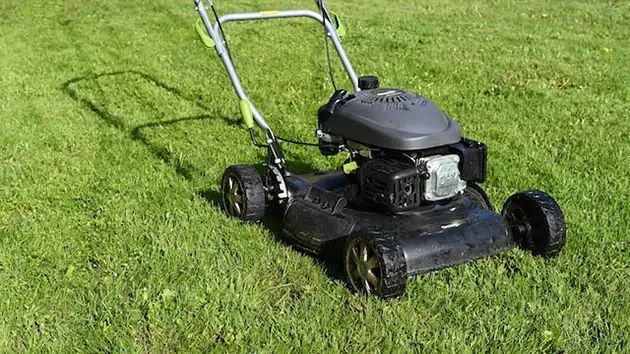
The recall covers ten model numbers of the RYOBI 40-Volt Brushless 21-inch cordless walk-behind mower: RY401014BTLUS, RY401014US, RY401140US, RY401015BTLUS, RY401015US, RY401150US, RY401140US-Y, RY401150US-Y, RY401020 and RY401200. Only units with serial numbers from KC21032D010001 through KC21327N999999 are included, so the model number alone does not settle it. Both numbers are printed inside the green mower housing. The mowers have a black cutting deck with a gray top housing and came with a black bag marked RYOBI.They were sold at Home Depot, at Direct Tools Factory Outlet and online from February 2021 through January 2025. At the time of the recall TTI had received 97 reports of the mower overheating during use, including five fires and two minor burn injuries.
The remedy is a free replacement mower, and getting it involves a step owners do not expect: the recall instructs consumers to stop using the mower, cut the handle wire cable in two places, photograph the cuts along with the serial number, and submit those photos to TTI. Once the submission is verified, a replacement ships. Proof of ownership, such as the serial number or a purchase receipt, is part of the process. Full instructions are on the official CPSC recall notice and on Ryobi's recall and safety page.
Free settlement alerts
Get notified when new class actions open to claims
Join thousands of readers who get the latest class action settlements you may qualify for — delivered straight to your inbox.
What the Lawsuit Claims
The named plaintiff bought one of the recalled mowers from a Home Depot in Baton Rouge, Louisiana, and alleges he experienced overheating and power loss while using it. He still owns the mower. He reports no injury and no damage to anything other than the mower itself, which turns out to matter a great deal to how the case has gone.The complaint pleaded ten counts on behalf of a proposed nationwide class and a Pennsylvania subclass: unjust enrichment, breach of express warranty, breach of implied warranty, breach of the implied warranty of merchantability, fraudulent concealment, strict liability for failure to warn, strict liability design defect, negligent failure to warn, negligent design defect, and negligence. The core allegation across all of them is economic rather than physical — that buyers paid for a mower represented as safe and instead received one carrying a fire risk, and would not have bought it, or would have paid less, had they known.
One housekeeping point from the ruling is worth having straight, because the case caption is misleading. TTI told the court that Ryobi Technologies, Inc. merged into One World Technologies, Inc., now TTI Consumer Power Tools, Inc., which assumed its assets and liabilities. For purposes of this lawsuit the separately named Ryobi entity no longer exists. The court treated the defendants collectively as TTI, a Delaware corporation with its principal place of business in South Carolina.
What the August 2026 Ruling Decided
The motion to dismiss was fully briefed by May 2025, and the ruling came more than a year later, after oral argument on June 30, 2026. It went against TTI on jurisdiction and mostly for TTI on the merits of the pleading.The two implied warranty counts survived. Everything else — unjust enrichment, express warranty, fraudulent concealment, both strict liability counts, both negligence-based defect counts, and general negligence — was dismissed with prejudice, meaning the plaintiff cannot replead them.
The reasons vary by count. The fraudulent concealment claim failed the heightened pleading standard of Rule 9(b): the complaint did not say when, where or how the alleged fraud occurred, and did not even give the date of purchase. The express warranty claim failed because it pointed to no specific stated warranty that induced the purchase, only general marketing. The unjust enrichment claim was precluded because the plaintiff had also pleaded the warranty claim that Louisiana law channels this dispute into. And the negligence and strict liability counts fell away because Louisiana makes its Products Liability Act the exclusive route against a manufacturer, while damage to the product itself and loss of its use are not recoverable under that Act — those belong in a warranty action. Since the plaintiff alleged no harm beyond the mower, there was nothing left for a tort claim to reach.
Why a Pennsylvania Court Applied Louisiana Law
Both sides briefed the case under Pennsylvania law without addressing which state's law governed. The court raised the question on its own, because the answer decided the case.Under Pennsylvania law, a buyer must notify the seller of a breach within a reasonable time or lose the remedy, and courts have read that as a pleading requirement. The plaintiff gave TTI no pre-suit notice, so his warranty claims would have been barred outright. Louisiana never adopted Article 2 of the Uniform Commercial Code, and handles warranty claims through a redhibition action instead. Louisiana does ask a buyer to give notice, but excuses it when the seller already knows about the defect — and the complaint alleges TTI knew about the fire risk. That difference in outcome made it a genuine conflict the court had to resolve.
Resolving it was straightforward. The plaintiff lives in Louisiana, bought the mower in Louisiana, used it there and experienced the malfunction there. No relevant contact occurred in Pennsylvania, so Louisiana had the greater interest and its law applied. The result cut both directions: it rescued the warranty claims that Pennsylvania law would have killed, and it killed the tort claims that Pennsylvania law might have allowed.
The Jurisdiction Ruling Other Defendants Are Watching
The part of the opinion with reach beyond this case has nothing to do with mowers. TTI argued the Pennsylvania court had no personal jurisdiction over it, since it is incorporated in Delaware, headquartered in South Carolina, and the plaintiff's claims arose entirely in Louisiana. The court agreed on general and specific jurisdiction — and still kept the case, because TTI had registered to do business in Pennsylvania, which under Pennsylvania law amounts to consenting to general jurisdiction there. The Supreme Court upheld that scheme against a due process challenge in Mallory v. Norfolk Southern Railway Co. in 2023.TTI's fallback was that the registration statute violates the Dormant Commerce Clause, an argument built almost entirely on Justice Alito's separate opinion in Mallory. The court was blunt about the limits of that source: no other justice joined it, the majority expressly declined to reach the issue, and the concurrence itself said only that there was "a good prospect" of a violation, with its discrimination analysis confined to a single footnote and no evidence about Pennsylvania's statute.
Doing the analysis itself, the court found no discriminatory purpose — every state once had consent-by-registration laws, and at least five still do, so Pennsylvania companies face reciprocal burdens elsewhere — and no proof of a substantial burden on interstate commerce, because TTI submitted no evidence of one. Having to choose between registering and forgoing the ability to sue in Pennsylvania courts, the court said, is an ordinary business decision rather than a constitutional injury. The challenge was rejected without prejudice, and TTI may renew it at summary judgment with an actual factual record.
What Happens Next
With the answer filed on August 28, 2026, the case moves into discovery on the two surviving implied warranty counts. The next real milestone would be a motion for class certification, which has not been filed. Nothing in the public record sets a certification schedule or a trial date, and no settlement has been reported.Two things are worth watching. A case reduced to redhibition claims under Louisiana law is a harder one to certify nationwide, since warranty law varies by state and the choice-of-law reasoning that saved these claims is tied to where this particular plaintiff bought his mower. And TTI's constitutional challenge to Pennsylvania's registration statute is explicitly still open for summary judgment, which is the piece of this docket with implications well beyond lawn equipment.
For a mower owner, none of that changes what to do now: check the model and serial numbers, stop using a recalled unit, and claim the free replacement.
Frequently Asked Questions
Can I file a claim in the Ryobi mower class action?
No. The case is still at the pleading stage, no class has been certified, there is no settlement and there is no claim form. What is available right now is the recall remedy: owners of a recalled mower can get a free replacement from TTI, which is separate from the lawsuit and does not require joining it.
How do I know if my Ryobi mower is recalled?
The recall covers ten model numbers of the RYOBI 40-Volt Brushless 21-inch cordless walk-behind mower with serial numbers from KC21032D010001 through KC21327N999999. Both numbers are printed inside the green mower housing. The mowers were sold at Home Depot, at Direct Tools Factory Outlet and online from February 2021 through January 2025. Check the model and serial against the official recall notice rather than relying on the model name alone.
What did the August 2026 ruling actually decide?
Judge Juan R. Sanchez kept the case in Pennsylvania, rejecting challenges to personal jurisdiction and venue, then held that Louisiana law governs the claims because the named plaintiff bought and used the mower there. Under Louisiana law he dismissed eight of the ten counts with prejudice, leaving only the two implied warranty counts. The ruling decided whether the claims were adequately pleaded, not whether the mowers are defective.
Why does it matter that Louisiana law applies?
It cut both ways. Louisiana never adopted Article 2 of the Uniform Commercial Code, so the pre-suit notice requirement that would have barred the warranty claims under Pennsylvania law did not apply, and those claims survived as a redhibition action. But Louisiana also makes its Products Liability Act the exclusive route against a manufacturer, which eliminated the negligence and strict liability counts outright.
Has Ryobi or TTI been found liable?
No. The allegations in the complaint are unproven, TTI has contested them and filed an answer, and no court has found the company liable. A recall is a safety action taken with the Consumer Product Safety Commission and is not itself a finding of legal fault.
Sources
- U.S. Consumer Product Safety Commission — TTI Outdoor Power Equipment recalls RYOBI battery-powered mowers due to fire hazard, February 6, 2025
- Lilly v. Ryobi Technologies, Inc., No. 2:25-cv-00939, U.S. District Court for the Eastern District of Pennsylvania — Class Action Complaint filed February 21, 2025
- Memorandum and Order on the motion to dismiss, ECF Nos. 33 and 34, entered August 13, 2026 (Judge Juan R. Sánchez)
- Mallory v. Norfolk Southern Railway Co., 600 U.S. 122 (2023)
- Health Canada — Ryobi battery-powered mowers recalled due to potential fire hazard