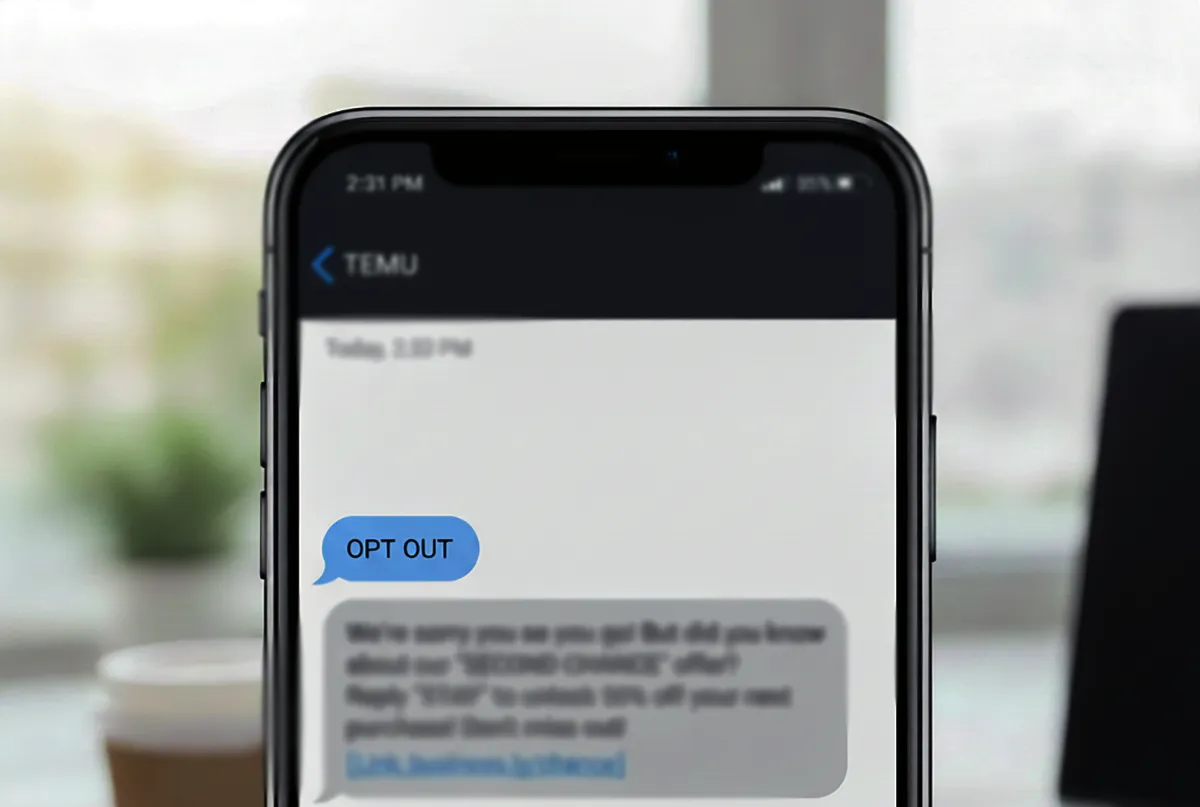
People who received marketing text messages from the clothing retailer Flag & Anthem LLC are the subject of a proposed class action filed in California federal court on November 13, 2026, which alleges the company sent them during the hours federal rules put off limits and to numbers on the National Do Not Call Registry. The allegations are unproven, no class has been certified, and there is nothing to claim.

Allegations Only · No Settlement Yet
This article describes a class action complaint. The statements below are unproven allegations. Flag & Anthem LLC has not been found liable, has not yet responded to the complaint, there is no certified class, and nothing to claim at this time. This page is informational and is not legal advice.
What Is This About?
A proposed class action filed on November 13, 2026 in the U.S. District Court for the Central District of California alleges that the apparel retailer Flag & Anthem LLC ran a marketing text campaign that broke two separate rules under the Telephone Consumer Protection Act. The case is Michael Relph v. Flag & Anthem LLC, No. 8:26-cv-03360. Flag & Anthem is described in the complaint as a Delaware limited liability company authorised to do business in California. It had not responded to the complaint when this page was written.The first claim is about timing. FCC rules bar a telephone solicitation before 8 a.m. or after 9 p.m. in the recipient's own local time, and a separate regulation extends those rules to telemarketing texts sent to wireless numbers. The complaint alleges five texts in December 2025 — on the 1st, 6th, 8th, 12th and 19th — arriving between 6:35 a.m. and 7:45 a.m. Pacific. The second claim is about the National Do Not Call Registry: the complaint says the number had been listed since at least December 2004, and that the company had no signed written agreement permitting the texts and no established business relationship that would exempt them.
Free settlement alerts
Get notified when new class actions open to claims
Join thousands of readers who get the latest class action settlements you may qualify for — delivered straight to your inbox.
Who the Proposed Classes Would Cover
The complaint asks the court to certify two nationwide classes, each reaching back four years from the filing date and running to the date of certification.• The after-hours class: people who received more than one marketing text in any twelve-month period on a wireless number used as a residential line, where at least one of those texts was sent before 8 a.m. or after 9 p.m. in the recipient's local time.
• The Do Not Call class: people who received more than one such text in any twelve-month period on a wireless number used as a residential line that had been listed on the National Do Not Call Registry for at least 30 days before the first text.
The complaint puts the likely size at “at least in the dozens and likely in the hundreds or thousands,” which is an estimate made before any discovery rather than a figure drawn from the company's records. Neither class has been certified, and the complaint reserves the right to change the definitions — so who is ultimately covered, if anyone, is not settled.
Why the Timing Claim Matters
The quiet-hours rule is the less familiar half of the TCPA, and it is the part of this case that could reach the most people. A retailer can have consent to text and still run afoul of it, because the restriction is about when a solicitation is initiated, measured in the recipient's local time rather than the sender's. The complaint also notes that the alleged messages came from a short code, identified the company by name, linked to its website, and did not tell recipients how to opt out.A detail worth noting for anyone following this area: the same plaintiffs' counsel filed a materially similar TCPA complaint against a different retailer in the same district days later, Duran v. Tire Streets LLC, No. 5:26-cv-06996, on November 20, 2026. OCA mentions this as a filing pattern, not as evidence about either defendant.
What Happens Next
Summons was issued on November 19, 2026, so the next step is Flag & Anthem's response — an answer or a motion to dismiss. Early TCPA cases commonly turn on whether the recipient's number counts as a residential line, whether the company can show prior express invitation or permission in a signed writing, whether an established business relationship applies, and whether it can establish the regulatory safe harbour by showing it maintained reasonable practices to avoid texting registry numbers. The complaint anticipates and denies each of those, which is argument rather than proof.Nothing is claimable at this stage and no settlement exists. Plaintiff's counsel is PLG Damage Attorneys; class counsel has not been appointed because no class has been certified.
Questions
Is there anything to claim in the Flag & Anthem lawsuit?
No. The complaint was filed on November 13, 2026 and the case is at its earliest stage: no answer has been filed, no class has been certified, there is no settlement and no claim form exists. Nothing can be claimed, and no court has found that Flag & Anthem did anything wrong.
What does the Flag & Anthem complaint allege?
It alleges two things under the Telephone Consumer Protection Act. First, that Flag & Anthem sent marketing texts outside the hours the FCC's rules allow, which bar a telephone solicitation before 8 a.m. or after 9 p.m. in the recipient's local time. The complaint identifies five texts in December 2025, sent between 6:35 a.m. and 7:45 a.m. Pacific. Second, that it texted a number listed on the National Do Not Call Registry, in this case since at least December 2004. The complaint also says the messages came from a short code, named the company, linked to its website and did not tell recipients how to opt out.
Who would the Flag & Anthem classes cover?
The complaint proposes two nationwide classes, each reaching back four years from filing. The after-hours class covers people who got more than one marketing text in any twelve-month period on a wireless number used as a residential line, where at least one arrived before 8 a.m. or after 9 p.m. local time. The Do Not Call class covers people who got more than one such text in a twelve-month period on a number that had been on the registry for at least 30 days. Neither class has been certified, and the proposed definitions can change.
How much does the TCPA allow for an illegal text?
The statute the complaint relies on allows a person who received more than one call in a twelve-month period in violation of the rules to recover actual monetary loss or up to $500 for each violation, whichever is greater, and permits a court to treble that for a willful or knowing violation. Those are the statutory ceilings, not an amount anyone in this case has been awarded or offered.
Do the TCPA quiet hours apply to text messages?
The complaint's position is yes. It points to the FCC rule barring a telephone solicitation before 8 a.m. or after 9 p.m. local time, to the regulation extending those rules to telemarketing texts sent to wireless numbers, and to the Supreme Court's observation in Campbell-Ewald Co. v. Gomez that a text message counts as a call. Whether that reading applies to these facts is for the court, which has not ruled.
Sources
• Michael Relph v. Flag & Anthem LLC, No. 8:26-cv-03360 (U.S. District Court, Central District of California), Class Action Complaint, Dkt. 1, filed November 13, 2026• Docket, Relph v. Flag & Anthem LLC, No. 8:26-cv-03360 (C.D. Cal.) — summons issued November 19, 2026
• 47 U.S.C. § 227(c); 47 C.F.R. § 64.1200(c)(1), (c)(2) and (e)