People who paid Digital Forensics Corp. for help with a sextortion attack between February 2023 and July 2026 are at the center of a Federal Trade Commission lawsuit, announced October 13, 2026, alleging the Ohio company and its owner, Dmitry Belkin, misled victims into paying at least $60 million for tracking, reporting and monitoring services they did not perform. A federal judge temporarily halted the business; there is no refund program or claim process yet.

Allegations Only · No Settlement Yet
This article describes a lawsuit filed by the Federal Trade Commission. The statements below are unproven allegations. Digital Forensics Corporation and the other defendants have not been found liable, and there is no refund program or claim process. This page is informational and is not legal advice.
What Is the FTC’s Case Against Digital Forensics Corp.?
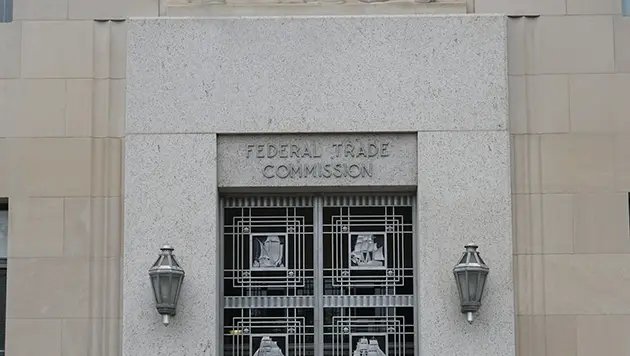
The Federal Trade Commission filed its complaint under seal on October 6, 2026 in the U.S. District Court for the Northern District of Ohio, Case No. 1:26-cv-02615, assigned to Judge Patricia A. Gaughan. The FTC announced the case on October 13, 2026, when the complaint was unsealed. The Commission voted 2-0 to authorize it.The defendants are Digital Forensics Corporation, LLC, a Warrensville Heights, Ohio company; its founder and owner, Dmitry Belkin; and 11 affiliated companies: 1st All Data Recovery LLC, 1st All File Recovery USA, Inc., I & D Belkin LLC, Remote Backup Corp, LLC, Digital Cyber Forensics Investigations LLC, Cyber Digital Forensics Response LLC, 1st All Investments, LLC, Salon Place LLC, VPR Academy LLC, 21111 Chagrin Investments LLC and 4350 Renaissance LLC. Some did business under names including Digital Forensics Corp, Digital Investigation, Cyber Blackmail 911 and Cyber Investigation. The FTC’s consumer alert says the company operates BlackmailHelpline.com, DigitalForensics.com, CyberBlackmail911.com and SecurityBreach911.com.
Free settlement alerts
Get notified when new class actions open to claims
Join thousands of readers who get the latest class action settlements you may qualify for — delivered straight to your inbox.
What Does the FTC Allege?
According to the complaint, people facing sextortion, where a criminal threatens to publish a nude or sexual image unless the victim pays, often searched online for help and found the defendants’ ads and websites. The FTC alleges sales staff followed scripts built around each victim’s fears, telling servicemembers they could face a dishonorable discharge, married victims that the criminal would target their spouse and in-laws, and divorcing victims that they could lose custody or visitation. It alleges the company told victims that law enforcement would not help and that blocking the sextortionist was “the last thing you want to do,” although the FBI has long recommended blocking and ignoring them.Victims were sold a “Phase 1” package priced from $1,499 to $20,000 that, according to the FTC, was supposed to stop the attack, take over communications with the criminal, trace the criminal’s location through a “tracking campaign,” produce an investigative report, send a cease-and-desist letter and report the crime to law enforcement. The complaint alleges the company instead usually changed the victim’s account settings to block the sextortionist, fabricated chat transcripts, pasted pre-saved map coordinates, often for Nigeria or the Philippines, into reports presented as real results, and did not contact law enforcement. It alleges nearly every customer was then pressured to buy a “Phase 2” monitoring service costing thousands of dollars more, which the FTC says was not performed either.
The FTC also alleges the company refused refunds its own contracts promised, steered unhappy customers to a fake Better Business Bureau website it controlled, conditioned partial refunds on non-disparagement agreements, and bought fake positive reviews, including by paying Uber drivers to post fabricated testimonials with staged photos. According to the FTC, employees in India also wrote fake reviews. The complaint says hundreds of consumers have complained and that the defendants took in at least $60 million from February 2023 to July 2026.
The six counts allege violations of Section 5 of the FTC Act, the Telemarketing Sales Rule, the Gramm-Leach-Bliley Act’s ban on obtaining financial account information through false statements, and the FTC’s Rule on the Use of Consumer Reviews and Testimonials. These are allegations; no court has ruled on them.
What the Court Order Does
The FTC asked the court for an ex parte temporary restraining order with an asset freeze, the appointment of a temporary receiver, immediate access to the defendants’ business premises, and an order requiring the defendants to show cause why a preliminary injunction should not issue. A federal judge granted the FTC’s request to temporarily halt the activities of Digital Forensics Corporation and Belkin, according to the FTC, and USA TODAY reported that the order also temporarily freezes the company’s assets. USA TODAY reported that the company’s attorneys said in a court filing that they will oppose the restraining order and the appointment of a receiver.Digital Forensics Corporation did not respond to requests for comment from USA TODAY or News 5 Cleveland. USA TODAY, which reported on the company’s sales practices in 2025, said the company had previously defended its sales tactics and pointed to positive customer reviews.
Could Customers Get Money Back?
The complaint asks the court for a permanent injunction and for monetary and other relief. Section 19 of the FTC Act lets a court order the refund of money to consumers injured by violations of FTC rules such as the Telemarketing Sales Rule. Any money would come only from a court judgment or a settlement, and there is no refund program, claim form or deadline as of October 20, 2026. When the FTC does run a refund program, it announces it on its refunds page, and the agency says it never requires people to pay money or provide account information to receive a refund. OCA’s coverage of the Trend Deploy refunds shows how a recent FTC refund program was paid out.Where the FTC Points Sextortion Victims
In a consumer alert published with the lawsuit, the FTC points victims to free help from local police and the FBI, the National Center for Missing & Exploited Children’s CyberTipline when a minor is involved, and the online platform where an image appears. Under the federal TAKE IT DOWN Act, covered platforms must remove nonconsensual intimate images within 48 hours of a victim’s request, and the FTC takes reports at TakeItDown.ftc.gov about platforms that do not comply.Questions
What is the FTC’s lawsuit against Digital Forensics Corp. about?
The FTC alleges Digital Forensics Corporation, owner Dmitry Belkin and 11 affiliated companies misled sextortion victims into paying $1,499 to $20,000 for tracking, reporting and monitoring services they did not perform, refused promised refunds and faked online reviews, taking in at least $60 million from February 2023 to July 2026. These are allegations; no court has ruled on them.
Can people who paid Digital Forensics Corp. get a refund?
Not now. The FTC is asking the court for monetary relief, but money would come only from a judgment or settlement, and there is no refund program or claim form as of October 20, 2026. The FTC announces refund programs on its refunds page and says it never requires payment or account information to send a refund.
What did the court order in the Digital Forensics Corp. case?
A federal judge in the Northern District of Ohio granted the FTC’s request for a temporary restraining order that temporarily halts the activities of Digital Forensics Corporation and Dmitry Belkin. USA TODAY reported the order also temporarily freezes the company’s assets. The company’s attorneys have said they will oppose the order.
Where does the FTC point sextortion victims for free help?
The FTC’s October 13, 2026 consumer alert points victims to local police, the FBI, the National Center for Missing and Exploited Children’s CyberTipline for cases involving minors, and the platform hosting an image, which under the TAKE IT DOWN Act must remove nonconsensual intimate images within 48 hours of a request.
Sources
• FTC press release (October 13, 2026) and case page, FTC Matter No. 252-3163• Complaint and memorandum in support of the motion for a temporary restraining order, FTC v. Digital Forensics Corporation, LLC et al., No. 1:26-cv-02615 (N.D. Ohio)
• FTC consumer alert, “How to avoid deceptive sextortion assistance services and find real help” (October 13, 2026)
• USA TODAY, “Young men were sextorted. Feds shut down Ohio firm exposed by USA TODAY” (October 14, 2026), and News 5 Cleveland