Maryland is the first state to make it illegal for a grocer to charge you more than the shopper next to you because of what it knows about you. The Protection From Predatory Pricing Act takes effect October 1, 2026 — and the exemption for loyalty card pricing is where most of the argument is.

What Maryland Just Did
Governor Wes Moore signed House Bill 895, the Protection From Predatory Pricing Act, on April 28, 2026. It becomes enforceable on October 1, 2026, and it makes Maryland the first state in the country to prohibit surveillance pricing outright in a specific sector rather than merely require it be disclosed.The prohibition is narrow by design. Food retailers and grocery delivery services may not use a consumer's personal data to set a higher food price for that individual. "Personal data" is defined broadly — information linked or reasonably linkable to an identified or identifiable consumer, excluding de-identified and publicly available data — so browsing history, app behavior, location and inferred household details all sit inside the definition.
What Surveillance Pricing Looks Like in a Grocery Aisle
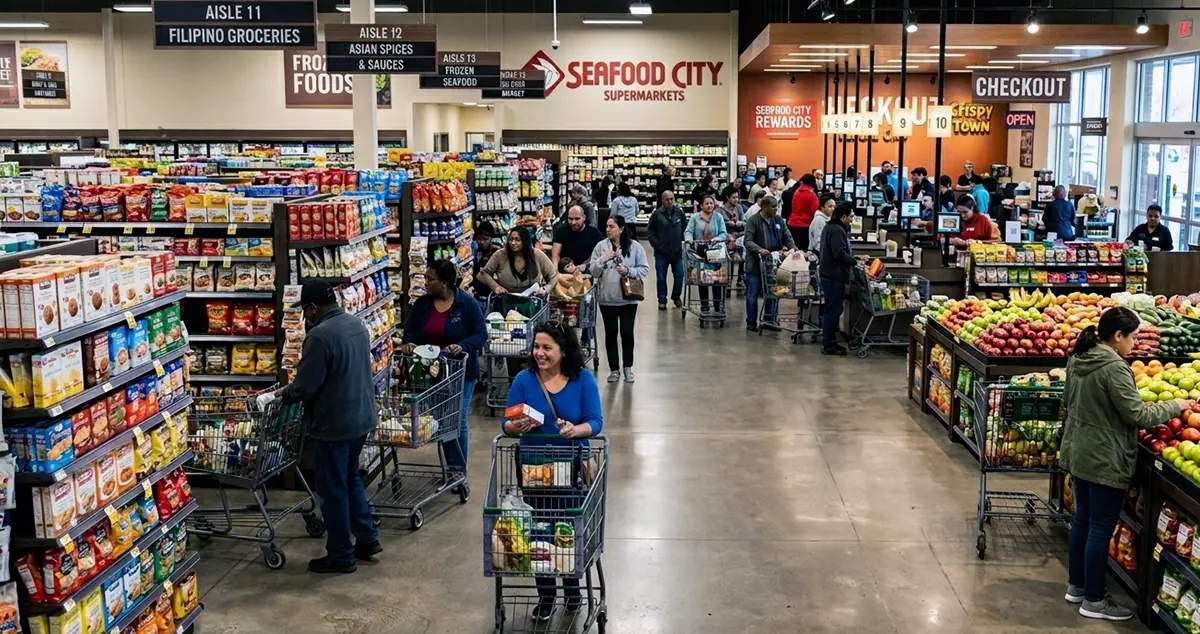
The practice is easier to picture in a store than in the abstract. A shopper picks up a loaf of bread and the price shown on a shelf display or in the retailer's app is not the store's price for that loaf — it is the store's price for that loaf for that shopper, calculated from their purchase history, location data, search behavior or other online activity.That is different from the price movement everyone already accepts. A weekly circular, a seasonal produce swing, a clearance sticker on something near its date — those move for every customer at the same time. Surveillance pricing moves for one customer, and the person behind them in line never sees it happen. Maryland's law is aimed squarely at the second category.
The Maryland statute is also specifically about being charged more. It targets the use of personal data to set higher prices for individuals, which is a narrower target than the outright prohibition on customized pricing that Connecticut enacted weeks later.
Free settlement alerts
Get notified when new class actions open to claims
Join thousands of readers who get the latest class action settlements you may qualify for — delivered straight to your inbox.
Who Is Covered, and Who Slipped Through
The act reaches business establishments of at least 15,000 square feet that sell groceries on the premises, plus services that deliver groceries to consumers. That captures the supermarket chains and the delivery platforms, and it deliberately leaves out a great deal:• Grocery sellers under the square-footage threshold — corner stores, bodegas, specialty food shops.
• Every non-food retailer in Maryland. Clothing, electronics, travel, tickets and subscriptions are all untouched.
• Loyalty and membership program pricing, which is exempt even where the loyalty price is the higher one.
• Subscription pricing and pricing tied to a subscription service.
That fourth category is the one privacy analysts have flagged hardest, and the criticism is not hard to follow: a loyalty card is one of the primary instruments through which a grocer collects individual shopping data in the first place. Writing loyalty pricing out of a law about individualized pricing leaves a wide lane open. The International Association of Privacy Professionals characterized these carve-outs as loopholes in the statute.
Supporters would answer that a loyalty discount is a bargain the shopper knowingly opts into, which is the distinction the retail industry has pressed in every state where these bills have moved. Whether the exemption swallows the rule is something the Attorney General's enforcement record after October will actually answer.
Nobody Gets to Sue Over It
This is the part that matters most for anyone hoping the law creates a payout. It does not.Enforcement runs exclusively through the Consumer Protection Division of the Maryland Attorney General's Office. The statute contains no private right of action, meaning it does not authorize an individual shopper to file their own lawsuit for a violation. It also builds in a 45-day cure period, giving a business an opportunity to fix a violation before enforcement proceeds.
Penalties run up to $10,000 per violation and as much as $25,000 per violation for repeat violators — real money, but money that goes to the state rather than to shoppers. There is no fund, no claim form and no class here. A Marylander who believes a grocer is pricing from their personal data reports it to the Consumer Protection Division; that is the mechanism the legislature built. Our explainer on what a private right of action is and why these pricing laws keep leaving it out covers why that drafting choice is so consistent across states.
Why Groceries Went First
Every state considering these bills faced the same industry argument: personalized pricing is indistinguishable from ordinary marketing, and banning it breaks loyalty discounts. Maryland's answer was to pick the one category where that argument lands weakest.Food is non-discretionary, purchased weekly, and bought by everyone. A shopper cannot comparison-shop their way out of a grocery bill the way they can walk away from an overpriced flight. Legislators also had a concrete national example to point at: a December 2025 investigation by Consumer Reports, the Groundwork Collaborative and More Perfect Union reported that Instacart shoppers were being shown different prices for identical items from the same store at the same time — as much as 23 percent apart. The Federal Trade Commission opened an investigation, and Instacart subsequently ended the pricing experiments and has said it complies with applicable law.
Narrowing a bill to groceries is also how it passes. A sector-specific statute gives the rest of the retail lobby less reason to fight, which is the same calculation other states are now making in reverse as they draft broader versions.
What Changes for Maryland Shoppers on October 1
Practically, less than the headline suggests — and that is worth being honest about.Nothing in the law requires a grocer to tell you what the unpersonalized price would have been, and Maryland did not adopt a New York–style disclosure label, so there is no on-screen warning to look for. Loyalty pricing continues exactly as before. The change is a prohibition enforced by a state agency, which means its effect on your grocery bill depends entirely on whether that agency looks and what it finds.
What a shopper can usefully do is unchanged from before the law: compare the same item logged out or on another device, check the shelf price against the app price, and keep a screenshot if the two do not match. That record is what a Consumer Protection Division complaint runs on.
Frequently Asked Questions
When does Maryland's surveillance pricing ban take effect?
October 1, 2026. Governor Wes Moore signed House Bill 895, the Protection From Predatory Pricing Act, on April 28, 2026, and the law becomes enforceable on October 1, 2026.
Which stores does the Maryland law cover?
Business establishments of at least 15,000 square feet that sell groceries on the premises, plus services that deliver groceries to consumers. A small corner store or specialty food shop below that square footage is outside the law, and so is every non-food retailer in the state.
Can I sue a grocery store under this law?
No. The Protection From Predatory Pricing Act is enforced by the Consumer Protection Division of the Maryland Attorney General's Office and contains no private right of action, so an individual shopper cannot file suit under it. The statute also gives a business a 45-day period to cure a violation. Reporting a suspected violation to the Consumer Protection Division is the route available to consumers.
Does the law cover loyalty card prices?
No, and this is the most significant limit in the statute. Pricing associated with a loyalty or membership program is exempt, as is pricing tied to a subscription. Privacy analysts have described these carve-outs as loopholes, because loyalty programs are one of the primary ways grocers collect the individual shopping data that personalized pricing runs on.
What are the penalties for a violation?
Up to $10,000 per violation, rising to as much as $25,000 per violation for a repeat violator. Those penalties are recovered by the state, not paid to individual shoppers.
Does the ban stop prices from changing at all?
No. It targets individualized pricing built from a specific shopper's personal data. Prices that move for everyone at once, such as a weekly sale, a seasonal produce swing, or a supply-driven increase, are not what the statute addresses.
Sources
• Maryland General Assembly — House Bill 895 (enrolled text)• Maryland HB 895 — bill history, 2026 Regular Session
• Skadden — Maryland becomes the first state to restrict surveillance pricing in the food industry
• IAPP — Maryland enacts a first-of-its-kind surveillance pricing law, but there are loopholes
• Consumer Reports & Groundwork Collaborative — Instacart pricing investigation (Dec. 2025)
• Stateline — States begin banning surveillance pricing (Aug. 4, 2026)