Mackinac Island ferry riders, residents and businesses are at the center of an antitrust lawsuit Michigan Attorney General Dana Nessel filed on November 12, 2026, alleging the Hoffmann Family of Companies illegally monopolized ferry service to the island and nearby dock parking. The state is seeking divestiture and damages; there is no settlement and nothing for riders to file.

Allegations Only · No Settlement Yet
This article describes a lawsuit filed by the State of Michigan. The statements below are unproven allegations. The Hoffmann companies deny violating antitrust law and have not been found liable, there is no class action or settlement, and there is nothing to claim at this time. This page is informational and is not legal advice.
What Is This About?
Michigan Attorney General Dana Nessel sued the Hoffmann Family of Companies and eight related businesses on November 12, 2026, alleging they used a string of acquisitions to take control of every passenger ferry line serving Mackinac Island and most of the long-term parking near the mainland ferry docks. The case, State of Michigan ex rel. Dana Nessel v. Hoffmann Family of Companies, et al., No. 2026-5609-CB, was filed in the 30th Circuit Court for Ingham County and assigned to Judge James S. Jamo.The state brings three counts under Michigan law: an agreement in restraint of trade and monopolization, both under the Michigan Antitrust Reform Act, and unjust enrichment. It sues on its own behalf and on behalf of Michigan residents. Hoffmann says it is not violating state or federal antitrust laws and will defend the case in court.
Free settlement alerts
Get notified when new class actions open to claims
Join thousands of readers who get the latest class action settlements you may qualify for — delivered straight to your inbox.
How Hoffmann Came to Own Every Ferry Line
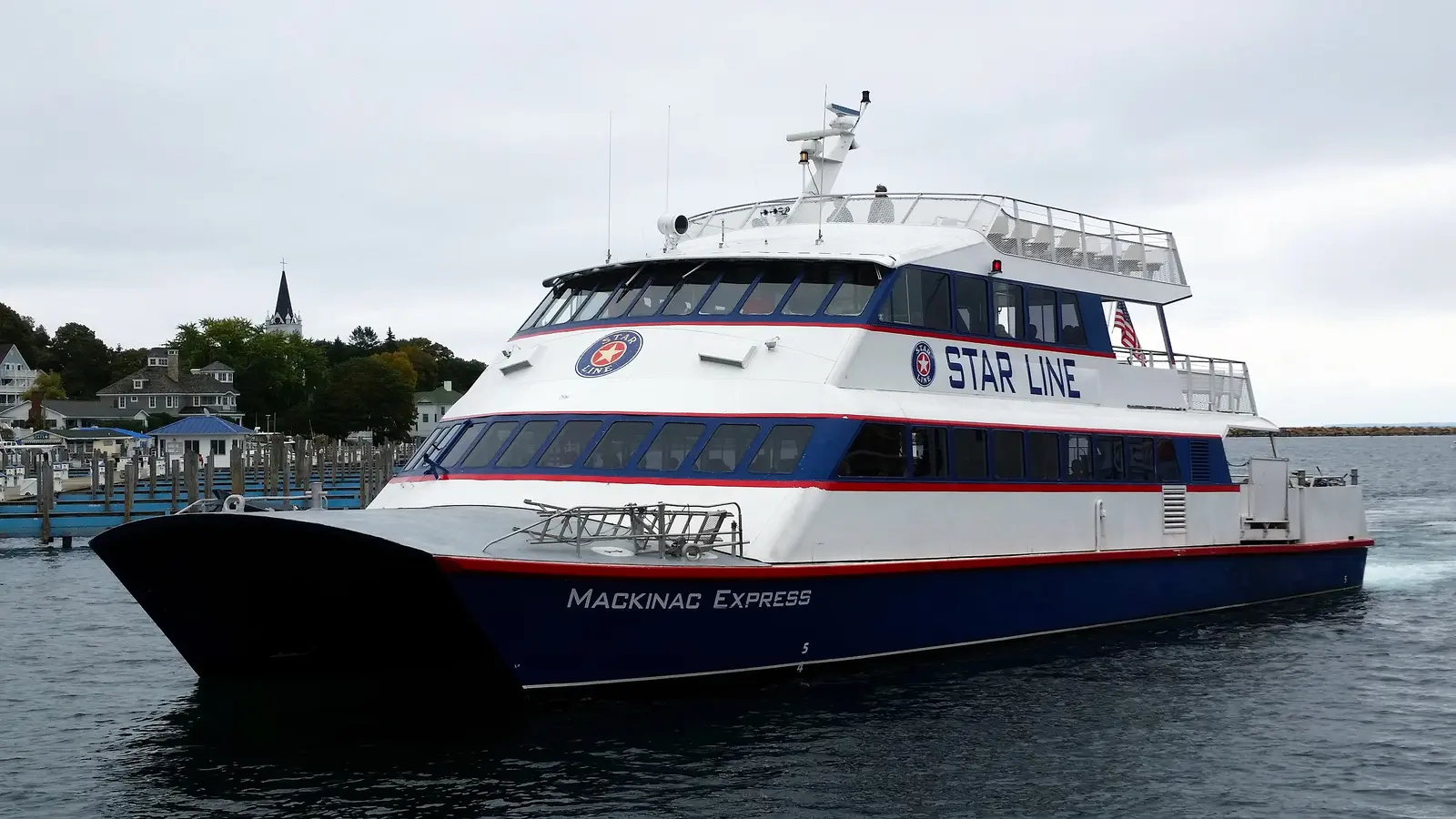
Passenger ferries are the main way the island’s visitors, an estimated 1.2 million a year according to the complaint, and many of its workers reach Mackinac Island, where cars are banned. Three companies once competed on the crossings from Mackinaw City and St. Ignace. According to the complaint, Star Line bought the assets of the Arnold line in 2016 and later renamed itself Mackinac Island Ferry Company. Hoffmann took a controlling stake in Shepler’s in March 2022, which the state says gave it 54% of the market, and acquired Mackinac Island Ferry Company in June 2024. That company now operates as Arnold Transit.The state alleges the 2024 deal left Hoffmann with all of the passenger ferry service to the island, every dock on the island and the mainland that can serve passenger ferries, and roughly 80% of long-term parking near the mainland terminals. The complaint says a Hoffmann executive told a newspaper after the deal that pricing would “stay the same.”
What the State Alleges About Prices and Service
The complaint describes a series of increases after the 2024 acquisition. According to the state:- Fares: adult round-trip fares rose from $36 to $39 on Shepler’s and from $34 to $37 on Arnold, including a $2 increase the City of Mackinac Island had rejected and a further $1 increase announced in April 2026.
- New fees: Arnold added a $3 fee on online tickets, and Shepler’s added a 3% credit-card surcharge that was later replaced by a $2 per-ticket booking fee.
- Day parking: once free, it now costs $15 a day at Shepler’s and $10 a day at Arnold.
- Overnight parking: Arnold’s dockside overnight parking rose from $30 to $80 a night, a 167% increase, and its valet dockside parking from $50 to $130. Shepler’s standard overnight parking rose from $20 to $25.
- Service: Hoffmann allegedly pulled boats from the former Star Line fleet and ended that line’s Mackinaw City service in August 2024.
What Michigan Is Asking the Court to Do
The state asks the court to declare that the conduct violates the Michigan Antitrust Reform Act and to order whatever structural relief is needed to restore competition, including divestiture of Mackinac Island Ferry Company. It also seeks an injunction, treble damages on behalf of Michigan residents and businesses, civil penalties, disgorgement and restitution of what it calls unjust enrichment, plus costs and fees. The amounts would be set at trial, and the state has demanded a jury.This is not a class action. Any money recovered would come through the state’s case, and the complaint does not describe how it would reach individual riders. There is no settlement, fund, administrator or claim form.
The Fight Between the Ferries and the City
The lawsuit follows a long dispute between Hoffmann’s ferry lines and the City of Mackinac Island, which grants the ferry franchises. The ferry lines sued the city in federal court in 2025, and Hoffmann says that court has twice rejected antitrust claims the city brought against them. The state’s case is separate: it is brought by the attorney general in state court under Michigan law. The complaint states there is no other pending or resolved case arising from the same transactions.What Happens Next?
The defendants will respond to the complaint in Ingham County Circuit Court, and the state says the case qualifies for the court’s business docket. A state antitrust case seeking divestiture typically moves through motions and discovery before any trial, and it could also be resolved by agreement. Nessel leaves office in January 2027; her successor would take over the state’s side of the case. The 2027 ferry season and the June 30, 2027 franchise expiration fall within that same window.Questions
Can Mackinac Island ferry riders get money from the Michigan lawsuit?
Not at this stage. The lawsuit is brought by the State of Michigan, not by a class of riders, and there is no settlement, fund or claim form. The complaint asks for treble damages on behalf of Michigan residents and businesses and for restitution, in amounts to be determined at trial, but no court has awarded anything and no process for riders exists.
Who did Michigan sue over the Mackinac Island ferries?
The defendants are the Hoffmann Family of Companies and eight related entities: Hoffmann Marine, Hoffmann Shepler’s Ferry Service LLC, Hoffmann Star Line LLC, Shepler’s, Inc. (Shepler’s Mackinac Island Ferry), Osprey Capital, LLC, Osprey Holdings, LLC, Mackinac Island Ferry Company (doing business as Arnold Transit Company) and Hoffmann Commercial Real Estate.
What does Michigan want the court to do?
The complaint asks the court to declare that the conduct violates the Michigan Antitrust Reform Act, to order structural relief to restore competition, including divestiture of the Mackinac Island Ferry Company, to bar the conduct going forward, and to award treble damages on behalf of Michigan residents and businesses, civil penalties, disgorgement and restitution. The state also demands a jury trial.
Will Mackinac Island ferries run in 2027?
The lawsuit does not change ferry schedules. According to the complaint, both Hoffmann lines’ franchise agreements with the City of Mackinac Island expire June 30, 2027, and April 2026 letters from the lines said each reserved the right to stop operating for the 2027 season without a contract extension on terms it found acceptable. Hoffmann says its goal is a contract extension that keeps service running.
How has Hoffmann responded?
Hoffmann has said it is reviewing the lawsuit, will respond in court and is confident it will prevail because it is not violating state or federal antitrust laws. It has also pointed out that a federal court twice rejected antitrust claims the City of Mackinac Island brought against its ferry lines.
Sources
- Michigan Attorney General press release: AG Nessel Sues Hoffmann Companies for Monopoly over Mackinac Island Ferry Service (Nov. 12, 2026)
- Complaint, State of Michigan ex rel. Dana Nessel v. Hoffmann Family of Companies, et al., No. 2026-5609-CB (Ingham Cty. Cir. Ct.)
- Interlochen Public Radio: Michigan sues Mackinac Island ferry operator, claims it’s a monopoly (Nov. 15, 2026)
- The Detroit News (via Yahoo News): Nessel lawsuit seeks end to Mackinac Island ferry monopoly (Nov. 12, 2026)