Farmers, applicators, and others who worked around Paraquat weed killer and later developed Parkinson's disease have sued the herbicide's manufacturers, with the federal cases consolidated in MDL 3004 in southern Illinois. This page explains what the lawsuits allege, the science behind them, and who has been bringing claims.

Allegations Only · No Settlement Yet
This page describes ongoing litigation. The statements below are unproven allegations. No manufacturer has been found liable, no nationwide Paraquat settlement has been finalized, and eligibility depends on the facts of each case. This page is informational and is not legal or medical advice.
Attention: Paraquat Herbicide Users
Paraquat has been a workhorse weed killer on farms, orchards, and plantations for decades. Now it is at the center of lawsuits claiming that long term exposure to this herbicide may increase the risk of Parkinson's disease and other serious health problems.If you or a loved one used or worked around Paraquat and later developed Parkinson's disease, you may be able to pursue a financial recovery for medical bills, lost income, and other losses.
You may qualify for a Paraquat claim if:
• You used, mixed, or sprayed Paraquat containing products such as Gramoxone, Firestorm, or Parazone after 1964
• You lived or worked near fields where Paraquat was applied, including rural communities and farm housing
• You were later diagnosed with Parkinson's disease, Parkinsonism, or had symptoms like tremor, slow movement, stiffness, or balance problems.
What a Claim Involves
Exposure and diagnosisThe threshold questions are work history, exposure to the weed killer, and a medical diagnosis — where and when Paraquat was used, and when Parkinson's disease or Parkinsonism was diagnosed.
An attorney of your own choosing
There is no claim form for this litigation and nothing to file here. Claims are brought as individual lawsuits by a law firm that handles Paraquat cases and is licensed in the relevant state.
Potential compensation
Successful Paraquat lawsuits may recover compensation for medical treatment, home care, lost wages, reduced earning ability, and pain and suffering for families affected by Parkinson's disease. Outcomes vary and nothing is guaranteed.
Free settlement alerts
Get notified when new class actions open to claims
Join thousands of readers who get the latest class action settlements you may qualify for — delivered straight to your inbox.
What is Paraquat weed killer?
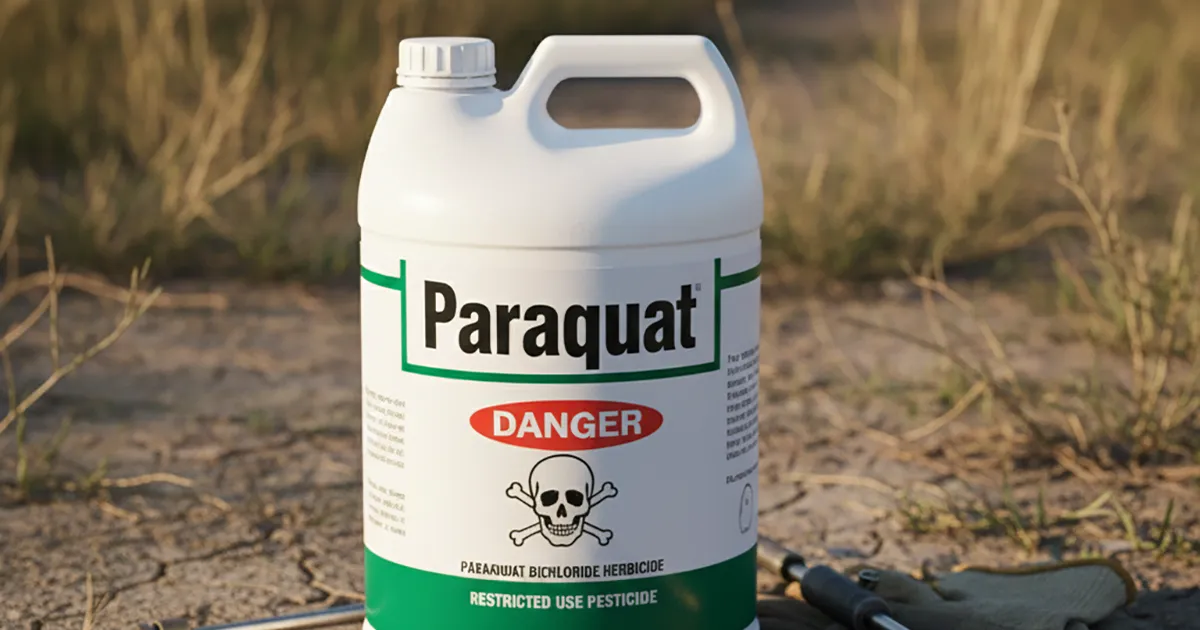
Paraquat is a fast acting, non selective herbicide. In simple terms, it kills most green plants it touches. It has been used since the 1960s to control weeds in crops such as corn, soybeans, cotton, and other row crops, as well as orchards, vineyards, and plantations.Because Paraquat is extremely toxic, the product is restricted to trained and certified applicators in the United States. Even small swallowing or high dose inhalation can be fatal. Liquid Paraquat is often dyed blue and given a strong odor so it is not mistaken for water or soft drinks, yet accidental and intentional poisonings have still occurred.
Why Paraquat weed killer is under scrutiny
Paraquat has long carried warnings about acute poisoning, but the lawsuits and recent public concern focus on long term, low dose exposure as well. People who regularly mixed, sprayed, cleaned tanks, or worked in fields treated with Paraquat may have been breathing in tiny droplets or contacting residues on crops, soil, or equipment over many years.Researchers and regulators have raised concerns that Paraquat may harm specific cells that are especially vulnerable in Parkinson's disease. Families who have watched a loved one go from healthy and active to struggling with tremors and mobility issues are now asking whether years of weed killer exposure contributed to their condition.
Studies linking Paraquat to Parkinson's disease
Farming and Movement Evaluation (FAME) studyIn 2011, a government backed research project known as the Farming and Movement Evaluation study looked at licensed pesticide applicators and farming communities. The study reported that people who used Paraquat had more than double the risk of Parkinson's disease compared to those who did not use this herbicide.
It was not just a small difference. The association suggested that repeated Paraquat exposure over time could significantly raise the odds of developing Parkinson's symptoms.
Genetic susceptibility and higher risk
Later research examined how Paraquat might affect people with certain gene variations related to the way the body handles toxic stress. One study found that individuals who carried specific genetic changes and were exposed to Paraquat had a much higher risk of Parkinson's disease, many times greater than people without that combination of genes and exposure.
Cell level damage that resembles Parkinson's
Lab research suggests that Paraquat can disrupt how cells use oxygen and handle reactive molecules inside the body. This process can lead to oxidative stress and cell death in ways that resemble the damage seen in the brains of people with Parkinson's disease. Lawsuits rely on this type of scientific evidence to argue that Paraquat is not just a short term poisoning risk, but also a long term neurological hazard.
Global concern, bans, and restrictions
Paraquat has been banned or heavily restricted in many countries because of its toxicity. Some regions have reported large numbers of deaths from Paraquat poisoning, including cases where the herbicide was stored in unmarked bottles or mixed with other chemicals without proper training or safety equipment.Health advocates and labor groups have pushed for a worldwide ban, arguing that the conditions in which Paraquat is often used make it difficult to handle safely, especially in rural communities and low income areas. Critics say that when farmers are not given training, protective gear, and clear labels, poisoning and long term harm are more likely.
Even in places where Paraquat remains legal, regulators have imposed tighter controls, such as limiting who can purchase it, requiring warning labels, and restricting the way it is stored, mixed, and sprayed. Lawsuits in the United States claim that these steps came too late for many workers and families already living with Parkinson's disease.
Paraquat lawsuits and what they claim
Paraquat Parkinson's lawsuits generally claim that:• Manufacturers knew or should have known that Paraquat exposure could increase the risk of Parkinson's disease
• Warnings on the label were not strong enough, or did not explain the long term neurological risks
• Safer alternative designs or herbicides existed, but Paraquat continued to be sold without adequate protections
• Farmers, applicators, and rural communities were not fully informed about the dangers they faced
People filing lawsuits are seeking compensation for medical care, long term disability, lost wages, and the impact that Parkinson's has on everyday life. Surviving family members may bring claims on behalf of loved ones who passed away.
Who may qualify for a Paraquat claim
Direct applicators and mixersPeople who mixed, loaded, or sprayed Paraquat as part of their job, such as licensed applicators, farm workers, and groundskeepers, are among the most likely to qualify. They often handled concentrated product, cleaned tanks, or repaired spraying equipment.
Farmers and ranchers
Owners and operators of farms or ranches who regularly used Paraquat to control weeds in fields, orchards, or pastures may meet exposure criteria, especially if they handled the product themselves and now live with Parkinson's disease.
Workers on Paraquat treated land
People who did not spray Paraquat directly but worked in fields where it was applied, harvested crops, pruned vines, or maintained irrigation in treated areas may also have significant exposure, especially over many seasons.
Rural residents living near treated fields
Some lawsuits and research also look at residents who lived near fields where Paraquat was sprayed and who may have inhaled drift or contacted residues over time. Case reviews typically consider addresses, time periods, and wind patterns when evaluating these claims.
Medical and exposure evidence lawyers look for
Paraquat lawsuits are evidence driven. Helpful documentation can include:• Medical records confirming a diagnosis of Parkinson's disease or related disorders
• Notes from neurologists describing tremor, rigidity, slowness of movement, and balance problems
• Work history showing job titles, employers, and duties involving herbicide use
• Product names and photos of containers such as Gramoxone, Firestorm, or other Paraquat formulations
• Co worker or family statements describing spraying practices and protective gear used, or not used
• Any training materials, safety data sheets, or pesticide licenses kept over the years
The more specific the information about where, when, and how Paraquat was used, the easier it is for a legal team to match it with known products, manufacturers, and time frames in existing litigation.
Typical steps in a Paraquat Parkinson's claim
Initial consultationA law firm goes over the diagnosis, symptoms, work history, and herbicide use to see whether the account fits known exposure patterns.
Detailed interview
If the case appears to fit, the firm may schedule a longer conversation to go over medical history, job duties, and where the person lived and worked when Paraquat was used. Family members often participate to help fill in details.
Record collection
With your permission, the firm can request medical records, employment records, and other documents that support your claim. They may also look for evidence tying your workplaces to Paraquat purchases.
Filing the lawsuit
When there is enough information, the firm prepares and files a complaint in court. Many Paraquat cases are grouped in coordinated proceedings, but each case still reflects the individual history of the person who was exposed.
Negotiations and possible trial
Some cases may settle as part of broader negotiations. Others may proceed to individual trials, especially early cases that help test key issues and evidence. Outcomes are never guaranteed, but the process is meant to hold manufacturers accountable and provide a path to compensation.
How Paraquat lawyers are typically paid
Lawsuits over Paraquat and Parkinson's disease are usually handled on a contingency fee basis. In practical terms this often means:• No upfront consultation fee for initial case review
• The law firm only receives a fee if there is a settlement or award
• The fee is a percentage of the recovery, explained in a written agreement
• Case costs may be advanced by the firm and repaid from any recovery, depending on the contract.
You should always read the fee agreement carefully and ask questions about how fees and costs will work in your situation before you sign.
Where to go from here
There is no claim form for the Paraquat litigation and nothing to submit on this page — no settlement fund has been finalized, so there is nothing to claim. Anyone who spent years working around Paraquat and now lives with Parkinson's symptoms would need to speak with a law firm that handles these cases and is licensed in their state.The questions such a firm asks are the ones this page describes: when the exposure happened, which products the person recalls, and when the diagnosis came. State filing deadlines apply and can be strict, so the timing of that conversation matters.
Related toxic-exposure guides
You can also read related guides on:• PFAS forever chemicals exposure
• AFFF firefoam PFAS water contamination lawsuit
• Hair relaxer uterine cancer lawsuit
• Roundup weed killer cancer lawsuit — Supreme Court ruling
Paraquat frequently asked questions
Who may qualify for a Paraquat Parkinson's lawsuit?
People who were regularly exposed to Paraquat after the mid 1960s and later developed Parkinson's disease or Parkinsonism symptoms may qualify. This can include farmers, farm workers, applicators, groundskeepers, and others who mixed, sprayed, or worked near Paraquat-treated fields. Whether a particular work and medical history fits current criteria is a question for an attorney licensed in that state.
Do I need proof of the exact Paraquat brand I used?
Detailed recall helps, but it is not always required. Many farmers and workers do not have old jugs or records from decades ago. A legal team can use your work history, locations, and time periods to match likely products and suppliers.
What if I smoked, had family history, or other risk factors?
Parkinson's disease can have many influences. The presence of other risk factors usually does not automatically disqualify you. Lawsuits argue that Paraquat exposure contributed to or increased the risk of Parkinson's, even if other factors were present.
Is there a deadline to file a Paraquat claim?
Yes. Every state has its own deadlines, often measured from the time you were diagnosed or when you should reasonably have learned that Paraquat might be connected to your condition. Because these rules are strict, it is important to speak with a lawyer as soon as possible.
Can family members bring a claim if a loved one passed away?
In many states, surviving spouses, children, or estates can continue claims on behalf of someone who died with Parkinson's disease after years of Paraquat exposure. A law firm licensed in that state can explain who has legal standing and how those claims work.
What if I worked with many different pesticides?
It is very common for farm workers to use a mix of herbicides, insecticides, and fungicides over a career. Case reviews focus on whether Paraquat was part of that mix and how often it was used. Other pesticide use usually does not prevent a Paraquat claim by itself.
Will my case be part of a class action?
Paraquat Parkinson's cases are often grouped in coordinated proceedings (MDL 3004), but each lawsuit still involves an individual person's medical history and damages. Lawyers can explain whether your claim would be handled in a larger docket or filed separately in your jurisdiction.
Disclosures
Contingency fees
Paraquat Parkinson's lawsuits are typically handled on a contingency fee basis. In most cases attorneys only collect a fee if there is a settlement or award, under the terms of the representation agreement.
No guarantee of results
Prior results do not guarantee a similar outcome. Whether you qualify depends on your exposure history, medical records, state law, and other factors. This page provides general information, not legal advice. For advice about your situation speak with an attorney licensed in your state.
OpenClassActions.com is not a law firm and is not a claims administrator, and this page is not an offer to evaluate a claim. For legal advice or help with a potential Paraquat claim, speak with an attorney licensed in your state.