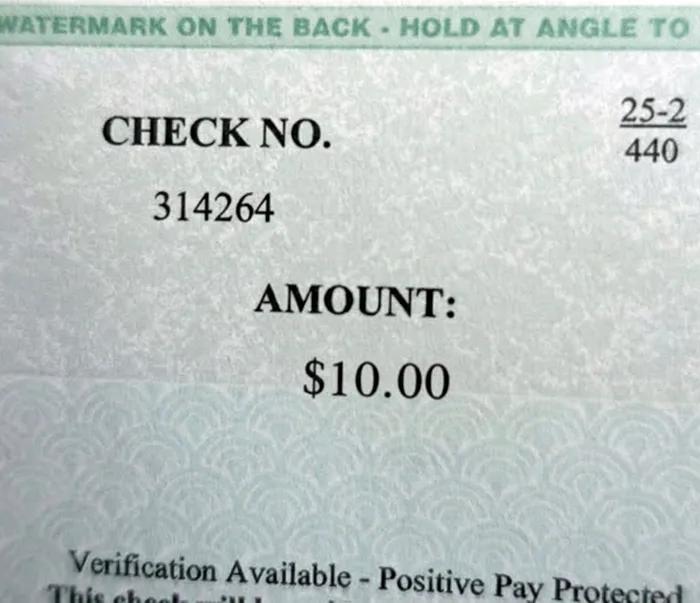
A class action payment is not automatically taxable or tax-free. The federal answer depends on what the payment was intended to replace, whether the settlement allocates the award among different categories, and whether a specific exclusion applies.


This page provides general educational information, not tax advice. Federal and state treatment can depend on the settlement documents and a recipient's individual facts. Use the linked IRS materials for official guidance and consult a qualified tax professional for advice about a particular payment or return.
The Short Answer
Some class action settlement payments are taxable and others are not. The IRS does not use one rule for every settlement check. Its central question is what the payment was intended to replace.A payment replacing wages is generally treated as wages. Interest is generally treated as interest income. Punitive damages are generally taxable. Compensatory damages received because of a personal physical injury or physical sickness may qualify for an exclusion, while damages for a nonphysical injury generally do not. One settlement can split a payment among several categories, producing different treatment for each part.
Class Action Settlement Tax Guide by Payment Type
The table summarizes the general federal framework in IRS Publication 4345 and the IRS settlement-and-judgment guidance. It is a starting point, not a conclusion about an individual check.| Payment type | General federal treatment | Common information form | Example |
|---|---|---|---|
| Consumer refund or price adjustment | A refund of purchase price or recovery for loss in property value may be a basis adjustment rather than income. An amount exceeding adjusted basis may be income. “Consumer refund” is not a stand-alone IRS category, so the settlement's purpose controls. | Often no form when the payment is a return of capital; facts can produce a different result. | A settlement returns part of an alleged product-price premium to buyers. |
| Back pay, front pay or severance | Generally taxable as wages and subject to applicable employment-tax withholding. | Form W-2 | An employment class action allocates part of each award to unpaid wages. |
| Settlement interest | Generally taxable as interest income, even if another portion of the payment is excluded. | A separate interest statement or Form 1099 may apply. | A court-approved payment includes interest for the time between judgment and distribution. |
| Punitive damages | Generally taxable, including punitive damages connected to a physical-injury case. The IRS describes a narrow exception for certain wrongful-death awards under state law. | Form 1099-MISC may apply. | An award separately labels one component as punitive damages. |
| Personal physical injury or physical sickness | Compensatory damages may be excluded if the IRS requirements are met. Amounts tied to medical expenses deducted in an earlier year may be included to the extent the deduction produced a tax benefit. Interest and punitive damages remain separate. | Excluded damages generally are not reported as taxable damages on Form 1099-MISC. | A product-injury settlement compensates class members for documented physical injuries. |
| Emotional distress or mental anguish | Generally taxable when not caused by a personal physical injury or physical sickness. When attributable to a qualifying physical injury or sickness, it generally follows the physical-injury treatment. Limited medical-expense rules can also apply. | Form 1099-MISC may apply to a taxable portion. | An employment or privacy settlement allocates money to emotional distress without a physical injury. |
Free settlement alerts
Get notified when new class actions open to claims
Join thousands of readers who get the latest class action settlements you may qualify for — delivered straight to your inbox.
Why the Settlement's Purpose Matters More Than Its Label
“Class action settlement,” “cash payment,” “award” and “consumer refund” describe how money reached a claimant, not necessarily its federal tax character. The IRS says the facts and circumstances must be considered and asks what the settlement and its payments were intended to replace.The complaint, settlement agreement, court order, notice, award letter and payment statement may identify that purpose. A written allocation can separate wages, emotional distress, interest, punitive damages, property loss and other components. According to IRS Publication 4345, the IRS generally respects an allocation when it is consistent with the substance of the settled claims.
A payment method does not change the analysis. A paper check, PayPal payment, prepaid card or direct deposit can each carry the same character as the underlying award.
Are Consumer Class Action Refunds Taxable?
A consumer class action payment can represent several different things. It might return part of the purchase price, compensate for diminished property value, pay statutory damages, reimburse an expense, add interest or resolve a nonphysical privacy claim. Those categories are not interchangeable.IRS Publication 4345 states that a property settlement for loss in value is generally not taxable when it is less than the property's adjusted basis, although the payment reduces that basis. An amount above adjusted basis is income. That rule can be relevant when a settlement genuinely restores capital or purchase price, but it does not turn every small consumer check into a tax-free refund.
The amount of the check is not the deciding factor. A $10 payment and a $10,000 payment are analyzed by what each replaces. A small payment may fall below an information-reporting threshold while still having the same underlying tax character.
Class Action Settlement 1099 Rules
Form 1099 is an information return. Receiving one does not create the payment's tax character, and not receiving one does not erase it. The settlement's substance comes first; the reporting form communicates how the payer reported the transaction to the IRS.Taxable nonwage damages, including many nonphysical-injury and punitive-damage payments, are commonly reported in Box 3 of Form 1099-MISC. Back pay and other wage allocations are generally reported on Form W-2 instead. A single employment settlement can therefore produce both a W-2 and a 1099-MISC.
For 2026 payments, the current IRS instructions state that the general reporting threshold for many Form 1099-MISC Box 3 other-income payments is $2,000. Older articles frequently quote a $600 threshold that applied before the 2026 increase. The threshold governs whether the payer must file an information return; it does not decide whether a smaller payment is income. Other reporting and withholding rules can also require a form regardless of that general threshold.
A request for Form W-9 is also not a final tax determination. Administrators and defendants use a W-9 to obtain a taxpayer identification number when information reporting or backup withholding may apply.
Examples of How One Settlement Can Be Split
These simplified examples illustrate the IRS framework. They do not determine the treatment of a real payment.• A consumer product settlement pays $25 as a partial return of an alleged price premium. The settlement documents describe the payment as restoring purchase price, with no interest or statutory-damages allocation. The return-of-capital and basis rules may be relevant, but the label alone is not conclusive.
• An employment class action allocates $1,500 to back pay and $500 to nonphysical emotional distress. The wage component is generally handled through payroll and Form W-2. The nonwage component is evaluated separately and may be reported on Form 1099-MISC.
• A physical-injury settlement pays $8,000 in compensatory damages and $300 in interest. The compensatory part may qualify for exclusion if the IRS requirements are met, while the interest is generally taxable as interest income.
• A privacy class action pays $75 without issuing a Form 1099. The lack of a form does not decide whether the payment is taxable. The nonphysical claims, the settlement allocation and any applicable exclusion still control.
• A judgment includes compensatory damages for physical injury and a separate punitive award. The IRS generally treats punitive damages as taxable even when the compensatory physical-injury portion qualifies for exclusion.
Documents to Review Before Reaching a Conclusion
Start with the court-approved settlement notice and the settlement agreement. Look for an allocation section, a description of the released claims and any language explaining what the award replaces. Then compare those documents with the payment statement, Form W-2, Form 1099-MISC, Form 1099-INT or other information return received from the payer.Keep records showing the original claim, the approved amount and every allocation. If a form appears inconsistent with the settlement documents, use the issuer's official contact channel to request an explanation or corrected form. Do not send taxpayer records or a Social Security number to OpenClassActions.com; OCA does not administer settlement payments or issue tax forms.
Federal Rules Are Not the Whole Picture
IRS guidance addresses federal treatment. A state may use different definitions, exclusions or reporting rules. The year of payment can also matter because information-reporting thresholds and form instructions change. Check the tax year printed on the form and use IRS materials for that year.The safest general takeaway is narrow: identify what each part of the settlement replaced, separate wages, interest and punitive damages from other components, and do not use the presence or absence of a Form 1099 as the only test.
Frequently Asked Questions
Are all class action settlement payments taxable?
No. The IRS looks at what the payment was intended to replace. Wages, interest, punitive damages and many nonphysical-damage payments are generally taxable, while qualifying compensatory damages for personal physical injuries or physical sickness may be excluded. A settlement can contain both taxable and nontaxable parts.
Will I receive a Form 1099 for a class action settlement?
It depends on the payment's character, amount and the payer's reporting obligations. Taxable nonwage damages are commonly reported on Form 1099-MISC, while wage portions are generally reported on Form W-2. A settlement containing several categories may produce more than one form.
Is a settlement taxable if I did not receive a 1099?
The absence of a Form 1099 does not by itself make a payment nontaxable. Information-reporting thresholds determine when a payer must issue a form, while the tax character of the payment depends on what it replaced and whether an exclusion applies.
Why did I receive both a W-2 and a 1099 for one settlement?
An employment settlement may allocate one portion to back pay or other wages and another portion to nonwage damages. The wage portion is generally reported on Form W-2, while a taxable nonwage portion may be reported on Form 1099-MISC.
Are emotional distress settlement payments taxable?
The IRS generally treats emotional distress damages as taxable when they do not originate from a personal physical injury or physical sickness. Emotional distress attributable to a qualifying physical injury or sickness is generally treated like the underlying physical-injury damages, subject to the IRS rules for prior medical-expense deductions.
Is interest added to a settlement taxable?
The IRS says interest on a settlement is generally taxable as interest income. That can be true even when the underlying compensatory payment qualifies for an exclusion, so the interest should be evaluated separately.
Sources
• IRS — Tax Implications of Settlements and Judgments• IRS Publication 4345 — Settlements: Taxability
• IRS — Instructions for Forms 1099-MISC and 1099-NEC