Genuine class action notices and the scams imitating them look almost identical — both arrive unannounced, both name a real company, both promise money. Five checks tell them apart, and one of them settles the question on its own.


That ambiguity is the whole problem. Real settlement notices are sent by companies you have never heard of, about lawsuits you never joined, using language written for a judge rather than for you. They look exactly like what a well-built scam would look like. So the instinct most people fall back on — does this feel legitimate? — is the one instinct that cannot resolve it.
What follows is the verification method that does resolve it, in roughly five minutes, without clicking anything in the message.
First, the One Rule That Settles Most Cases
Filing a claim in a court-approved class action settlement is free. Always. There is no filing fee, no processing fee, no release fee, no administrative charge, and no advance payment of any kind. The settlement administrator is paid out of the settlement fund or directly by the defendant, and the court approves that cost. Class members pay nothing.So if a message asks you to send money, buy a gift card, pay a fee, or provide a card number to "cover processing" before your settlement payment can be released, you are done investigating. That is a scam. It does not matter how convincing the rest of it is. This one rule disqualifies a large share of fraudulent settlement messages before you check anything else, and it is worth knowing on its own — we cover the variations in do you have to pay a fee to file a class action claim.
The trouble is that the more sophisticated fakes have stopped asking for money. They ask for information instead — your Social Security number, your bank account and routing number, your date of birth, a copy of your ID — framed as verification the administrator needs before it can pay you. Those require the longer check.
The Five-Minute Verification
Work these in order. Most fakes fail at step two.• 1. Do not click the link. Everything below can be done from a search engine and a court-records site. Treat the message as a claim to be checked, not a door to walk through. If the message is real, nothing is lost — you will reach the same settlement website through the front door a minute later.
• 2. Find the case caption and look it up independently. A genuine notice always identifies the underlying lawsuit: a case name in the form Smith v. Example Corp., a court, and a case number. Search that caption on a free federal court-records source such as CourtListener, or search the case number directly. You are asking one question: does this lawsuit exist, in that court, with a settlement? Scam messages frequently invent a plausible-sounding case, reuse a case that ended years ago, or omit the caption entirely and describe only a company and a dollar amount. Any of those three is a failing grade. (For how the federal records system works and why some of it sits behind a paywall, see our guide to PACER and federal court records.)
• 3. Reach the official settlement website independently. Once you know the case is real, search for the settlement by name and go to the official site directly rather than through the message. Compare what you find against the message: same case, same defendant, same deadline, same benefit. A real notice will match the official site on every one of those. A fake will typically diverge on at least one — most often the deadline or the payment amount, because those are the levers scams use to create urgency.
• 4. Check what the site asks you for. A legitimate claim form asks for identifying information appropriate to the class: your name, your mailing address, an email address, sometimes a purchase date or an account identifier, and often a Claim ID or Notice ID printed on the notice itself. It may ask how you want to be paid. It does not ask for your full Social Security number as a precondition to file in most consumer cases, it does not ask for your online banking login, and it never asks for a password. A form demanding credentials or a payment card is not a claim form.
• 5. Sanity-check the deadline. Confirm the claim deadline on the official settlement site, not in the message. Old notices circulate for years after a case closes, forwarded between friends and reposted on social media, and a large share of "is this real?" questions turn out to be real notices for settlements that closed long ago. Separately, a message pressuring you to act within hours is a scam tell in its own right — court-approved claim periods run for weeks or months, not for an afternoon.
Free settlement alerts
Get notified when new class actions open to claims
Join thousands of readers who get the latest class action settlements you may qualify for — delivered straight to your inbox.
Red Flags That End the Inquiry
Any single one of these is enough to stop:• A request for money in any form — fee, tax, processing charge, gift card, wire transfer, cryptocurrency.
• A request for a password, an online banking login, or a verification code sent to your phone.
• A deadline measured in hours, or a claim that your payment will be "forfeited today."
• No case caption, no court, and no case number anywhere in the message.
• A settlement website whose address does not match the one named on the court docket or in the official notice.
• An unsolicited attachment — real notices link to a claim site; they do not ask you to open a file to claim money.
• A demand that you keep the claim confidential, or that you not discuss it with your bank.
Green Lights That Prove Nothing
This is where most people go wrong. The following are all consistent with a real notice, and all trivially easy to fake. None of them is evidence:• It knows your name and address. So does anyone who bought a marketing list or read a breach dump.
• It names a real company and a real lawsuit. Scams work better when the underlying case is real. Some fraudulent messages describe a genuine settlement accurately and simply point at a fake claim site.
• It looks professionally designed. Real notices are often plain and legalistic; fakes are often polished. Design quality runs the wrong direction here as often as it runs the right one.
• It names a well-known settlement administrator. Administrator names are public, printed in every court order. Using one costs a scammer nothing.
• The sending address ends in .com and looks corporate. Sender addresses are forgeable, and settlement administrators genuinely do send from unfamiliar domains, so this cuts both ways and settles nothing.
Why You Got It in the First Place
A recurring reason people assume a notice is fake is that they never joined anything. That is normal. In most consumer class actions you are a class member automatically by virtue of having bought the product, held the account, used the service, or had your data exposed — no signup, no lawyer, no participation of any kind. The court then orders the defendant to hand over its own records so the administrator can notify the class.That is why a legitimate notice can reference a purchase you barely remember from four years ago: it came out of the defendant's customer database, not out of anything you did. Our glossary entry on why you received a class action notice covers the mechanics, and what a settlement administrator is explains who these companies are and why one of them is emailing you.
If It Came as a Check Instead of an Email
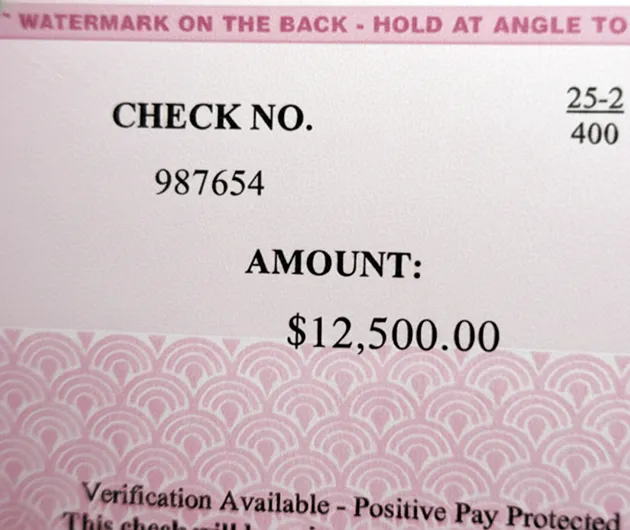
Unexpected checks follow a different logic. Real settlement checks do exist and do arrive unannounced, particularly in cases that pay class members automatically without any claim form. But there is a long-running fraud that mails a real-looking check and then asks you to send part of it back, forward a portion to a third party, or pay a fee to "release" the rest. The check clears provisionally, the money you send is gone, and the check is later returned as counterfeit — leaving you liable for the full amount.The rule mirrors the one above: a genuine settlement check requires nothing of you except depositing it. If cashing it comes with instructions, it is not a settlement check. If you are waiting on a payment you believe is legitimately owed, where is my settlement payment walks through the normal reasons real payments run late.
If You Already Gave Them Something
Move in this order:• Passwords first. Change the password on any account whose credentials you entered, plus every other account where you reused it.
• Then money. If you gave card or bank details, contact your bank or card issuer through your banking app or the number printed on your own card — not any number in the message — and ask them to watch or reissue the account.
• Then identity. If you handed over a Social Security number, you can place a fraud alert or a credit freeze with the three credit bureaus at no cost.
• Then report it. File with the FTC at ReportFraud.ftc.gov and, if money was lost, with the FBI's Internet Crime Complaint Center. If it arrived by mail, the U.S. Postal Inspection Service takes mail-fraud reports. Our guide on reporting a fake prize or sweepstakes covers which agency does what with the complaint.
If It Turns Out to Be Real
Then the remaining question is whether you can actually file. That usually comes down to proof. Some settlements let anyone in the class file on a simple attestation; many more require an administrator-issued Claim ID or Notice ID printed on the notice you received, which means the notice itself is the thing that makes filing possible — a good reason not to delete it while you investigate. Others want receipts or records.We track which is which on every settlement we cover, and maintain a running list of settlements you can claim with no proof at all. The full inventory of what is currently open lives on our open settlements directory.
Frequently Asked Questions
Do real class action settlements ever charge a fee to file a claim?
No. Filing a claim in a court-approved class action settlement is always free. The administrator is paid out of the settlement fund or by the defendant, never by class members. Any message that asks you to pay a filing fee, a processing fee, a release fee, or taxes up front in order to receive a settlement payment is a scam, without exception.
How did a settlement administrator get my email address if I never joined a lawsuit?
In most consumer class actions you are a class member automatically, without signing up. The administrator gets contact details from the defendant's own records — customer accounts, purchase history, subscriber lists, employment files, or breach-notification lists. Receiving a notice out of the blue is normal and is not by itself a sign of fraud.
What is the single fastest way to tell a fake settlement notice from a real one?
Check whether the case actually exists. A genuine notice always names a case caption, a court, and a case number. Look that case up yourself on a free court-records source such as CourtListener rather than clicking any link in the message. If the case cannot be found, or the settlement website does not match the case the court approved, treat the message as fraudulent.
Is a settlement notice fake if it arrives by text message?
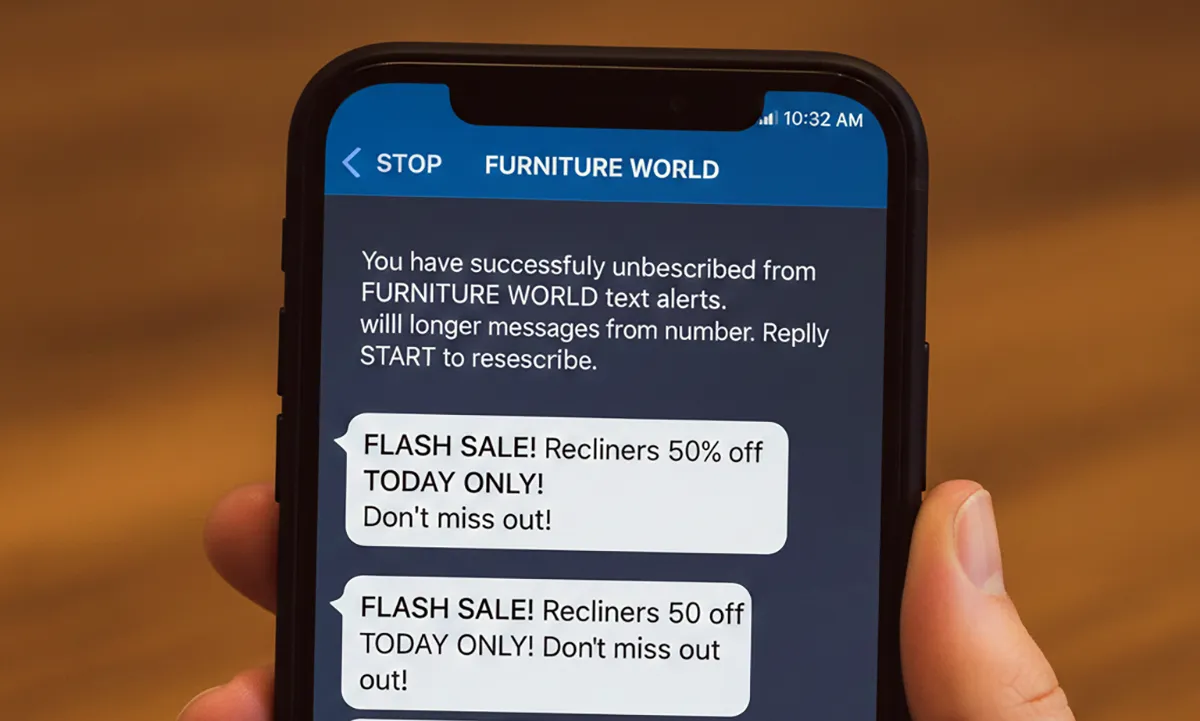
Not necessarily. Courts have approved text-message notice programs in cases where the defendant had mobile numbers on file, so a genuine notice can arrive as an SMS. Text notice does raise the stakes on verification, though, because the message is short and offers few details to check. Verify the case independently before acting on any texted link.
I already clicked the link and entered my information. What should I do?
Change the password on any account whose credentials you entered, and any other account using the same password. If you gave financial account or card details, contact your bank or card issuer through the number printed on your card or in your banking app and ask them to monitor or reissue the account. If you gave your Social Security number, consider placing a free fraud alert or credit freeze with the three credit bureaus. Then report the message to the FTC and the FBI's Internet Crime Complaint Center.
The notice looks real and the case is real, but the deadline has already passed. Is it still a scam?
It may simply be out of date rather than fraudulent. Old settlement notices circulate for years in forwarded emails and social posts long after the claim window closes. Confirm the current deadline on the official settlement website itself, not in the forwarded message, and be aware that a message pressing you to file after the published deadline is a common scam pattern.
Sources
• Federal Trade Commission — How to Avoid a Scam• Federal Trade Commission — Report Fraud
• FBI — Internet Crime Complaint Center
• U.S. Postal Inspection Service — Report a Mail Crime
• Administrative Office of the U.S. Courts — Court Records
• Free Law Project — CourtListener federal docket search