If you tried to shop Fashion Nova with a screen reader, watch the docket before assuming this deal is done: the Justice Department says the settlement pays the lawyers well while leaving blind users little, and the claims site itself was unusable.

What Happened?
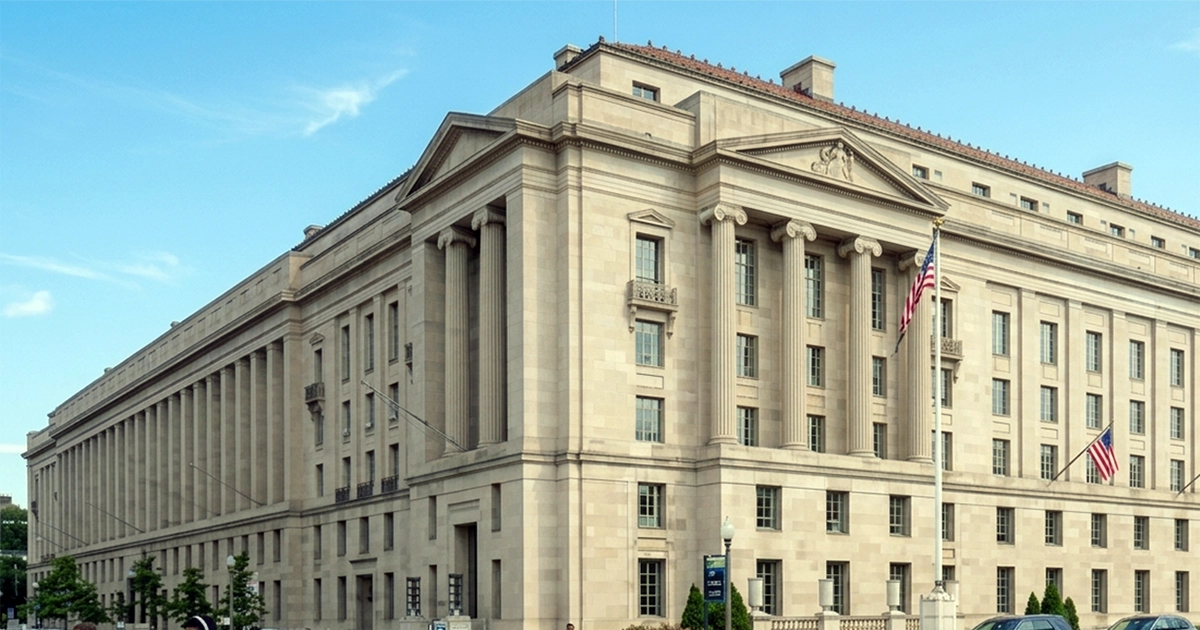
On February 2, 2026, the Department of Justice filed a Statement of Interest in Juan Alcazar v. Fashion Nova, Inc., Case No. 4:20-cv-01434-JST, pending in the United States District Court for the Northern District of California. The government urged the court to reject the proposed class action settlement, arguing it was not fair, reasonable, or adequate as federal rules require.The same day, the DOJ issued a press release titled "Department of Justice Opposes Unfair Class Action Settlement Involving Accessibility of Website under the ADA." Assistant Attorney General Harmeet K. Dhillon of the Civil Rights Division said a class action under the ADA should, above all, secure greater accessibility for consumers with disabilities, and that Congress intended courts to be skeptical of settlements that instead enrich private counsel.
The Lawsuit Behind the Settlement
The plaintiff, Juan Alcazar, is legally blind and uses screen reader software to navigate websites. He sued Fashion Nova, a California-based apparel retailer, back in February 2020, alleging that its online clothing store was not accessible and denied blind users equal access to its goods and services. The claims were brought under Title III of the Americans with Disabilities Act and California's Unruh Civil Rights Act.The case sought injunctive relief (changes to the website) on behalf of a nationwide class of legally blind people who tried to use the site with screen readers, plus state statutory damages for a California subclass. After class certification, the parties went through discovery, expert work, and motion practice before reaching a settlement in mediation.
Free settlement alerts
Get notified when new class actions open to claims
Join thousands of readers who get the latest class action settlements you may qualify for — delivered straight to your inbox.
What the Proposed Settlement Would Do
Under the amended settlement, Fashion Nova agreed to pay $5.15 million into a non-reversionary common fund for the California class. According to the filings, that money was slated to be divided like this:• Attorneys' fees: 25% of the fund, or $1,287,500
• Class counsel costs: $1,235,259.03
• Settlement administrator: $200,000
• Service award to the named plaintiff: $1,000
• Remaining for the class: roughly $2.43 million, divided evenly among California class members who filed a valid claim
In other words, less than half of Fashion Nova's payment would actually reach class members. The DOJ press release noted the plaintiff was seeking over $2.52 million in attorneys' fees and costs combined. For the nationwide class of blind users outside California, the settlement offered no money at all, only injunctive relief.
Why the DOJ Objected
The government's objection rested on a few core points.The injunctive relief was generic and unenforceable. The DOJ zeroed in on the single sentence in the agreement promising that Fashion Nova would modify its website "as needed to achieve substantial conformance with WCAG 2.1." There was no compliance monitoring, no required third-party or user testing, and no enforcement mechanism the court could use if the site stayed inaccessible. Class counsel reserved only an optional right to audit the website at their own expense, and the DOJ noted that option appeared to have expired before the final approval papers were even filed.
The relief did not match real accessibility settlements. The government contrasted the deal with other resolutions and its own consent decrees, which typically require concrete steps: appointing an accessibility coordinator, adopting and posting an accessibility policy, training staff, retaining a consultant for regular audits and end-user testing, monitoring compliance, and filing annual reports. The Fashion Nova deal, the DOJ argued, had none of that teeth.
It mostly benefited the lawyers. Echoing the purpose of the Class Action Fairness Act, the DOJ framed the settlement as closer to a transfer of money to class counsel than meaningful recovery for injured class members.
The Irony: The Claims Website Was Itself Inaccessible
Here is the part that turns this from a routine fee fight into a cautionary tale. The website set up to administer the settlement, where class members were supposed to go to file claims, was itself inaccessible to blind and low-vision users, according to the DOJ.The government retained an accessibility expert, Terri Youngblood Savage of Accessible Systems, Inc., who has three decades of experience in the field. In September 2025, during the claims period, she tested the class website using the same kinds of screen reader tools at the heart of the original complaint, including JAWS and iOS VoiceOver, along with other accessibility testing tools. She found a series of barriers that could have stopped an eligible blind claimant from successfully filing:
• The "Submit Claim" button had no keyboard focus indicator, so keyboard-only users could not tell where they were on the page.
• A backup set of navigation tabs did have a focus box, but its color contrast was far too low (about 1.4 to 1, where roughly 3 to 1 is the recommended minimum).
• The claim form's Yes or No questions, including "Are you legally blind?", were not properly linked to their answer buttons, so a screen reader never read the question aloud. Blind users were left guessing what they were answering.
• A hidden checkbox near the signature section was announced to screen readers with no context, inviting confusion.
• Screen reader users heard two "Submit" buttons, but only one actually worked, so a claimant could click the wrong one and wrongly assume their claim went through.
• When a form was submitted with errors, the error message was not read aloud, so a blind user might think the claim succeeded when it had not.
• Document download icons had incorrect alt text, so users could not tell whether they were downloading or opening a file.
The upshot, the DOJ argued, is that the people the settlement was meant to compensate could have been blocked from claiming their share by the same type of accessibility failures the lawsuit was about in the first place.
What ADA Title III and WCAG 2.1 Actually Mean
Title III of the ADA bars discrimination on the basis of disability by places of public accommodation. Courts and the DOJ have applied that to many business websites, reasoning that an online store is an extension of the goods and services a company offers the public. For private plaintiffs, Title III generally provides injunctive relief (an order to fix the problem) rather than money damages, which is why the money in this case flowed from the California state-law claims.WCAG 2.1, the Web Content Accessibility Guidelines, is the technical standard most settlements point to. It spells out how to make web content perceivable and operable for people with disabilities, including blind users on screen readers. Committing to WCAG conformance is common, but as the DOJ stressed, a promise to conform means little without a way to verify and enforce it.
What This Means for Class Members
If you are a blind or low-vision shopper who tried to use Fashion Nova's website, the practical takeaway is to watch the docket rather than assume anything is final. The DOJ urged the court to reject the deal, and a Final Approval Hearing was set for February 12, 2026. A court can approve, modify, or reject a proposed settlement, so the status may have changed after the government weighed in. The official class website and the court record are the places to confirm current deadlines and whether any revised settlement emerges.More broadly, this filing is a reminder that a class action settlement is not automatically a good deal just because it carries a big headline number. The structure matters: how much actually reaches class members, whether the promised fixes are enforceable, and whether the claims process is one affected people can actually use.
Read the DOJ Filing
You can read the Department of Justice's Statement of Interest and the supporting expert declaration below.The Bigger Picture: Serial Accessibility Suits
The DOJ filing also offered context about the volume of litigation here. According to the government, this was far from the plaintiff's only case: he filed roughly fifteen more class actions over three months in 2020, each alleging nearly identical accessibility barriers, and several more the following year. The filing states that the plaintiff's counsel has brought in excess of 500 such suits, with most ending in undisclosed individual settlements.None of that decides whether Fashion Nova's website was accessible. But it frames why a court, and now the federal government, might look closely at whether a given settlement actually advances accessibility or mainly generates fees.
Related Fashion Nova Coverage
We are tracking Fashion Nova across several consumer law fronts. For background and related cases:• Fashion Nova website accessibility settlement — the underlying settlement the DOJ is challenging
• Fashion Nova TCPA spam text lawsuit — a separate class action over early-morning marketing texts
• Fashion Nova $12 voucher settlement — a separate deceptive-pricing settlement for California, Oregon and Washington shoppers
• Browse all open class action settlements
• Latest class action news and updates
Frequently Asked Questions
Is the Fashion Nova accessibility settlement final?
Not as described in these filings. The Department of Justice filed a Statement of Interest on February 2, 2026 urging the court to reject the proposed settlement, and a Final Approval Hearing was scheduled for February 12, 2026. A court can approve, modify, or reject a settlement, so the outcome may have changed since the DOJ filing. Check the court docket or the official class website for the current status.
Why did the Justice Department oppose the settlement?
The DOJ argued the deal would richly compensate the plaintiff's lawyers while delivering little real value to class members, especially the nationwide class of blind users outside California. It said the injunctive relief was a generic, weakly enforceable promise to comply with accessibility guidelines, with no monitoring or enforcement, and it noted that the settlement's own claims website was inaccessible to people with vision disabilities.
What was wrong with the settlement claims website?
A DOJ accessibility expert tested the class website in September 2025 with screen readers and found multiple barriers: a missing keyboard focus indicator on the Submit Claim button, a focus indicator with too little color contrast, claim form questions like "Are you legally blind?" that were not read aloud, a confusing hidden checkbox, a redundant Submit button that did not work, claim errors that were not announced, and incorrect alt text on document icons. These echoed the barriers the lawsuit accused Fashion Nova's own site of having.
Who qualified for money under the proposed settlement?
Only California class members were set to receive money. The proposed settlement created a $5.15 million non-reversionary fund, but after attorneys' fees, costs, administration, and a service award, roughly $2.43 million would have been divided among California class members who filed valid claims. The nationwide class of blind users outside California would receive only injunctive relief, not money.
What is ADA Title III and WCAG 2.1?
Title III of the Americans with Disabilities Act prohibits disability discrimination by places of public accommodation, which courts and the DOJ have applied to many business websites. WCAG 2.1 (Web Content Accessibility Guidelines) is a widely used technical standard for making web content accessible to people with disabilities, including blind users who rely on screen readers. The proposed settlement committed Fashion Nova to substantial conformance with WCAG 2.1.
Sources
• Statement of Interest of the United States, Juan Alcazar v. Fashion Nova, Inc., Case No. 4:20-cv-01434-JST, U.S. District Court, Northern District of California (filed February 2, 2026)• Declaration of Terri Youngblood Savage, Accessible Systems, Inc. (filed February 2, 2026)
• U.S. Department of Justice, Office of Public Affairs, press release 26-92, "Department of Justice Opposes Unfair Class Action Settlement Involving Accessibility of Website under the ADA" (February 2, 2026)
• Title III of the Americans with Disabilities Act, 42 U.S.C. § 12181 et seq.; Class Action Fairness Act of 2005, 28 U.S.C. § 1715
• Web Content Accessibility Guidelines (WCAG) 2.1, W3C